Papillons are one of the longest-living toy dog breeds, known for their intelligence, alert personality, and elegant butterfly-shaped ears. Despite their small size, Papillons are active and athletic companions that often remain energetic well into their senior years. Understanding the average Papillon lifespan and how the breed ages can help owners better support their dog through every life stage.
The average Papillon lifespan is 13 to 16 years. Because they are a small breed, Papillons typically live longer than many medium or large dogs. Their slower aging process after early adulthood is one reason breed-specific age charts are more accurate than the traditional “7 dog years” rule.
Papillons are friendly, highly trainable, and closely bonded to their owners. They thrive with regular activity, mental stimulation, proper nutrition, and consistent care. Like many small breeds, their long-term health and life expectancy are strongly influenced by dental care, healthy weight management, and routine veterinary checkups.
Papillon Dog Quick Facts
| Feature | Details |
|---|---|
| Breed group | Toy dog |
| Average height | 8–11 inches |
| Average weight | 5–10 pounds |
| Coat type | Long, silky, single coat |
| Temperament | Intelligent, alert, friendly |
| Energy level | Moderate to high |
| Average lifespan | 13–16 years |
Because Papillons age differently from larger breeds, understanding their lifespan, aging stages, and age-to-human-years comparison can help owners better recognize changing health and care needs over time.
How Long Do Papillons Live?
Papillons usually live between 13 and 16 years. Their long lifespan is one of the reasons the breed is popular among small dog owners. With proper nutrition, exercise, dental care, and regular veterinary visits, many Papillons remain healthy and active well into their later years.
Why Papillons Age Differently Than Larger Dogs
One of the biggest reasons Papillons often live longer than large dogs is their small body size. Small breeds typically mature quickly during the first two years of life but age more gradually afterward. Larger dogs place more stress on their joints, organs, and metabolism over time, which can contribute to a shorter average lifespan.
Breed genetics also play an important role. Papillons are generally considered a healthy toy breed with relatively strong longevity compared to many larger breeds. While they can develop age-related health conditions, early care and routine health monitoring often help support a longer life expectancy.
Daily lifestyle habits have a major impact on lifespan as well. Healthy nutrition, regular physical activity, weight management, dental hygiene, and consistent veterinary care all contribute to healthier aging in Papillons.
Papillon Lifespan Compared to Other Dog Sizes
| Dog size | Average lifespan |
|---|---|
| Papillon (toy breed) | 13–16 years |
| Small breeds | 12–15 years |
| Medium breeds | 10–13 years |
| Large breeds | 8–12 years |
| Giant breeds | 6–10 years |
Compared to larger dogs, Papillons often maintain their mobility, energy, and overall health for more years. This is one reason breed-specific aging charts are more useful than generalized dog age formulas.
The Papillon is widely recognized as one of the longer-living toy breeds due to its small size, active lifestyle, and relatively strong overall breed longevity.
Papillon Age Chart and Human Years Comparison
Understanding a Papillon’s age in human years can help owners better recognize changing energy levels, health needs, and aging stages throughout the dog’s life. Because Papillons are a small toy breed with a longer average lifespan, they age differently than medium or large dogs.
Breed-specific age charts provide a more realistic comparison than the old “7 dog years” rule. Small dogs like Papillons mature quickly during their first two years, then age more gradually throughout adulthood and senior years.
If you want a personalized age calculation based on your dog’s exact age, breed, and life stage, you can also use our Papillon Dog Age Calculator for a more detailed estimate.
Papillon Age to Human Years Chart
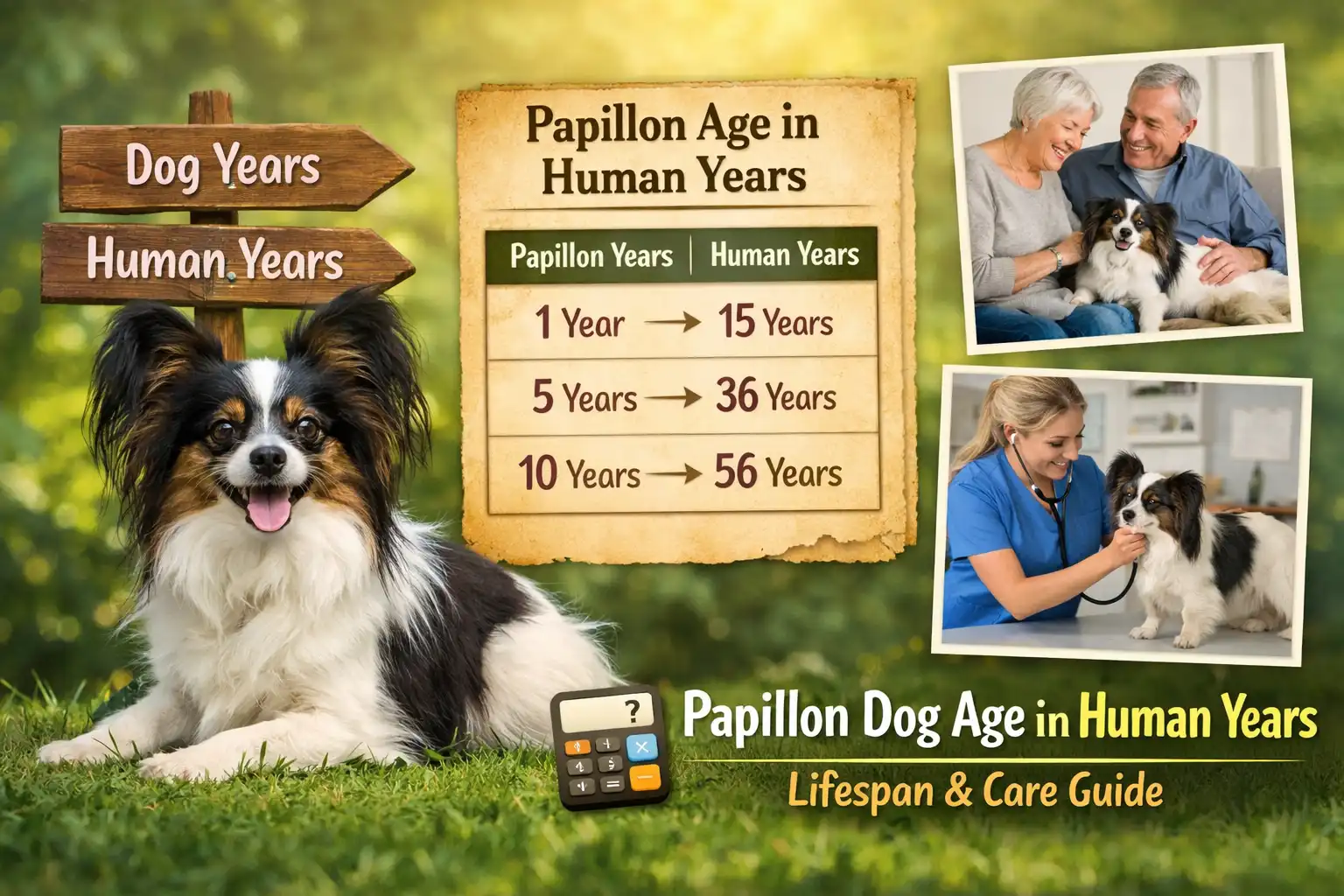
The chart below shows the estimated human age equivalent for Papillons at different life stages. These estimates help explain how aging changes over time in small dog breeds.
| Papillon age (years) | Estimated human age equivalent |
|---|---|
| 1 year | 15 human years |
| 2 years | About 24 human years |
| 3 years | About 28 human years |
| 5 years | About 36 human years |
| 7 years | About 44 human years |
| 10 years | About 56 human years |
| 12 years | About 64 human years |
| 15 years | About 76 human years |
Want a More Accurate Papillon Age Calculation?
Age charts provide general estimates, but every Papillon ages differently based on genetics, lifestyle, and overall health. Use our Papillon Dog Age Calculator to get a more personalized age comparison based on your dog’s exact age and breed profile.
These numbers are estimates rather than exact scientific conversions, but they provide a more accurate picture of canine aging than generalized formulas.
Real Papillon Age Examples
Different life stages often affect behavior, activity levels, and health needs. The examples below help illustrate how a Papillon’s age may compare to human aging milestones.
| Papillon age | Comparable human life stage |
|---|---|
| 1 year | Teenage years with high energy and rapid learning |
| 5 years | Adult stage with steady routines and full maturity |
| 10 years | Middle-aged stage with gradual slowing and changing health needs |
| 15 years | Senior stage with increased need for comfort and monitoring |
Compared to many larger breeds, Papillons often remain active and alert well into their senior years, even at ages when larger dogs may already experience significant physical decline.
Papillon Life Stages Explained
Like all dogs, Papillons go through distinct life stages that influence their behavior, nutritional needs, exercise levels, and overall health. Understanding these stages helps owners better support healthy aging throughout the dog’s lifespan.
Papillon puppies grow rapidly during their first year and benefit from early socialization, training, and consistent routines. This stage plays a major role in long-term behavior and confidence.
Adult Papillons are usually energetic, alert, and mentally active for many years. Most remain highly playful and responsive throughout adulthood when supported with regular exercise, healthy nutrition, and daily mental stimulation.
Senior Papillons are generally considered older around 9 years of age. During this stage, owners may notice slower movement, changes in hearing or vision, increased sleep, or reduced endurance. Routine senior veterinary care becomes increasingly important during later life stages.
Papillon Life Stages and What to Expect
| Age range | Life stage | Common characteristics | Primary care focus |
|---|---|---|---|
| 0–1 year | Puppy | Rapid growth, curiosity, high energy | Training, nutrition, vaccinations |
| 2–8 years | Adult | Stable routines, active lifestyle, mental sharpness | Weight management, exercise, dental care |
| 9+ years | Senior | Reduced mobility, increased rest, aging changes | Joint support, senior wellness checks, comfort care |
While every Papillon ages differently, these life stage patterns provide a useful general guide for understanding typical aging changes in the breed.
Papillon Care, Health Issues, and Longevity Tips
Daily care plays a major role in helping Papillons live longer, healthier lives. Because this breed is small and generally long-lived, consistent habits such as healthy nutrition, dental hygiene, exercise, and routine veterinary care can significantly affect long-term health and quality of life.
Papillons are active, intelligent dogs that benefit from regular movement and mental stimulation. Maintaining a healthy body weight is especially important because excess weight can increase stress on joints and contribute to age-related health problems later in life.
Dental care is one of the most important areas of long-term health management for Papillons. Small dog breeds are more likely to develop dental disease at an earlier age, which can eventually affect overall health if left untreated. Regular brushing, dental cleanings, and routine checkups help support healthier aging.
As Papillons age, their health needs gradually change. Early recognition of common age-related conditions can help owners provide better long-term support and comfort.
Common Papillon Health Issues by Age
| Age stage | Common health concerns | Recommended care focus |
|---|---|---|
| Puppy | Low blood sugar, fragile bones, growth support | Balanced nutrition, vaccinations, routine vet visits |
| Adult | Dental disease, patellar luxation, weight management | Dental care, exercise, healthy diet |
| Senior | Joint stiffness, vision or hearing changes, reduced mobility | Senior wellness checks, gentle exercise, comfort support |
Although many Papillons remain energetic well into old age, senior dogs often benefit from more frequent health monitoring and small lifestyle adjustments that support mobility and comfort.
Daily Care Checklist for Papillon Dogs
| Care area | Adult Papillon | Senior Papillon |
|---|---|---|
| Nutrition | Balanced small-breed diet | Senior-support nutrition |
| Exercise | Daily walks and active play | Gentle walks and lighter activity |
| Dental care | Routine brushing and cleanings | More frequent dental monitoring |
| Vet visits | Annual wellness exams | Twice-yearly senior wellness checks |
| Mental stimulation | Training, games, enrichment | Light puzzles and calm interaction |
Frequently Asked Questions About Papillon Lifespan
What is the average lifespan of a Papillon?
The average Papillon lifespan is typically between 13 and 16 years. Because they are a small toy breed, Papillons usually live longer than medium or large dogs when supported with proper nutrition, exercise, dental care, and regular veterinary visits.
At what age is a Papillon considered a senior?
Most Papillons are considered seniors around 9 years of age. During this stage, owners may notice gradual aging changes such as lower stamina, increased sleeping, mild joint stiffness, or changes in hearing and vision.
How old is a 10-year-old Papillon in human years?
A 10-year-old Papillon is estimated to be similar to a person in their mid-50s. Small breeds age differently than large dogs, which is why breed-specific age charts provide more realistic aging comparisons.
Why do Papillons usually live longer than large dogs?
Papillons generally live longer because small dog breeds age more slowly after early adulthood and place less long-term stress on their joints, organs, and metabolism compared to larger breeds.
Final Thoughts on Papillon Lifespan and Aging
With an average lifespan of 13 to 16 years, the Papillon is considered one of the longer-living toy dog breeds. Understanding the breed’s aging process, life stages, and age chart comparisons can help owners better support their dog throughout every stage of life.
Healthy nutrition, regular dental care, exercise, weight management, and routine veterinary visits all contribute to healthier aging and long-term quality of life in Papillons.
If you want a more personalized estimate based on your dog’s exact age and breed profile, you can also explore our Papillon Dog Age Calculator for a more detailed age comparison.

Ata Ur Rehman is the founder of Pet Age in Human Years Calculator, an educational platform that provides age conversion charts and lifespan guides for dogs, cats, birds, and other companion animals. His work focuses on helping pet owners understand how animal ages translate into human years using commonly accepted age conversion formulas and published lifespan averages.
The website compiles breed and species lifespan data from kennel clubs, breed organizations, and general animal lifespan studies to present simple and easy-to-understand guides for pet owners worldwide.
This website was created to centralize animal age conversion charts into one easy reference platform for pet owners.