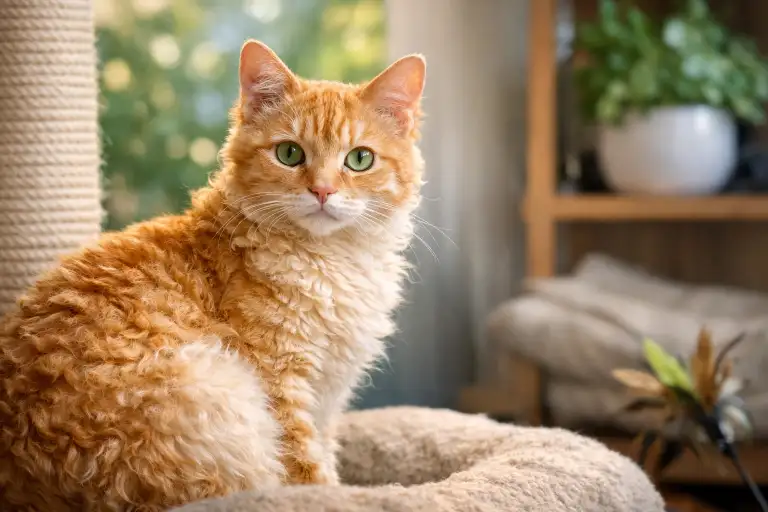
The Tennessee Rex cat is one of the rarest naturally occurring rex-type breeds in the world — and unlike many experimental curly breeds, it didn’t begin in a lab or a controlled breeding program. It started with a single kitten born in rural Tennessee with an unusual coat that shimmered in the sunlight and curled in a way no one had quite seen before.
That shimmer is what truly separates this breed. The Tennessee Rex carries both a natural curly mutation and a satin gene, giving the coat a glossy, almost polished glow under light. When you see one in person, the fur doesn’t just curl — it reflects light differently than most rex breeds. Owners often describe it as looking “lit from within.”
The breed traces back to 2004, when a curly-coated kitten named Satin Surprise was born to a feral domestic cat in Franklin County, Tennessee. Breeder Franklin Whittenburg recognized that this wasn’t just a random coat variation. Through careful and ethical breeding, it became clear the curl and satin traits were genetic and reproducible. Unlike the Devon Rex or Cornish Rex, which originated decades earlier in England, the Tennessee Rex is an American-born mutation — and still considered an emerging breed.
Recognition status remains limited. The Tennessee Rex has been shown in some registries under developing or experimental categories, but it is not yet widely recognized by major associations like CFA. This limited recognition contributes to its rarity — and also means responsible breeding practices are critical to maintain genetic health as the population grows.
Today, the Tennessee Rex is still extremely rare. You won’t find dozens of breeders across the country. In fact, locating a kitten may require joining waiting lists or contacting the original breeding lines. For many enthusiasts, that exclusivity adds appeal — but it also means prospective owners must be patient and selective.
Despite the rarity, the Tennessee Rex is not just about novelty. Early owners consistently describe them as affectionate, intelligent, and socially engaged cats that bond closely with their people. They’re not simply “curly-coated curiosities.” They behave much like a confident, interactive house cat — with a striking appearance that turns heads.
Tennessee Rex at a glance:
| Trait | Tennessee Rex |
|---|---|
| Origin | Tennessee, USA |
| Coat Type | Curly with satin sheen |
| Size | Medium |
| Weight | Typically 6–12 lbs |
| Lifespan | Estimated 12–15 years |
| Shedding | Low |
| Energy Level | Moderate to moderately high |
| Rarity | Extremely rare |
| Recognition | Developing / Limited registry status |
Because this breed is still developing, long-term data on health trends and lifespan continues to evolve. However, as a naturally occurring mutation rather than a heavily engineered cross, early observations suggest a generally robust foundation — provided breeders maintain genetic diversity carefully.
For cat lovers drawn to unusual coats, American-born breeds, or rex-type cats with personality and shine, the Tennessee Rex stands in a category of its own.
Appearance, Size & Coat Characteristics
At first glance, the Tennessee Rex looks soft, curly, and shiny — but when you see one in real life, the coat really stands out. The curls are gentle and natural, not tight like a poodle. And because of the satin gene, the fur reflects light in a way that almost makes the cat glow.
This is not just a curly cat. It is a curly cat with shine.
Tennessee Rex cats are medium in size. They are not tiny and not large. Most adults feel solid and balanced when you pick them up.
Average size details:
- Adult weight: 6 to 12 pounds
- Males: Usually larger and more muscular
- Females: Slightly smaller and lighter
- Full growth: Around 12 to 18 months
Their body is strong but not bulky. They have:
- A balanced, athletic build
- Medium-length legs
- A straight tail
- A rounded chest
- Curly whiskers
They are not as slim and delicate as the Cornish Rex. They are also not as stocky as the Selkirk Rex. They fall somewhere in between.
Now let’s talk about the coat — the most special part of this breed.
The Tennessee Rex has:
- Soft, wavy to lightly curled fur
- A silky texture
- A satin shine that reflects light
- Curly whiskers
The satin gene changes how the hair reflects light. Instead of looking flat, the coat looks glossy and bright. In sunlight, the shine becomes even more noticeable.
The curls are usually loose waves, not tight ringlets. Kittens may look extra curly. As they grow, the coat can change slightly in texture.
Common coat colors can include:
- Solid colors
- Tabby patterns
- Bicolor
- Other natural cat colors
Eye color depends on coat color and genetics. There is no single required eye color.
Do they shed?
Yes — but usually less than many regular-coated cats. Shedding is considered low to moderate. However, no cat is completely non-shedding.
Are they hypoallergenic?
No cat is fully hypoallergenic. The Tennessee Rex may produce less loose fur, but people with allergies can still react to dander and saliva.
Because of their lighter coat texture, they may feel colder than heavy-coated breeds. In cold climates, they often prefer warm indoor spaces, soft blankets, and sunny windows.
Here is a simple comparison with other rex breeds:
| Feature | Tennessee Rex | Devon Rex | Cornish Rex | Selkirk Rex |
|---|---|---|---|---|
| Body Type | Balanced, muscular | Slim | Fine-boned | Stocky |
| Coat Texture | Curly + shiny satin | Soft waves | Tight curls | Thick plush curls |
| Shedding | Low | Very low | Very low | Moderate |
| Coat Shine | High (satin glow) | Low | Low | Medium |
If you want a cat that looks different from most house cats but still has a natural, balanced body shape, the Tennessee Rex fits that description very well.
Tennessee Rex Personality & Everyday Life
The Tennessee Rex is not just special because of its coat. Its personality is just as important. Most owners describe this breed as friendly, playful, and very people-focused.
This is not a cat that hides all day. It likes to be part of the home.
Here is what daily life with a Tennessee Rex usually feels like:
- They follow their favorite person from room to room
- They enjoy sitting near you, not always on you
- They watch everything happening in the house
- They like to explore new spaces
Affection level
The Tennessee Rex is usually affectionate. Many enjoy lap time, but they are not always clingy. Some may curl up beside you instead of on your lap. They bond strongly with their family but can also be friendly with guests if socialized early.
Independence
They are not extremely independent cats. They prefer company. If left alone for many hours every day, they may get bored or lonely. In homes where people work long hours, having another friendly pet can help.
Energy level
Energy is moderate to moderately high.
They are playful but not wild. They enjoy:
- Chasing wand toys
- Climbing cat trees
- Playing short active games
- Exploring shelves and high spots
They usually have bursts of energy, then rest, then play again.
Intelligence
This breed is smart. They learn quickly and enjoy mental challenges. Many respond well to:
- Puzzle toys
- Clicker training
- Simple tricks like “sit” or “come”
Because they are curious, they may jump on counters or open cabinets. This is not bad behavior — it is curiosity mixed with intelligence.
Vocalization
Most Tennessee Rex cats are moderate talkers. They are not usually as loud as some oriental breeds. They may:
- Chirp softly
- Make small trills
- Meow when they want attention
They use their voice to communicate but are not known for constant loud talking.
Behavior with children
They usually do well with respectful children. They enjoy play and attention. However:
- Young children must be taught gentle handling
- Rough play should always be avoided
Behavior with other cats
If introduced properly, they often get along well with other friendly cats. They are social and usually enjoy companionship.
Behavior with dogs
With early introduction, many Tennessee Rex cats live peacefully with calm dogs. Slow introductions are important.
Apartment living
This breed can do well in apartments if:
- They have vertical space (cat trees or shelves)
- They get daily play time
- They are not left alone too long
Indoor vs outdoor
Because of their lighter coat and rarity, indoor living is safest. Outdoor life increases risk of injury, theft, and illness. Most breeders recommend indoor-only homes.
Here is a quick personality summary:
| Trait | Level |
|---|---|
| Affection | High |
| Independence | Moderate |
| Energy | Moderate to High |
| Intelligence | High |
| Vocalization | Moderate |
| Good with Kids | Yes, with supervision |
| Good with Pets | Usually, if socialized |
In simple words, the Tennessee Rex is a social, smart, playful cat that enjoys being part of family life.
Care, Grooming, Health & Lifespan
Taking care of a Tennessee Rex is not very hard, but there are a few special things to know because of its curly satin coat and rare breed status.
Grooming needs
The coat is soft and lightly curled. It does not need heavy brushing.
Most owners find that:
- Brushing once a week is enough
- Use a soft brush, not a hard one
- Do not over-brush, or curls can loosen
- Wipe gently with a damp cloth if needed
Some rex-type cats can have slightly oily skin. If the coat feels greasy, an occasional gentle bath may help. Always use cat-safe shampoo.
Nail, ear, and teeth care
Like all cats, the Tennessee Rex needs:
- Nails trimmed every 2–4 weeks
- Ears checked weekly
- Teeth brushed if possible
Because of curly hair, some rex breeds may collect more ear wax. Regular checks help prevent infection.
Shedding
Shedding is usually low. You may see light hair on furniture, but not heavy fur like long-haired breeds. Remember, no cat is fully non-shedding.
Is the Tennessee Rex hypoallergenic?
No cat is 100% hypoallergenic. Allergies come from proteins in saliva and skin, not just fur. Some people may react less, but allergy testing before adoption is always smart.
Lifespan
Because the Tennessee Rex is still a developing breed, long-term data is limited. Early reports suggest:
- Estimated lifespan: 12 to 15 years
- Possibly longer with good care
Healthy indoor cats often live longer than outdoor cats.
Health concerns
Since this breed comes from a natural mutation and not heavy mixing of many breeds, early signs suggest a generally healthy foundation. However, the population is small. Small gene pools can increase risk if breeders are not careful.
Possible concerns to monitor:
- Heart health (such as HCM screening)
- General genetic diversity
- Routine dental health
There are no widely confirmed breed-specific diseases at this time, but research is still growing.
Veterinary care
Recommended care includes:
- Yearly vet checkups
- Regular vaccines
- Heart screening if advised by breeder or vet
- Parasite prevention
Climate sensitivity
Because of the lighter coat, these cats may feel cold easily. They often enjoy:
- Warm indoor spaces
- Soft blankets
- Sunny windows
Most experts recommend keeping this breed indoors for safety and health.
Here is a quick care overview:
| Category | What to Expect |
|---|---|
| Lifespan | 12–15 years (estimated) |
| Grooming | Light brushing weekly |
| Bathing | Only if needed |
| Shedding | Low |
| Major Health Risks | No confirmed major breed issues yet |
| Screening | Heart checks recommended |
| Climate | Sensitive to cold |
With proper care, regular vet visits, and responsible breeding, the Tennessee Rex can live a long and healthy life.
Price, Pros & Cons & Should You Get a Tennessee Rex?
Because the Tennessee Rex is very rare, price and availability are different from common cat breeds.
Kitten price
There are only a small number of breeders. This means kittens are not always available.
Typical price range:
- $800 to $2,000 or more
- Price depends on breeder, location, and quality
You may also need to:
- Join a waiting list
- Pay a deposit
- Travel to pick up the kitten
Be careful of very cheap listings online. Rare breeds are sometimes used in scams. Always check:
- Breeder reputation
- Health testing proof
- Clean living conditions
- Clear contract and health guarantee
Adoption
Because this is a new and rare breed, finding one in a shelter is very unlikely. Most Tennessee Rex cats come directly from breeders.
Ongoing yearly costs
Owning any cat includes regular expenses.
Here is a simple cost overview:
| Expense | Estimated Cost |
|---|---|
| Kitten Price | $800–$2,000+ |
| Food (yearly) | $300–$600 |
| Vet Care (yearly) | $300–$700 |
| Insurance (optional) | $20–$50 per month |
| Supplies | $200–$400 yearly |
Costs may be higher in some areas.
Pros and Cons
Before choosing this breed, it helps to look at both good and challenging sides.
| Pros | Cons |
|---|---|
| Very unique curly, shiny coat | Extremely rare and hard to find |
| Friendly and social | May not like being alone long hours |
| Intelligent and playful | Limited long-term health data |
| Low shedding | Small breeder network |
Who should choose this breed?
The Tennessee Rex may be a good fit if you:
- Want a rare and unique cat
- Enjoy interactive, social pets
- Have time for daily play and attention
- Plan to keep your cat indoors
Who may struggle with this breed?
This breed may not be ideal if you:
- Work very long hours every day
- Want a very independent cat
- Live in very cold conditions without warm indoor space
- Prefer a widely available breed
In simple words, the Tennessee Rex is best for owners who want a rare, people-friendly, playful cat and are ready to give it time and attention.
For official breed recognition updates and registry information, you can visit The International Cat Association (TICA) website.

Ata Ur Rehman is the founder of Pet Age in Human Years Calculator, an educational platform that provides age conversion charts and lifespan guides for dogs, cats, birds, and other companion animals. His work focuses on helping pet owners understand how animal ages translate into human years using commonly accepted age conversion formulas and published lifespan averages.
The website compiles breed and species lifespan data from kennel clubs, breed organizations, and general animal lifespan studies to present simple and easy-to-understand guides for pet owners worldwide.
This website was created to centralize animal age conversion charts into one easy reference platform for pet owners.