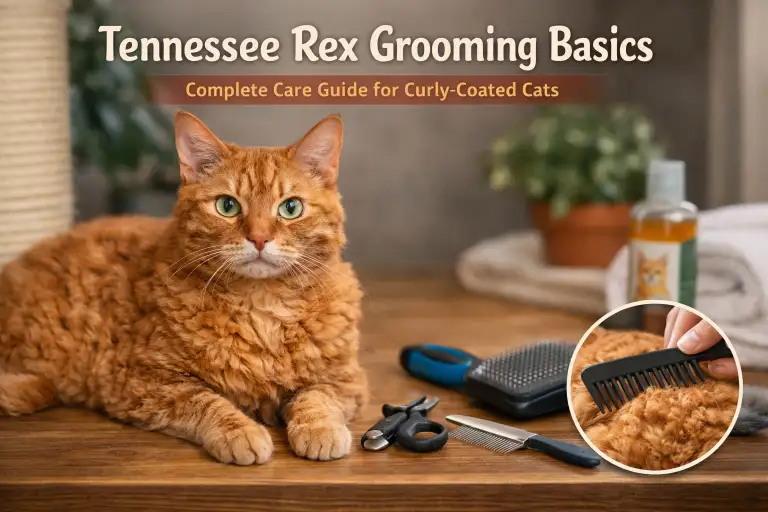
The Tennessee Rex is known for its soft, wavy to curly coat — a texture that immediately sets it apart from straight-haired breeds. Because the coat looks plush and low-shedding, many owners assume grooming is minimal. In reality, curly coats require preventive maintenance, just in a slightly different way than traditional short- or long-haired cats.
Unlike heavily undercoated breeds, the Tennessee Rex typically has a lighter, finer coat texture. The curls can range from loose waves to tighter ripples depending on genetics and coat length. Fine hair is more delicate than it looks — it can break if over-brushed and can clump together if neglected.
Here’s what makes this coat unique from a grooming perspective:
- The hair shaft is often softer and more flexible.
- Oil distribution can be uneven, leading to slight greasiness over time.
- Light shedding still occurs — just less visibly.
- Friction areas (armpits, belly, behind ears) are still mat-prone.
- Over-brushing can stretch or frizz the curl pattern.
One of the most common misunderstandings about curly-coated cats is that they “don’t need grooming.” What’s true is that they don’t need aggressive de-shedding. What’s not true is that they can be left completely alone.
Myth vs Reality
| Myth | Reality |
|---|---|
| Tennessee Rex cats don’t shed | They shed lightly, but loose hair still needs removal |
| Curly coats don’t mat | Fine curls can clump in high-friction areas |
| They groom themselves enough | Self-grooming does not prevent oil buildup or hidden tangles |
| Less fur means less maintenance | Coat texture — not length — determines grooming needs |
Life stage also affects grooming needs:
- Kittens may not have their full curl pattern yet. Early gentle handling builds lifelong tolerance for grooming.
- Adults are typically in a maintenance phase — weekly brushing prevents buildup.
- Seniors may groom themselves less due to stiffness or arthritis, increasing mat risk.
Indoor vs outdoor lifestyle also matters. Outdoor Tennessee Rex cats are more likely to collect debris in curls, while indoor cats may develop mild oil buildup over time.
Seasonal changes can influence grooming frequency as well. Even lightly shedding breeds can experience mild seasonal coat shifts in spring and fall.
The goal with a Tennessee Rex is not heavy grooming — it’s consistent, gentle maintenance. Prevent problems early, preserve the curl structure, and monitor the skin regularly.
Brushing a Tennessee Rex the Right Way (Without Damaging the Curls)
Brushing is the most important part of Tennessee Rex grooming. The goal is not to remove lots of loose fur. The goal is to prevent small tangles, spread natural oils, and keep the curls healthy.
Because the coat is soft and fine, it must be handled gently. Too much brushing can stretch the curls and make the coat look frizzy. Too little brushing can cause small clumps to form close to the skin.
Why gentle brushing matters:
- Fine curls can break if pulled hard
- Mats can form in hidden areas
- Oil can build up near the skin
- Senior cats may not groom themselves well
Safe tools for brushing:
- A wide-tooth comb
- A soft slicker brush (used lightly)
- A grooming glove for very sensitive cats
Avoid heavy de-shedding tools. These are made for thick undercoats and can damage a curly coat.
Step-by-step brushing method:
- Choose a calm time when your cat is relaxed.
- Let your cat sniff the tool first.
- Start by petting with your hands.
- Brush slowly in the direction the curls grow.
- Work in small areas at a time.
- Check the skin as you brush.
- Stop if your cat shows stress signs.
Areas that need extra attention:
- Behind the ears
- Under the front legs (armpits)
- Belly area
- Base of the tail
How often should you brush?
Most Tennessee Rex cats do well with brushing once a week. During mild shedding seasons (spring and fall), you may brush twice a week. If the coat feels greasy or starts to clump, increase brushing slightly.
Signs you are brushing too hard:
- The curls look stretched or fuzzy
- Your cat’s skin twitches a lot
- Your cat pulls away or flicks the tail
- You see broken hairs
Never cut small mats with scissors. The skin is very thin and easy to cut. If you find a tight mat close to the skin, it is safer to contact a professional groomer.
Brushing should feel like bonding time, not a struggle. Short, calm sessions are better than long sessions.
Nail, Ear, Eye & Dental Care Essentials
Brushing is only one part of grooming. Your Tennessee Rex also needs regular nail trims, clean ears, clean eyes, and basic dental care. These small tasks prevent pain and health problems later.
Keep sessions short and calm. You do not have to do everything in one day.
Nail trimming basics
Indoor cats still need nail trims. Scratching posts help, but they do not keep nails short enough.
How often to trim:
- Every 2 to 4 weeks for most cats
- If you hear nails clicking on the floor, it is time
Simple nail trimming steps:
- Pick a quiet time when your cat is relaxed.
- Hold one paw gently.
- Press the toe pad to extend the nail.
- Trim only the sharp tip.
- Avoid the pink part inside the nail (this is called the quick).
- If your cat pulls away, take a break.
If you accidentally cut the quick and it bleeds, stay calm. Apply styptic powder or cornstarch and apply gentle pressure.
Ear care basics
Check ears once a week.
Healthy ears:
- Light pink inside
- Small amount of light wax
- No strong smell
Warning signs:
- Dark debris
- Bad smell
- Redness or swelling
- Head shaking
Only clean the outer visible part of the ear using a vet-approved cleaner and soft cotton pad. Never put cotton swabs deep into the ear.
Eye care basics
Tennessee Rex cats usually do not have heavy tear stains. If you see small discharge:
- Use a soft damp cloth
- Wipe gently from inner corner outward
- Use a clean part of the cloth for each eye
If discharge is thick, yellow, or constant, contact a vet.
Dental care basics
Dental care is often ignored, but it is very important.
Why it matters:
- Prevents bad breath
- Reduces gum disease
- Protects overall health
Start slowly:
- Let your cat taste cat-safe toothpaste
- Rub teeth gently with your finger
- Use a soft cat toothbrush
Try to brush teeth 2–3 times per week. Daily is even better.
Do not use human toothpaste. It is not safe for cats.
Keep grooming calm and simple. Doing small tasks often is better than waiting too long.
Bathing a Tennessee Rex — When It’s Necessary and When It’s Not
Many people think curly-coated cats need frequent baths. Others think they should never be bathed. The truth is somewhere in the middle.
Tennessee Rex cats usually do not need regular baths. They are good at cleaning themselves. But because their coat is soft and curly, natural oils can sometimes build up on the skin.
When a bath may be needed:
- The coat feels greasy or sticky
- There is a bad smell
- Your cat got into something dirty
- There is visible dirt that brushing cannot remove
- Your vet recommends it
When NOT to bathe:
- The coat just looks a little messy
- Your cat is very stressed easily
- The skin looks red or irritated
- You are trying to “reduce shedding”
Bathing too often can dry out the skin and damage the curls.
Simple bathing steps:
- Brush lightly before the bath to remove small tangles.
- Use lukewarm water (not hot).
- Wet the coat gently.
- Use a small amount of cat-safe shampoo.
- Massage softly — do not scrub hard.
- Rinse very well. Leftover shampoo can irritate the skin.
- Gently squeeze water out with your hands.
- Towel dry softly.
Do not use a high-heat dryer. Heat can dry the skin and change the curl pattern. Most Tennessee Rex cats do best with towel drying and warm room air.
If your cat becomes very stressed during bathing, stop and try again another day. Safety is more important than finishing the bath.
Bathing guide table
| Situation | Should You Bathe? |
|---|---|
| Greasy coat buildup | Yes |
| Mild dust | No |
| Strong odor | Yes |
| Skin irritation | Ask a vet first |
| Just normal shedding | No |
Most Tennessee Rex cats only need a bath every few months, if at all.
Grooming Schedule, Safety Signals & When to Call a Professional
Grooming works best when it is done on a simple schedule. Small, regular care prevents big problems later. You do not need long grooming sessions. Short and calm sessions are better.
Here is an easy grooming schedule for most Tennessee Rex cats:
Grooming frequency table
| Task | How Often | Increase If… |
|---|---|---|
| Brushing | 1 time per week | Coat feels greasy or clumpy |
| Nail trimming | Every 2–4 weeks | Nails click on the floor |
| Ear check | Once per week | You see wax buildup |
| Teeth brushing | 2–3 times per week | Bad breath or tartar |
| Bathing | Every few months (if needed) | Coat becomes oily |
This schedule may change if your cat is older, very active, or has health issues.
Watch your cat’s body language during grooming. Cats give warning signs before they scratch or bite.
Common stress signals:
| Body Signal | What It Means | What To Do |
|---|---|---|
| Tail flicking fast | Getting annoyed | Slow down |
| Ears flat back | Feeling scared or upset | Pause grooming |
| Skin twitching | Overstimulated | Stop brushing |
| Growling or hissing | Very stressed | End session |
If you see these signs, stop early. Ending on a calm note helps your cat trust you next time.
Common grooming mistakes:
| Mistake | Why It’s Risky | Better Choice |
|---|---|---|
| Brushing too hard | Breaks curls and hurts skin | Brush gently once a week |
| Skipping nail trims | Nails grow too long | Trim every 2–4 weeks |
| Cleaning deep inside ears | Can cause injury | Clean outer ear only |
| Cutting mats with scissors | Easy to cut skin | See a groomer |
When to call a professional groomer or vet:
- Tight mats close to the skin
- Red, swollen, or infected skin
- Repeated ear infections
- Very aggressive behavior during grooming
- Severe nail overgrowth
Professional groomers have safe tools for mat removal. Vets should handle skin infections or painful problems.
With the right routine, Tennessee Rex grooming is simple and gentle. Focus on prevention, stay calm, and watch your cat’s signals.
For more detailed veterinary guidance on safe nail trimming and general at-home grooming care, you can visit the American Veterinary Medical Association (AVMA).

Ata Ur Rehman is the founder of Pet Age in Human Years Calculator, an educational platform that provides age conversion charts and lifespan guides for dogs, cats, birds, and other companion animals. His work focuses on helping pet owners understand how animal ages translate into human years using commonly accepted age conversion formulas and published lifespan averages.
The website compiles breed and species lifespan data from kennel clubs, breed organizations, and general animal lifespan studies to present simple and easy-to-understand guides for pet owners worldwide.
This website was created to centralize animal age conversion charts into one easy reference platform for pet owners.