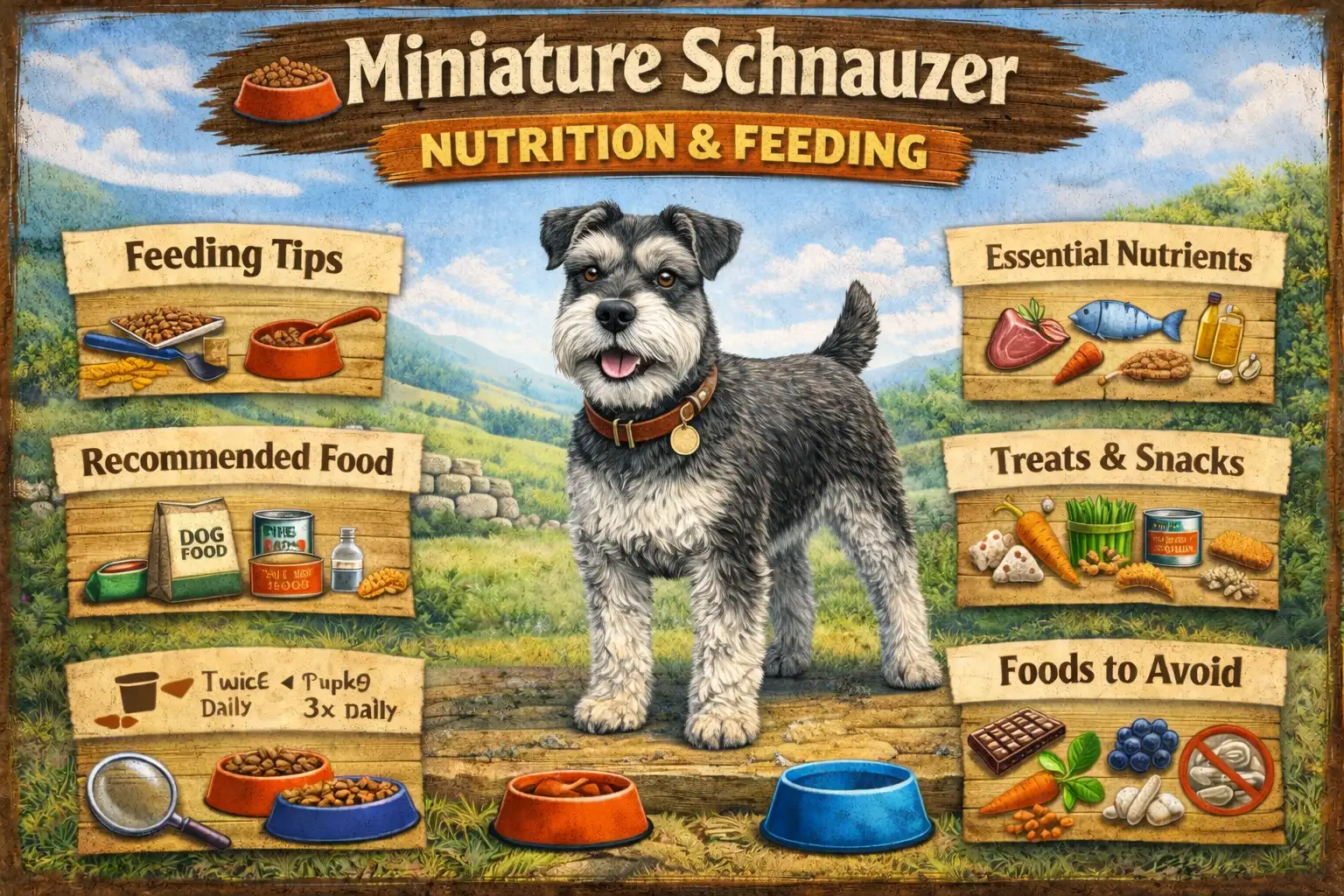
A Miniature Schnauzer typically needs 300 to 550 calories per day, depending on age, weight, activity level, and body condition. Most adults do best with two measured meals per day, while puppies usually need smaller meals more often. Because this breed can be sensitive to high-fat foods, a low-fat, portion-controlled diet is usually the safest long-term feeding approach.
Quick Miniature Schnauzer Feeding Guide:
- Daily calories: Most Miniature Schnauzers need 300–550 calories per day.
- Adult feeding schedule: 2 measured meals per day.
- Puppy feeding schedule: 3 smaller meals per day.
- Best diet style: Low-fat, balanced, and portion-controlled.
- Treat limit: Keep treats under 10% of daily calories.
This Miniature Schnauzer feeding chart and calorie guide helps you understand how much to feed a Miniature Schnauzer by age, weight, and activity level. The goal is not just to keep your dog full. The real goal is to prevent overfeeding, support healthy digestion, and reduce the breed’s higher risk of weight gain and pancreatitis.
Miniature Schnauzers are small dogs with big personalities, but they also have specific nutritional sensitivities. Feeding them like any other small breed can lead to too many calories, too much fat, and long-term health problems. If you want a deeper look at the breed’s temperament, size, and general care needs, read our complete Miniature Schnauzer dog guide.
Use the charts and feeding tips below as a practical starting point. Then adjust your Miniature Schnauzer’s food amount based on body condition, age, daily activity, and your vet’s advice.
What Is the Best Diet for a Miniature Schnauzer?
The best diet for a Miniature Schnauzer is a low-fat, balanced, and portion-controlled diet that supports healthy weight, steady digestion, and good energy. High-quality protein, moderate carbohydrates, and controlled fat levels are more important than choosing a trendy food type or feeding more protein than your dog needs.
For this breed, the safest feeding approach is simple: choose a complete dog food, measure portions carefully, limit fatty treats, and keep daily calories under control.
Why Miniature Schnauzer nutrition is different
Miniature Schnauzers have a combination of breed traits that directly affect how they should be fed:
- A small body size, which means even small amounts of extra food can quickly cause weight gain
- A higher sensitivity to fatty foods, which makes low-fat feeding especially important
- A strong food drive, which can lead to begging, overeating, and too many treats
- A dense, wiry coat that benefits from steady nutrition and good-quality ingredients
This is why a Miniature Schnauzer feeding plan should focus on measured meals, calorie control, and low-fat food choices. These basics matter more than expensive food trends.
Because coat condition also reflects overall health, regular grooming supports the same long-term care routine. You can connect feeding with coat care by reading the Miniature Schnauzer grooming basics guide.
The real impact of proper feeding
When a Miniature Schnauzer is fed the right amount of food for its age, weight, and activity level, owners usually notice:
- Better weight control and a more visible waistline
- Steadier energy throughout the day
- Fewer digestive upsets and more consistent stools
- Healthier skin and coat condition
- Less begging caused by random snacks and table food
- Lower risk of obesity-related health problems
On the other hand, diets that are too high in fat, too calorie-dense, or poorly measured can lead to:
- Slow weight gain that is easy to miss
- Constant begging and food obsession
- Soft stool, gas, or occasional vomiting
- Higher risk of pancreatitis in sensitive dogs
- More difficulty adjusting food as your dog gets older
Nutrition and calorie control as a long-term health tool
For Miniature Schnauzers, nutrition is not just about choosing food. It is a daily health management tool. The right feeding routine supports:
- Healthy digestion
- Stable body weight
- Skin and coat health
- Joint comfort as your dog ages
- Better energy balance through each life stage
Many Miniature Schnauzers live well into their senior years, so feeding should change as they move from puppy to adult to senior life stages. You can use the Miniature Schnauzer age calculator to better understand your dog’s current life stage and adjust feeding expectations accordingly.
What Should a Miniature Schnauzer Eat?
A Miniature Schnauzer should eat a complete, balanced dog food that is low to moderate in fat, rich in quality protein, and measured according to daily calorie needs. The best food is not always the richest food. For this breed, simple and controlled feeding is usually better than high-fat or overly calorie-dense meals.
Miniature Schnauzers do best on food that supports steady energy, easy digestion, healthy weight control, and coat health. Their diet should be consistent, easy to measure, and suitable for their life stage.
The three main nutrients your Miniature Schnauzer needs
Every complete dog food is built around three main nutrients: protein, fat, and carbohydrates. Each one has a different role in your Miniature Schnauzer’s health.
Protein supports muscles, immune health, and coat strength. Miniature Schnauzers need good-quality animal protein, but they do not need extreme protein levels unless advised by a vet.
Fat provides energy and helps absorb vitamins, but it is the most sensitive nutrient for this breed. Too much fat can increase the risk of weight gain and digestive problems.
Carbohydrates provide energy and fiber. When chosen well, they can support digestion, stool quality, and fullness between meals.
Ideal macronutrient balance for Miniature Schnauzers
| Nutrient | Best Range for Miniature Schnauzers | Why It Matters |
|---|---|---|
| Protein | Moderate to high | Supports muscles, coat, and daily energy |
| Fat | Low to moderate | Helps reduce weight gain and pancreatitis risk |
| Carbohydrates | Moderate | Supports digestion, fiber intake, and steady energy |
The key point is simple: controlled fat and correct portions matter more than chasing the highest protein food. Use the feeding chart below as a starting point, then adjust portions based on body condition, age, activity level, and your dog’s response.
Important vitamins and minerals
Miniature Schnauzers also need vitamins and minerals to support skin, coat, bones, teeth, and immune health. Most complete dog foods already include these nutrients, so extra supplements are usually not needed unless your vet recommends them.
| Nutrient | Why It Helps |
|---|---|
| Omega-3 fatty acids | Supports skin, coat, and inflammation control |
| Vitamin E | Supports skin and immune health |
| Zinc | Supports coat quality and healing |
| Calcium and phosphorus | Support strong bones and teeth |
How to read a dog food label
Dog food labels can be confusing, but Miniature Schnauzer owners should focus on the parts that affect calories, fat intake, and long-term health.
| Label Part | What to Look For | What to Be Careful About |
|---|---|---|
| First ingredients | Named protein such as chicken, turkey, fish, or lamb | Unclear ingredient names or very rich formulas |
| Fat percentage | Low to moderate fat levels | Very high-fat foods marketed for small breeds |
| Calories per cup | Clear calorie information so portions can be measured | Feeding only by cup size without checking calories |
| Life stage statement | Food suitable for puppy, adult, senior, or all life stages | Using puppy food for adults without a reason |
Always check the calorie content per cup or serving. Two dog foods can look similar, but one may contain many more calories per cup than the other.
What matters most to remember
- Miniature Schnauzers need low-fat, balanced food
- Daily calories matter more than guessing cup amounts
- Quality ingredients matter more than brand hype
- Fatty treats and table scraps should be limited
- Simple, steady feeding works best for this breed
Once you understand the right nutrient balance, the next step is knowing exactly how many calories your Miniature Schnauzer needs each day.
How Many Calories Should a Miniature Schnauzer Eat?
Most Miniature Schnauzers need between 300 and 550 calories per day, depending on age, weight, activity level, body condition, and whether they are neutered or spayed. Smaller or less active adults may need closer to 300–400 calories daily, while larger or more active Miniature Schnauzers may need 450–550 calories per day, including treats.
Calories are more accurate than cup measurements because every dog food has a different calorie density. One food may have 320 calories per cup, while another may have 450 calories per cup. That is why the best Miniature Schnauzer feeding chart should start with calories first, then convert those calories into cups based on the food label.
Quick Answer: A healthy adult Miniature Schnauzer usually needs 300–550 calories per day, split into 2 measured meals. Puppies usually need 3 meals per day, while seniors often do better with 2 smaller meals. Treats should stay under 10% of total daily calories.
How to Calculate Miniature Schnauzer Calories
The easiest way to estimate Miniature Schnauzer calories is to start with your dog’s weight, then adjust based on activity level, age, and body condition. A small, less active Miniature Schnauzer needs fewer calories, while a lean and active dog usually needs more.
For most owners, the feeding chart below is easier than doing manual calorie math. Use your dog’s current weight first, then adjust the final amount based on whether your Miniature Schnauzer is gaining, losing, or maintaining weight.
| Step | What to Check | How to Use It |
|---|---|---|
| 1 | Current weight | Choose the closest weight range in the feeding chart |
| 2 | Activity level | Use low, average, or high activity calorie range |
| 3 | Body condition | Reduce slightly if overweight, increase slightly if underweight |
| 4 | Treat calories | Include treats, chews, and human food in the daily total |
| 5 | Food label | Convert daily calories into cups using calories per cup |
For example, if your Miniature Schnauzer needs 400 calories per day and the food has 400 calories per cup, your dog would need about 1 cup of food per day, split into two meals. If the same dog also gets 40 calories in treats, meals should provide about 360 calories instead.
How Much to Feed a Miniature Schnauzer and How Often
How much to feed a Miniature Schnauzer depends mainly on age, weight, activity level, and body condition. Because this breed is small, even a small amount of extra food each day can slowly cause weight gain. Feeding the right amount helps your dog stay active, lean, and comfortable.
Use the Miniature Schnauzer feeding charts below as a starting point. Then adjust the food amount every few weeks based on your dog’s waistline, energy level, stool quality, and your vet’s advice.
Miniature Schnauzer Feeding Chart by Weight and Activity
This Miniature Schnauzer feeding chart shows estimated daily calorie needs for adult dogs based on weight and activity level. These numbers include meals and treats combined.
| Adult Weight | Low Activity | Average Activity | High Activity |
|---|---|---|---|
| 11–13 lbs | 300–350 calories/day | 350–400 calories/day | 400–450 calories/day |
| 14–16 lbs | 350–400 calories/day | 400–450 calories/day | 450–500 calories/day |
| 17–20 lbs | 400–450 calories/day | 450–500 calories/day | 500–550 calories/day |
If your Miniature Schnauzer is overweight, start near the lower end of the range. If your dog is active, lean, and energetic, the middle or higher end may be more appropriate.
Miniature Schnauzer Calorie Estimator
Use this simple Miniature Schnauzer calorie estimator if you want a quick starting point before checking the full feeding chart. Choose the row closest to your dog’s weight and activity level.
Simple Calorie Estimator:
- Small or less active Miniature Schnauzer: 300–400 calories per day
- Average adult Miniature Schnauzer: 400–500 calories per day
- Larger or highly active Miniature Schnauzer: 500–550 calories per day
- Senior with lower activity: Start 10–15% below the normal adult range
- Overweight Miniature Schnauzer: Start near the lower end and speak with your vet before major calorie cuts
This is not a replacement for veterinary advice, especially if your dog has pancreatitis, diabetes, sudden weight change, or ongoing digestive problems. It is a simple starting point for everyday feeding decisions.
Miniature Schnauzer Feeding Chart by Age
This Miniature Schnauzer feeding chart by age shows how feeding needs change from puppy to adult to senior. Puppies need more frequent meals, adults need steady portion control, and seniors often need careful calorie monitoring.
| Life Stage | Age Range | Meals Per Day | Feeding Focus |
|---|---|---|---|
| Puppy | 2–12 months | 3 meals | Steady growth, small meals, puppy-formula food |
| Adult | 1–7 years | 2 meals | Weight control, measured calories, low-fat routine |
| Senior | 7+ years | 2 smaller meals | Easy digestion, lean body weight, activity-based portions |
For a more detailed age breakdown, you can also read the Miniature Schnauzer age chart, which explains how this breed’s life stages compare with human years.
Skipping meals or feeding once per day can increase hunger, begging, and stomach upset. Most Miniature Schnauzers do best with a predictable feeding routine.
If you are not sure which life stage your dog is in, use the Miniature Schnauzer age calculator to estimate their age stage before adjusting meals and calories.
Miniature Schnauzer Feeding Chart by Age, Weight, and Calories
For better accuracy, combine age and weight together. This helps answer the common question: how much food should a Miniature Schnauzer eat each day?
| Age / Stage | Typical Weight | Estimated Daily Calories | Meals Per Day |
|---|---|---|---|
| Young puppy | Growing | Follow puppy food label by current weight | 3–4 small meals |
| Older puppy | Approaching adult size | 300–500 calories, depending on growth and activity | 3 meals |
| Adult | 11–13 lbs | 300–400 calories | 2 meals |
| Adult | 14–16 lbs | 350–500 calories | 2 meals |
| Adult | 17–20 lbs | 400–550 calories | 2 meals |
| Senior | Varies | Usually 10–15% less if activity drops | 2 smaller meals |
This chart is a starting point, not a fixed rule. A lean, active senior may need more food than a young adult that sleeps most of the day.
How Many Cups of Food Should a Miniature Schnauzer Eat?
Most adult Miniature Schnauzers eat around ¾ to 1½ cups of dry food per day, split into two meals, depending on the calories per cup. However, cups are only an estimate. Always check your dog food label because calorie density changes by brand and recipe.
| Calories Needed Per Day | If Food Has 350 Calories/Cup | If Food Has 450 Calories/Cup |
|---|---|---|
| 300 calories | About 0.85 cup/day | About 0.65 cup/day |
| 400 calories | About 1.15 cups/day | About 0.9 cup/day |
| 500 calories | About 1.4 cups/day | About 1.1 cups/day |
| 550 calories | About 1.55 cups/day | About 1.2 cups/day |
This is why two Miniature Schnauzers can eat different cup amounts but still receive similar calories. For weight control, calories matter more than the cup number.
Male vs Female Miniature Schnauzer Feeding Chart
Male and female Miniature Schnauzers do not usually need separate feeding charts unless their size, activity, or body condition is different. A heavier male may need more calories than a smaller female, but a very active female may need more food than a lazy male. Feed based on weight, age, activity, and body condition, not sex alone.
Using Body Condition to Adjust Portions
Do not rely only on the feeding guide on the bag. Use your hands and eyes too. Your Miniature Schnauzer should have a visible waist from above, and you should be able to feel the ribs without pressing hard.
| Body Look | What It Means | What to Do |
|---|---|---|
| Ribs hard to feel, no clear waist | Overweight | Reduce daily calories by about 10% |
| Ribs easy to feel, waist visible | Ideal | Keep feeding the same amount |
| Ribs very visible, low muscle | Underweight | Increase food slightly and speak with your vet |
Check body condition every 2 to 3 weeks. Do not change food every day based on small weight changes.
Common Portion Mistakes to Avoid
- Guessing portions instead of measuring food
- Forgetting to count treats, chews, and table scraps
- Feeding by cup size without checking calories per cup
- Letting begging control feeding times
- Using puppy food for an adult dog without a clear reason
- Giving fatty human foods “just once” too often
Small dogs feel full faster, but they also gain weight faster. A few extra bites per day can become a real weight problem over time.
How Much Should a 15 lb Miniature Schnauzer Eat?
A 15 lb Miniature Schnauzer typically needs about 400 to 450 calories per day, depending on activity level and body condition. Less active dogs may need closer to 400 calories, while active dogs may need slightly more. This total should include meals, treats, chews, and any human food.
How Often Should You Feed a Miniature Schnauzer?
Puppies usually need three meals per day to support steady growth and energy. Adult Miniature Schnauzers usually do best with two meals per day. Senior dogs can also eat two meals daily, but smaller portions may be easier to digest if activity levels drop.
A consistent schedule also supports training and behavior. For help building better routines around food motivation, see the Miniature Schnauzer training guide.
Helpful Feeding Tips
- Use a measuring cup or kitchen scale
- Keep treats under 10% of daily calories
- Feed at the same times each day
- Adjust food after neutering, weight gain, or activity changes
- Choose lower-fat treats when training
- Track weight and body condition every few weeks
Best Food Types, Treats, and Safe Human Foods for Miniature Schnauzers
Many Miniature Schnauzer owners feel confused when choosing food. There are many options, but not all are ideal for this breed. The goal is to choose food that is easy to digest, low to moderate in fat, complete and balanced, and simple to measure every day.
This section is not about choosing one “best” brand. It is about understanding which food types are easier to manage for a Miniature Schnauzer’s weight, digestion, and pancreatitis risk.
Common Dog Food Types and How They Compare
| Food Type | Good Points | Things to Watch |
|---|---|---|
| Dry kibble | Easy to measure, store, and feed consistently | Some small-breed formulas are too calorie-dense |
| Wet or canned food | Tasty and adds moisture | Can be high in calories if portions are not measured |
| Fresh cooked food | Clear ingredients and often easy to digest | Must be balanced correctly and portioned carefully |
| Freeze-dried food | Convenient and flavorful | Often higher in fat and calories |
| Raw food | Protein-focused | May be risky for dogs prone to pancreatitis or stomach upset |
| Homemade food | Full control over ingredients | Needs vet or veterinary nutrition guidance to avoid deficiencies |
For most Miniature Schnauzers, a high-quality dry food, wet food, or fresh cooked food can work well if the formula is not too fatty and the portions are measured correctly.
Safe and Unsafe Human Foods
Many owners like to share food with their dogs. Some plain human foods are safe in small amounts, while others are dangerous or too fatty for Miniature Schnauzers.
| Safe in Small Amounts | Unsafe or Avoid | Why to Avoid |
|---|---|---|
| Plain chicken breast | Fatty meats | Can trigger stomach upset and pancreatitis risk |
| Carrots | Chocolate | Toxic to dogs |
| Green beans | Onions and garlic | Can damage red blood cells |
| Apple slices without seeds | Grapes and raisins | Can harm kidneys |
| Plain rice | Fried foods | Too much fat and seasoning |
| Plain pumpkin | Butter, cream, and rich sauces | Too fatty for sensitive dogs |
Human food should be plain, unseasoned, and counted as part of your dog’s daily calories. Even safe foods can cause weight gain if they are given too often.
Treat Guidelines for Miniature Schnauzers
Treats should support training, not replace a balanced diet. A good rule is that treats should be less than 10% of total daily calories.
| Treat Type | Recommended? | Notes |
|---|---|---|
| Small training treats | Yes | Use tiny pieces and count calories |
| Fresh vegetables | Yes | Serve plain with no butter or oil |
| Lean cooked meat | Sometimes | Keep portions very small and plain |
| Chewy fatty treats | No | High-fat risk for this breed |
| Table scraps | No | Hard to control calories and fat |
For example, if your Miniature Schnauzer eats 400 calories per day, treats should usually stay under about 40 calories total for the day.
Simple Feeding Tips That Work
- Choose a complete food suitable for your dog’s life stage
- Check calories per cup before deciding portions
- Look for low to moderate fat levels
- Avoid mixing too many foods at once
- Keep meal times consistent
- Do not use rich table foods as daily treats
Too many food changes can cause stomach upset and picky eating. A simple, steady feeding routine is usually best for Miniature Schnauzers.
Special Diets, Feeding Problems, and Real-Life Miniature Schnauzer Scenarios
Miniature Schnauzers often need extra care with food because they can gain weight easily and may be sensitive to high-fat meals. Small feeding changes can make a big difference, especially for dogs with pancreatitis risk, sensitive stomachs, allergies, or lower activity levels.
This section helps you adjust your Miniature Schnauzer’s diet in real-life situations while keeping the main rules simple: measure calories, keep fat controlled, avoid rich table foods, and make food changes slowly.
Special Diet Needs in Miniature Schnauzers
Some Miniature Schnauzers need a more careful feeding plan than others. The right approach depends on the dog’s health, weight, digestion, and veterinary advice.
| Condition | Diet Focus | Simple Feeding Tips |
|---|---|---|
| Pancreatitis risk | Very low-fat food | Avoid fatty treats, fried foods, rich table scraps, and high-fat chews |
| Overweight | Fewer daily calories | Measure food, reduce treats, and adjust portions by body condition |
| Food allergies | Limited ingredients | Use one main protein source and avoid frequent food changes |
| Sensitive stomach | Easy digestion | Switch foods slowly and keep meals simple and consistent |
| Low activity dogs | Lower calorie intake | Use smaller portions and avoid extra snacks between meals |
| Senior dogs | Lean weight maintenance | Feed measured meals and adjust calories if activity drops |
Always speak with your vet before starting a special diet, especially if your Miniature Schnauzer has pancreatitis, repeated vomiting, chronic diarrhea, allergies, or sudden weight changes.
Low-Fat Feeding Rules for Miniature Schnauzers
A low-fat feeding routine is especially important for Miniature Schnauzers because rich foods can cause digestive upset and may increase pancreatitis risk in sensitive dogs. Low-fat feeding does not mean removing all fat. It means avoiding unnecessary high-fat foods and keeping daily intake controlled.
- Choose complete dog food with low to moderate fat levels
- Avoid fried foods, butter, cream, fatty meats, and greasy leftovers
- Use lean treats instead of rich chews or high-fat training snacks
- Keep treats under 10% of total daily calories
- Measure meals instead of free-feeding throughout the day
- Ask your vet about diet changes if your dog has a history of pancreatitis
For most Miniature Schnauzers, the safest daily routine is simple: measured meals, low-fat treats, no rich table food, and steady feeding times.
Common Feeding Problems and Easy Fixes
Many feeding problems are caused by habits, not true hunger. Begging, picky eating, soft stool, and weight gain often improve when meals become more consistent and portions are measured.
| Problem | Common Cause | What Helps |
|---|---|---|
| Always hungry | Too many snacks or inconsistent meals | Measure food, reduce treats, and feed on a routine |
| Picky eating | Too many food changes or table scraps | Stick to one balanced food and avoid rewarding picky behavior |
| Soft stool | Fast food switch or rich foods | Slow the transition and keep food plain and consistent |
| Weight gain | Guessing portions or not counting treats | Track calories and reduce daily food by about 10% if needed |
| Begging | Feeding from the table | Ignore begging and reward calm behavior away from meals |
| Vomiting after rich food | High-fat snacks or table food | Stop rich extras and speak with your vet if it repeats |
Most problems improve when feeding is simple, measured, and consistent. If symptoms continue, do not keep changing foods repeatedly without veterinary guidance.
How to Switch Dog Food Safely
Changing food too fast can upset your Miniature Schnauzer’s stomach. A slow transition gives the digestive system time to adjust and reduces the chance of soft stool, gas, or vomiting.
| Day | Old Food | New Food |
|---|---|---|
| 1–2 | 75% | 25% |
| 3–4 | 50% | 50% |
| 5–6 | 25% | 75% |
| 7+ | 0% | 100% |
If your dog gets diarrhea, vomits, or refuses food during the switch, slow the transition and contact your vet if symptoms continue.
Real-Life Feeding Situations
These simple feeding rules can help with common daily situations Miniature Schnauzer owners face.
| Situation | Best Approach |
|---|---|
| Picky eater | Offer food for 15–20 minutes, then remove it until the next meal |
| Multiple dogs at home | Feed separately so each dog gets the correct portion |
| Travel days | Keep the same food and feeding schedule when possible |
| Training days | Use tiny low-fat treats and subtract them from daily calories |
| After neutering or spaying | Monitor weight closely and reduce calories if activity drops |
| Senior dog with lower activity | Use smaller measured meals and check body condition every few weeks |
Begging usually gets worse when owners give in “just once.” A steady routine helps your Miniature Schnauzer understand when food is coming and reduces food obsession over time.
When to See a Vet
Call your vet if your Miniature Schnauzer shows signs that may be linked to diet, digestion, or a medical issue.
- Vomiting that happens more than once or keeps coming back
- Long-lasting diarrhea or repeated soft stool
- Fast weight gain or sudden weight loss
- Refusing food for more than one day
- Pain, weakness, or unusual tiredness after eating
- A past or current diagnosis of pancreatitis
- Constant itching, ear problems, or suspected food allergies
Do not try to manage serious symptoms with diet changes alone. Miniature Schnauzers with pancreatitis risk or ongoing digestive problems need proper veterinary guidance.
Miniature Schnauzer Feeding FAQs
How much should a Miniature Schnauzer eat per day?
Most adult Miniature Schnauzers need about 300 to 550 calories per day, depending on weight, activity level, age, and body condition. Smaller or less active dogs usually need fewer calories, while larger or more active dogs may need more.
How many calories should a Miniature Schnauzer eat?
A healthy adult Miniature Schnauzer usually needs 300–550 calories daily. A 11–13 lb dog may need around 300–400 calories, while a 17–20 lb dog may need around 400–550 calories depending on activity.
How much should a 15 lb Miniature Schnauzer eat?
A 15 lb Miniature Schnauzer usually needs about 400 to 450 calories per day. Less active dogs may need slightly less, while active dogs may need slightly more. Treats should be included in this total.
How many cups of food should a Miniature Schnauzer eat?
Most adult Miniature Schnauzers eat around ¾ to 1½ cups of dry food per day, split into two meals. The exact amount depends on the calories per cup listed on the dog food label.
Should male and female Miniature Schnauzers eat different amounts?
Male and female Miniature Schnauzers do not usually need separate feeding charts. Food amount should be based on weight, age, activity level, and body condition, not sex alone.
How often should you feed a Miniature Schnauzer?
Adult Miniature Schnauzers usually do best with two measured meals per day. Puppies usually need three meals per day, while seniors often do well with two smaller meals.
What is the best diet for a Miniature Schnauzer with pancreatitis risk?
A Miniature Schnauzer with pancreatitis risk usually needs a low-fat, portion-controlled diet. Avoid fatty meats, fried foods, rich table scraps, and high-fat treats. Always follow your vet’s advice if your dog has had pancreatitis.
Can Miniature Schnauzers eat human food?
Miniature Schnauzers can eat some plain human foods in small amounts, such as plain chicken breast, carrots, green beans, apple slices without seeds, and plain rice. Avoid chocolate, grapes, raisins, onions, garlic, fried foods, fatty meats, butter, cream, and rich sauces.
Final Thoughts
Feeding a Miniature Schnauzer does not need to be complicated. The best approach is to keep food low to moderate in fat, measure calories carefully, limit treats, and adjust portions based on age, weight, activity, and body condition.
If you want to connect feeding needs with your dog’s life stage, use the Miniature Schnauzer age calculator to better understand whether your dog is in the puppy, adult, or senior stage.

Ata Ur Rehman is the founder of Pet Age in Human Years Calculator, an educational platform that provides age conversion charts and lifespan guides for dogs, cats, birds, and other companion animals. His work focuses on helping pet owners understand how animal ages translate into human years using commonly accepted age conversion formulas and published lifespan averages.
The website compiles breed and species lifespan data from kennel clubs, breed organizations, and general animal lifespan studies to present simple and easy-to-understand guides for pet owners worldwide.
This website was created to centralize animal age conversion charts into one easy reference platform for pet owners.