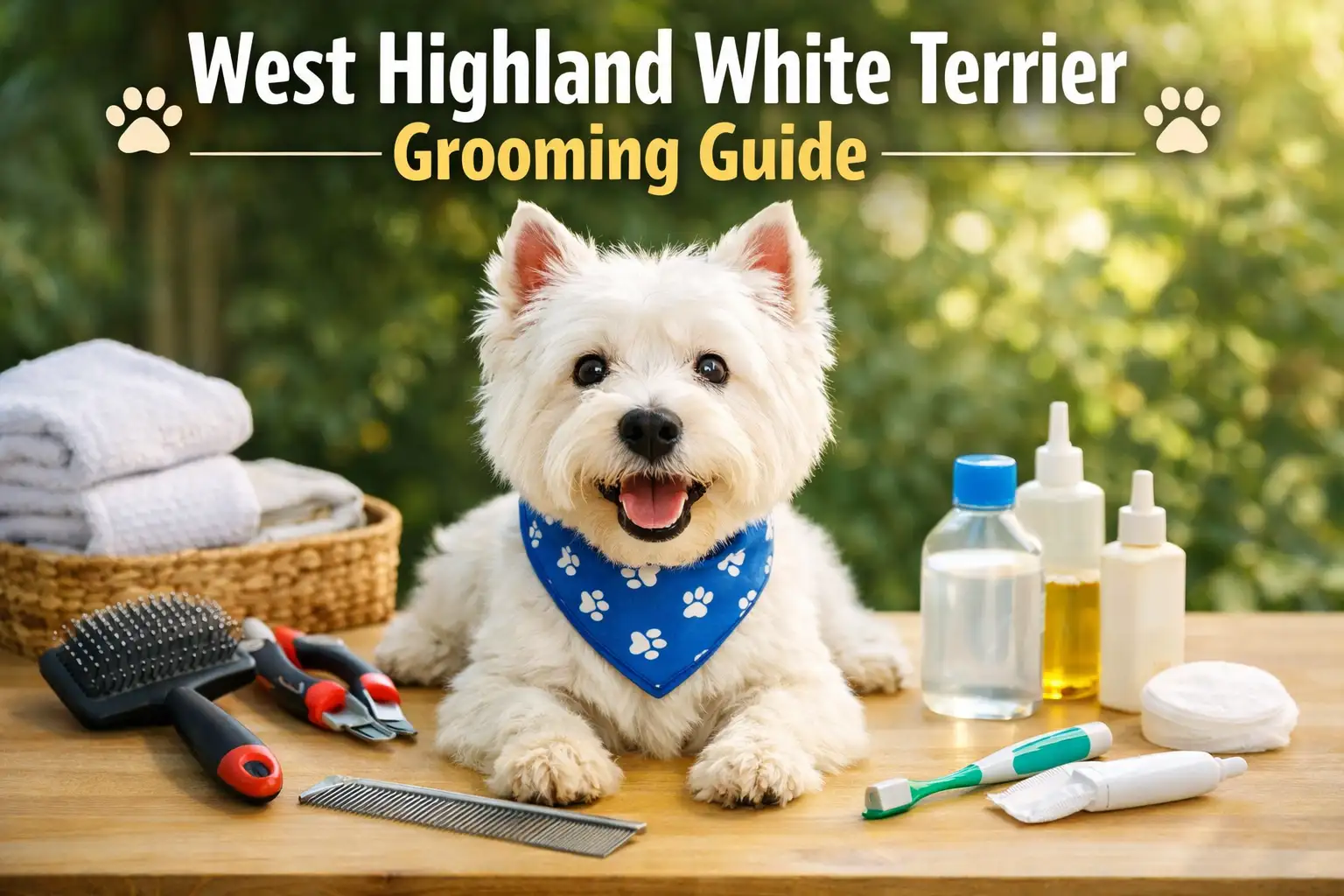
Grooming a west highland white terrier is not just about keeping them looking neat. It plays a big role in their comfort, skin health, and overall well-being. Westies have a very specific coat and sensitive skin, which means they need a different grooming approach than many other small dogs.
This guide is designed to help everyday owners understand the basics of west highland white terrier grooming without making things complicated. You will learn why grooming matters, what makes the westie coat unique, and how to build a simple routine that works at home.
Westies were bred to have a tough outer coat that protects them from dirt, weather, and rough terrain. When grooming is skipped or done the wrong way, that protective coat can weaken. This often leads to itching, matting, skin irritation, and frequent trips to the groomer or vet.
If you are new to the breed or want a deeper understanding of your dog’s needs, it helps to know more about their history, temperament, and care requirements. You can explore that in the West Highland White Terrier Dog Full Guide, which explains the breed beyond grooming and helps put their care needs into context.
Whether you plan to groom your westie fully at home or rely on a professional groomer, learning the basics will help you make better decisions. It also makes grooming sessions calmer, safer, and less stressful for both you and your dog.
Understanding the Westie Coat and Why It Needs Special Care
A west highland white terrier has a double coat, which means there are two layers of hair. Each layer has a job, and both need proper care.
The top layer is the outer coat. It feels rough and slightly hard. This layer helps protect the dog from dirt, water, and rough surfaces. Under that is the undercoat. It is soft and thick, and it helps keep the dog warm.
Because of this double coat, westies do not groom like short-haired dogs.
If the coat is not cared for correctly, several problems can appear.
First, the undercoat can build up. When loose hair is not removed, it traps moisture and dirt close to the skin. This often leads to itching and bad smells.
Second, mats can form. Westies commonly get mats:
- behind the ears
- under the legs
- around the chest and neck
- near the tail
Mats pull on the skin and can be painful, even if they look small.
Third, the skin can become irritated. Westies are known to have sensitive skin. Poor grooming, harsh products, or too much bathing can damage the skin barrier and make itching worse.
Another thing owners often notice is shedding confusion. Westies do shed, but not like heavy-shedding breeds. When dead hair is not removed through brushing or proper grooming, it stays stuck in the coat instead of falling out.
This is why westie grooming is not just about looks. It helps:
- keep the skin clean and calm
- reduce itching and redness
- prevent matting
- keep the coat healthy and strong
Hand Stripping vs Clipping a Westie: Which Is Right for Your Dog?
Many westie owners feel confused when they hear the words hand stripping and clipping. Both are grooming methods, but they give very different results.
Hand stripping means removing loose dead hair from the coat by hand or with a special tool. This helps the coat grow the way it was meant to grow. It keeps the outer coat rough and helps the white color stay bright.
Clipping means cutting the coat with electric clippers. This is faster and easier, but it changes how the coat feels and looks over time.
Here is a simple way to understand the difference.
| Grooming method | What it does to the coat | Color and texture | Best for |
|---|---|---|---|
| Hand stripping | Removes dead hair from the root | Keeps coat rough and bright white | Show dogs and owners who want a natural coat |
| Clipping | Cuts hair instead of removing it | Coat becomes soft and may turn dull or gray | Pet westies and easier upkeep |
Hand stripping takes more time and practice. Most owners do not do it at home unless they are trained. Many professional groomers offer this service, especially for show dogs.
Clipping is common for pet westies. It is easier to manage and more comfortable for owners who want simple grooming. The downside is that the coat can become soft, hold more dirt, and sometimes irritate sensitive skin.
One important myth to clear up is shaving. Shaving a westie very short is not recommended. It can damage the coat, expose sensitive skin, and make skin problems worse instead of better.
There is no single right choice for every westie. The best option depends on:
- your dog’s skin health
- how much grooming time you can handle
- whether your westie is a pet or a show dog
How to Groom a Westie at Home: Step-by-Step Routine
Grooming a westie at home does not have to be hard. A simple routine done often works better than long grooming sessions done once in a while.
Start grooming when your dog is calm. Pick a quiet place and keep sessions short, especially for puppies or nervous dogs.
Here is a simple home grooming routine most owners can follow.
| Grooming task | Why it matters | How often |
|---|---|---|
| Brushing | Removes loose hair and prevents mats | 2 to 3 times a week |
| Bathing | Keeps skin clean and reduces odor | Every 4 to 6 weeks |
| Light trimming | Keeps face, feet, and hygiene areas neat | As needed |
Brushing comes first. Always brush before a bath. Brushing a wet coat can cause mats to tighten. Use gentle strokes and check common problem areas like behind the ears, under the legs, and around the chest.
Bathing should be done with warm water, not hot. Wet the coat fully and use a small amount of dog shampoo. Massage it in gently and rinse very well. Leftover shampoo can cause itching.
Drying is just as important as bathing. Towel dry first, then use a low heat dryer if your dog allows it. Never use high heat. Make sure the coat is fully dry, especially near the skin.
Light trimming helps keep your westie comfortable. Many owners trim around the eyes, paws, and private areas between full grooming visits. Do not rush and never cut close to the skin.
If your westie becomes stressed, stop and try again later. Calm, short sessions build trust and make grooming easier over time.
Westie Grooming Tools and Products You Actually Need
You do not need many tools to groom a westie. Using a few correct tools is better than buying many items you will not use.
Here are the basic grooming tools most westie owners need.
| Tool | What it is used for | How often to use | Helpful notes |
|---|---|---|---|
| Slicker brush | Removes loose hair and small tangles | 2 to 3 times a week | Be gentle, do not press hard |
| Metal comb | Finds hidden mats close to the skin | After brushing | Check behind ears and legs |
| Dog shampoo | Cleans the coat and skin | Every 4 to 6 weeks | Use mild shampoo made for dogs |
| Towel | Dries the coat after bathing | After every bath | Pat dry, do not rub hard |
| Nail clippers | Keeps nails short and safe | Every 3 to 4 weeks | Cut small amounts only |
A slicker brush is the most useful tool for westies. It helps remove loose hair and keeps the coat from matting. Always brush slowly and stop if your dog seems uncomfortable.
A metal comb is used after brushing. It helps find small tangles that the brush may miss. If the comb gets stuck, there may be a small mat forming.
Shampoo choice is very important. Westies often have sensitive skin. Always use dog shampoo, not human shampoo. Strong smells and harsh cleaners can cause itching and redness.
Some tools are not needed for most owners. Heavy clippers, stripping knives, and strong dryers are best left to professional groomers unless you have training.
Simple tools used the right way keep grooming calm and safe for your westie.
How Often Do Westies Need Grooming?
Many owners ask how often a westie needs grooming. The answer depends on age, coat condition, and whether grooming is done at home or by a professional.
Regular grooming works best when it follows a simple schedule. Waiting too long often leads to mats, skin problems, and stress for the dog.
Here is a clear grooming schedule most westie owners can follow.
| Grooming task | Puppy | Adult | Senior |
|---|---|---|---|
| Brushing | 2 times a week | 2 to 3 times a week | 2 times a week |
| Bathing | Every 6 weeks | Every 4 to 6 weeks | Every 6 weeks |
| Nail trimming | Every 3 to 4 weeks | Every 3 to 4 weeks | Every 2 to 3 weeks |
| Professional grooming | Every 8 to 10 weeks | Every 6 to 8 weeks | Every 6 to 8 weeks |
Puppies need gentle grooming to help them get used to being handled. Short sessions are better than long ones. This builds trust and makes grooming easier as they grow.
Adult westies usually need the most regular grooming. Their coat is fully developed, and loose hair must be removed often to avoid matting and skin irritation.
Senior westies may need more care with nails and skin. Older dogs can have thinner skin and joint pain, so grooming should be slow and gentle.
Age plays a big role in grooming needs. If you are not sure which life stage your dog is in, the West Highland White Terrier Dog Age In Human Years Calculator can help you understand your westie’s age better and adjust grooming routines as needed.
Sticking to a routine keeps grooming simple and helps your westie stay comfortable and healthy.
Nail Trimming, Ear Cleaning, and Dental Care for Westies
Grooming a westie is not only about the coat. Nails, ears, and teeth also need regular care to keep your dog healthy and comfortable.
Here is a simple overview of how often these areas need attention.
| Care type | How often | Warning signs |
|---|---|---|
| Nail trimming | Every 3 to 4 weeks | Clicking sound when walking, nails curling |
| Ear cleaning | Every 1 to 2 weeks | Redness, bad smell, head shaking |
| Dental care | 2 to 3 times a week | Bad breath, red gums, tartar buildup |
Nail trimming is very important. Long nails can cause pain and affect how your westie walks. Trim a small amount at a time. If you are unsure, it is safer to trim less and do it more often.
Ear cleaning helps prevent infections. Use a dog-safe ear cleaner and a soft cotton pad. Gently clean only the part you can see. Never push anything deep into the ear.
Westies can be prone to ear problems, so watch for signs like frequent scratching or shaking of the head. If the ears look very red or smell bad, a vet visit is needed.
Dental care is often overlooked, but it matters a lot. Small dogs like westies can build tartar quickly. Brushing with a dog toothbrush and dog toothpaste helps prevent gum disease and tooth loss.
If brushing is new for your dog, start slowly. Even a few seconds at first is helpful. Over time, most dogs learn to accept it.
Keeping nails, ears, and teeth clean helps your westie feel better and prevents health problems before they start.
Common Westie Grooming Mistakes That Cause Skin and Coat Problems
Many grooming problems in westies come from small mistakes that happen over time. Knowing what to avoid can save your dog from discomfort and skin trouble.
One common mistake is bathing too often. Washing a westie too much can dry out the skin. This removes natural oils that protect the coat and skin. Dry skin can lead to itching and redness.
Another mistake is shaving the coat very short. Shaving damages the westie’s double coat. It can make the skin more sensitive and may cause the coat to grow back soft, patchy, or dull.
Ignoring small mats is also a problem. Mats often start behind the ears or under the legs. If they are not removed early, they become tight and painful. Small mats are much easier to fix than large ones.
Using human shampoo is another mistake. Human products are too strong for dogs. They can cause irritation, dryness, and itching. Always use shampoo made for dogs.
Rushing grooming sessions can also cause stress. Pulling the brush, moving too fast, or forcing your dog to stay still can make grooming scary. Calm and slow grooming builds trust.
Avoiding these mistakes helps keep grooming simple and keeps your westie’s skin and coat healthy.
Home Grooming vs Professional Grooming: When to See a Groomer
Many westie owners wonder how much grooming they can do at home and when a professional groomer is needed. The good news is that both options can work together.
Home grooming is great for regular care. Brushing, light bathing, nail trimming, and ear cleaning can all be done at home if you take your time and use the right tools. This helps keep your westie comfortable between grooming visits.
Professional grooming is important for coat maintenance. Groomers are trained to handle clipping, hand stripping, and shaping the coat safely. They also know how to deal with mats, thick undercoat, and sensitive skin.
Here is a simple guide to help you decide.
| Grooming task | Can be done at home | Best done by a groomer |
|---|---|---|
| Brushing | Yes | No |
| Bathing | Yes | Sometimes |
| Nail trimming | Yes | Yes, if unsure |
| Coat clipping | Sometimes | Yes |
| Hand stripping | No | Yes |
| Removing heavy mats | No | Yes |
A professional groomer is especially helpful if:
- your westie has thick mats
- the coat needs hand stripping
- your dog gets very nervous during grooming
- skin problems keep coming back
Most westies benefit from seeing a groomer every 6 to 8 weeks. Even if you groom at home, regular professional visits help keep the coat and skin in good shape.
Home grooming and professional grooming are not opposites. When used together, they give your westie the best care.
West Highland White Terrier Grooming FAQs
Do westies shed a lot?
Westies do shed, but not like heavy-shedding dogs. Loose hair often stays trapped in the coat instead of falling out. Regular brushing helps remove this hair and keeps the coat healthy.
Can westies be shaved in summer?
Shaving a westie is not a good idea. Their double coat helps protect the skin. Shaving can cause skin irritation and long-term coat damage. Light trimming or proper clipping is safer.
How do I keep my westie white?
Regular brushing helps prevent dirt buildup. Use a gentle dog shampoo made for white or sensitive coats. Avoid over-bathing, as this can cause skin problems.
How often should a westie see a groomer?
Most westies do well with professional grooming every 6 to 8 weeks. This keeps the coat neat and prevents mats.
Are westies prone to skin problems?
Yes, many westies have sensitive skin. Poor grooming, harsh products, or skipped brushing can make problems worse. Watch for itching, redness, or hair loss.
Can I groom a westie puppy at home?
Yes. Start with short, gentle sessions. Brush lightly and handle paws, ears, and mouth often so grooming feels normal as they grow.
Westie Grooming Routine Summary and Final Tips
Grooming a westie works best when you keep things simple and consistent. Small steps done often are easier than fixing big problems later.
Here is a quick summary you can follow.
| Grooming task | How often | Who can do it |
|---|---|---|
| Brushing | 2 to 3 times a week | Owner |
| Bathing | Every 4 to 6 weeks | Owner or groomer |
| Nail trimming | Every 3 to 4 weeks | Owner or groomer |
| Coat grooming | Every 6 to 8 weeks | Groomer |
| Ear cleaning | Every 1 to 2 weeks | Owner |
Always groom when your westie is calm. Short and gentle sessions help your dog feel safe. Praise and patience go a long way.
Pay attention to changes in your dog’s skin and coat. Redness, itching, hair loss, or bad smells are signs something may be wrong. Catching problems early makes them easier to fix. For more detailed breed information, temperament traits, and official care guidance, you can visit the American Kennel Club’s page on the West Highland White Terrier.
Related Article

Ata Ur Rehman is the founder of Pet Age in Human Years Calculator, an educational platform that provides age conversion charts and lifespan guides for dogs, cats, birds, and other companion animals. His work focuses on helping pet owners understand how animal ages translate into human years using commonly accepted age conversion formulas and published lifespan averages.
The website compiles breed and species lifespan data from kennel clubs, breed organizations, and general animal lifespan studies to present simple and easy-to-understand guides for pet owners worldwide.
This website was created to centralize animal age conversion charts into one easy reference platform for pet owners.