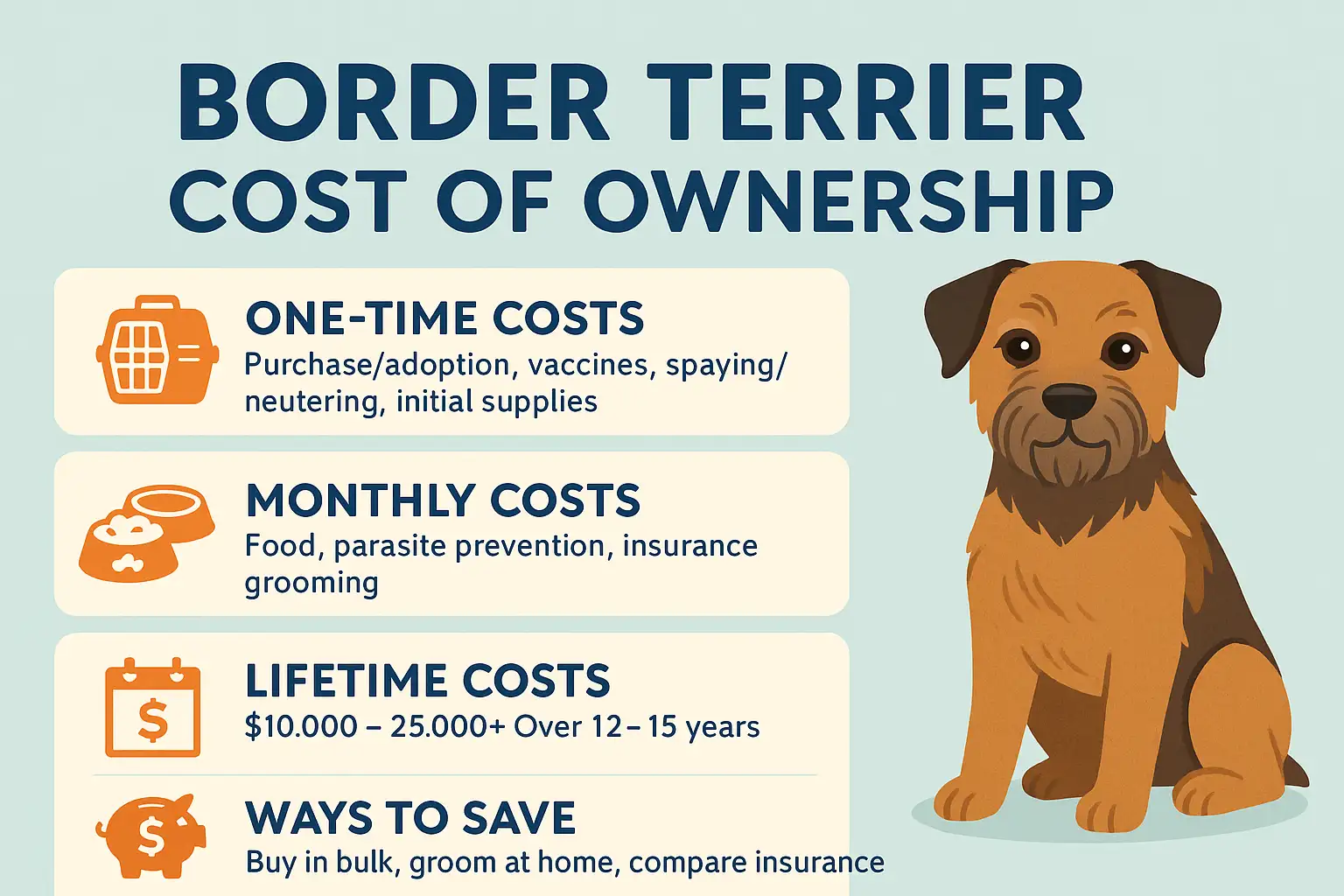
Owning a Border Terrier can be a rewarding experience, but it is also a long-term financial commitment. Before bringing one home, it is important to understand the real Border Terrier cost of ownership, including the puppy price, first-year setup costs, monthly care expenses, grooming needs, vet bills, and possible emergency costs.
This guide breaks down the main expenses Border Terrier owners should expect, from adoption or breeder fees to food, grooming, routine veterinary care, training, insurance, and lifetime ownership costs. The goal is to help you plan a realistic budget before choosing this small but active terrier breed.
Border Terriers are generally considered a small, relatively low-maintenance breed, but that does not mean they are cost-free. Their expenses can add up quickly during the first year because of purchase or adoption fees, vaccinations, spaying or neutering, supplies, and early training. After the first year, costs usually become more predictable, but owners should still prepare for regular care and unexpected health expenses.
If you are also planning long-term care, you can use our Border Terrier Age Calculator to estimate your dog’s age in human years and better understand how care needs may change over time.
Border Terrier Cost of Ownership at a Glance
The total cost of owning a Border Terrier depends on where you live, whether you adopt or buy from a breeder, the quality of food you choose, grooming frequency, veterinary needs, and whether you use pet insurance. However, most owners should plan for higher expenses in the first year and steadier monthly costs after that.
| Cost Type | Estimated Cost |
|---|---|
| Adoption fee | $100–$400 |
| Breeder purchase price | $800–$1,500 |
| First-year setup and vet care | $500–$1,000+ |
| Typical monthly care | $90–$225 |
| Estimated annual cost after year one | $1,100–$2,700 |
These estimates are not fixed prices. A healthy adult Border Terrier with basic grooming and routine care may cost less, while a puppy, senior dog, or dog with medical needs can cost significantly more.
Plan Costs Around Your Border Terrier’s Age
A Border Terrier’s expenses can change from puppyhood to adulthood and senior years. Puppies usually cost more because of vaccines, supplies, and training, while older dogs may need more routine vet care, dental support, or age-related monitoring.
Use our Border Terrier Age Calculator to estimate your dog’s age in human years and plan long-term care more accurately.
First-Year and One-Time Costs for Border Terriers
The first year is usually the most expensive stage of Border Terrier ownership. This is because new owners often pay for the dog itself, essential supplies, early training, and home setup during the same period. Planning for these costs early helps avoid financial surprises after adoption or purchase.
Adoption or Purchase Fees
The cost of bringing home a Border Terrier depends mainly on whether you adopt from a rescue or shelter, or buy from a breeder. Adoption fees are usually lower and may range from $100 to $400. Buying a Border Terrier puppy from a breeder can cost around $800 to $1,500, depending on breeder reputation, location, pedigree, health screening, and availability.
When comparing prices, do not look only at the upfront fee. A lower purchase price may not always mean lower long-term costs if the dog has not received proper health checks, vaccinations, or early care.
Initial Veterinary Care
Initial vet care is one of the most important first-year expenses. A new Border Terrier puppy or newly adopted adult dog may need vaccinations, parasite prevention, a wellness exam, microchipping, and spaying or neutering. These costs vary by clinic and location, but they should be included in your first-year budget.
- Vaccinations: Puppy vaccination series and basic protection may cost around $100–$300.
- Spay or neuter surgery: This may cost around $150–$300, depending on location and clinic pricing.
- Microchipping: A one-time microchip procedure may cost around $30–$60.
- Initial wellness exam: A first checkup may add another $50–$150.
Setup Supplies
Before bringing your Border Terrier home, you will need basic supplies such as a crate, bed, bowls, leash, collar, toys, grooming tools, and starter food. These are usually one-time or occasional replacement costs, but they can still add a noticeable amount to your first-year budget.
| Item | Estimated Cost |
|---|---|
| Crate | $30–$100 |
| Food and water bowls | $10–$30 |
| Dog bed | $20–$60 |
| Leash, collar, and ID tag | $20–$50 |
| Toys and enrichment items | $20–$60 |
| Basic grooming tools | $20–$80 |
First-Year Costs vs Adult-Year Costs
Border Terrier costs usually drop after the first year because most setup purchases and initial medical procedures are already complete. However, food, grooming, routine vet care, parasite prevention, and possible insurance costs continue throughout your dog’s life.
| Cost Category | First Year | Typical Ongoing Years |
|---|---|---|
| Adoption or breeder fee | $100–$1,500 | Not repeated |
| Initial vet care | $300–$700 | $150–$300 per year for routine care |
| Setup supplies | $100–$300 | Occasional replacements |
| Food | $40–$80 per month | $40–$80 per month |
| Grooming | $40–$80 per session | $40–$80 every 6–8 weeks if professionally groomed |
| Training | $100–$500+ | Optional refresher training if needed |
By the second year, most Border Terrier owners have a clearer idea of their dog’s regular care costs. Still, it is smart to keep a separate emergency fund for unexpected vet visits, dental care, medication, or age-related health needs.
Border Terrier Cost by Life Stage
Border Terrier expenses change as your dog moves from puppyhood to adulthood and then into the senior years. Puppies usually have higher first-year costs, adult dogs often have more predictable monthly expenses, and senior dogs may need extra veterinary care, dental support, medication, or special diets.
| Life Stage | Main Costs to Expect | Budget Priority |
|---|---|---|
| Puppy | Purchase or adoption fee, vaccinations, spay or neuter surgery, microchipping, supplies, training, food, and early vet visits | Plan for the highest upfront cost |
| Adult | Food, grooming, routine vet care, parasite prevention, insurance, toys, supplies, and occasional training refreshers | Maintain a steady monthly budget |
| Senior | More frequent vet checks, dental care, medication, joint support, special diets, emergency savings, and age-related monitoring | Increase savings for health care |
Because care needs can change with age, it is helpful to estimate your dog’s current life stage. Use the Border Terrier Age Calculator to understand your dog’s age in human years and plan future care more accurately.
How We Estimated Border Terrier Ownership Costs
The cost estimates in this guide are based on the major expenses most Border Terrier owners should plan for, including adoption or breeder price, first-year veterinary care, food, grooming, training, preventative care, pet insurance, emergency savings, and senior-dog needs.
Actual costs can vary by location, veterinary clinic pricing, grooming frequency, food quality, insurance coverage, and your dog’s health. For this reason, the numbers in this guide are presented as realistic planning ranges rather than fixed prices.
Ongoing Monthly and Annual Expenses for Border Terrier Owners
After the first-year setup costs are complete, the main Border Terrier ownership expenses become food, grooming, routine veterinary care, parasite prevention, training, insurance, and occasional replacements. These ongoing costs are usually more predictable than the first year, but they still need to be planned as part of your monthly and annual dog care budget.
For most owners, the typical monthly cost of owning a Border Terrier may fall between $90 and $225, depending on food quality, grooming choices, insurance coverage, local vet pricing, and your dog’s individual health needs.
Food and Nutrition Costs
Border Terriers are small dogs, so their food costs are usually lower than those of medium or large breeds. However, the final monthly cost depends on the food brand, portion size, age, activity level, and whether your dog needs a special diet.
Most owners can expect to spend around $40–$80 per month on food for a Border Terrier. Puppies, highly active dogs, or dogs with dietary sensitivities may cost more. For a deeper breakdown of feeding needs, see our Border Terrier nutrition and feeding guide.
Routine Vet Visits and Preventative Care
Routine veterinary care is an important part of the long-term cost of owning a Border Terrier. Even healthy dogs need annual checkups, vaccinations, dental checks, and parasite prevention. Preventative care may feel like a recurring expense, but it can reduce the risk of larger medical bills later.
- Annual wellness visits: Around $150–$300 per year for routine exams and basic vaccinations.
- Flea, tick, and heartworm prevention: Around $10–$25 per month, or about $120–$300 per year.
- Dental care: Costs vary widely, but owners should budget for dental products, checkups, and possible professional cleaning when needed.
Grooming and Coat Maintenance
Border Terriers have a wiry double coat that needs regular maintenance. Some owners handle basic brushing and coat care at home, while others use professional grooming. Professional grooming may cost around $40–$80 per session, depending on your location and the services included.
If your Border Terrier is professionally groomed every 6–8 weeks, annual grooming costs may fall around $250–$650. Home grooming can reduce this cost, but you may still need basic tools and occasional professional help. For coat care details, visit our Border Terrier grooming guide.
Training and Behavioral Support
Border Terriers are intelligent and active, but they can also be independent. Early training helps prevent behavior problems that may become more expensive to fix later. Puppy classes, obedience training, and occasional refresher sessions should be considered part of the overall Border Terrier cost of ownership.
Group training classes may cost around $50–$150 per course or session package, while private training can cost more. Some owners may spend $100–$500+ during the first year and less in later years if the dog is well trained. For behavior and obedience planning, see our Border Terrier training guide.
Pet Insurance and Emergency Savings
Pet insurance is optional, but it can help reduce the financial pressure of unexpected medical bills. The cost depends on your dog’s age, location, coverage level, deductible, and provider. Many Border Terrier owners may pay around $30–$60 per month for accident and illness coverage.
If you do not choose pet insurance, it is still wise to keep a separate emergency fund for urgent vet visits, injuries, dental treatment, or age-related care. Even a small monthly emergency fund can make unexpected expenses easier to manage.
Monthly and Annual Border Terrier Cost Summary
| Expense Category | Estimated Monthly Cost | Estimated Annual Cost |
|---|---|---|
| Food | $40–$80 | $480–$960 |
| Routine vet care | $15–$30 | $150–$300 |
| Preventative medications | $10–$25 | $120–$300 |
| Professional grooming | $20–$55 average monthly equivalent | $250–$650 |
| Pet insurance | $30–$60 | $360–$720 |
| Training or behavior support | Varies | $100–$500+ if needed |
These estimates give a realistic starting point, but your actual Border Terrier expenses may be higher or lower. A healthy adult dog with home grooming may cost less, while a puppy, senior dog, or dog with medical needs may require a larger annual budget.
Major Factors That Affect Border Terrier Ownership Costs
The cost of owning a Border Terrier is not the same for every owner. Even though Border Terriers are small dogs, your total expenses can change based on your location, housing situation, grooming choices, veterinary prices, health needs, insurance coverage, and the age of your dog.
Understanding these cost drivers helps you build a more accurate budget instead of relying on a single average number. A healthy adult Border Terrier with home grooming may be relatively affordable, while a puppy, senior dog, or dog with ongoing medical needs may cost much more over time.
Breed Size and Daily Care Needs
Border Terriers are small dogs, which usually helps keep food, medication, and some supply costs lower than they would be for larger breeds. Smaller dogs generally eat less, need smaller beds and crates, and may have lower dosage-based medication costs.
However, small size does not eliminate ownership expenses. Border Terriers are active, intelligent terriers that still need quality food, regular exercise, training, coat maintenance, dental care, and routine vet visits. Their lower food cost is only one part of the full Border Terrier cost of ownership.
| Cost Area | How Border Terrier Size Affects Cost |
|---|---|
| Food | Usually lower than medium or large breeds because portions are smaller |
| Supplies | Small crates, beds, collars, and harnesses may cost less |
| Medication | Some medication costs may be lower because dosage is weight-based |
| Grooming | Still needed because of the wiry coat, even though the dog is small |
| Training | Still important because terriers can be independent and energetic |
Location and Local Cost of Living
Your location can strongly affect Border Terrier expenses. Veterinary clinics, groomers, boarding services, trainers, and pet insurance providers may charge more in large cities or high-cost areas. Owners in smaller towns may pay less for some services, but they may have fewer specialist options nearby.
Local pricing can affect almost every major category, including routine vet visits, emergency care, grooming appointments, dog daycare, boarding, and training classes. This is why two Border Terrier owners may have very different annual costs even if their dogs have similar needs.
Apartment Living vs House Living
Your housing situation can also change the total cost of owning a Border Terrier. Apartment owners may need to budget for pet rent, pet deposits, elevator-friendly walking gear, or dog walking support if outdoor access is limited. House owners may avoid monthly pet rent but may spend more on fencing, yard maintenance, or outdoor safety items.
- Apartment costs: Pet rent may cost around $10–$50 per month, while pet deposits may range from $100–$500.
- House-related costs: Yard fencing, outdoor gates, or safety upgrades may cost around $100–$500+, depending on what your home already has.
- Dog walking support: Owners with long work hours may need occasional dog walking, which can increase monthly expenses.
Veterinary Care and Health History
Veterinary care is one of the biggest variables in Border Terrier ownership costs. A healthy dog may only need routine checkups, vaccines, parasite prevention, and dental monitoring. However, emergency visits, allergies, injuries, dental treatment, or chronic conditions can increase annual costs quickly.
Owners should not budget only for routine care. Even if your Border Terrier is healthy, it is smart to keep an emergency fund for unexpected vet visits, medication, diagnostic tests, or urgent treatment.
- Routine annual care: Around $150–$300 per year for basic checkups and vaccinations.
- Emergency vet visits: Can range from $100–$1,000+, depending on the issue and treatment needed.
- Ongoing health issues: Skin, dental, allergy, or age-related care may add $100–$500+ per year.
Age of Your Border Terrier
Your Border Terrier’s age also affects ownership costs. Puppies usually cost more in the first year because of vaccines, spaying or neutering, supplies, and training. Adult dogs may have more stable costs, while senior Border Terriers may need more frequent vet visits, dental care, medication, or age-related support.
If you want to understand how your dog’s care needs may change with age, use the Border Terrier Age Calculator to estimate your dog’s age in human years.
Pet Insurance Coverage
Pet insurance can increase your monthly expenses, but it may reduce the financial pressure of unexpected medical bills. The price depends on your location, your dog’s age, coverage level, deductible, reimbursement rate, and whether you choose accident-only or accident-and-illness coverage.
Many Border Terrier owners may pay around $30–$60 per month for pet insurance. If you choose not to buy insurance, consider setting aside money each month for emergency veterinary care instead.
Border Terrier Cost Variation Summary
| Cost Driver | Possible Added Cost | Why It Matters |
|---|---|---|
| Higher-cost location | Varies widely | Vet care, grooming, boarding, and training may cost more |
| Apartment pet fees | $10–$50 per month or $100–$500 deposit | Some rentals add monthly or one-time pet charges |
| Professional grooming | $250–$650 per year | Costs increase if you do not groom at home |
| Emergency vet care | $100–$1,000+ | Unexpected illness or injury can quickly raise costs |
| Pet insurance | $30–$60 per month | Adds monthly cost but may help with large medical bills |
| Senior dog care | Varies | Older dogs may need more checkups, medication, or dental care |
The most realistic Border Terrier budget includes both predictable monthly expenses and flexible savings for unexpected needs. Food and routine care may be manageable for many owners, but location, health, grooming choices, and age can significantly change the lifetime cost of ownership.
Hidden Costs, Budgeting Tips, and Saving Strategies for Border Terrier Owners
Even after you calculate the basic Border Terrier cost of ownership, there are still hidden expenses that many new owners overlook. These costs may not happen every month, but they can affect your yearly and lifetime budget if you are not prepared.
The most realistic Border Terrier budget should include regular care, occasional replacements, emergency savings, and age-related expenses. This helps you avoid underestimating the true cost of owning a Border Terrier over the long term.
Hidden or Unexpected Border Terrier Costs
Some ownership costs are easy to predict, such as food and routine vet care. Others are less obvious and may only appear during travel, illness, training problems, dental issues, or changes in your dog’s age and activity level.
- Boarding or pet sitting: If you travel, boarding or pet sitting may cost around $20–$60 per day, depending on your location and the level of care needed.
- Property damage: Puppies and energetic young dogs may chew furniture, shoes, rugs, or household items. Replacement costs may range from $50–$300+.
- Dental care: Dental products, checkups, and possible professional cleaning can add noticeable yearly costs, especially as your Border Terrier gets older.
- Emergency vet visits: Sudden illness, injury, stomach problems, or accidents can lead to costs ranging from $100 to $1,000+.
- Replacement supplies: Beds, collars, harnesses, leashes, toys, grooming tools, and bowls may need replacement over time.
- Senior dog care: Older Border Terriers may need more frequent vet visits, medication, dental care, joint support, or special diets.
Border Terrier Hidden Cost Summary
| Hidden Cost | Estimated Cost | When It May Happen |
|---|---|---|
| Boarding or pet sitting | $20–$60 per day | Travel, holidays, work trips |
| Property damage | $50–$300+ | Puppy stage, boredom, chewing habits |
| Dental care | Varies | Adult and senior years |
| Emergency vet care | $100–$1,000+ | Illness, injury, accidents |
| Replacement supplies | $50–$200+ per year | Normal wear and tear |
| Senior care | Varies | Later life stages |
Budgeting Tips for Border Terrier Owners
A good Border Terrier budget should separate predictable monthly expenses from occasional or emergency expenses. This makes it easier to understand what you need every month and what you should save for over time.
- Create a monthly care budget: Include food, grooming, parasite prevention, insurance, and routine care savings.
- Keep an emergency fund: Try to set aside at least $300–$1,000 for unexpected vet care or urgent expenses.
- Track recurring costs: Review food, grooming, medications, and vet spending every few months so your budget stays realistic.
- Plan for age-related care: Puppies, adults, and senior Border Terriers have different care needs and different cost patterns.
- Use internal care guides: Planning food, grooming, and age-related care together can help prevent unnecessary spending.
If you want to understand how your Border Terrier’s care needs may change with age, use the Border Terrier Age Calculator to estimate your dog’s age in human years.
Ways to Save Money Without Reducing Care Quality
Saving money on Border Terrier ownership does not mean cutting essential care. The goal is to reduce avoidable expenses while still giving your dog proper food, grooming, training, exercise, and veterinary attention.
- Groom at home when possible: Basic brushing and coat maintenance can reduce professional grooming frequency.
- Prevent problems early: Routine vet visits, dental care, parasite prevention, and training may reduce bigger costs later.
- Buy durable supplies: Cheap items that break quickly may cost more over time than stronger, longer-lasting products.
- Measure food portions correctly: Overfeeding can increase food costs and may also contribute to health problems.
- Train early: Early obedience and socialization can reduce the need for expensive behavior correction later.
Lifetime Cost of Owning a Border Terrier
The lifetime cost of owning a Border Terrier depends on the dog’s age, health, lifestyle, grooming needs, insurance coverage, and local prices. A healthy Border Terrier with home grooming and routine care may stay near the lower end of the range, while a dog with medical issues, frequent grooming, boarding, or senior-care needs may cost much more.
Using the typical monthly and annual expenses in this guide, many owners should expect the total lifetime cost of a Border Terrier to fall somewhere around $15,000 to $35,000+. This estimate includes first-year costs, recurring care, grooming, food, routine vet care, insurance or emergency savings, and occasional hidden expenses.
Border Terrier Lifetime Cost Estimate
| Cost Category | Estimated First-Year Cost | Estimated Ongoing Cost | Lifetime Impact |
|---|---|---|---|
| Adoption or breeder fee | $100–$1,500 | Not repeated | One-time upfront cost |
| Initial vet care and setup | $500–$1,000+ | Occasional replacements | Highest during the first year |
| Food | $480–$960 per year | $480–$960 per year | Major recurring lifetime cost |
| Routine vet care | $150–$300+ | $150–$300+ per year | Continues throughout life |
| Grooming | $250–$650+ | $250–$650+ per year | Depends on home vs professional grooming |
| Insurance or emergency savings | $360–$720+ per year | $360–$720+ per year | Protects against large unexpected bills |
| Hidden and senior-care costs | Varies | Varies | Usually increases with age or medical needs |
The most important takeaway is that the purchase price is only a small part of the full Border Terrier cost of ownership. Long-term expenses such as food, vet care, grooming, insurance, dental care, and emergency savings usually matter more over the dog’s lifetime.
Border Terrier Cost of Ownership FAQs
Is it expensive to own a Border Terrier?
Border Terriers are not usually the most expensive breed to own because they are small and have moderate food needs. However, the total cost can still be significant when you include the puppy price or adoption fee, first-year vet care, grooming, food, training, insurance, dental care, and emergency savings.
How much does a Border Terrier cost in the first year?
The first year is usually the most expensive. Many owners may spend around $1,000 to $3,000+ during the first year, depending on whether they adopt or buy from a breeder, the cost of initial vet care, supplies, training, grooming, and local pricing.
How much does a Border Terrier cost per month?
A typical Border Terrier may cost around $90 to $225 per month after the first year. This can include food, grooming, parasite prevention, insurance, routine care savings, and occasional supplies. Costs may be higher for dogs with health issues or owners using frequent professional services.
What is the most expensive part of owning a Border Terrier?
The most expensive part is often the first year because it includes the purchase or adoption fee, vaccinations, spaying or neutering, microchipping and early training. Over the dog’s lifetime, veterinary care, grooming, insurance, and emergency costs usually become the biggest long-term expenses.
Should I get pet insurance for my Border Terrier?
Pet insurance can be useful if you want protection against large unexpected vet bills. It adds a monthly cost, but it may help with accidents, illnesses, surgeries, or emergency treatment. If you do not choose insurance, it is smart to build a separate emergency fund for veterinary care.
How can I reduce the cost of owning a Border Terrier?
You can reduce costs by grooming at home when possible, measuring food portions correctly, keeping up with preventative care, training early, buying durable supplies, and planning for routine vet visits before small problems become expensive. You can also review our Border Terrier grooming guide and Border Terrier nutrition guide for better long-term care planning.
Does a Border Terrier become more expensive as it gets older?
Many dogs become more expensive in their senior years because they may need more frequent vet visits, dental care, medication, joint support, or special diets. You can use the Border Terrier Age Calculator to estimate your dog’s age in human years and understand how care needs may change over time.
Related Border Terrier Care Guides
To plan Border Terrier ownership properly, cost should be considered alongside age, feeding, grooming, training, and general breed care. These related guides help connect the full Border Terrier care cluster while keeping the age calculator as the main planning tool.
- Border Terrier Age Calculator — estimate your dog’s age in human years and understand age-related care needs.
- Border Terrier Dog Breed Guide — learn about temperament, size, care needs, and ownership suitability.
- Border Terrier Nutrition and Feeding Guide — plan food portions, diet quality, and feeding costs.
- Border Terrier Grooming Guide — understand coat care, grooming frequency, and grooming costs.
- Border Terrier Training Guide — plan early obedience, behavior support, and training expenses.
Final Thoughts on Border Terrier Ownership Costs
Owning a Border Terrier can be rewarding, but it requires realistic financial planning. The purchase price or adoption fee is only the beginning. Food, grooming, vet care, training, insurance, dental care, emergency visits, and senior care all contribute to the full Border Terrier cost of ownership.
If you are preparing for a Border Terrier, plan for both predictable monthly expenses and unexpected costs. A strong budget should include routine care, emergency savings, and age-related care planning so your dog can stay healthy throughout every life stage.
For complete breed planning, you can also read our Border Terrier dog breed guide and use the Border Terrier Age Calculator to understand how your dog’s age may affect long-term care needs.

Ata Ur Rehman is the founder of Pet Age in Human Years Calculator, an educational platform that provides age conversion charts and lifespan guides for dogs, cats, birds, and other companion animals. His work focuses on helping pet owners understand how animal ages translate into human years using commonly accepted age conversion formulas and published lifespan averages.
The website compiles breed and species lifespan data from kennel clubs, breed organizations, and general animal lifespan studies to present simple and easy-to-understand guides for pet owners worldwide.
This website was created to centralize animal age conversion charts into one easy reference platform for pet owners.