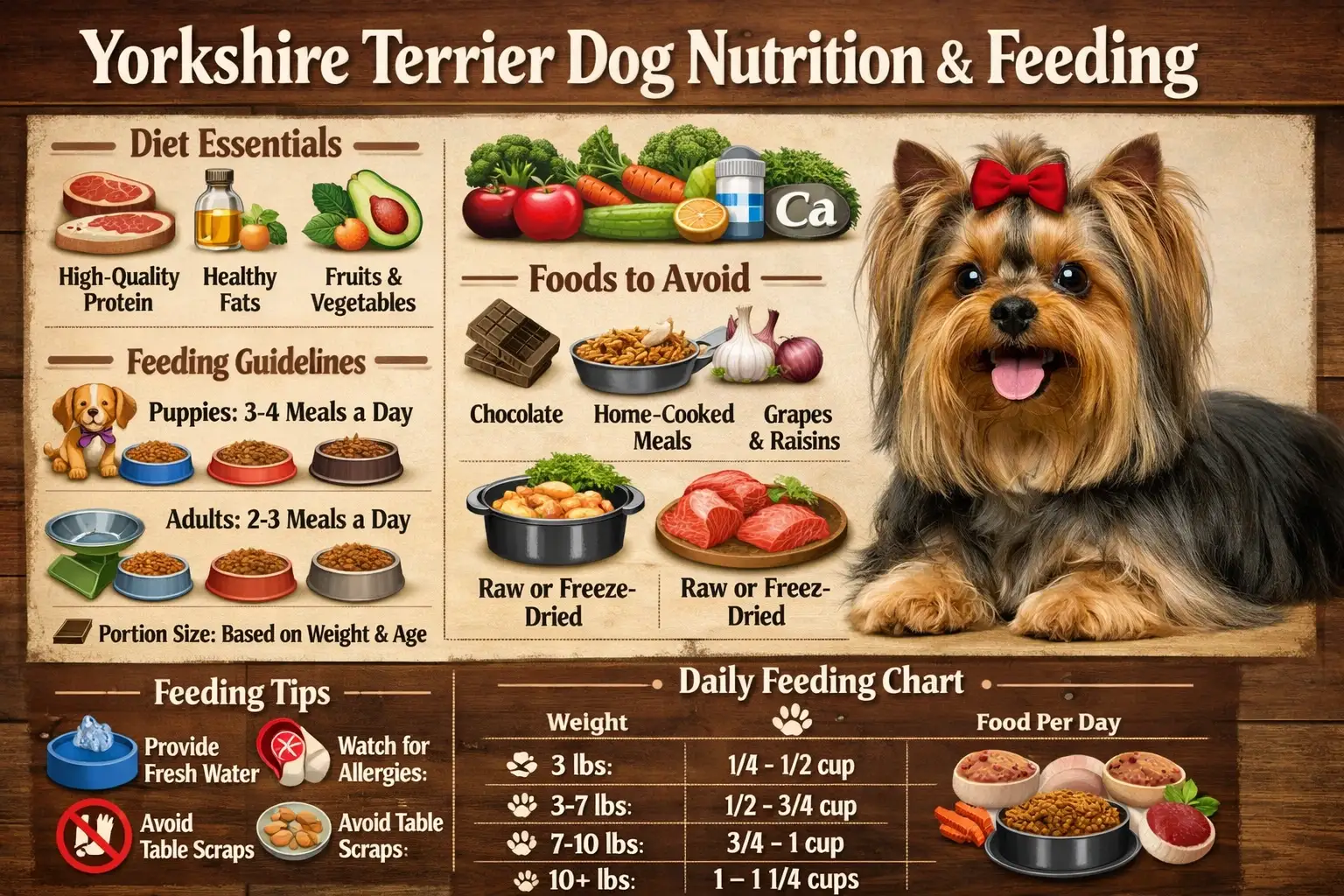
Yorkshire Terriers may be small, but their nutritional needs are anything but simple. As a toy breed with a fast metabolism, delicate digestive system, and long lifespan, Yorkies are far more sensitive to diet quality, portion size, and feeding consistency than many larger dogs. What you put in your Yorkshire Terrier’s bowl directly affects their energy levels, coat and skin health, dental condition, digestion, and long-term wellness.
This guide is designed to help Yorkshire Terrier owners make confident, informed feeding decisions—whether you’re raising a tiny puppy, caring for an adult Yorkie, or supporting a senior dog’s changing needs. Rather than relying on vague advice like “feed high-quality food,” this article focuses on practical, science-backed nutrition principles tailored specifically to this breed.
Proper nutrition matters more for Yorkshire Terriers because:
- Their small body size means even minor overfeeding can quickly lead to weight gain
- Their fast metabolism increases the risk of low blood sugar if meals are skipped
- Their small jaws and crowded teeth make food texture and dental support important
- Their long, fine coat depends heavily on balanced protein, fat, and micronutrient intake
Many common health and behavior issues seen in Yorkies—such as picky eating, digestive upset, dull coats, dental disease, or constant hunger—are often linked to feeding mistakes rather than underlying illness. These mistakes usually aren’t intentional. They happen because owners apply “big dog” feeding logic to a very small, metabolically different breed.
By understanding why Yorkshire Terrier nutrition is unique, you’ll be better prepared to choose the right foods, feed the right amounts, and adjust your dog’s diet as their life stage, activity level, and health change over time.
Yorkshire Terriers do best on food that is easy to digest, high in quality, and made for small dogs. Because Yorkies are tiny, every bite matters. The goal is to give enough energy and nutrients without upsetting the stomach or causing weight gain.
Below are the basics, explained in simple terms, with tables you can scan quickly.
Basic nutrition needs for Yorkshire Terriers
Yorkies need the same nutrients as all dogs, but in small, balanced amounts. Protein helps muscles and the coat. Fat gives energy and keeps skin healthy. Carbs provide steady fuel. Vitamins and minerals support the whole body.
Yorkshire Terrier nutritional needs overview
| Nutrient | Recommended range | Why it matters for Yorkies |
|---|---|---|
| Protein | Moderate to high | Supports muscle, energy, and a healthy coat |
| Fat | Moderate | Gives energy and helps skin and coat |
| Carbohydrates | Moderate | Provides steady energy and fiber |
| Fiber | Low to moderate | Helps digestion and stool quality |
| Vitamins & minerals | Balanced (complete food) | Supports bones, teeth, immune system |
A complete and balanced dog food (meeting AAFCO or similar standards) already includes these in the right amounts. Extra supplements are usually not needed unless a vet says so.
Best food types for Yorkshire Terriers
There is no single “perfect” food type. The best choice depends on your dog’s age, teeth, digestion, and your lifestyle.
Food type comparison for Yorkshire Terriers
| Food type | Pros | Cons | Best for which Yorkies |
|---|---|---|---|
| Dry kibble | Easy to store, helps reduce plaque | Hard for bad teeth, low moisture | Healthy adult Yorkies |
| Wet/canned food | Soft, tasty, high moisture | Spoils fast, higher cost | Picky eaters, seniors |
| Fresh cooked food | Very tasty, gentle on stomach | Expensive, short shelf life | Sensitive stomachs |
| Freeze-dried | Nutrient-dense, easy to serve | Needs rehydration, costly | Travel or mixed feeding |
| Homemade food | Full control of ingredients | Risk of imbalance | Only with vet guidance |
For most owners, a small-breed kibble or mixed kibble + wet food works well.
Puppy, adult, and senior feeding differences
Yorkshire Terriers change a lot as they age. Their food needs change too.
Yorkshire Terrier nutrition by life stage
| Life stage | Main focus | Feeding notes |
|---|---|---|
| Puppy | Growth and energy | Needs more calories and frequent meals |
| Adult | Weight and maintenance | Balanced meals, steady portions |
| Senior | Digestion and joints | Easier-to-chew food, fewer calories |
Puppies need more meals and energy. Seniors usually need fewer calories but better digestion support.
How to read food labels (simple tips)
- Look for real meat listed first
- Choose food labeled for small or toy breeds
- Avoid foods with too many fillers or vague meat names
- “Complete and balanced” matters more than buzzwords
Grain-free is not required unless your vet recommends it.
How Much to Feed a Yorkshire Terrier and Feeding Schedule
Yorkshire Terriers are very small dogs, so portion size matters a lot. Just a little extra food each day can lead to weight gain. Too little food, or skipped meals, can cause low energy or low blood sugar—especially in puppies.
This section gives simple charts and clear rules you can follow.
How many calories does a Yorkshire Terrier need?
Most adult Yorkies need small but steady calories each day. Needs change with weight and activity.
Yorkshire Terrier feeding chart by weight
| Yorkie weight | Daily calories (approx.) | Daily food amount* |
|---|---|---|
| 3 lb (1.4 kg) | 120–150 calories | ~¼ cup |
| 5 lb (2.3 kg) | 180–220 calories | ~⅓ cup |
| 7 lb (3.2 kg) | 230–270 calories | ~½ cup |
| 9 lb (4 kg) | 280–320 calories | ~¾ cup |
*Food amounts are based on average dry kibble. Always check your food’s label and adjust.
Feeding schedule by age
Yorkshire Terriers do best with regular meal times.
Yorkshire Terrier feeding schedule
| Age | Meals per day | Important notes |
|---|---|---|
| Puppy (2–4 months) | 4 meals | Helps prevent low blood sugar |
| Puppy (4–6 months) | 3 meals | Still needs steady energy |
| Adult | 2 meals | Morning and evening |
| Senior | 2 small meals | Easier on digestion |
Skipping meals is not a good idea for Yorkies, especially puppies.
Adjusting food for activity level
Not all Yorkshire Terriers are equally active.
Activity level portion guide
| Activity level | How to adjust food | Example |
|---|---|---|
| Low activity | Reduce slightly | Mostly indoor, short walks |
| Moderate | Feed listed amount | Daily walks, playtime |
| High activity | Increase slightly | Very playful or training often |
Watch your dog’s body, not just the bowl. You should be able to feel ribs but not see them.
Common feeding tips for Yorkshire Terriers
- Measure food, don’t guess
- Limit treats to 10% or less of daily calories
- Weigh your Yorkie once a month
- Adjust food after spaying/neutering
Small changes make a big difference for small dogs.
Safe Foods, Treats, and Foods Yorkshire Terriers Must Avoid
Yorkshire Terriers often beg for food, but not all foods are safe for them. Because they are small, even a little of the wrong food can cause big problems. This section helps you quickly see what is safe and what is dangerous.
Safe human foods for Yorkshire Terriers
These foods are safe only in small amounts and should not replace regular dog food.
Safe human foods table
| Food | Safe portion | Notes |
|---|---|---|
| Cooked chicken (plain) | Small bites | No salt, no skin, no bones |
| Cooked turkey | Small bites | Plain only |
| Cooked rice | 1–2 spoons | Good for upset stomach |
| Carrots | A few slices | Crunchy and low calorie |
| Apples (no seeds) | Small slices | Remove seeds and core |
| Pumpkin (plain) | 1 spoon | Helps digestion |
Always introduce new foods slowly to avoid stomach upset.
Foods Yorkshire Terriers must avoid
Some foods are toxic and should never be given.
Toxic foods table
| Food | Why it’s dangerous | Risk level |
|---|---|---|
| Chocolate | Affects heart and nerves | Very high |
| Grapes & raisins | Can damage kidneys | Very high |
| Onions & garlic | Harms red blood cells | High |
| Xylitol (sweetener) | Causes low blood sugar | Very high |
| Alcohol | Toxic even in small amounts | Very high |
| Cooked bones | Can splinter | High |
If your Yorkshire Terrier eats any of these, contact a vet right away.
Treat guidelines for Yorkshire Terriers
Treats are fun, but too many treats cause weight gain fast.
Yorkshire Terrier treat guide
| Treat type | Max per day | Notes |
|---|---|---|
| Small training treats | 3–5 | Break into tiny pieces |
| Dental treats | 1 small | Check calories |
| Human food treats | 1–2 bites | Count toward daily food |
Treats should make up less than 10% of daily calories.
Simple safety tips
Teach family members what not to feed
Never feed from the table during meals
Read labels on human snacks
Store toxic foods out of reach
Special Diets, Common Feeding Problems, and When to See a Vet
Some Yorkshire Terriers need special care when it comes to food. Others may eat poorly, gain weight fast, or have stomach problems. This section helps you understand common feeding issues and what to do next.
Special diet needs in Yorkshire Terriers
Some Yorkies do better with food changes, but others need help from a vet.
Special diet needs overview
| Condition | Diet focus | What to watch for |
|---|---|---|
| Food allergies | Limited ingredients | Itching, ear infections |
| Sensitive stomach | Easy-to-digest food | Soft stool, gas |
| Weight gain | Lower calories | Less treats, more control |
| Low appetite | Tasty but balanced food | Skipping meals |
| Tear staining | Balanced diet | Diet alone may not fix it |
Never change to a strict diet without watching how your dog reacts.
Common feeding problems and simple solutions
Many feeding problems are caused by habits, not illness.
Feeding problems and solutions
| Problem | Likely cause | What to try first |
|---|---|---|
| Picky eater | Too many treats | Set meal times |
| Always hungry | Overfeeding treats | Measure food |
| Loose stool | Food change too fast | Slow transition |
| Weight gain | Extra calories | Reduce portions |
| Won’t eat in morning | Late-night feeding | Earlier dinner |
Most dogs improve within a few days when routines are fixed.
Switching food the safe way
Always change food slowly.
Simple rule:
- Days 1–3: Mostly old food
- Days 4–6: Half old, half new
- Days 7–10: Mostly new food
Fast changes often cause diarrhea or refusal to eat.
When to see a vet
Contact a vet if your Yorkshire Terrier:
- Stops eating for more than 24 hours
- Loses weight without reason
- Has long-term diarrhea or vomiting
- Shows signs of pain or weakness
- Has repeated food reactions
A vet or pet nutrition expert can help create a safe plan.
Final takeaway
Yorkshire Terriers stay healthiest with:
- Correct portions
- Safe food choices
- Regular feeding times
- Fewer treats
Small dogs need big care when it comes to food.
For official nutrition standards and guidance used by veterinarians and pet food manufacturers, you can review the feeding and nutrient recommendations published by the Association of American Feed Control Officials, which set the baseline for complete and balanced dog foods.

Ata Ur Rehman is the founder of Pet Age in Human Years Calculator, an educational platform that provides age conversion charts and lifespan guides for dogs, cats, birds, and other companion animals. His work focuses on helping pet owners understand how animal ages translate into human years using commonly accepted age conversion formulas and published lifespan averages.
The website compiles breed and species lifespan data from kennel clubs, breed organizations, and general animal lifespan studies to present simple and easy-to-understand guides for pet owners worldwide.
This website was created to centralize animal age conversion charts into one easy reference platform for pet owners.