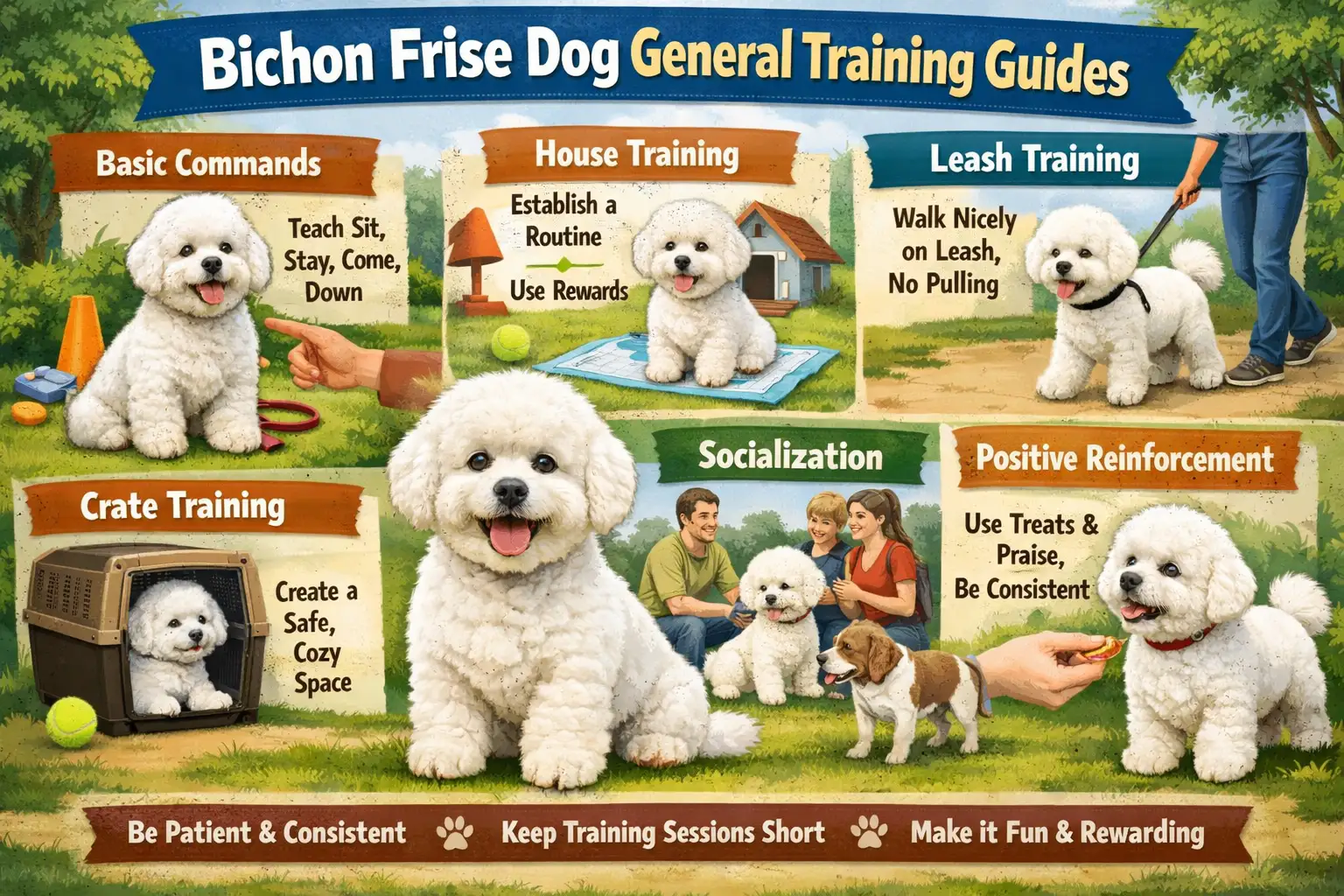
Bichon Frise training methods work best when they are gentle, consistent, and reward-based. This breed is intelligent, playful, people-focused, and sensitive, so training should focus on clear communication rather than control. A Bichon Frise usually learns faster when sessions are short, positive, and repeated daily.
Recommended Dog Care Products
Based on your dog’s age, these products may help with comfort, health, grooming, and daily care.

Purina Pro Plan Veterinary Supplements
Daily probiotics for dogs to support digestive and gut health.
View on Amazon ↗
Earth Rated Poop Bags for Dogs
Leak-proof, extra thick waste bag refill rolls with lavender scent.
View on Amazon ↗
Greenies Pill Pockets for Dogs
Large dog treats for capsule medication, peanut butter flavor.
View on Amazon ↗
HONEY CARE All-Absorb Dog Wrap
Small male dog wraps, 50 count, useful for daily care support.
View on Amazon ↗
Seresto Flea & Tick Collar
Flea and tick treatment and prevention for dogs over 18 lbs.
View on Amazon ↗
Milk-Bone MaroSnacks
Small dog treats with real bone marrow in a 40 oz canister.
View on Amazon ↗
Vital Essentials Dog Treats
Freeze dried beef liver dog treats, grain free and single ingredient.
View on Amazon ↗
Stain & Odor Eliminator
Enzyme cleaner for pet stains, carpet messes, and strong odors.
View on Amazon ↗
Pur Luv Chicken Jerky Treats
Dog treats made with real chicken breast, high protein and chew-friendly.
View on Amazon ↗
Milk-Bone Flavor Snacks
Mini crunchy dog biscuits in a 36 oz canister for small rewards.
View on Amazon ↗As an Amazon Associate, we may earn from qualifying purchases.
To train a Bichon Frise successfully, use positive reinforcement, keep lessons short, reward good behavior immediately, and build routines for potty training, leash walking, barking control, and calm behavior at home. Harsh correction, yelling, or inconsistent rules can make this breed anxious, stubborn, or confused.
This guide is designed for both first-time dog owners and experienced handlers who want practical Bichon Frise training tips for puppies and adult dogs. Whether you are starting with basic commands, fixing potty accidents, reducing barking, or improving focus, the goal is to build a calm, confident dog that understands what you expect.
Unlike some breeds that tolerate firm or rigid training styles, Bichon Frise dogs respond best to gentle, reward-based training. Their sensitive nature means they learn quickly from both good and bad experiences. This guide focuses on realistic methods that work in real homes, including apartments, busy households, families with children, and multi-pet environments.
Throughout this article, you’ll learn how to:
- Choose the best Bichon Frise training methods for this breed’s temperament
- Train a Bichon Frise puppy without creating fear or confusion
- Set realistic expectations for puppies, adults, and older dogs
- Build obedience, manners, focus, and calm behavior step by step
- Prevent common behavior problems before they become long-term habits
Understanding Bichon Frise Behavior and Learning Style
Before choosing any training method, it helps to understand how a Bichon Frise thinks and learns. This breed is smart, social, and closely bonded to people. Bichons enjoy attention and often want to please their owners, but they can become stressed when training feels harsh, confusing, or unpredictable.
Bichon Frise dogs learn best when training feels fun, calm, and rewarding. They do not respond well to yelling, punishment, or force. Those methods often create fear, avoidance, barking, or what owners mistake as stubborn behavior.
Here are the main breed traits that affect Bichon Frise training:
- Bichons are people-focused and like being close to their owners
- They are sensitive to tone of voice and body language
- They usually respond well to praise, treats, toys, and play
- They can lose focus if training sessions are too long or repetitive
- They may bark, resist, or act out when bored, lonely, or unsure
Many owners think a Bichon Frise is stubborn when the dog is actually overwhelmed, distracted, or unclear about what is being asked. Clear steps, short sessions, consistent rewards, and predictable routines make training much easier.
How Bichon Frise Traits Affect Training
| Bichon Frise Trait | What It Means for Training |
|---|---|
| Very social | Learns faster with praise, attention, and interaction |
| Sensitive nature | Needs calm guidance instead of harsh correction |
| Intelligent | Gets bored with repeated drills and needs variety |
| Short attention span | Does best with short, frequent training sessions |
| Food motivated | Responds well to small treats when rewards are timed correctly |
| People-oriented | Can struggle with separation if independence is not trained early |
Best Bichon Frise Training Methods
The best Bichon Frise training methods are positive, simple, and consistent. Instead of correcting every mistake, focus on rewarding the behavior you want your dog to repeat. When the reward comes immediately after the correct action, your Bichon understands faster.
Recommended Dog Care Products
Based on your dog’s age, these products may help with comfort, health, grooming, and daily care.
Purina Pro Plan Veterinary Supplements
Daily probiotics for dogs to support digestive and gut health.
View on Amazon ↗
Earth Rated Poop Bags for Dogs
Leak-proof, extra thick waste bag refill rolls with lavender scent.
View on Amazon ↗
Greenies Pill Pockets for Dogs
Large dog treats for capsule medication, peanut butter flavor.
View on Amazon ↗
HONEY CARE All-Absorb Dog Wrap
Small male dog wraps, 50 count, useful for daily care support.
View on Amazon ↗
Seresto Flea & Tick Collar
Flea and tick treatment and prevention for dogs over 18 lbs.
View on Amazon ↗
Milk-Bone MaroSnacks
Small dog treats with real bone marrow in a 40 oz canister.
View on Amazon ↗
Vital Essentials Dog Treats
Freeze dried beef liver dog treats, grain free and single ingredient.
View on Amazon ↗
Stain & Odor Eliminator
Enzyme cleaner for pet stains, carpet messes, and strong odors.
View on Amazon ↗
Pur Luv Chicken Jerky Treats
Dog treats made with real chicken breast, high protein and chew-friendly.
View on Amazon ↗
Milk-Bone Flavor Snacks
Mini crunchy dog biscuits in a 36 oz canister for small rewards.
View on Amazon ↗As an Amazon Associate, we may earn from qualifying purchases.
| Training Method | Best For | Why It Works for Bichons |
|---|---|---|
| Positive reinforcement | Commands, manners, focus | Rewards the behavior you want without creating fear |
| Short daily sessions | Puppies and distracted dogs | Matches the breed’s shorter attention span |
| Routine-based training | Potty training and home behavior | Helps the dog understand what happens next |
| Redirecting unwanted behavior | Barking, chewing, jumping | Shows the dog what to do instead of only saying no |
| Calm socialization | People, pets, noises, visitors | Builds confidence without overwhelming the dog |
Training should feel like teamwork, not control. When your Bichon Frise feels safe, understood, and rewarded for the right choices, learning becomes faster and more reliable.
Step-by-Step Bichon Frise Training Basics
If you are wondering how to train a Bichon Frise, start with simple foundation skills before moving to advanced commands. Small daily practice works better than long training sessions. The goal is to make good behavior easy to understand and easy to repeat.
Start with the Right Training Setup
Before each training session, set your Bichon up for success:
- Choose a quiet place with few distractions
- Use small, soft treats your dog enjoys
- Keep sessions short, usually 5–10 minutes
- Train 2–3 times per day instead of one long session
- Use the same words for each command every time
- End each session with an easy success
Bichon Frise Puppy Training vs Adult Training
Bichon Frise puppy training requires more patience because puppies have short attention spans, small bladders, and little impulse control. Adult Bichons can often learn faster, but they may already have habits that need to be reshaped with consistency.
| Training Area | Bichon Frise Puppy | Adult Bichon Frise |
|---|---|---|
| Attention span | Very short; use 3–5 minute lessons at first | Longer, but still benefits from short sessions |
| Potty training | Needs frequent breaks and a strict schedule | Needs routine, reminders, and accident prevention |
| Basic commands | Learn slowly through repetition and rewards | Can learn faster if training is clear and consistent |
| Socialization | Needs gentle exposure to people, sounds, and handling | May need confidence-building if undersocialized |
| Mistakes | Very common and normal | Less common, but habits may take longer to change |
| Owner patience needed | High | Moderate to high, depending on past training |
Core Skills to Train First
Focus on these basic Bichon Frise training skills before advanced tricks or complex obedience:
- Name response: looking at you when called
- Sit and down for calm control
- Come when called, starting indoors first
- Leave it for safety around food, objects, and distractions
- Leash walking without pulling
- Calm behavior around visitors, sounds, and daily routines
Use treats and praise immediately after your dog does the correct action. Fast reward timing helps your Bichon connect the behavior with the reward.
Bichon Frise Training Schedule and Weekly Routine
Consistency matters more than session length. A simple weekly routine helps your Bichon Frise understand when to focus, when to rest, and what behaviors are expected each day.
| Training Type | Session Length | How Often | Main Goal |
|---|---|---|---|
| Basic commands | 5–10 minutes | 2–3 times daily | Build sit, down, stay, come, and focus |
| Puppy potty training | Very short | After waking, eating, playing, and naps | Prevent accidents and build routine |
| Leash training | 5–15 minutes | Once daily | Teach calm walking without pulling |
| Focus games | 3–5 minutes | Daily | Improve attention around distractions |
| Calm behavior practice | 5 minutes | Daily | Reduce jumping, barking, and overexcitement |
If your dog loses focus, stop and try again later. Forcing training usually makes a Bichon Frise less willing to cooperate. Short, successful sessions build better long-term results.
How to Potty Train a Bichon Frise
Potty training is one of the most important parts of Bichon Frise training because this small breed has a small bladder and can develop indoor habits quickly if the routine is unclear. The best approach is to use a fixed schedule, close supervision, and immediate rewards after your dog goes potty in the correct place.
To potty train a Bichon Frise, take your dog outside after waking up, after meals, after playtime, after naps, and before bedtime. Puppies need more frequent breaks than adult dogs. Do not wait for accidents to happen. A predictable routine teaches your Bichon when and where to go.
Recommended Dog Care Products
Based on your dog’s age, these products may help with comfort, health, grooming, and daily care.
Purina Pro Plan Veterinary Supplements
Daily probiotics for dogs to support digestive and gut health.
View on Amazon ↗
Earth Rated Poop Bags for Dogs
Leak-proof, extra thick waste bag refill rolls with lavender scent.
View on Amazon ↗
Greenies Pill Pockets for Dogs
Large dog treats for capsule medication, peanut butter flavor.
View on Amazon ↗
HONEY CARE All-Absorb Dog Wrap
Small male dog wraps, 50 count, useful for daily care support.
View on Amazon ↗
Seresto Flea & Tick Collar
Flea and tick treatment and prevention for dogs over 18 lbs.
View on Amazon ↗
Milk-Bone MaroSnacks
Small dog treats with real bone marrow in a 40 oz canister.
View on Amazon ↗
Vital Essentials Dog Treats
Freeze dried beef liver dog treats, grain free and single ingredient.
View on Amazon ↗
Stain & Odor Eliminator
Enzyme cleaner for pet stains, carpet messes, and strong odors.
View on Amazon ↗
Pur Luv Chicken Jerky Treats
Dog treats made with real chicken breast, high protein and chew-friendly.
View on Amazon ↗
Milk-Bone Flavor Snacks
Mini crunchy dog biscuits in a 36 oz canister for small rewards.
View on Amazon ↗As an Amazon Associate, we may earn from qualifying purchases.
- Take your Bichon Frise out at the same times every day
- Use the same potty spot when possible
- Praise and reward immediately after potty outside
- Supervise closely indoors, especially after food, water, and play
- Clean indoor accidents fully so the smell does not attract repeat accidents
- Never punish accidents, because fear can make potty training slower
If accidents continue, reduce freedom inside the home and return to a stricter schedule. Most potty training problems happen because the dog has too much freedom too soon or the routine changes from day to day.
Leash and Focus Training
Leash training helps a Bichon Frise stay calm, focused, and safe during walks. Because Bichons are curious and easily distracted, start leash training indoors before expecting perfect behavior outside.
- Start indoors in a quiet space before moving outside
- Walk a few steps, then reward calm walking beside you
- Stop moving when pulling starts
- Reward eye contact and attention during walks
- Use short practice walks instead of long, frustrating sessions
- Increase distractions slowly as your dog improves
Progress may feel slow at first, but steady practice builds better leash manners. A Bichon Frise should learn that staying near you makes the walk continue, while pulling makes the walk stop.
Common Bichon Frise Training Problems and Solutions
Even with good Bichon Frise training methods, problems can still happen. This does not mean your dog is bad or that training has failed. Most behavior issues come from confusion, boredom, anxiety, lack of routine, or too much freedom before the dog is ready.
The key is to identify why the behavior is happening, then teach your Bichon what to do instead. Correction alone is not enough. A Bichon Frise learns better when the owner rewards the right behavior and calmly redirects the wrong behavior.
Common Bichon Frise Behavior Problems
Here are the most common Bichon Frise behavior problems owners face during training:
- Excessive barking at people, noises, or attention triggers
- Potty accidents after basic training has already started
- Ignoring commands around distractions
- Crying, pacing, or stress when left alone
- Pulling on the leash during walks
- Jumping on visitors or becoming overexcited indoors
These behaviors often happen because the dog is bored, nervous, overstimulated, or unsure of what behavior is expected. Consistency is usually more important than intensity.
Bichon Frise Training Problems and Fixes
| Problem | Likely Cause | Best Training Fix |
|---|---|---|
| Excessive barking | Boredom, alertness, attention seeking, anxiety | Reward quiet behavior, reduce triggers, add exercise, and avoid rewarding demand barking |
| Potty accidents | No clear schedule or too much freedom indoors | Use fixed potty times, supervise closely, and reward outdoor potty immediately |
| Not listening | Too many distractions or unclear commands | Train in quiet areas first, use one command word, and reward fast responses |
| Separation anxiety | Too much dependence or sudden alone time | Practice short alone periods daily and build independence slowly |
| Leash pulling | Excitement, poor focus, or lack of practice | Stop walking when pulling starts and reward calm steps beside you |
| Jumping on people | Excitement and attention seeking | Reward sitting or calm greetings instead of giving attention while jumping |
How to Train a Bichon Frise to Stop Barking
To train a Bichon Frise to stop barking, first identify the trigger. Bichons may bark because they hear noises, want attention, feel bored, feel anxious, or are reacting to visitors. The solution depends on the cause.
- For attention barking, avoid giving attention while the barking continues
- For alert barking, reward your dog when they become quiet
- For boredom barking, add walks, play, puzzle toys, and short training games
- For visitor barking, practice calm greetings before the doorbell or guests arrive
- For anxiety barking, build confidence and independence slowly
Do not yell at a barking Bichon Frise. Yelling often sounds like joining the barking and can make the behavior worse. Calm timing, quiet rewards, and predictable routines work better.
Bichon Frise Separation Anxiety Training
Bichon Frise separation anxiety can happen because this breed bonds closely with people. Some dogs cry, bark, pace, scratch doors, or have accidents when left alone. The goal is to teach your dog that alone time is safe and temporary.
Recommended Dog Care Products
Based on your dog’s age, these products may help with comfort, health, grooming, and daily care.
Purina Pro Plan Veterinary Supplements
Daily probiotics for dogs to support digestive and gut health.
View on Amazon ↗
Earth Rated Poop Bags for Dogs
Leak-proof, extra thick waste bag refill rolls with lavender scent.
View on Amazon ↗
Greenies Pill Pockets for Dogs
Large dog treats for capsule medication, peanut butter flavor.
View on Amazon ↗
HONEY CARE All-Absorb Dog Wrap
Small male dog wraps, 50 count, useful for daily care support.
View on Amazon ↗
Seresto Flea & Tick Collar
Flea and tick treatment and prevention for dogs over 18 lbs.
View on Amazon ↗
Milk-Bone MaroSnacks
Small dog treats with real bone marrow in a 40 oz canister.
View on Amazon ↗
Vital Essentials Dog Treats
Freeze dried beef liver dog treats, grain free and single ingredient.
View on Amazon ↗
Stain & Odor Eliminator
Enzyme cleaner for pet stains, carpet messes, and strong odors.
View on Amazon ↗
Pur Luv Chicken Jerky Treats
Dog treats made with real chicken breast, high protein and chew-friendly.
View on Amazon ↗
Milk-Bone Flavor Snacks
Mini crunchy dog biscuits in a 36 oz canister for small rewards.
View on Amazon ↗As an Amazon Associate, we may earn from qualifying purchases.
- Practice very short alone periods before leaving for longer times
- Give your dog a calm resting space with a bed or crate if they are comfortable with it
- Avoid emotional greetings and goodbyes
- Reward calm independence during the day, not only when leaving
- Increase alone time slowly instead of making sudden long absences
If your Bichon Frise panics when alone, training should move slowly. Severe separation stress may need help from a professional trainer or veterinarian.
How to Discipline a Bichon Frise
The best way to discipline a Bichon Frise is not through punishment. Discipline should mean clear rules, calm redirection, and consistent rewards for the behavior you want. This breed is sensitive, so harsh corrections can create fear, anxiety, or avoidance.
- Redirect unwanted behavior to a better action
- Reward calm behavior immediately
- Use the same rules every day
- Remove attention from demand barking or jumping
- Keep your voice calm and avoid yelling
- Prevent mistakes instead of waiting to correct them
For example, if your Bichon jumps on guests, ask for a sit and reward the sit. If your dog barks for attention, wait for quiet and reward calm behavior. This teaches your dog what works without damaging trust.
Helpful Bichon Frise Training Tips
- Do not punish mistakes, because it can slow learning
- Use the same command words every time
- Be consistent with rules across all family members
- Keep training calm, short, and predictable
- Reward good behavior more often than you correct bad behavior
- Give enough daily exercise, play, and mental stimulation
- Practice in quiet spaces first, then slowly add distractions
Training a Bichon Frise in Busy Homes and Apartments
Bichon Frise dogs can do well in apartments and busy homes, but they need structure. Noise, visitors, children, and daily movement can make training harder if the dog does not have a calm routine.
In noisy or busy homes:
- Train in short sessions away from heavy distractions
- Use quiet spaces when your dog is overwhelmed
- Give your dog rest time after play or visitors
- Teach calm greetings instead of allowing jumping or barking
In apartments:
- Reward quiet moments throughout the day
- Practice door and hallway calmness
- Use daily walks and indoor games to reduce boredom
- Prevent window barking by managing access to triggers
Most mild training problems improve within 2–4 weeks when training is consistent. If the behavior becomes worse or your dog shows fear, panic, or aggression, get extra help sooner.
When to Get Professional Help for Bichon Frise Training
Most Bichon Frise dogs improve with time, patience, and daily practice. But some training problems do not improve with basic routines alone. Knowing when to ask for help can prevent stress for both you and your dog.
Signs You May Need Extra Help
You should consider professional help if:
- Your dog shows fear, panic, or shaking often
- Barking or anxiety gets worse instead of better
- Your dog growls, snaps, or tries to bite
- Potty accidents continue after several weeks of routine
- Your dog cannot relax when alone
- Your dog becomes more reactive around people, pets, or noises
These signs do not mean your dog is bad. They often mean the dog is scared, confused, overwhelmed, or needs a more structured training plan.
When to Act and What to Do
| Behavior | How Long to Wait | What to Do |
|---|---|---|
| Mild training issues | 2–4 weeks | Adjust the routine and stay consistent |
| Ongoing anxiety | 2–3 weeks | Contact a positive reinforcement trainer |
| Fearful behavior | Immediately | Seek help from a behavior-focused professional |
| Aggression signs | Immediately | Contact a qualified trainer or veterinarian |
| Severe separation stress | 1–2 weeks | Get professional guidance early |
Who Can Help
- A positive reinforcement dog trainer
- A behavior-focused trainer with small dog experience
- A veterinarian if anxiety, fear, or aggression is severe
Avoid trainers who rely on fear, yelling, or punishment. Bichon Frise dogs learn best with calm, kind, consistent training methods.
Getting help early can save time, reduce stress, and lead to better long-term behavior.

Ata Ur Rehman is the founder of Pet Age in Human Years Calculator, an educational platform that provides age conversion charts and lifespan guides for dogs, cats, birds, and other companion animals. His work focuses on helping pet owners understand how animal ages translate into human years using commonly accepted age conversion formulas and published lifespan averages.
The website compiles breed and species lifespan data from kennel clubs, breed organizations, and general animal lifespan studies to present simple and easy-to-understand guides for pet owners worldwide.
This website was created to centralize animal age conversion charts into one easy reference platform for pet owners.