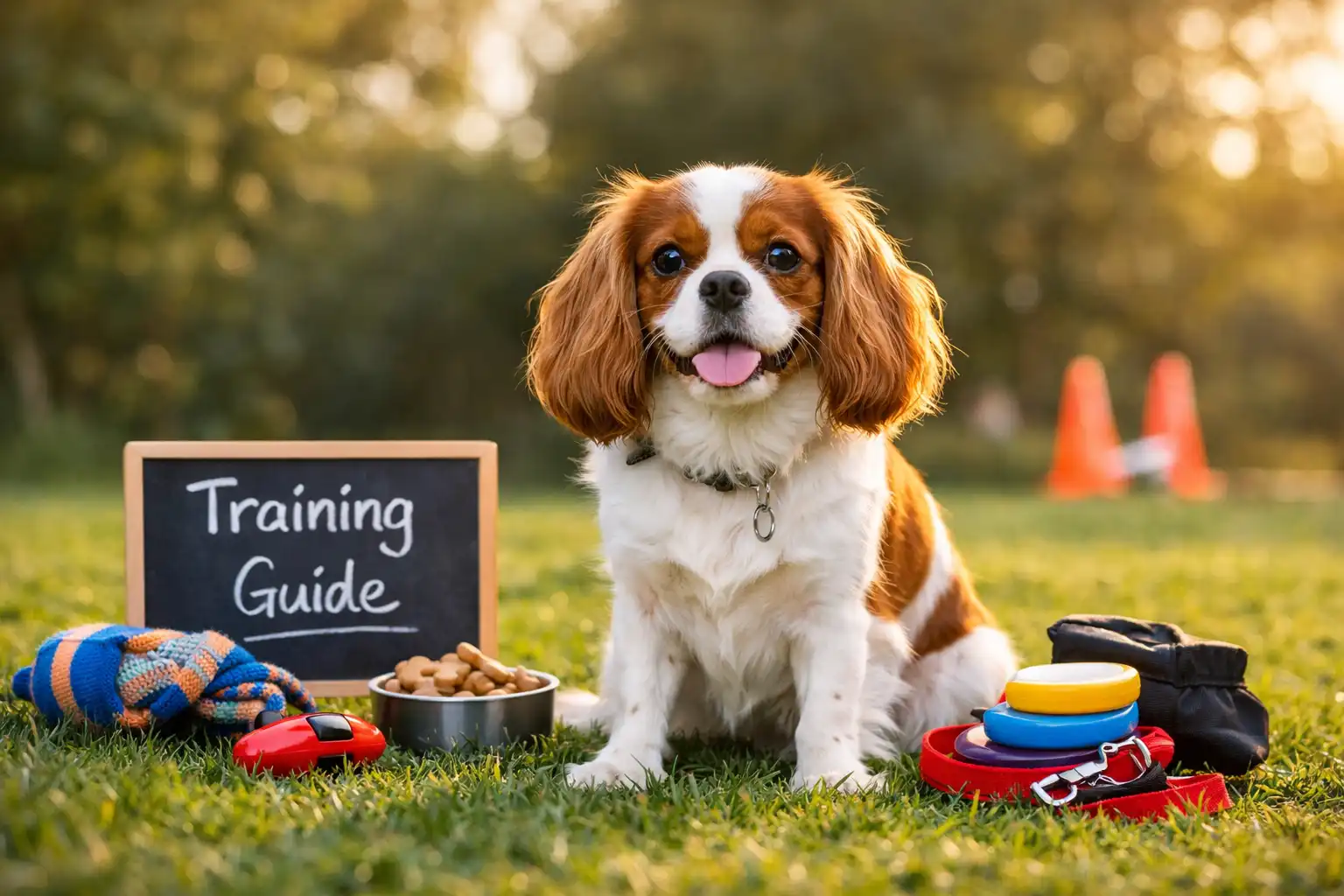
Training your Cavalier King Charles Spaniel is an important step to ensure a happy, well-behaved dog. These dogs are gentle, affectionate, and love spending time with their owners, but without guidance, they can develop habits like jumping, barking, or chewing.
This guide will teach you simple, effective methods to train your Cavalier. Whether you have a playful puppy or an adult dog, following the right steps will help you build a strong bond, keep your home peaceful, and enjoy a confident, obedient companion.
Cavaliers respond best to positive, reward-based training. Short, consistent sessions with treats, praise, or play will keep your dog motivated and eager to learn.
Here’s a quick snapshot of this breed’s training traits:
| Trait | Info |
|---|---|
| Breed | Cavalier King Charles Spaniel |
| Temperament | Gentle, affectionate, social |
| Training Ease | Moderate to easy with positive methods |
| Energy Level | Moderate, enjoys play and walks |
This table gives you an at-a-glance look at what to expect when training your Cavalier and helps you plan sessions that match their personality and energy.
Why Training Matters for Cavaliers
Training your Cavalier King Charles Spaniel is important for both your dog and your home. These dogs are friendly and loving, but without proper guidance, they may develop bad habits like jumping on guests, chewing furniture, or barking too much.
Early training helps your dog learn the rules of your home and understand what is expected. It also builds confidence, reduces anxiety, and strengthens the bond between you and your pet. Cavaliers are sensitive dogs, so using gentle, positive methods works much better than punishment.
Here are some of the main benefits of proper training:
| Benefit | Why it matters |
|---|---|
| Good behavior | Keeps your dog safe and polite |
| Confidence | Reduces fear and anxiety in new situations |
| Strong bond | Makes your relationship with your dog closer |
| Home peace | Prevents stress caused by unwanted behaviors |
By focusing on training early and consistently, you help your Cavalier become a happy, obedient, and confident companion that fits smoothly into your family life.
Understanding Your Dog’s Behavior
To train your Cavalier King Charles Spaniel well, you need to understand how they think and learn. Cavaliers are gentle, friendly, and social dogs. They enjoy being with people and want to please their owners, which makes training easier when done with patience and rewards.
Puppies and adult dogs learn differently. Puppies have shorter attention spans, so training sessions should be brief but frequent. Adult dogs can focus longer but may already have habits that need correcting. Shy or anxious dogs may need extra encouragement and calm guidance.
Your environment also affects training. If you have other pets, live in an apartment, or have a busy household, you may need to adjust training times and methods. Always be consistent and calm to help your Cavalier understand what is expected.
Here’s a quick comparison of learning approaches:
| Dog Type | Attention Span | Learning Tips |
|---|---|---|
| Puppy | Short | Short, fun sessions with treats and praise |
| Adult | Moderate | Gradually increase session length and complexity |
| Shy/Anxious | Variable | Use gentle encouragement and safe spaces |
Understanding these traits will help you choose the best training methods and make your Cavalier a confident and well-behaved dog.
Step-by-Step Training Methods
Training your Cavalier King Charles Spaniel is easier when you follow clear steps. Use short, consistent sessions with lots of praise, treats, or toys. Keep sessions fun to keep your dog motivated.
Here’s a simple daily training plan for basic commands and skills:
| Training Task | Session Length | Frequency | Reward Type |
|---|---|---|---|
| Sit/Stay | 5–10 min | 2–3x/day | Treats/Praise |
| Recall (Come) | 5–10 min | 1–2x/day | Treats/Toys |
| Leash Walking | 10–15 min | 1–2x/day | Praise |
| Crate Training | 5–10 min | 2–3x/day | Treats |
| Potty Training | Short sessions | As needed | Praise |
Tips for better results:
- Always use positive reinforcement. Avoid yelling or punishment.
- Be consistent with commands and rewards.
- For stubborn or easily distracted dogs, increase motivation with high-value treats or toys.
- Adjust the pace for puppies, adult dogs, or anxious dogs.
By following these steps, your Cavalier will learn obedience, improve behavior, and enjoy training sessions with you.
Common Problems & Professional Help
Even with the best training, Cavaliers can sometimes show unwanted behaviors. Common issues include barking too much, jumping on people, chewing furniture, or feeling anxious when left alone. The key is to act quickly with gentle, consistent solutions.
Here’s a quick guide to common problems and how to fix them:
| Problem | Cause | Quick Fix |
|---|---|---|
| Barking | Attention-seeking | Redirect attention and reward quiet behavior |
| Jumping | Excitement | Turn away and reward calm behavior |
| Chewing | Boredom | Provide toys and regular exercise |
| Separation Anxiety | Fear of being alone | Gradually increase alone time and crate training |
Sometimes, a behavior problem may need professional help. Contact a certified dog trainer or veterinary behaviorist if you notice:
- Aggression or fear-based reactions
- Extreme anxiety or panic when alone
- Persistent behaviors that don’t improve with training
Professional guidance ensures your Cavalier stays safe, happy, and well-adjusted while giving you expert tips for long-term success.
For more detailed information about Cavalier King Charles Spaniel breed standards and health tips, visit the American Kennel Club’s official guide.
Related Article

Ata Ur Rehman is the founder of Pet Age in Human Years Calculator, an educational platform that provides age conversion charts and lifespan guides for dogs, cats, birds, and other companion animals. His work focuses on helping pet owners understand how animal ages translate into human years using commonly accepted age conversion formulas and published lifespan averages.
The website compiles breed and species lifespan data from kennel clubs, breed organizations, and general animal lifespan studies to present simple and easy-to-understand guides for pet owners worldwide.
This website was created to centralize animal age conversion charts into one easy reference platform for pet owners.