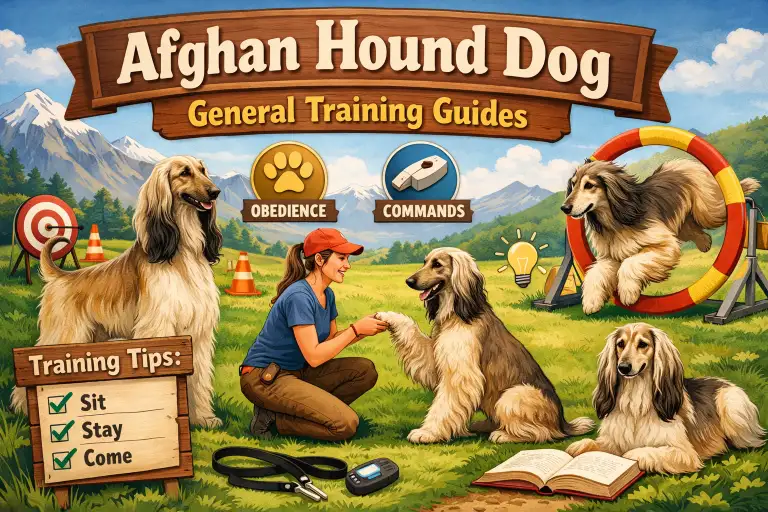
Afghan Hound training requires patience, structure, and the right approach. While this breed is intelligent and highly capable of learning, their independent nature can make obedience training more challenging than with other dogs.
Quick Afghan Hound Training Summary
- Use short (5–10 minute) positive reinforcement sessions
- Focus early on recall and leash manners
- Stay consistent — avoid harsh corrections
- Expect moderate difficulty due to independent temperament
- Increase distractions gradually as obedience improves
This guide will help you learn the best ways to train your Afghan Hound, from teaching basic commands to handling common behavioral challenges. If you’re new to the breed, you may also want to read our complete Afghan Hound breed guide to better understand their temperament, history, and care needs.
By the end of this guide, you will understand your Afghan Hound’s behavior, know how to plan training sessions, and be able to solve common problems with confidence.
Afghan Hound Training Overview
Afghan Hound training requires patience, consistency, and positive reinforcement. Because this breed is intelligent but independent, training works best when sessions are short, reward-based, and structured around clear boundaries.
- Start early with socialization and recall training
- Use high-value rewards to maintain focus
- Keep sessions short (5–10 minutes)
- Be calm and consistent — avoid harsh corrections
- Gradually increase distractions over time
With the right approach, Afghan Hounds can become well-mannered, responsive companions while still maintaining their unique personality.
What Is the Best Way to Train an Afghan Hound?
The best way to approach Afghan Hound training is through short, consistent, reward-based sessions. Afghan Hounds are intelligent but independent, which means they respond better to positive reinforcement than strict correction. Using high-value treats, calm guidance, and repetition helps build reliable obedience while respecting their sensitive nature.
Successful Afghan Hound training focuses on recall, leash manners, socialization, and impulse control. Because of their strong prey drive and independent personality, early structure and consistency are essential for long-term obedience.
Is Afghan Hound Training Difficult?
Afghan Hound training is considered moderately challenging compared to highly obedient breeds. While Afghan Hounds are intelligent, they were bred to think independently, which can make them appear stubborn during training. This does not mean they cannot be trained — it means they require patience, consistency, and positive reinforcement.
Owners who use short sessions, high-value rewards, and calm guidance typically see steady progress. Understanding the breed’s independent nature helps set realistic expectations and improves long-term obedience results.
Why Afghan Hound Training Is Important
Training your Afghan Hound is not just about teaching commands. It keeps your dog safe, happy, and well-behaved. Consistent training is also part of responsible ownership. Understanding the long-term financial commitment can help you plan properly, so explore our guide on Afghan Hound cost of ownership to prepare for expenses related to care, training, and health. Afghan Hounds are independent and sometimes stubborn, so consistent training helps them understand boundaries and what is expected.
Proper training also prevents common problems like chasing small animals, jumping on guests, or ignoring commands. Training strengthens the bond between you and your dog, reduces stress, and helps your Afghan Hound enjoy daily life more.
Here is a quick look at why training matters for Afghan Hounds:
Training Benefits at a Glance
| Training Goal | Importance | Afghan Hound Consideration |
|---|---|---|
| Recall | Safety | Can be distracted by small animals |
| Leash Manners | Safety & walks | Sensitive to tension on leash |
| Socialization | Reduces fear and anxiety | May be slow to warm up to strangers |
| Basic Commands | Obedience & daily life | Requires patience due to independent nature |
| Crate & House Training | Comfort & routine | Helps reduce anxiety and accidents |
Training works best when it is consistent, short, and positive. Even 5–10 minute sessions a few times a day can make a big difference. Afghan Hounds respond well to calm voices, gentle encouragement, and tasty rewards.
Understanding Afghan Hound Behavior for Training
Afghan Hounds are unique dogs with strong personalities. They are intelligent, independent, and sometimes stubborn. Originally bred as sighthounds for hunting in mountainous regions, Afghan Hounds were trained to think and act independently while chasing prey. This background explains why modern Afghan Hounds may seem stubborn during training — they were developed to make decisions on their own rather than constantly look to humans for direction. This means they may not always follow commands right away, but they learn well when training is calm, consistent, and positive.
Knowing your Afghan Hound’s behavior helps you plan training in a way that works for them. Because Afghan Hounds have a long, high-maintenance coat, regular grooming routines can also influence behavior and comfort. Learn more in our Afghan Hound grooming guide to keep your dog healthy and calm during training. They may be sensitive to loud voices, easily distracted by small animals, or slow to trust new people. Training should always respect their personality and focus on gentle guidance.
Here is a quick look at Afghan Hound behavior and how it affects training:
Afghan Hound Behavior Traits & Training Implications
| Trait | Training Challenge | Recommended Approach |
|---|---|---|
| Independent | May ignore commands | Use high-value rewards and short sessions |
| Sensitive | Easily stressed or anxious | Speak calmly and use gentle encouragement |
| Prey-driven | Chases small animals | Start with controlled leash training and gradual exposure |
| Slow to socialize | May be shy with strangers | Introduce new people slowly with positive reinforcement |
| Intelligent | Can become bored | Keep sessions interesting and reward creativity |
Understanding these traits helps you adjust your training style, set realistic expectations, and avoid frustration. Afghan Hounds respond best to short, frequent sessions, consistent rules, and rewards that they find motivating.
How to Train an Afghan Hound (Step-by-Step Guide)
Training an Afghan Hound works best when it is short, consistent, and positive. Proper nutrition also plays a key role in focus and energy levels. A balanced diet supports learning and reduces hyperactivity, so review our Afghan Hound feeding and nutrition guide to ensure your dog is set up for training success. Use calm voices, high-value rewards, and keep distractions low at first. Here is a clear plan to teach basic commands and daily skills.
Step 1: Teach Basic Commands
Start with simple commands like sit and stay. Use high-value treats, say the command clearly, and reward immediately when your Afghan Hound responds correctly.
Step 2: Build Reliable Recall
Practice recall in low-distraction environments first. Call your dog’s name, reward instantly, and gradually increase distance and difficulty over time.
Step 3: Improve Leash Manners
Begin leash training indoors or in quiet areas. Reward calm walking and stop moving if pulling begins to reinforce proper behavior.
Step 4: Establish Crate & House Training
Create a consistent routine for meals, naps, and outdoor breaks. Use positive reinforcement to make the crate a safe and comfortable space.
Afghan Hound Training Schedule & Steps
| Command/Skill | Step-by-Step Actions | Session Length | Frequency | Expected Progress |
|---|---|---|---|---|
| Sit | Show treat → say “sit” → reward when sitting | 5 min | 2–3 times/day | 1–2 weeks |
| Recall | Call name → reward immediately → increase distance gradually | 5–10 min | 2 times/day | 2–4 weeks |
| Leash Walking | Practice indoors → reward calm walking → move outside gradually | 10 min | 1–2 times/day | 2–3 weeks |
| Crate Training | Feed meals in crate → short stays → gradually increase duration | 5–30 min | 2–3 times/day | 1–3 weeks |
| House Training | Take outside frequently → praise for elimination → consistent routine | 5 min | After meals & naps | 2–4 weeks |
Tips for Success
- Keep sessions short and fun to maintain focus.
- Always reward immediately for correct behavior.
- Adjust the plan for high-energy or shy dogs by increasing breaks or using more rewards.
- Avoid punishment — Afghan Hounds are sensitive and respond better to encouragement.
Common Afghan Hound Training Problems & Solutions
Even with consistent training, Afghan Hounds can show challenges because of their independent and sensitive nature. Understanding common problems and how to fix them makes training smoother and less stressful for both you and your dog.
Problem Behaviors & Solutions
| Problem | Cause | Quick Fix | Notes |
|---|---|---|---|
| Ignoring commands | Independence | Use high-value treats, shorter sessions | Gradually increase distractions |
| Jumping on visitors | Excitement | Ignore until calm → reward calm behavior | Be consistent every visit |
| Chasing animals | Prey drive | Leash control, recall practice | Avoid off-leash areas early |
| Fear of strangers | Shyness or past experience | Slow socialization, positive reinforcement | Pair new people with treats |
| Refusing crate | Anxiety | Start with short stays, feed meals inside | Increase duration slowly |
Tips for Troubleshooting
- Always stay patient and calm — Afghan Hounds are sensitive to frustration.
- Break training into small, achievable steps.
- Use high-value rewards for difficult commands or fearful situations.
- Track progress weekly and adjust strategies as needed.
As your dog matures, training expectations may change. You can estimate your dog’s life stage using our Afghan Hound age calculator to better adapt training routines to their age and development.
Afghan Hound Training FAQs
Are Afghan Hounds easy to train?
Afghan Hounds are intelligent but independent, which makes them moderately difficult to train. They learn quickly but may choose not to obey if training is inconsistent. Using positive reinforcement, short sessions, and high-value rewards improves success significantly.
How long does it take to train an Afghan Hound?
Basic Afghan Hound training such as sit, recall, and leash manners typically takes 2–4 weeks of consistent practice. Advanced obedience and impulse control may take several months due to their independent nature.
Why does my Afghan Hound ignore commands?
Afghan Hounds were bred as independent hunters, so they may ignore commands if distracted or unmotivated. Strengthening recall training, reducing distractions, and using better rewards usually improves responsiveness.
Professional Training Advice
Every Afghan Hound is unique, and training results can vary based on temperament, age, and environment. If your dog shows persistent behavioral challenges such as aggression, severe anxiety, or extreme fearfulness, consider consulting a certified professional dog trainer or veterinarian for personalized guidance.
This guide is designed to provide general Afghan Hound training advice based on breed characteristics and widely accepted positive reinforcement methods.
Final Thoughts on Afghan Hound Training
Afghan Hound training requires patience, structure, and consistency, but with the right approach, these intelligent dogs can become well-mannered and responsive companions. By focusing on positive reinforcement, short sessions, and realistic expectations, owners can successfully guide their Afghan Hound toward reliable obedience and long-term behavioral stability.
Related Afghan Hound Guides
If you want to learn more about caring for this breed beyond training, explore our detailed Afghan Hound resources:
- Complete Afghan Hound Breed Guide
- Afghan Hound Grooming Guide
- Afghan Hound Nutrition & Feeding Guide
- Afghan Hound Cost of Ownership
- Afghan Hound Age Calculator
For more detailed information about Afghan Hound behavior and official breed standards, you can visit the American Kennel Club: Afghan Hound Breed Page

Ata Ur Rehman is the founder of Pet Age in Human Years Calculator, an educational platform that provides age conversion charts and lifespan guides for dogs, cats, birds, and other companion animals. His work focuses on helping pet owners understand how animal ages translate into human years using commonly accepted age conversion formulas and published lifespan averages.
The website compiles breed and species lifespan data from kennel clubs, breed organizations, and general animal lifespan studies to present simple and easy-to-understand guides for pet owners worldwide.
This website was created to centralize animal age conversion charts into one easy reference platform for pet owners.