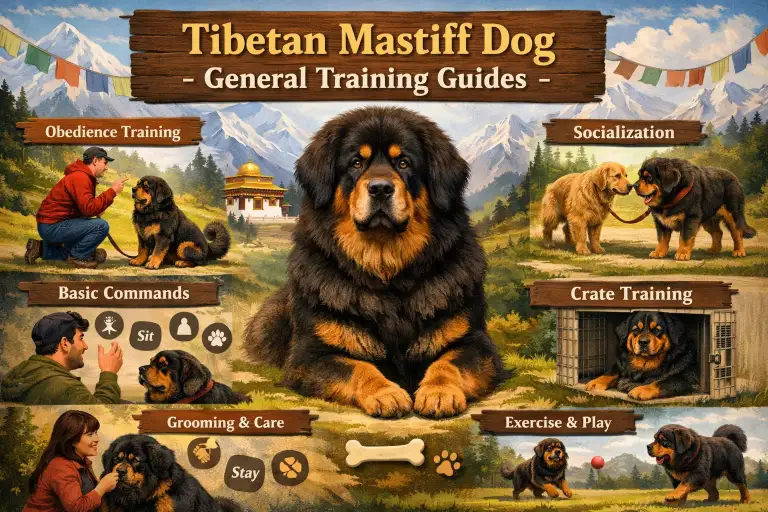
Tibetan Mastiff Training Guide: How to Train a Strong, Independent Guardian Dog
Training a Tibetan Mastiff is not about teaching blind obedience — it’s about building cooperation with a powerful, independent guardian dog that was bred to think for itself. Owners who approach this breed expecting quick compliance often feel frustrated, while those who understand how Tibetan Mastiffs learn tend to see steady, reliable progress over time.
Recommended Dog Care Products
Based on your dog’s age, these products may help with comfort, health, grooming, and daily care.

Purina Pro Plan Veterinary Supplements
Daily probiotics for dogs to support digestive and gut health.
View on Amazon ↗
Earth Rated Poop Bags for Dogs
Leak-proof, extra thick waste bag refill rolls with lavender scent.
View on Amazon ↗
Greenies Pill Pockets for Dogs
Large dog treats for capsule medication, peanut butter flavor.
View on Amazon ↗
HONEY CARE All-Absorb Dog Wrap
Small male dog wraps, 50 count, useful for daily care support.
View on Amazon ↗
Seresto Flea & Tick Collar
Flea and tick treatment and prevention for dogs over 18 lbs.
View on Amazon ↗
Milk-Bone MaroSnacks
Small dog treats with real bone marrow in a 40 oz canister.
View on Amazon ↗
Vital Essentials Dog Treats
Freeze dried beef liver dog treats, grain free and single ingredient.
View on Amazon ↗
Stain & Odor Eliminator
Enzyme cleaner for pet stains, carpet messes, and strong odors.
View on Amazon ↗
Pur Luv Chicken Jerky Treats
Dog treats made with real chicken breast, high protein and chew-friendly.
View on Amazon ↗
Milk-Bone Flavor Snacks
Mini crunchy dog biscuits in a 36 oz canister for small rewards.
View on Amazon ↗As an Amazon Associate, we may earn from qualifying purchases.
This guide is designed to help you train a Tibetan Mastiff in a way that fits the breed’s temperament, maturity rate, and natural guarding instincts. It applies to:
- Tibetan Mastiff puppies starting early foundation training
- Adolescent dogs testing boundaries
- Adult Tibetan Mastiffs that were under-trained or inconsistently trained
- First-time giant-breed owners and experienced handlers alike
Unlike many working or companion breeds, Tibetan Mastiffs do not respond well to repetitive drills, force-based methods, or high-pressure correction. Their training success depends on trust, consistency, and clear boundaries — not dominance or constant commands.
In this article, you’ll learn:
- What realistic training success looks like for a Tibetan Mastiff
- Why traditional obedience advice often fails with this breed
- How to train in a way that respects independence without losing control
- When training issues are normal — and when they require professional help
Why Proper Training Is Critical for Tibetan Mastiffs
Training is not optional for a Tibetan Mastiff. This breed grows very large, very strong, and very confident. Without proper training, small behavior issues can turn into serious safety problems for the dog, the family, and the people around them.
Tibetan Mastiffs were bred to guard homes, land, and livestock without human direction. This means they naturally make their own decisions. If training is missing or unclear, the dog will decide what is “right” on its own. That can include blocking visitors, ignoring commands, pulling hard on the leash, or becoming overly protective of the home.
Good training helps your Tibetan Mastiff:
- Understand clear rules inside and outside the home
- Stay calm instead of reacting to every sound or stranger
- Trust your decisions instead of taking control
- Live safely in modern environments like neighborhoods and cities
Poor or delayed training often leads to stress for both the dog and the owner. Many Tibetan Mastiffs are rehomed not because they are “bad dogs,” but because their natural behavior was never guided correctly.
The table below shows how much difference proper training makes.
| With Proper Training | Without Proper Training |
|---|---|
| Calm and confident around family | Overly protective or suspicious |
| Responds to basic commands | Ignores commands when distracted |
| Controlled behavior on leash | Pulling, freezing, or refusing to move |
| Clear boundaries at home | Guarding doors, gates, or furniture |
| Owner feels in control | Owner feels stressed or unsafe |
Training also protects your dog. A well-trained Tibetan Mastiff is less likely to be labeled as aggressive, restricted by local rules, or placed in risky situations that could have been avoided.
Recommended Dog Care Products
Based on your dog’s age, these products may help with comfort, health, grooming, and daily care.
Purina Pro Plan Veterinary Supplements
Daily probiotics for dogs to support digestive and gut health.
View on Amazon ↗
Earth Rated Poop Bags for Dogs
Leak-proof, extra thick waste bag refill rolls with lavender scent.
View on Amazon ↗
Greenies Pill Pockets for Dogs
Large dog treats for capsule medication, peanut butter flavor.
View on Amazon ↗
HONEY CARE All-Absorb Dog Wrap
Small male dog wraps, 50 count, useful for daily care support.
View on Amazon ↗
Seresto Flea & Tick Collar
Flea and tick treatment and prevention for dogs over 18 lbs.
View on Amazon ↗
Milk-Bone MaroSnacks
Small dog treats with real bone marrow in a 40 oz canister.
View on Amazon ↗
Vital Essentials Dog Treats
Freeze dried beef liver dog treats, grain free and single ingredient.
View on Amazon ↗
Stain & Odor Eliminator
Enzyme cleaner for pet stains, carpet messes, and strong odors.
View on Amazon ↗
Pur Luv Chicken Jerky Treats
Dog treats made with real chicken breast, high protein and chew-friendly.
View on Amazon ↗
Milk-Bone Flavor Snacks
Mini crunchy dog biscuits in a 36 oz canister for small rewards.
View on Amazon ↗As an Amazon Associate, we may earn from qualifying purchases.
Most problems seen in adult Tibetan Mastiffs start as small issues in puppyhood or adolescence. Early, steady training prevents those problems from becoming permanent habits.
Understanding Tibetan Mastiff Behavior and Temperament
Many owners think Tibetan Mastiffs are stubborn or hard-headed. In reality, this breed thinks differently from most dogs. Tibetan Mastiffs were bred to work alone, without waiting for human commands. They were trusted to judge danger and act on their own.
This means a Tibetan Mastiff does not ask, “What do you want me to do?”
Instead, the dog often asks, “Does this make sense to me?”
This behavior is normal for the breed.
Key behavior traits you should understand:
- They are independent thinkers, not eager pleasers
- They mature slowly, both mentally and emotionally
- They are naturally alert and protective
- They react strongly to changes in their environment
- They respect calm, confident leadership, not force
Many training problems happen because owners expect fast obedience like they would from a Labrador or German Shepherd. When a Tibetan Mastiff does not respond right away, owners repeat commands, raise their voice, or apply pressure. This often makes the dog shut down or ignore the owner completely.
The table below shows common Tibetan Mastiff traits and how training should adapt.
| Tibetan Mastiff Trait | What Owners Often Think | What Actually Works |
|---|---|---|
| Independent decision-making | “My dog is stubborn” | Give clear rules and limit choices |
| Slow response to commands | “He doesn’t listen” | Use fewer repeats and calm timing |
| Strong guarding instinct | “He is being aggressive” | Teach boundaries and controlled exposure |
| Low tolerance for drills | “Training isn’t working” | Keep sessions short and meaningful |
| Late maturity | “Training failed” | Stay patient and consistent over time |
Environment also matters a lot. Tibetan Mastiffs learn best in calm spaces first. Busy streets, visitors, or loud sounds can overwhelm them early in training. When the dog feels pressured, learning slows down.
Good training works with the breed’s nature, not against it. When you understand how a Tibetan Mastiff thinks, training becomes easier and safer for everyone.
Step-by-Step Tibetan Mastiff Training Approach
Training a Tibetan Mastiff works best when you keep things simple, calm, and consistent. This breed learns through trust and clear rules, not force or endless repetition.
Recommended Dog Care Products
Based on your dog’s age, these products may help with comfort, health, grooming, and daily care.
Purina Pro Plan Veterinary Supplements
Daily probiotics for dogs to support digestive and gut health.
View on Amazon ↗
Earth Rated Poop Bags for Dogs
Leak-proof, extra thick waste bag refill rolls with lavender scent.
View on Amazon ↗
Greenies Pill Pockets for Dogs
Large dog treats for capsule medication, peanut butter flavor.
View on Amazon ↗
HONEY CARE All-Absorb Dog Wrap
Small male dog wraps, 50 count, useful for daily care support.
View on Amazon ↗
Seresto Flea & Tick Collar
Flea and tick treatment and prevention for dogs over 18 lbs.
View on Amazon ↗
Milk-Bone MaroSnacks
Small dog treats with real bone marrow in a 40 oz canister.
View on Amazon ↗
Vital Essentials Dog Treats
Freeze dried beef liver dog treats, grain free and single ingredient.
View on Amazon ↗
Stain & Odor Eliminator
Enzyme cleaner for pet stains, carpet messes, and strong odors.
View on Amazon ↗
Pur Luv Chicken Jerky Treats
Dog treats made with real chicken breast, high protein and chew-friendly.
View on Amazon ↗
Milk-Bone Flavor Snacks
Mini crunchy dog biscuits in a 36 oz canister for small rewards.
View on Amazon ↗As an Amazon Associate, we may earn from qualifying purchases.
Before you start teaching commands, focus on your mindset. Stay patient, speak calmly, and avoid power struggles. A Tibetan Mastiff will stop listening if training feels like pressure or a fight.
Start with these basics:
- Train in a quiet place with few distractions
- Use short sessions, not long drills
- Give clear commands only once
- Reward calm choices, not excitement
- End sessions before the dog gets bored
Training sessions should be short. Five to ten minutes is enough. Two short sessions per day work better than one long session. This helps the dog stay focused and interested.
Focus first on:
- Name response
- Calm leash walking
- Sit, down, and stay
- Waiting politely at doors
- Calm behavior around family members
Socialization is important, but it must be controlled. Do not force your Tibetan Mastiff to greet strangers or dogs. Let the dog observe from a safe distance and reward calm behavior. Pushing social contact too fast can increase fear or guarding.
Use this simple weekly training plan:
- Practice indoors first
- Slowly move to the yard
- Add new places only after success
- Keep rules the same every day
- Reward calm behavior more than speed
The table below shows how training usually progresses with this breed.
| Training Phase | Main Focus | What the Owner Should Expect |
|---|---|---|
| Early training | Trust and calm behavior | Slow but steady progress |
| Basic commands | Simple cues and leash skills | Delayed but thoughtful responses |
| Adolescent stage | Boundaries and consistency | Testing limits is normal |
| Adult training | Reliability and control | Strong habits when rules stay clear |
Progress with a Tibetan Mastiff is not fast, but it is lasting. When trained correctly, they remember lessons well and stay stable over time.
Common Tibetan Mastiff Training Problems and When to Get Help
Even with good training, Tibetan Mastiffs can show behavior problems. This does not mean you failed. It usually means the dog needs clearer rules, more time, or extra support.
Common problems owners face:
Recommended Dog Care Products
Based on your dog’s age, these products may help with comfort, health, grooming, and daily care.
Purina Pro Plan Veterinary Supplements
Daily probiotics for dogs to support digestive and gut health.
View on Amazon ↗
Earth Rated Poop Bags for Dogs
Leak-proof, extra thick waste bag refill rolls with lavender scent.
View on Amazon ↗
Greenies Pill Pockets for Dogs
Large dog treats for capsule medication, peanut butter flavor.
View on Amazon ↗
HONEY CARE All-Absorb Dog Wrap
Small male dog wraps, 50 count, useful for daily care support.
View on Amazon ↗
Seresto Flea & Tick Collar
Flea and tick treatment and prevention for dogs over 18 lbs.
View on Amazon ↗
Milk-Bone MaroSnacks
Small dog treats with real bone marrow in a 40 oz canister.
View on Amazon ↗
Vital Essentials Dog Treats
Freeze dried beef liver dog treats, grain free and single ingredient.
View on Amazon ↗
Stain & Odor Eliminator
Enzyme cleaner for pet stains, carpet messes, and strong odors.
View on Amazon ↗
Pur Luv Chicken Jerky Treats
Dog treats made with real chicken breast, high protein and chew-friendly.
View on Amazon ↗
Milk-Bone Flavor Snacks
Mini crunchy dog biscuits in a 36 oz canister for small rewards.
View on Amazon ↗As an Amazon Associate, we may earn from qualifying purchases.
- The dog ignores commands outside
- The dog listens indoors but not in public
- Strong pulling or stopping on leash
- Guarding the home, gate, or family members
- Barking or reacting to strangers
- Sudden training setbacks during teenage months
Many of these problems happen because the dog feels unsure, overprotective, or confused about who is in charge. Repeating commands, yelling, or using force often makes things worse with this breed.
The table below helps you understand what is happening and what to do next.
| Problem You See | Common Cause | What You Should Do | When to Get Help |
|---|---|---|---|
| Ignoring commands | Too many repeats or distractions | Train in calm places and give one clear command | If the dog never responds |
| Pulling or stopping on leash | Lack of confidence or control | Practice short walks and reward calm steps | If walks feel unsafe |
| Overprotective behavior | Poor boundaries or fear | Limit guarding triggers and reward calm behavior | If growling or snapping starts |
| Barking at people | Unclear rules or stress | Teach settle and calm observation | If barking turns aggressive |
| Training regression | Normal adolescence | Stay consistent and patient | If behavior gets worse over weeks |
You should seek professional help if:
- Your dog shows growling, snapping, or biting
- The dog guards food, space, or people
- Fear or anxiety does not improve with training
- You feel unsafe or overwhelmed
A trainer who understands guardian breeds can help guide training safely. In serious cases, a veterinary behavior specialist may be needed to rule out fear, pain, or anxiety issues.
For additional breed background and general care guidance, you can also review the American Kennel Club Tibetan Mastiff breed overview, which explains the breed’s temperament, history, and ownership considerations from an official canine authority.

Ata Ur Rehman is the founder of Pet Age in Human Years Calculator, an educational platform that provides age conversion charts and lifespan guides for dogs, cats, birds, and other companion animals. His work focuses on helping pet owners understand how animal ages translate into human years using commonly accepted age conversion formulas and published lifespan averages.
The website compiles breed and species lifespan data from kennel clubs, breed organizations, and general animal lifespan studies to present simple and easy-to-understand guides for pet owners worldwide.
This website was created to centralize animal age conversion charts into one easy reference platform for pet owners.