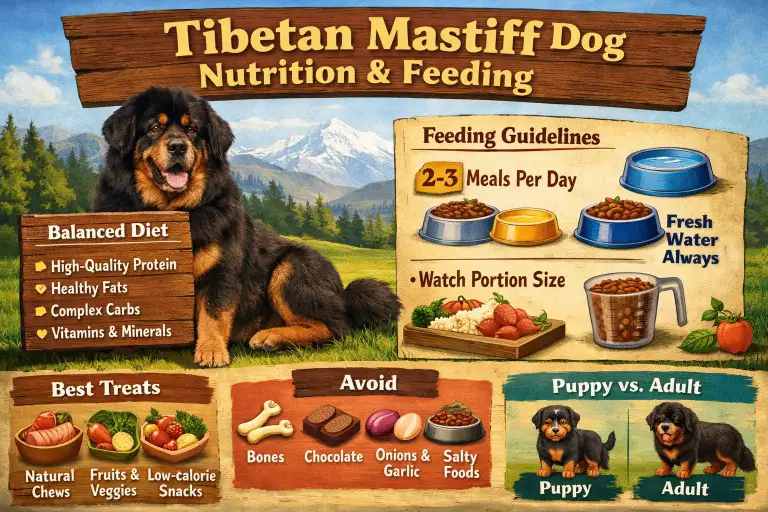
Tibetan Mastiff Dog Nutrition & Feeding Guide
Feeding a Tibetan Mastiff isn’t just about filling a bowl—it’s about supporting one of the world’s largest, slowest-maturing, and most unique guardian breeds. Proper nutrition plays a direct role in how your Tibetan Mastiff grows, moves, thinks, and ages, and mistakes made early (or repeated over time) can have lifelong consequences.
Recommended Dog Care Products
Based on your dog’s age, these products may help with comfort, health, grooming, and daily care.

Purina Pro Plan Veterinary Supplements
Daily probiotics for dogs to support digestive and gut health.
View on Amazon ↗
Earth Rated Poop Bags for Dogs
Leak-proof, extra thick waste bag refill rolls with lavender scent.
View on Amazon ↗
Greenies Pill Pockets for Dogs
Large dog treats for capsule medication, peanut butter flavor.
View on Amazon ↗
HONEY CARE All-Absorb Dog Wrap
Small male dog wraps, 50 count, useful for daily care support.
View on Amazon ↗
Seresto Flea & Tick Collar
Flea and tick treatment and prevention for dogs over 18 lbs.
View on Amazon ↗
Milk-Bone MaroSnacks
Small dog treats with real bone marrow in a 40 oz canister.
View on Amazon ↗
Vital Essentials Dog Treats
Freeze dried beef liver dog treats, grain free and single ingredient.
View on Amazon ↗
Stain & Odor Eliminator
Enzyme cleaner for pet stains, carpet messes, and strong odors.
View on Amazon ↗
Pur Luv Chicken Jerky Treats
Dog treats made with real chicken breast, high protein and chew-friendly.
View on Amazon ↗
Milk-Bone Flavor Snacks
Mini crunchy dog biscuits in a 36 oz canister for small rewards.
View on Amazon ↗As an Amazon Associate, we may earn from qualifying purchases.
Unlike many large dogs, Tibetan Mastiffs are a primitive, low-metabolism breed. They tend to mature slowly, have periods of naturally reduced appetite, and are far less food-driven than most modern working or sporting dogs. This means common feeding advice—especially “high-calorie,” “feed more for size,” or aggressive puppy growth strategies—often works against them.
Nutrition affects Tibetan Mastiffs in several critical ways:
- Growth rate and joint health during puppyhood, when excessive calories or minerals can increase the risk of orthopedic problems
- Body weight and mobility in adulthood, particularly for dogs with a naturally low activity level
- Skin and coat health, especially given their dense double coat and seasonal shedding
- Digestive stability, as many Tibetan Mastiffs are sensitive to sudden diet changes or overly rich foods
- Longevity and quality of life, especially in senior years when weight control becomes essential
Another challenge for owners is that Tibetan Mastiffs often don’t eat like typical dogs. It’s common for healthy adults to skip meals, eat less during hot weather, or regulate intake on their own. Without understanding the breed, owners may overcompensate with treats, toppers, or frequent food changes—leading to weight gain, digestive upset, or picky eating habits.
This guide is designed to help you:
- Understand what a Tibetan Mastiff truly needs from a nutritional standpoint
- Avoid overfeeding and growth-related mistakes common in giant breeds
- Choose appropriate foods based on life stage, lifestyle, and health
- Feed with confidence—even when your dog’s appetite doesn’t match expectations
Core Nutritional Needs of a Tibetan Mastiff
To feed a Tibetan Mastiff well, you don’t need complicated formulas—but you do need to understand what their body actually needs. This breed is large, heavy-boned, slow to mature, and usually low to moderate in activity. That means their food must support steady growth, strong joints, healthy digestion, and weight control, not fast size gain.
Many feeding problems in Tibetan Mastiffs come from diets that are too rich, too high in calories, or unbalanced for a giant breed.
Below is a clear, practical breakdown of what matters most.
Key Macronutrients for Tibetan Mastiffs
These are the main building blocks of your dog’s diet.
Recommended Dog Care Products
Based on your dog’s age, these products may help with comfort, health, grooming, and daily care.
Purina Pro Plan Veterinary Supplements
Daily probiotics for dogs to support digestive and gut health.
View on Amazon ↗
Earth Rated Poop Bags for Dogs
Leak-proof, extra thick waste bag refill rolls with lavender scent.
View on Amazon ↗
Greenies Pill Pockets for Dogs
Large dog treats for capsule medication, peanut butter flavor.
View on Amazon ↗
HONEY CARE All-Absorb Dog Wrap
Small male dog wraps, 50 count, useful for daily care support.
View on Amazon ↗
Seresto Flea & Tick Collar
Flea and tick treatment and prevention for dogs over 18 lbs.
View on Amazon ↗
Milk-Bone MaroSnacks
Small dog treats with real bone marrow in a 40 oz canister.
View on Amazon ↗
Vital Essentials Dog Treats
Freeze dried beef liver dog treats, grain free and single ingredient.
View on Amazon ↗
Stain & Odor Eliminator
Enzyme cleaner for pet stains, carpet messes, and strong odors.
View on Amazon ↗
Pur Luv Chicken Jerky Treats
Dog treats made with real chicken breast, high protein and chew-friendly.
View on Amazon ↗
Milk-Bone Flavor Snacks
Mini crunchy dog biscuits in a 36 oz canister for small rewards.
View on Amazon ↗As an Amazon Associate, we may earn from qualifying purchases.
Ideal Macronutrient Ranges for Tibetan Mastiffs
| Nutrient | Recommended Range | Why It Matters | Common Owner Mistakes |
|---|---|---|---|
| Protein | Moderate to high, from animal sources | Supports muscle, immune system, coat | Feeding very high protein with excess calories |
| Fat | Moderate | Provides energy and skin health | Diets too high in fat causing weight gain |
| Carbohydrates | Low to moderate | Supports digestion and energy | Using carb-heavy foods as fillers |
| Fiber | Moderate | Helps stool quality and gut health | Too little fiber leading to loose stools |
Tibetan Mastiffs do not need extreme protein or fat levels. More is not better. Balance is what protects their joints and weight.
Essential Micronutrients for Giant Breeds
Micronutrients are needed in small amounts, but mistakes here can cause serious problems—especially in puppies.
Critical Micronutrients for Tibetan Mastiffs
| Nutrient | Why It’s Important | Puppy vs Adult Focus | Risk if Unbalanced |
|---|---|---|---|
| Calcium & Phosphorus | Bone and joint development | Very important for puppies | Joint deformities if too high |
| Omega-3 fatty acids | Skin, coat, joints | All life stages | Dry coat, inflammation if low |
| Zinc | Skin and immune health | All life stages | Skin issues if deficient |
| Vitamin D | Bone strength | Controlled intake needed | Toxic in excess |
Never add calcium supplements to a Tibetan Mastiff puppy’s diet unless a veterinarian tells you to. Most large-breed puppy foods already contain the correct amount.
How to Read Dog Food Labels (Without the Confusion)
Dog food bags use a lot of marketing words. What matters is what’s actually inside.
Dog Food Label Cheat Sheet
| Label Term | What It Really Means | What to Look For | Red Flags |
|---|---|---|---|
| “Complete & Balanced” | Meets basic nutrition standards | AAFCO statement present | Missing feeding trials |
| First ingredient | Main ingredient by weight | Named animal protein | Vague terms like “meat meal” |
| Guaranteed Analysis | Shows protein and fat % | Moderate, not extreme numbers | Very high fat for a low-activity dog |
| “Grain-free” | No grains used | Only needed for true allergies | Used as a marketing claim |
For Tibetan Mastiffs, a large-breed or giant-breed formula is usually safer than standard adult food.
Supplements: When They Help and When They Hurt
Many owners want to add supplements “just in case.” For this breed, that can backfire.
Recommended Dog Care Products
Based on your dog’s age, these products may help with comfort, health, grooming, and daily care.
Purina Pro Plan Veterinary Supplements
Daily probiotics for dogs to support digestive and gut health.
View on Amazon ↗
Earth Rated Poop Bags for Dogs
Leak-proof, extra thick waste bag refill rolls with lavender scent.
View on Amazon ↗
Greenies Pill Pockets for Dogs
Large dog treats for capsule medication, peanut butter flavor.
View on Amazon ↗
HONEY CARE All-Absorb Dog Wrap
Small male dog wraps, 50 count, useful for daily care support.
View on Amazon ↗
Seresto Flea & Tick Collar
Flea and tick treatment and prevention for dogs over 18 lbs.
View on Amazon ↗
Milk-Bone MaroSnacks
Small dog treats with real bone marrow in a 40 oz canister.
View on Amazon ↗
Vital Essentials Dog Treats
Freeze dried beef liver dog treats, grain free and single ingredient.
View on Amazon ↗
Stain & Odor Eliminator
Enzyme cleaner for pet stains, carpet messes, and strong odors.
View on Amazon ↗
Pur Luv Chicken Jerky Treats
Dog treats made with real chicken breast, high protein and chew-friendly.
View on Amazon ↗
Milk-Bone Flavor Snacks
Mini crunchy dog biscuits in a 36 oz canister for small rewards.
View on Amazon ↗As an Amazon Associate, we may earn from qualifying purchases.
- Healthy dogs on complete diets usually do not need supplements
- Joint supplements may help older dogs, but results vary
- Extra vitamins or minerals can cause more harm than good
If your dog has joint issues, skin problems, or digestive trouble, always check with a veterinarian before adding supplements.
How Much to Feed a Tibetan Mastiff and How Often
Knowing how much food your Tibetan Mastiff needs is just as important as choosing the right food. Because this breed is very large but often low in activity, overfeeding is one of the most common problems owners face.
Tibetan Mastiffs do not need large portions just because they are big dogs. Feeding too much can lead to fast weight gain, joint stress, and shorter lifespan.
Daily Calorie Needs by Weight and Activity
Calorie needs change based on body size and how active your dog is. Most Tibetan Mastiffs are calm guardians, not high-energy athletes.
Estimated Daily Calorie Needs for Tibetan Mastiffs
| Adult Weight | Low Activity (Guarding / Sedentary) | Moderate Activity |
|---|---|---|
| 90–110 lbs | 1,600–1,900 calories | 1,900–2,200 calories |
| 110–130 lbs | 1,900–2,200 calories | 2,200–2,600 calories |
| 130–150 lbs | 2,200–2,600 calories | 2,600–3,000 calories |
These are starting points. Every dog is different, so portions should be adjusted based on body condition.
How Often to Feed a Tibetan Mastiff
Meal timing helps digestion and weight control.
Feeding Frequency by Life Stage
Recommended Dog Care Products
Based on your dog’s age, these products may help with comfort, health, grooming, and daily care.
Purina Pro Plan Veterinary Supplements
Daily probiotics for dogs to support digestive and gut health.
View on Amazon ↗
Earth Rated Poop Bags for Dogs
Leak-proof, extra thick waste bag refill rolls with lavender scent.
View on Amazon ↗
Greenies Pill Pockets for Dogs
Large dog treats for capsule medication, peanut butter flavor.
View on Amazon ↗
HONEY CARE All-Absorb Dog Wrap
Small male dog wraps, 50 count, useful for daily care support.
View on Amazon ↗
Seresto Flea & Tick Collar
Flea and tick treatment and prevention for dogs over 18 lbs.
View on Amazon ↗
Milk-Bone MaroSnacks
Small dog treats with real bone marrow in a 40 oz canister.
View on Amazon ↗
Vital Essentials Dog Treats
Freeze dried beef liver dog treats, grain free and single ingredient.
View on Amazon ↗
Stain & Odor Eliminator
Enzyme cleaner for pet stains, carpet messes, and strong odors.
View on Amazon ↗
Pur Luv Chicken Jerky Treats
Dog treats made with real chicken breast, high protein and chew-friendly.
View on Amazon ↗
Milk-Bone Flavor Snacks
Mini crunchy dog biscuits in a 36 oz canister for small rewards.
View on Amazon ↗As an Amazon Associate, we may earn from qualifying purchases.
| Life Stage | Meals Per Day | Important Notes |
|---|---|---|
| Puppy (under 12 months) | 3 meals | Supports steady growth |
| Adult | 2 meals | Helps prevent overeating |
| Senior | 2 smaller meals | Easier on digestion |
Some adult Tibetan Mastiffs naturally skip meals, especially in warm weather. This is normal for the breed and not always a health problem.
Feeding Tibetan Mastiff Puppies Safely
Puppies grow slowly and should not be pushed to grow fast.
- Use large-breed or giant-breed puppy food
- Avoid high-calorie or “performance” foods
- Never add calcium supplements unless a vet tells you to
Slow, steady growth protects bones and joints.
Using Body Condition Instead of the Scale
Because Tibetan Mastiffs have thick coats, weight alone can be misleading.
Simple Body Condition Check
| What You See or Feel | What It Means | Feeding Adjustment |
|---|---|---|
| Ribs easy to feel, not visible | Ideal weight | Keep feeding the same |
| Ribs hard to feel, heavy belly | Overweight | Reduce portions |
| Ribs very visible, no fat cover | Underweight | Increase food slowly |
You should be able to feel ribs with light pressure, even if you cannot see them.
Adjusting Food for Lifestyle
- Guarding or yard dogs usually need fewer calories
- Dogs that walk daily or train need slightly more
- Neutering can lower calorie needs
Treats should be counted as part of daily calories, not “extra food.”
Best Types of Dog Food for Tibetan Mastiffs
There is no single “perfect” food for every Tibetan Mastiff. The best choice depends on your dog’s age, appetite, health, and your daily routine. What matters most is that the food is balanced, safe, and not too rich for this calm, giant breed.
Below is a simple look at the main food types owners use, along with their benefits and risks.
Dry Kibble for Tibetan Mastiffs
Dry kibble is the most common choice and works well for many Tibetan Mastiffs.
Good quality kibble:
- Is easy to store and measure
- Helps keep teeth cleaner
- Is usually more affordable
- Can be balanced for large or giant breeds
Look for large-breed or giant-breed formulas. These are made to support joint health and slow growth.
Avoid very high-fat or “performance” foods unless your vet recommends them.
Canned and Fresh Dog Food
Canned and fresh foods are often more tasty and easier to chew.
They may help:
- Picky eaters
- Older dogs with dental problems
- Dogs that need extra moisture
The downside is cost and portion control. These foods are often higher in calories, so it’s easy to overfeed.
Raw and Freeze-Dried Diets
Some owners choose raw or freeze-dried diets, but these require extra care.
Possible benefits:
- High meat content
- Very appealing taste
Risks include:
- Bacteria like Salmonella
- Unbalanced nutrients
- Too much calcium or fat for giant breeds
These diets should only be used if they are properly formulated and handled safely.
Homemade Diets
Homemade food may sound healthy, but it is the easiest way to create nutrient problems.
Most homemade diets:
- Lack proper vitamins and minerals
- Have incorrect calcium levels
- Can harm bones and joints over time
If you want to feed homemade food, always work with a veterinarian or a canine nutrition expert.
Comparing Food Types at a Glance
Dog Food Type Comparison for Tibetan Mastiffs
| Food Type | Pros | Cons | Best For |
|---|---|---|---|
| Dry kibble | Balanced, affordable, easy | Less moisture | Most adult dogs |
| Canned food | Tasty, soft texture | Higher calories | Seniors, picky eaters |
| Fresh food | High moisture, appealing | Expensive | Owners who measure carefully |
| Raw / freeze-dried | Meat-rich | Safety and balance risks | Experienced owners only |
| Homemade | Full control | Easy to imbalance | Vet-supervised plans only |
Practical Comparison of Food Types
| Food Type | Monthly Cost | Prep Time | Safety Risk |
|---|---|---|---|
| Dry kibble | Low–Medium | Very low | Low |
| Canned food | Medium | Low | Low |
| Fresh food | High | Medium | Medium |
| Raw food | High | High | High |
| Homemade | Medium–High | High | Medium–High |
For most owners, high-quality dry kibble with occasional fresh toppers is the safest and easiest choice.
Common Feeding Problems, Special Diets, and Practical Tibetan Mastiff Feeding Tips
Even with good food, many Tibetan Mastiff owners face feeding problems. This breed can be picky, gain weight easily, or have a sensitive stomach. The good news is that most issues can be fixed with simple changes.
This section focuses on real-life problems and clear solutions.
Common Tibetan Mastiff Feeding Problems and Solutions
| Problem | Likely Cause | What You Can Do | When to See a Vet |
|---|---|---|---|
| Won’t eat meals | Normal breed behavior, heat | Stick to set meal times | If weight drops |
| Gaining weight | Overfeeding, too many treats | Reduce portions | If weight keeps rising |
| Loose stool | Food change too fast | Slow transition | If lasts over a week |
| Always hungry | Low fiber, boredom | Add fiber, routine | If begging is extreme |
| Vomiting after meals | Eating too fast | Use slow feeder | If frequent |
Many Tibetan Mastiffs eat less during warm weather. This is normal and not always a health issue.
Special Diet Needs
Some Tibetan Mastiffs need diet changes for health reasons.
- Sensitive stomachs may need simple ingredient foods
- Overweight dogs need fewer calories, not “diet treats”
- Seniors often do better with slightly lower fat
- Working or guarding dogs may need more calories during cold months
Always change food slowly over 7 to 10 days.
Safe and Unsafe Human Foods
Many owners like to share food, but not all foods are safe.
Safe vs Unsafe Foods for Tibetan Mastiffs
| Food | Safe or Unsafe | Notes |
|---|---|---|
| Cooked chicken | Safe | Plain, no seasoning |
| Rice | Safe | Helps upset stomach |
| Carrots | Safe | Low-calorie snack |
| Grapes | Unsafe | Toxic to dogs |
| Chocolate | Unsafe | Very dangerous |
| Onions | Unsafe | Can damage red blood cells |
Never give cooked bones, spicy food, or sugary snacks.
Treats should support training, not replace meals.
Treat Guidelines for Tibetan Mastiffs
| Treat Type | Max Daily Amount | Better Option |
|---|---|---|
| Store treats | Very limited | Break into small pieces |
| Human food | Rare | Plain vegetables |
| Training rewards | Tiny bites | Use kibble |
Treats should make up less than 10% of daily calories.
When to Get Professional Help
You should talk to a veterinarian or nutrition expert if:
- Your dog keeps losing or gaining weight
- Digestive problems last more than a week
- You want to feed raw or homemade food
- Your puppy is growing too fast or too slow
For official, science-based nutrition standards used by pet food manufacturers and veterinarians, you can review the guidelines published by the Association of American Feed Control Officials (AAFCO), which set minimum nutritional requirements for complete and balanced dog foods.

Ata Ur Rehman is the founder of Pet Age in Human Years Calculator, an educational platform that provides age conversion charts and lifespan guides for dogs, cats, birds, and other companion animals. His work focuses on helping pet owners understand how animal ages translate into human years using commonly accepted age conversion formulas and published lifespan averages.
The website compiles breed and species lifespan data from kennel clubs, breed organizations, and general animal lifespan studies to present simple and easy-to-understand guides for pet owners worldwide.
This website was created to centralize animal age conversion charts into one easy reference platform for pet owners.