Tibetan Mastiff Grooming: Coat Care, Shedding, and Grooming Basics
Tibetan Mastiff grooming is not about appearance or keeping the coat “pretty.” It’s about protecting a complex double coat, supporting healthy skin, managing extreme seasonal shedding, and keeping a powerful guardian breed comfortable in changing conditions.
Recommended Dog Care Products
Based on your dog’s age, these products may help with comfort, health, grooming, and daily care.

Purina Pro Plan Veterinary Supplements
Daily probiotics for dogs to support digestive and gut health.
View on Amazon ↗
Earth Rated Poop Bags for Dogs
Leak-proof, extra thick waste bag refill rolls with lavender scent.
View on Amazon ↗
Greenies Pill Pockets for Dogs
Large dog treats for capsule medication, peanut butter flavor.
View on Amazon ↗
HONEY CARE All-Absorb Dog Wrap
Small male dog wraps, 50 count, useful for daily care support.
View on Amazon ↗
Seresto Flea & Tick Collar
Flea and tick treatment and prevention for dogs over 18 lbs.
View on Amazon ↗
Milk-Bone MaroSnacks
Small dog treats with real bone marrow in a 40 oz canister.
View on Amazon ↗
Vital Essentials Dog Treats
Freeze dried beef liver dog treats, grain free and single ingredient.
View on Amazon ↗
Stain & Odor Eliminator
Enzyme cleaner for pet stains, carpet messes, and strong odors.
View on Amazon ↗
Pur Luv Chicken Jerky Treats
Dog treats made with real chicken breast, high protein and chew-friendly.
View on Amazon ↗
Milk-Bone Flavor Snacks
Mini crunchy dog biscuits in a 36 oz canister for small rewards.
View on Amazon ↗As an Amazon Associate, we may earn from qualifying purchases.
Many owners underestimate grooming needs because Tibetan Mastiffs are not clipped or styled like other large dogs. In reality, improper grooming—especially shaving, over-bathing, or infrequent brushing—can damage the coat, worsen shedding, and trigger skin problems that take months or even years to correct.
A well-maintained Tibetan Mastiff coat:
- Regulates body temperature in both cold and warm weather
- Protects the skin from moisture, debris, and UV exposure
- Reduces matting, hot spots, and trapped undercoat
- Keeps seasonal shedding manageable instead of overwhelming
This breed’s grooming routine is heavily influenced by coat type, climate, and season, not by aesthetics. Owners who understand how the coat works—and groom accordingly—spend less time fighting mats, less money on corrective grooming, and deal with far fewer skin issues over the dog’s lifetime.
This guide is designed to help you:
- Understand what makes Tibetan Mastiff grooming unique
- Set realistic expectations for time, tools, and effort
- Avoid common grooming mistakes that harm the coat
- Build a simple, effective grooming routine you can maintain at home
Understanding the Tibetan Mastiff Double Coat and Shedding Cycle
The Tibetan Mastiff has a thick double coat, and this single fact explains most of its grooming needs. If you understand how this coat works, grooming becomes much easier and safer.
The coat has two layers.
The outer layer, called the guard coat, is long, coarse, and weather-resistant. It protects the dog from rain, snow, dirt, and sun.
The inner layer, called the undercoat, is soft, dense, and very thick. It works like insulation, keeping the dog warm in winter and helping control body temperature in warmer months.
This breed does not shed a little all year like many dogs. Instead, Tibetan Mastiffs go through heavy seasonal shedding, often called a “coat blow.” During these periods, large amounts of undercoat loosen and fall out over a few weeks. If this loose hair is not brushed out, it can trap moisture, cause mats, and lead to skin problems.
Many owners believe shaving helps with heat. This is not true. Shaving a Tibetan Mastiff:
- Removes natural insulation
- Exposes skin to sunburn
- Disrupts normal temperature control
- Can permanently damage coat regrowth
The coat is designed to protect the dog, not make it hotter.
Recommended Dog Care Products
Based on your dog’s age, these products may help with comfort, health, grooming, and daily care.
Purina Pro Plan Veterinary Supplements
Daily probiotics for dogs to support digestive and gut health.
View on Amazon ↗
Earth Rated Poop Bags for Dogs
Leak-proof, extra thick waste bag refill rolls with lavender scent.
View on Amazon ↗
Greenies Pill Pockets for Dogs
Large dog treats for capsule medication, peanut butter flavor.
View on Amazon ↗
HONEY CARE All-Absorb Dog Wrap
Small male dog wraps, 50 count, useful for daily care support.
View on Amazon ↗
Seresto Flea & Tick Collar
Flea and tick treatment and prevention for dogs over 18 lbs.
View on Amazon ↗
Milk-Bone MaroSnacks
Small dog treats with real bone marrow in a 40 oz canister.
View on Amazon ↗
Vital Essentials Dog Treats
Freeze dried beef liver dog treats, grain free and single ingredient.
View on Amazon ↗
Stain & Odor Eliminator
Enzyme cleaner for pet stains, carpet messes, and strong odors.
View on Amazon ↗
Pur Luv Chicken Jerky Treats
Dog treats made with real chicken breast, high protein and chew-friendly.
View on Amazon ↗
Milk-Bone Flavor Snacks
Mini crunchy dog biscuits in a 36 oz canister for small rewards.
View on Amazon ↗As an Amazon Associate, we may earn from qualifying purchases.
Below is a simple table to help you understand how the coat affects grooming.
| Coat Feature | What It Does | Grooming Impact | What Owners Should Know |
|---|---|---|---|
| Guard coat | Blocks water, dirt, and sun | Should never be shaved | Cutting damages protection |
| Dense undercoat | Insulates and controls body temperature | Must be brushed out regularly | Trapped undercoat causes mats |
| Seasonal shedding | Releases old undercoat | Requires frequent brushing | Normal, not a health issue |
| Thick neck and hind coat | Extra protection areas | Mats form easily here | Needs extra brushing |
| Slow regrowth | Coat takes months to recover | Mistakes last a long time | Gentle grooming matters |
How often you groom depends on the season.
During normal months, brushing a few times a week is usually enough.
During shedding season, daily brushing may be needed to keep the coat healthy and comfortable.
Understanding this coat structure helps you avoid the most common grooming mistakes and prepares you for the hands-on grooming routine covered next.
How to Groom a Tibetan Mastiff at Home (Step-by-Step Routine)
Grooming a Tibetan Mastiff at home works best when you follow a simple routine and use the right tools. You do not need fancy equipment, but you do need patience and regular care. Short, calm sessions are better than long stressful ones.
Start with brushing. Always brush before bathing, never after. Brushing removes loose undercoat, dirt, and small tangles. Focus on areas where hair is thick and mats form easily, such as behind the ears, under the neck, behind the legs, and around the tail. Use slow strokes and work in small sections. Pulling too hard can hurt the skin.
During heavy shedding seasons, brushing becomes more important. Large clumps of undercoat loosen and need help coming out. If you skip brushing during this time, the coat can mat close to the skin and trap moisture.
Bathing should be limited. Tibetan Mastiffs do not need frequent baths. Too much bathing strips natural oils and dries the skin. When you do bathe, always use dog shampoo made for thick or double coats. Rinse very well, because leftover soap can cause itching.
Drying matters just as much as bathing. Never leave the coat damp. Use towels first, then air drying or a low-heat dog dryer. Wet undercoat can cause hot spots and skin infections.
The table below shows how often each grooming task is usually needed.
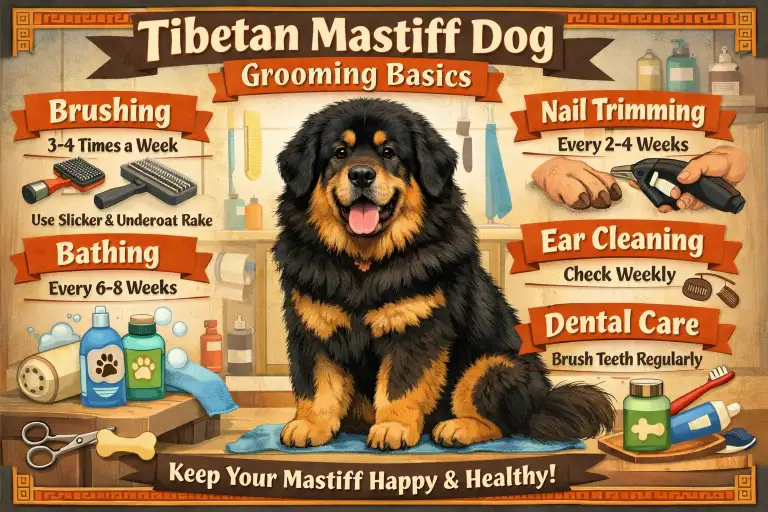
| Grooming Task | Normal Season | Shedding Season | Notes |
|---|---|---|---|
| Brushing | 2–3 times per week | Daily or every other day | Prevents mats and loose hair buildup |
| Deshedding | Rarely needed | Weekly or more | Helps remove loose undercoat |
| Bathing | Every 8–12 weeks | Only if dirty | Over-bathing dries skin |
| Nail trimming | Every 3–4 weeks | Same | Long nails affect movement |
| Ear cleaning | Monthly | Monthly | More often if ears get dirty |
Using the correct tools makes grooming easier and safer. The table below explains what tools are helpful and why.
Recommended Dog Care Products
Based on your dog’s age, these products may help with comfort, health, grooming, and daily care.
Purina Pro Plan Veterinary Supplements
Daily probiotics for dogs to support digestive and gut health.
View on Amazon ↗
Earth Rated Poop Bags for Dogs
Leak-proof, extra thick waste bag refill rolls with lavender scent.
View on Amazon ↗
Greenies Pill Pockets for Dogs
Large dog treats for capsule medication, peanut butter flavor.
View on Amazon ↗
HONEY CARE All-Absorb Dog Wrap
Small male dog wraps, 50 count, useful for daily care support.
View on Amazon ↗
Seresto Flea & Tick Collar
Flea and tick treatment and prevention for dogs over 18 lbs.
View on Amazon ↗
Milk-Bone MaroSnacks
Small dog treats with real bone marrow in a 40 oz canister.
View on Amazon ↗
Vital Essentials Dog Treats
Freeze dried beef liver dog treats, grain free and single ingredient.
View on Amazon ↗
Stain & Odor Eliminator
Enzyme cleaner for pet stains, carpet messes, and strong odors.
View on Amazon ↗
Pur Luv Chicken Jerky Treats
Dog treats made with real chicken breast, high protein and chew-friendly.
View on Amazon ↗
Milk-Bone Flavor Snacks
Mini crunchy dog biscuits in a 36 oz canister for small rewards.
View on Amazon ↗As an Amazon Associate, we may earn from qualifying purchases.
| Tool | What It Is Used For | When to Use It | Common Mistakes |
|---|---|---|---|
| Slicker brush | Removes loose hair and light tangles | Regular brushing | Brushing too hard |
| Undercoat rake | Pulls out thick undercoat | Shedding season | Using it too often |
| Wide-tooth comb | Checks for hidden mats | After brushing | Skipping problem areas |
| Dog shampoo | Cleans skin and coat | Bath time | Using human shampoo |
| Towels / low-heat dryer | Dries coat safely | After bathing | Leaving coat damp |
Grooming should always feel calm. If your dog becomes stressed, stop and try again later. Building trust makes future grooming much easier.
Extra Grooming Care: Nails, Ears, Skin, and Coat Health
Grooming a Tibetan Mastiff is not only about brushing and bathing. Small care steps like nail trimming, ear cleaning, and skin checks help prevent pain and serious health problems.
Nail care is very important for large dogs. Long nails can crack, split, or change how your dog walks. Check nails every few weeks. If you hear clicking on the floor, the nails are too long. Trim a little at a time. If you are unsure, ask a groomer or vet to show you how.
Ears should stay clean and dry. Check them once a month. A healthy ear looks pale pink and smells clean. Do not push cotton deep into the ear. Use a dog-safe ear cleaner and wipe only what you can see. Wet or dirty ears can lead to infections.
Skin and coat checks should be part of every grooming session. Thick fur can hide problems. Run your hands over the body to feel for bumps, scabs, redness, or warm spots. Early signs are easier to treat than advanced skin issues.
The table below lists common skin and coat problems owners should watch for.
| Problem | Common Signs | Possible Grooming Causes | What Owners Should Do |
|---|---|---|---|
| Hot spots | Red, wet, sore patches | Damp coat, trapped undercoat | Dry area and see a vet |
| Dry skin | Flakes, itching | Too much bathing | Reduce baths, use mild shampoo |
| Mats close to skin | Hard clumps of hair | Skipping brushing | Gently remove or see a groomer |
| Ear infection | Bad smell, head shaking | Moisture in ears | Clean ears and contact vet |
| Coat thinning | Patchy fur loss | Shaving or skin issues | Vet check needed |
Good grooming helps you spot these problems early. If something looks painful, smells bad, or does not improve, a vet visit is the safest choice.
Grooming Mistakes, Professional Grooming, and FAQs
Many grooming problems happen because owners follow bad advice or try to rush the process. Tibetan Mastiffs have a coat that takes a long time to grow back, so mistakes can last for months or even years.
One of the biggest mistakes is shaving. Shaving does not keep a Tibetan Mastiff cool. It removes protection and can damage the coat forever. Another common mistake is bathing too often. Too many baths dry the skin and make itching worse. Skipping brushing during shedding season is also a problem. Loose undercoat builds up fast and can turn into painful mats.
The table below shows common grooming mistakes and safer choices.
Recommended Dog Care Products
Based on your dog’s age, these products may help with comfort, health, grooming, and daily care.
Purina Pro Plan Veterinary Supplements
Daily probiotics for dogs to support digestive and gut health.
View on Amazon ↗
Earth Rated Poop Bags for Dogs
Leak-proof, extra thick waste bag refill rolls with lavender scent.
View on Amazon ↗
Greenies Pill Pockets for Dogs
Large dog treats for capsule medication, peanut butter flavor.
View on Amazon ↗
HONEY CARE All-Absorb Dog Wrap
Small male dog wraps, 50 count, useful for daily care support.
View on Amazon ↗
Seresto Flea & Tick Collar
Flea and tick treatment and prevention for dogs over 18 lbs.
View on Amazon ↗
Milk-Bone MaroSnacks
Small dog treats with real bone marrow in a 40 oz canister.
View on Amazon ↗
Vital Essentials Dog Treats
Freeze dried beef liver dog treats, grain free and single ingredient.
View on Amazon ↗
Stain & Odor Eliminator
Enzyme cleaner for pet stains, carpet messes, and strong odors.
View on Amazon ↗
Pur Luv Chicken Jerky Treats
Dog treats made with real chicken breast, high protein and chew-friendly.
View on Amazon ↗
Milk-Bone Flavor Snacks
Mini crunchy dog biscuits in a 36 oz canister for small rewards.
View on Amazon ↗As an Amazon Associate, we may earn from qualifying purchases.
| Mistake | Why Owners Do It | Why It Is Harmful | Better Choice |
|---|---|---|---|
| Shaving the coat | To reduce heat or shedding | Damages coat and skin | Brush and deshed instead |
| Bathing too often | To keep dog clean | Dries skin and causes itching | Bathe only when needed |
| Using human shampoo | Easy to find at home | Irritates dog skin | Use dog shampoo only |
| Skipping brushing | Time-saving | Leads to mats and hot spots | Short, regular brushing |
| Pulling mats hard | To remove fast | Causes pain and skin injury | Gentle removal or groomer help |
Some grooming tasks are safe to do at home. Others are better handled by a professional groomer, especially for large and strong dogs.
The table below helps you decide.
| Grooming Task | Safe at Home | Better with a Groomer | Reason |
|---|---|---|---|
| Regular brushing | Yes | No | Builds trust and coat health |
| Light bathing | Yes | No | Easy with proper drying |
| Nail trimming | Sometimes | Yes | Risk of cutting too short |
| Heavy deshedding | Sometimes | Yes | Takes time and strength |
| Severe mat removal | No | Yes | Prevents pain and injury |
Many owners also ask common questions.
Tibetan Mastiffs do shed a lot, but mostly during seasonal coat changes.
They are not hard to groom if brushing is done regularly.
Haircuts are not needed and should be avoided.
If the coat smells bad, feels greasy, or the skin looks red, grooming alone is not enough and a vet should be consulted.
Good grooming is about patience, routine, and understanding the coat. When done correctly, it keeps your Tibetan Mastiff comfortable, healthy, and protected year-round.
For more breed-specific background on the Tibetan Mastiff, including general care and history, you can also refer to the American Kennel Club Tibetan Mastiff breed overview, which provides additional context alongside proper grooming practices.

Ata Ur Rehman is the founder of Pet Age in Human Years Calculator, an educational platform that provides age conversion charts and lifespan guides for dogs, cats, birds, and other companion animals. His work focuses on helping pet owners understand how animal ages translate into human years using commonly accepted age conversion formulas and published lifespan averages.
The website compiles breed and species lifespan data from kennel clubs, breed organizations, and general animal lifespan studies to present simple and easy-to-understand guides for pet owners worldwide.
This website was created to centralize animal age conversion charts into one easy reference platform for pet owners.