Tibetan Mastiff Dog Cost of Ownership: Real First-Year, Annual, and Lifetime Costs
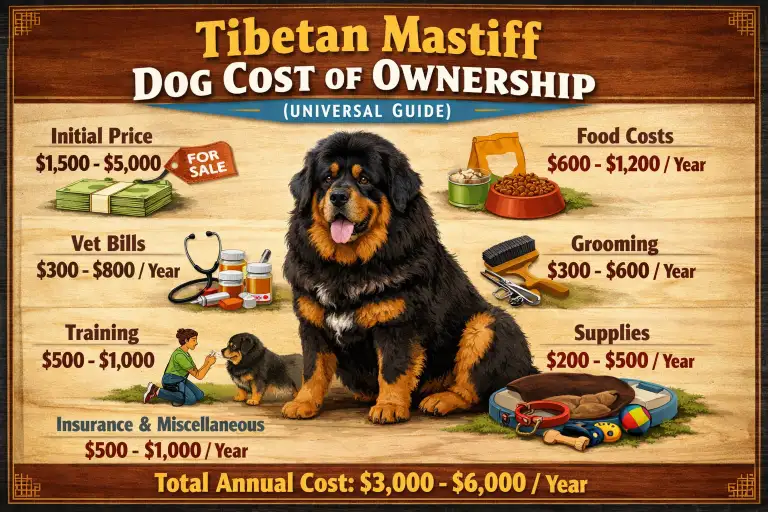
The first year is the most expensive year of owning a Tibetan Mastiff. Many new owners feel surprised by how fast costs add up, especially with a giant breed that grows slowly and needs strong care from day one. This section breaks the costs into simple parts so you can see where the money really goes.
Recommended Dog Care Products
Based on your dog’s age, these products may help with comfort, health, grooming, and daily care.

Purina Pro Plan Veterinary Supplements
Daily probiotics for dogs to support digestive and gut health.
View on Amazon ↗
Earth Rated Poop Bags for Dogs
Leak-proof, extra thick waste bag refill rolls with lavender scent.
View on Amazon ↗
Greenies Pill Pockets for Dogs
Large dog treats for capsule medication, peanut butter flavor.
View on Amazon ↗
HONEY CARE All-Absorb Dog Wrap
Small male dog wraps, 50 count, useful for daily care support.
View on Amazon ↗
Seresto Flea & Tick Collar
Flea and tick treatment and prevention for dogs over 18 lbs.
View on Amazon ↗
Milk-Bone MaroSnacks
Small dog treats with real bone marrow in a 40 oz canister.
View on Amazon ↗
Vital Essentials Dog Treats
Freeze dried beef liver dog treats, grain free and single ingredient.
View on Amazon ↗
Stain & Odor Eliminator
Enzyme cleaner for pet stains, carpet messes, and strong odors.
View on Amazon ↗
Pur Luv Chicken Jerky Treats
Dog treats made with real chicken breast, high protein and chew-friendly.
View on Amazon ↗
Milk-Bone Flavor Snacks
Mini crunchy dog biscuits in a 36 oz canister for small rewards.
View on Amazon ↗As an Amazon Associate, we may earn from qualifying purchases.
Buying or Adopting the Dog
Most Tibetan Mastiffs come from breeders. Adoption is rare and usually still comes with higher medical and transport costs. The price you pay at the start can be very high, but it is only one part of the total first-year cost.
First-Year Veterinary Care
In the first year, dogs need more vet visits than adults. This includes exams, vaccines, parasite prevention, and often spaying or neutering. Giant breeds also cost more at the vet because medication doses and anesthesia are based on body weight.
Setup and Equipment for a Giant Breed
Tibetan Mastiffs need large, strong, and durable items. Cheap gear often breaks and must be replaced. Fencing and containment are also important because of their size and guarding instincts.
Training and Early Behavior Costs
This breed is independent and strong-willed. Early training is not optional. Many owners use professional trainers to avoid future behavior problems that can become very expensive later.
Tibetan Mastiff First-Year Cost Breakdown
Recommended Dog Care Products
Based on your dog’s age, these products may help with comfort, health, grooming, and daily care.
Purina Pro Plan Veterinary Supplements
Daily probiotics for dogs to support digestive and gut health.
View on Amazon ↗
Earth Rated Poop Bags for Dogs
Leak-proof, extra thick waste bag refill rolls with lavender scent.
View on Amazon ↗
Greenies Pill Pockets for Dogs
Large dog treats for capsule medication, peanut butter flavor.
View on Amazon ↗
HONEY CARE All-Absorb Dog Wrap
Small male dog wraps, 50 count, useful for daily care support.
View on Amazon ↗
Seresto Flea & Tick Collar
Flea and tick treatment and prevention for dogs over 18 lbs.
View on Amazon ↗
Milk-Bone MaroSnacks
Small dog treats with real bone marrow in a 40 oz canister.
View on Amazon ↗
Vital Essentials Dog Treats
Freeze dried beef liver dog treats, grain free and single ingredient.
View on Amazon ↗
Stain & Odor Eliminator
Enzyme cleaner for pet stains, carpet messes, and strong odors.
View on Amazon ↗
Pur Luv Chicken Jerky Treats
Dog treats made with real chicken breast, high protein and chew-friendly.
View on Amazon ↗
Milk-Bone Flavor Snacks
Mini crunchy dog biscuits in a 36 oz canister for small rewards.
View on Amazon ↗As an Amazon Associate, we may earn from qualifying purchases.
| Expense Category | Typical Cost Range |
|---|---|
| Purchase or adoption | Very high (often the biggest single cost) |
| Initial vet care (vaccines, exams, preventatives) | High |
| Spay or neuter surgery | Moderate to high |
| Supplies and setup (crate, bed, bowls, leash, toys) | Moderate |
| Fencing and containment upgrades | Moderate to high |
| Training and behavior support | Moderate |
| Estimated total first-year cost | Very high overall |
Puppy vs Adult Tibetan Mastiff: First-Year Cost Comparison
| Cost Area | Puppy (First Year) | Adult (First Year) |
|---|---|---|
| Vet visits | Very frequent | Fewer |
| Food needs | Rising quickly | Stable |
| Training | Essential and ongoing | Still important |
| Setup supplies | Full setup needed | Some items already owned |
| Overall first-year cost | Highest possible | Still high, but usually lower |
Key takeaway:
A puppy costs more in the first year than an adult Tibetan Mastiff, but even adopting an adult is not cheap. This breed has high costs from the very beginning.
Monthly and Annual Expenses for a Tibetan Mastiff
After the first year, the biggest cost of owning a Tibetan Mastiff is ongoing care. These are the expenses you pay every month and every year for as long as the dog lives. Even when nothing goes wrong, this breed is not cheap to maintain.
Most owners spend money in the same main areas every month: food, basic health care, grooming, and training or management. Because Tibetan Mastiffs are very large dogs, many of these costs are higher than average.
Food and Nutrition Costs
Tibetan Mastiffs eat a lot of food, but they are not fast eaters. They still need high-quality large or giant-breed food to protect their joints and health. Cheap food often leads to stomach problems, skin issues, or vet visits later.
Routine Veterinary Care
Every year, your dog will need wellness exams, vaccines, and parasite prevention. Flea, tick, and heartworm prevention are ongoing costs. As the dog gets older, vet bills usually increase.
Grooming and Coat Care
This breed has a thick double coat. They do not need haircuts, but they shed heavily and need regular brushing. Some owners groom at home, while others use professional groomers during heavy shedding seasons.
Recommended Dog Care Products
Based on your dog’s age, these products may help with comfort, health, grooming, and daily care.
Purina Pro Plan Veterinary Supplements
Daily probiotics for dogs to support digestive and gut health.
View on Amazon ↗
Earth Rated Poop Bags for Dogs
Leak-proof, extra thick waste bag refill rolls with lavender scent.
View on Amazon ↗
Greenies Pill Pockets for Dogs
Large dog treats for capsule medication, peanut butter flavor.
View on Amazon ↗
HONEY CARE All-Absorb Dog Wrap
Small male dog wraps, 50 count, useful for daily care support.
View on Amazon ↗
Seresto Flea & Tick Collar
Flea and tick treatment and prevention for dogs over 18 lbs.
View on Amazon ↗
Milk-Bone MaroSnacks
Small dog treats with real bone marrow in a 40 oz canister.
View on Amazon ↗
Vital Essentials Dog Treats
Freeze dried beef liver dog treats, grain free and single ingredient.
View on Amazon ↗
Stain & Odor Eliminator
Enzyme cleaner for pet stains, carpet messes, and strong odors.
View on Amazon ↗
Pur Luv Chicken Jerky Treats
Dog treats made with real chicken breast, high protein and chew-friendly.
View on Amazon ↗
Milk-Bone Flavor Snacks
Mini crunchy dog biscuits in a 36 oz canister for small rewards.
View on Amazon ↗As an Amazon Associate, we may earn from qualifying purchases.
Training, Containment, and Management
Tibetan Mastiffs are independent and protective. Many owners continue training beyond puppyhood. Strong leashes, collars, and secure gates also need replacing over time.
Average Monthly Cost of Owning a Tibetan Mastiff
| Monthly Expense | Typical Cost Level |
|---|---|
| Food | High |
| Preventative medicine | Moderate |
| Grooming supplies or grooming visits | Low to moderate |
| Training or behavior support | Optional but recommended |
| Pet insurance (if used) | Moderate |
| Estimated monthly total | High overall |
Annual Recurring Costs
| Annual Expense | Typical Cost Level |
|---|---|
| Routine vet visits and vaccines | Moderate |
| Parasite prevention (yearly) | Moderate |
| Grooming (tools or professional help) | Low to moderate |
| Training refreshers | Low to moderate |
| License and registration | Low |
| Estimated annual total | Several thousand per year |
Key takeaway:
Even after the first year, owning a Tibetan Mastiff means steady, high yearly costs. Food and vet care alone make this breed more expensive than most dogs.
Major Cost Drivers That Make Tibetan Mastiffs Expensive
Tibetan Mastiffs are expensive to own because many costs are bigger and harder to avoid than with most dogs. Two owners can have the same breed and still spend very different amounts each year. This section explains what causes those differences.
Size and Weight Costs
This is a giant dog. Bigger size means higher costs almost everywhere:
- More food every month
- Higher medicine doses
- Higher vet bills for tests, surgery, and anesthesia
- Higher boarding and transport fees
A large dog does not cost just a little more than a medium dog. Over time, the difference becomes very large.
Living Situation and Home Setup
Recommended Dog Care Products
Based on your dog’s age, these products may help with comfort, health, grooming, and daily care.
Purina Pro Plan Veterinary Supplements
Daily probiotics for dogs to support digestive and gut health.
View on Amazon ↗
Earth Rated Poop Bags for Dogs
Leak-proof, extra thick waste bag refill rolls with lavender scent.
View on Amazon ↗
Greenies Pill Pockets for Dogs
Large dog treats for capsule medication, peanut butter flavor.
View on Amazon ↗
HONEY CARE All-Absorb Dog Wrap
Small male dog wraps, 50 count, useful for daily care support.
View on Amazon ↗
Seresto Flea & Tick Collar
Flea and tick treatment and prevention for dogs over 18 lbs.
View on Amazon ↗
Milk-Bone MaroSnacks
Small dog treats with real bone marrow in a 40 oz canister.
View on Amazon ↗
Vital Essentials Dog Treats
Freeze dried beef liver dog treats, grain free and single ingredient.
View on Amazon ↗
Stain & Odor Eliminator
Enzyme cleaner for pet stains, carpet messes, and strong odors.
View on Amazon ↗
Pur Luv Chicken Jerky Treats
Dog treats made with real chicken breast, high protein and chew-friendly.
View on Amazon ↗
Milk-Bone Flavor Snacks
Mini crunchy dog biscuits in a 36 oz canister for small rewards.
View on Amazon ↗As an Amazon Associate, we may earn from qualifying purchases.
Where you live matters a lot. Tibetan Mastiffs are not apartment-friendly dogs.
- Rural homes often need strong fencing and secure gates
- Suburban homes may need yard upgrades and noise control
- Urban areas usually mean higher vet, grooming, and boarding prices
Some owners also need liability coverage or special insurance because of the dog’s size and guarding nature.
Veterinary Risks and Emergency Care
Even a healthy Tibetan Mastiff is expensive at the vet because of size alone. If an emergency happens, costs rise fast. Giant breeds are also more likely to need:
- Expensive imaging (X-rays, scans)
- Joint and bone care
- Senior-age monitoring
Emergency vet visits for giant dogs can cost many times more than for small dogs.
Pet Insurance Decisions
Some owners choose pet insurance to protect against big surprise bills. Others save money monthly and pay out of pocket. Both choices have costs and risks.
Insurance premiums for Tibetan Mastiffs are higher than average, but one major emergency can cost more than years of insurance payments.
Cost Differences by Dog Size
| Dog Size | Typical Ownership Cost |
|---|---|
| Medium dog | Moderate |
| Large dog | High |
| Giant dog (Tibetan Mastiff) | Very high |
Routine vs Emergency Veterinary Cost Examples
| Vet Care Type | Cost Level |
|---|---|
| Routine exam | Moderate |
| Vaccines and prevention | Moderate |
| Emergency visit | High |
| Emergency surgery | Very high |
Key takeaway:
Tibetan Mastiffs are expensive because of size, strength, and risk, not because owners are careless. Planning ahead is the only way to manage these costs safely.
Lifetime Cost Summary, Hidden Expenses, and Final Reality Check
When people ask if they can afford a Tibetan Mastiff, the real answer is found in the long-term cost, not the first few months. This breed often lives 10 to 14 years, and expenses continue the whole time. Some years are calm and predictable, while others can be very expensive due to health, age, or life changes.
Estimated Lifetime Cost of Owning a Tibetan Mastiff
| Cost Scenario | What It Includes | Lifetime Cost Level |
|---|---|---|
| Lower-cost scenario | Healthy dog, basic care, no major emergencies | High |
| Average scenario | Routine vet care, grooming, training, occasional issues | Very high |
| High-cost scenario | Emergency care, long-term medical needs, senior care | Extremely high |
Even in the best case, this is not a low-cost breed. Owners should plan for many years of steady spending, not just the early stages.
Hidden and Often Forgotten Costs
| Common Hidden Cost | Why It Matters |
|---|---|
| Boarding or pet sitting | Large dogs cost more to board |
| Travel changes | Hotels, rentals, and flights often charge extra |
| Property damage | Chewed gates, doors, fencing, and landscaping |
| Dental care | Cleanings can be costly, especially for large dogs |
| Replacing supplies | Beds, leashes, and toys wear out faster |
These costs do not happen every month, but when they do, they can strain a budget.
Common Money Mistakes Owners Make
- Buying cheap food that leads to health problems
- Skipping training and paying later for damage or behavior issues
- Not saving for emergencies
- Assuming a giant dog costs only a little more than a medium dog
Final Reality Check
A Tibetan Mastiff is not just a pet. It is a long-term financial responsibility that requires planning, savings, and honest budgeting. This breed is best for owners who:
- Have stable income
- Can handle surprise expenses
- Are prepared for high lifetime costs
- Value proper care over cutting corners
If you are looking for a low-cost dog, this is not the right breed.
If you are prepared financially and understand the commitment, owning a Tibetan Mastiff can be rewarding, but it should never be an impulse decision.
For a broader look at typical dog expenses across breeds, you can also review the ASPCA Cost of Pet Ownership guide, which outlines average food, veterinary, and care costs for dogs in general.

Ata Ur Rehman is the founder of Pet Age in Human Years Calculator, an educational platform that provides age conversion charts and lifespan guides for dogs, cats, birds, and other companion animals. His work focuses on helping pet owners understand how animal ages translate into human years using commonly accepted age conversion formulas and published lifespan averages.
The website compiles breed and species lifespan data from kennel clubs, breed organizations, and general animal lifespan studies to present simple and easy-to-understand guides for pet owners worldwide.
This website was created to centralize animal age conversion charts into one easy reference platform for pet owners.