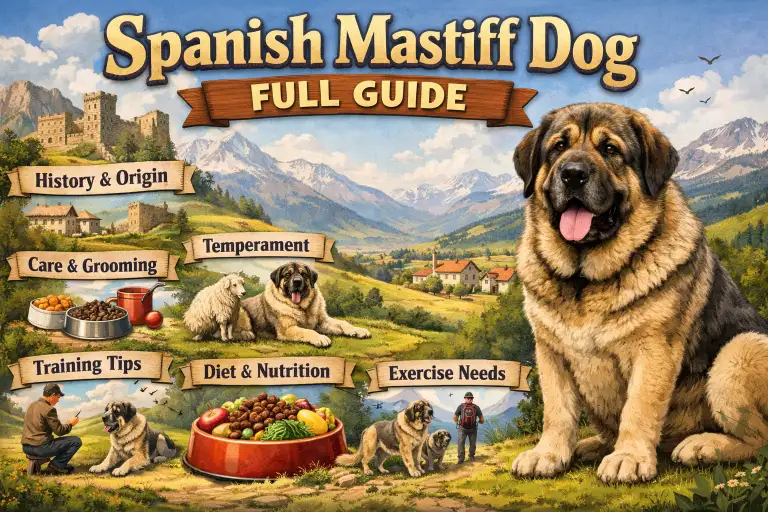
The Spanish Mastiff is one of the most ancient and formidable livestock guardian breeds in the world. Originating in Spain, this giant dog was specifically developed to protect flocks of sheep and cattle from predators such as wolves, bears, and thieves. Over centuries, selective breeding favored traits like independence, intelligence, and an unwavering protective instinct, shaping a dog capable of making decisions without constant human direction.
Unlike many companion breeds, the Spanish Mastiff was never intended to live in a city apartment or rely on owners for constant supervision. Its natural instincts are rooted in working-life scenarios where judgment, territorial awareness, and patience are critical. These dogs are calm and observant, yet assertive when a threat approaches. This combination makes them exceptional guardians for large properties, farms, or estates, but it also means they may not be suitable for first-time dog owners or those without sufficient space and experience handling giant breeds.
Within the breed, there are subtle differences between working-line Spanish Mastiffs and companion or show-line dogs. Working-line dogs tend to have a more developed guarding instinct, slightly larger frames, and a calm but independent demeanor. Companion-line dogs may be slightly more socialized to humans but can still retain strong territorial instincts. Understanding these distinctions is important for anyone considering bringing a Spanish Mastiff into their home, as it directly affects daily routines, training approaches, and expectations for behavior around family members and strangers.
In essence, the Spanish Mastiff is a breed that combines history, function, and temperament in a way that few other dogs can. They are loyal, watchful, and protective, yet require an owner who respects their autonomy and appreciates their purpose as a guardian. Choosing this breed demands careful consideration of space, lifestyle, and experience, but for the right household, it can be a profoundly rewarding companion.
Spanish Mastiff Size, Appearance, and Physical Characteristics
The Spanish Mastiff is a giant dog breed with a strong, muscular body built to guard livestock. They grow slowly and take up to 2–3 years to reach full size. Adult males are usually larger than females and can weigh anywhere between 140 to 220 pounds, with heights ranging from 28 to 35 inches at the shoulder. Females are slightly smaller, typically weighing 120 to 200 pounds and standing 26 to 32 inches tall. These dogs have a thick bone structure and broad chest, which helps them stay steady while protecting flocks.
Their coat is thick and dense, designed to keep them warm during cold winters and protect them from scratches and bites. Coat colors vary widely, including fawn, black, brindle, and wolf-gray. Some dogs may have white markings on their chest or paws. The loose skin around their neck, called a dewlap, and their large head with a strong jaw are some of the breed’s most distinctive features. These traits make them look impressive, but they also serve practical purposes for guarding and protecting against predators.
Spanish Mastiffs have a calm and steady appearance. Their eyes are dark and alert, showing intelligence and awareness. Despite their size, their movement is surprisingly smooth and balanced, giving them endurance over long hours of patrolling property. Overall, their physical build is a perfect mix of strength, protection, and stamina.
Spanish Mastiff Size & Physical Stats
| Feature | Male | Female |
|---|---|---|
| Height (at shoulder) | 28–35 inches | 26–32 inches |
| Weight | 140–220 lbs | 120–200 lbs |
| Maturity Age | 2–3 years | 2–3 years |
| Build | Muscular, broad chest | Muscular, slightly smaller |
| Growth Pattern | Slow, steady growth | Slow, steady growth |
Coat & Appearance Overview
| Feature | Description | Practical Effect |
|---|---|---|
| Coat Type | Thick, dense | Protects against cold and scratches |
| Coat Colors | Fawn, black, brindle, wolf-gray, sometimes white markings | Helps blend with surroundings and identification |
| Dewlap | Loose skin on neck | Protects throat from bites |
| Head & Jaw | Large, strong | Helps defend flocks |
| Movement | Smooth and balanced | Endurance for long patrolling hours |
Spanish Mastiff Temperament, Personality, and Real-Life Behavior
The Spanish Mastiff is a calm and protective dog. They are very loyal to their family and will watch over children and adults alike. They are not usually aggressive without a reason, but they can be suspicious of strangers. This makes them excellent guard dogs for homes, farms, or large properties. They are intelligent and independent, which means they can make decisions on their own when protecting their territory.
With children, Spanish Mastiffs are generally gentle and patient, but because of their large size, supervision is important. Around other dogs, they can get along well if they are socialized from a young age. Small animals like cats or rabbits need to be introduced carefully because the Spanish Mastiff has strong guarding instincts and may see them as part of the territory.
These dogs are also very observant. They notice movement and sounds easily and will respond quickly if something seems unusual. While they are protective, they are usually quiet and will only bark when they sense a real threat. This combination of calmness and alertness makes them both a loyal companion and a reliable guardian.
Spanish Mastiff Behavior Overview
| Behavior Area | Typical Behavior | Important Notes for Owners |
|---|---|---|
| Family | Loyal, gentle, protective | Supervise with small children due to size |
| Strangers | Wary, alert, protective | Socialization early helps prevent over-guarding |
| Children | Patient and gentle | Can knock over small kids accidentally |
| Other Dogs | Usually tolerant | Early socialization recommended |
| Small Animals | Guarding instincts may trigger | Careful introductions needed |
| Alertness | Very observant, responds to threats | Excellent for property guarding |
| Barking | Low unless threatened | Not a noisy breed by default |
This table makes it easy to see at a glance how the Spanish Mastiff behaves in different situations. It also helps potential owners understand what kind of home and supervision is needed.
Training, Exercise, and Daily Care Needs of a Spanish Mastiff
Spanish Mastiffs are smart but very independent. They do not always follow commands immediately, so training requires patience and consistency. They respond best to gentle, reward-based methods rather than harsh corrections. Early socialization is very important to help them behave well around children, other dogs, and strangers.
These dogs do not need a lot of high-intensity exercise like some working breeds, but they do need regular walks and space to roam safely. Mental stimulation is important too, such as letting them patrol a yard or providing interactive toys. Because they are a giant breed, over-exercising young puppies can harm their developing joints.
Grooming is simple but necessary. Their thick coat should be brushed weekly, and more often during seasonal shedding. Regular nail trimming, ear cleaning, and dental care are also important. Spanish Mastiffs tolerate cold weather well, but they can struggle in hot climates, so owners should provide shade and water when temperatures rise.
Spanish Mastiff Daily Care Expectations
| Area | Expectation | Reality for Owners |
|---|---|---|
| Training | Independent, needs patience | Gentle, consistent methods work best |
| Exercise | Low to moderate | Daily walks and yard time, avoid over-exercising puppies |
| Mental Stimulation | Needs tasks or interaction | Patrols, toys, or basic obedience games |
| Grooming | Weekly brushing, seasonal shedding | Simple maintenance but thick coat requires attention |
| Space | Large area preferred | Not suitable for small apartments |
| Climate | Cold tolerant, heat sensitive | Shade and water needed in hot weather |
This table helps readers quickly understand what daily care looks like and what to expect when living with a Spanish Mastiff. It combines training, exercise, mental stimulation, and grooming into one easy-to-read format.
Health, Lifespan, Cost, and Overall Suitability for Owners
Spanish Mastiffs are generally healthy for a giant breed, but they do have some common health risks. Their large size puts extra stress on their joints, so hip and elbow problems can occur. Like many deep-chested dogs, they are also at risk of bloat, which is a serious stomach condition. Heart issues and certain skin conditions can appear as well. Regular veterinary checkups, proper diet, and exercise help keep them healthy. Their typical lifespan ranges from 10 to 12 years, which is normal for large guardian breeds.
Owning a Spanish Mastiff comes with costs to consider. Puppies can be expensive, especially from reputable breeders. Food for a giant breed is significant, and routine veterinary care, grooming, and preventive medications add up. Insurance is recommended, as medical issues for large dogs can be costly. Despite the expenses, many owners find that the loyalty and protection of a Spanish Mastiff make them worth it.
This breed is best suited for owners who have space, experience with large dogs, and a lifestyle that allows regular outdoor activity. They are not ideal for small apartments, first-time dog owners, or people looking for a highly obedient lap dog. Families with children, other pets, or livestock can do well if the dog is socialized early and supervision is provided.
Health Overview
| Health Concern | Risk Level | Notes for Owners |
|---|---|---|
| Hip Dysplasia | Medium | Regular exercise and weight control help |
| Elbow Dysplasia | Medium | Watch for lameness and stiffness |
| Bloat (Gastric Torsion) | High | Feed smaller meals, avoid vigorous exercise after eating |
| Heart Problems | Medium | Annual vet checks recommended |
| Skin Conditions | Low to Medium | Grooming and monitoring for irritations |
Cost of Owning a Spanish Mastiff (Estimated)
| Expense Category | Typical Range | Notes |
|---|---|---|
| Puppy Price | $1,500–$3,500 | Depends on breeder, lineage, and health tests |
| Food | $80–$150/month | Large meals required for adult dogs |
| Veterinary Care | $500–$1,200/year | Includes vaccines, checkups, preventive meds |
| Grooming | $20–$50/month | Brushing, nail trimming, occasional baths |
| Insurance | $50–$150/month | Recommended due to size-related health risks |
Suitability Snapshot
| Owner Type | Suitability | Notes |
|---|---|---|
| Experienced Owners | High | Can handle independent, large breed |
| Families with Children | Medium-High | Needs supervision due to size |
| First-Time Dog Owners | Low | May struggle with training and management |
| Apartment Living | Low | Needs large outdoor space |
| Active Owners / Farms | High | Ideal for property guarding and outdoor activity |
| Multi-Pet Households | Medium | Socialization from young age required |
These tables help readers quickly see health risks, expected costs, and suitability, making it easier to decide if a Spanish Mastiff is the right dog for them.

Ata Ur Rehman is the founder of Pet Age in Human Years Calculator, an educational platform that provides age conversion charts and lifespan guides for dogs, cats, birds, and other companion animals. His work focuses on helping pet owners understand how animal ages translate into human years using commonly accepted age conversion formulas and published lifespan averages.
The website compiles breed and species lifespan data from kennel clubs, breed organizations, and general animal lifespan studies to present simple and easy-to-understand guides for pet owners worldwide.
This website was created to centralize animal age conversion charts into one easy reference platform for pet owners.