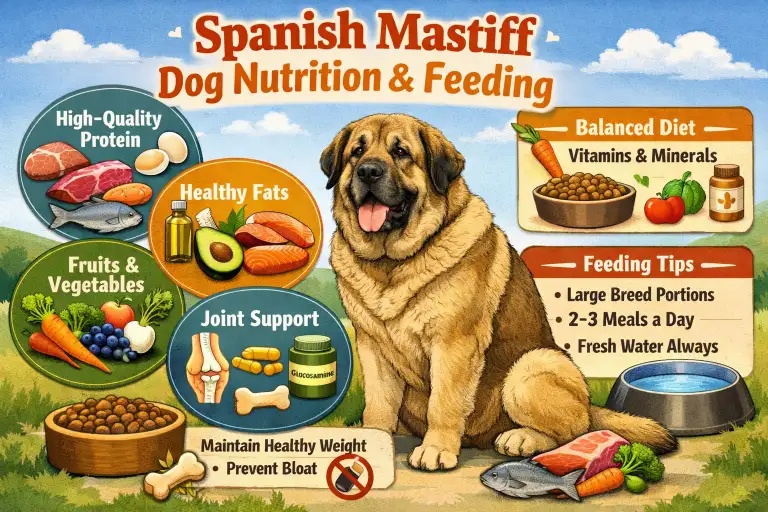
The Spanish Mastiff is a massive, powerful livestock guardian breed that requires careful attention to diet throughout its life. Unlike smaller breeds, improper feeding can lead to rapid weight gain, joint stress, and lifelong health issues. Because these dogs can weigh between 140–220 pounds (63–100 kg) as adults, even small mistakes in portioning or nutrient balance can have major consequences.
Nutrition in Spanish Mastiffs isn’t just about calories — it’s about supporting skeletal growth, maintaining muscle mass, preventing obesity, and preserving heart and joint health. Puppies, in particular, need slow, controlled growth to avoid developmental orthopedic diseases (DOD), such as hip or elbow dysplasia. Adults need diets that maintain lean muscle without excess fat, while seniors benefit from food that supports joint function and digestive health.
A properly balanced diet also affects energy, behavior, and overall lifespan. Working Spanish Mastiffs that guard livestock or roam large properties require more calories and protein than their low-activity companion counterparts. On the other hand, overfeeding a less active dog can lead to rapid weight gain, mobility problems, and shortened life expectancy.
To help you navigate the complexities of feeding this giant breed, this guide covers everything from daily calorie needs and macronutrients to safe foods, special diets, and practical feeding strategies. With the right nutrition, your Spanish Mastiff can grow strong, stay healthy, and thrive in both working and family environments.
Spanish Mastiff Growth & Weight Milestones
| Life Stage | Weight Range (lbs) | Notes on Feeding & Growth |
|---|---|---|
| 8 Weeks (puppy) | 20–40 | Start with high-quality puppy food, 3–4 meals/day, avoid over-supplementing calcium |
| 3 Months | 40–70 | Gradual increase in portions; monitor growth rate to prevent rapid weight gain |
| 6 Months | 70–110 | Begin slow transition to fewer meals (2–3/day); watch joint development |
| 1 Year | 110–160 | Transition to adult diet; maintain lean muscle, avoid overfeeding |
| 2–3 Years | 140–220 | Adult size reached; adjust calories to activity level, consider joint supplements |
| Senior (7+ years) | Varies | Lower calories if activity decreases; focus on joint support and digestibility |
This table provides a visual snapshot of growth stages, helping owners feed appropriately at each phase without guessing.
Spanish Mastiff Nutritional Needs Explained (Protein, Fat, Vitamins & Minerals)
Spanish Mastiffs are giant dogs, so their diet needs to provide the right balance of nutrients to support their big bodies, strong bones, and muscles. Feeding the wrong diet can lead to weight gain, weak joints, or poor growth in puppies. Understanding what nutrients your dog needs is key to keeping them healthy, energetic, and long-lived.
Macronutrients (Protein, Fat, Carbs)
| Nutrient | Why It Matters | Recommended Range |
|---|---|---|
| Protein | Builds and maintains muscles; supports growth | Puppies: 25–30% of calories, Adults: 22–28%, Seniors: 20–25% |
| Fat | Provides energy and helps skin & coat health | Puppies: 12–15%, Adults: 10–14%, Seniors: 8–12% |
| Carbohydrates | Source of energy; aids digestion | 30–50% depending on diet type |
Protein and fat are especially important for puppies and active adults. Carbs are mainly for energy, but too many carbs can cause weight gain in less active dogs.
Micronutrients (Vitamins & Minerals)
| Nutrient | Role | Notes for Spanish Mastiffs |
|---|---|---|
| Calcium & Phosphorus | Strong bones and teeth | Keep balanced, especially in puppies, to avoid joint problems |
| Vitamin D | Supports bone growth | Usually included in commercial diets |
| Omega-3 & Omega-6 | Healthy skin and coat; joint support | Fish oil or high-quality supplements can help |
| Zinc & Iron | Supports immunity and blood health | Usually included in balanced dog foods |
| Antioxidants (Vitamins C & E) | Immune system and aging support | Helps seniors stay healthy |
Tips for Giant-Breed Nutrients
- Puppies: Feed slow-growth diets to avoid fast weight gain that can stress bones.
- Adults: Maintain lean muscle and adjust calories for activity level.
- Seniors: Focus on joint health and digestibility, often with moderate protein and added supplements if needed.
Supplement Table (Optional for Owners)
| Supplement | Purpose | When to Use |
|---|---|---|
| Glucosamine & Chondroitin | Joint support | Active adults or seniors with mobility issues |
| Fish Oil (Omega-3) | Coat, skin, and heart health | All life stages if diet lacks omega-3s |
| Probiotics | Gut health | Dogs with sensitive stomachs or after food changes |
| Calcium | Bone growth | Puppies only if diet is homemade; avoid over-supplementing |
These tables make it easy to see what nutrients matter most for each life stage. Following them will help your Spanish Mastiff grow strong, stay healthy, and live a long life.
How Much to Feed a Spanish Mastiff (Calories, Portions & Feeding Frequency)
Feeding a Spanish Mastiff the right amount is very important. These dogs are very large, so too much food can cause obesity and joint problems, and too little can cause poor growth or low energy. The right amount depends on age, weight, activity level, and life stage.
Daily Calorie Needs by Weight and Activity
| Weight (lbs) | Low Activity (kcal/day) | Moderate Activity (kcal/day) | High Activity (kcal/day) |
|---|---|---|---|
| 140–160 | 2,500–2,800 | 2,800–3,200 | 3,200–3,600 |
| 160–180 | 2,800–3,100 | 3,100–3,500 | 3,500–3,900 |
| 180–200 | 3,100–3,400 | 3,400–3,800 | 3,800–4,200 |
| 200+ | 3,400–3,700 | 3,700–4,100 | 4,100–4,500 |
Feeding Frequency by Life Stage
| Life Stage | Meals per Day | Notes |
|---|---|---|
| Puppy (8–16 weeks) | 3–4 | Small meals to support growth and digestion |
| Puppy (4–6 months) | 3 | Gradually reduce frequency, monitor growth |
| Puppy (6–12 months) | 2–3 | Continue controlled growth, avoid rapid weight gain |
| Adult (1–6 years) | 2 | Adjust portions for activity level |
| Senior (7+ years) | 1–2 | Focus on lean protein, joint support, and digestibility |
Body Condition Tips
- Use a Body Condition Score (BCS) to check if your dog is too thin, ideal, or overweight.
- Feel the ribs: you should feel them without pressing too hard, but they shouldn’t be visible.
- Look at the waist: it should taper slightly behind the ribs, even in a giant breed.
Practical Feeding Advice
- Divide the daily food into 2–3 meals to reduce bloating risk.
- Adjust portions if your dog is very active outdoors or working.
- Weigh your dog regularly to make sure they stay at a healthy weight.
- Avoid feeding table scraps or too many treats, as calories add up fast.
Tables like these make it easy for owners to know exactly how much to feed, depending on their Spanish Mastiff’s weight, age, and lifestyle.
Best Food for Spanish Mastiffs: Kibble, Raw, Fresh & Homemade Diets
Choosing the right food for a Spanish Mastiff is very important. These dogs are giant and strong, so their food needs to support muscles, joints, and overall health. Not all dog food is suitable for such a large breed.
Food Type Comparison for Spanish Mastiffs
| Food Type | Pros | Cons | Giant-Breed Notes |
|---|---|---|---|
| Kibble | Convenient, long shelf life, usually balanced | Some low-quality brands, may contain fillers | Choose large-breed formulas with controlled calcium |
| Canned / Wet | High moisture, palatable | Expensive, spoils quickly | Can mix with kibble for variety |
| Raw / BARF | Natural, high protein, less processed | Risk of bacteria, careful portioning needed | Ensure balanced calcium-phosphorus ratio |
| Fresh / Cooked | Healthy, customizable | Time-consuming, expensive | Best if nutritionally complete, often prepared by specialists |
| Homemade | Full control of ingredients | Must balance nutrients, risk of deficiencies | Consult a vet to avoid growth or joint problems |
Safe vs Unsafe Human Foods for Spanish Mastiffs
| Safe Foods | Unsafe / Toxic Foods |
|---|---|
| Cooked chicken, turkey, or beef | Chocolate |
| Carrots, green beans, pumpkin | Grapes / raisins |
| Rice, oatmeal, plain pasta | Onions, garlic |
| Apples (no seeds), blueberries | Avocado, macadamia nuts |
| Plain yogurt or cottage cheese | Alcohol, caffeine |
Treat Guidelines for Giant Breeds
- Treats should not exceed 10% of daily calories.
- Examples of healthy treats: carrot sticks, small pieces of apple, cooked lean meat.
- Avoid feeding large high-calorie treats that can cause rapid weight gain.
Hydration Tips
- Spanish Mastiffs need plenty of fresh water daily.
- Giant dogs can drink 1–2 gallons of water per day, depending on activity.
- Always provide water before, during, and after exercise.
Feeding the right food type and controlling portions helps prevent weight problems, joint stress, and digestive issues. Tables make it simple to compare options and know what is safe.
Special Diets, Common Feeding Problems & Practical Owner Guidance
Even with the best food, Spanish Mastiffs can face feeding challenges. This section helps owners solve common problems and make the diet safe and balanced for every life stage.
Puppy Growth & Giant-Breed Diet Tips
| Issue | Cause | Solution |
|---|---|---|
| Fast weight gain | Overfeeding, high-fat puppy food | Use slow-growth formulas, measure portions carefully |
| Weak joints | Too much calcium or fast growth | Avoid extra supplements unless vet recommended |
| Digestive upset | Switching foods too quickly | Gradually introduce new food over 7–10 days |
Adult & Senior Feeding Problems
| Problem | Likely Cause | Practical Fix |
|---|---|---|
| Overweight | Low activity, too many treats | Reduce calories, increase exercise, weigh food |
| Sensitive stomach | Food change, low-quality kibble | Choose high-digestibility diets, add probiotics |
| Loose stool | Overfeeding, sudden food switch | Feed smaller meals, slow transition to new diet |
Owner Scenarios & Tips
| Scenario | Tips |
|---|---|
| Picky eater | Offer variety of textures, warm food slightly, mix wet + kibble |
| Multiple dogs | Feed separately, measure portions per dog, track weight |
| Working guardian | Increase protein & fat slightly for extra energy |
| Travel / schedule changes | Pack measured meals, maintain routine as much as possible |
| Food aggression | Feed in separate areas, supervise, avoid high-value treats together |
Safe Food Switching Checklist
- Start by mixing 25% new food with 75% old food.
- Gradually increase new food over 7–10 days.
- Watch for loose stool or vomiting.
- Adjust portions if weight changes.
- Consult your vet if problems persist.
Following these practical guidelines helps Spanish Mastiff owners avoid common feeding mistakes, manage special diets, and maintain healthy growth and weight.

Ata Ur Rehman is the founder of Pet Age in Human Years Calculator, an educational platform that provides age conversion charts and lifespan guides for dogs, cats, birds, and other companion animals. His work focuses on helping pet owners understand how animal ages translate into human years using commonly accepted age conversion formulas and published lifespan averages.
The website compiles breed and species lifespan data from kennel clubs, breed organizations, and general animal lifespan studies to present simple and easy-to-understand guides for pet owners worldwide.
This website was created to centralize animal age conversion charts into one easy reference platform for pet owners.