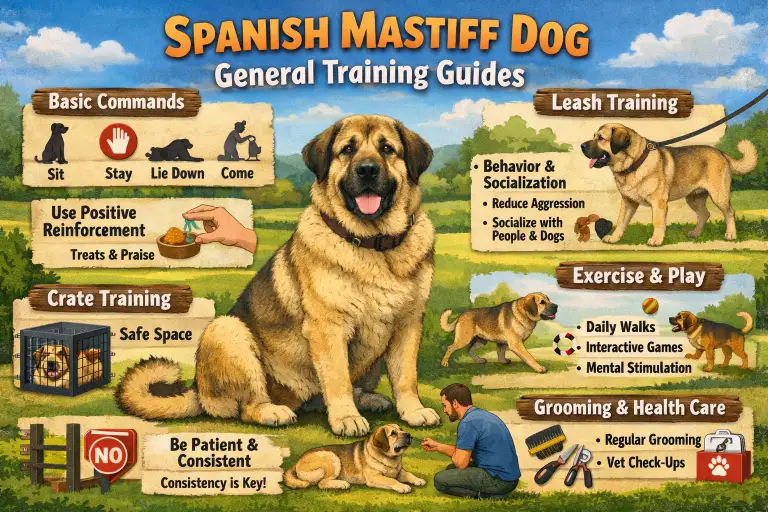
Training a Spanish Mastiff is a unique challenge that requires patience, consistency, and a deep understanding of the breed’s natural instincts. Unlike typical obedience breeds, Spanish Mastiffs are large, independent livestock guardian dogs with strong protective instincts. This means that training is not just about teaching commands—it’s about guiding their natural behavior in a way that keeps both your dog and your family safe.
This guide is designed for anyone looking to train a Spanish Mastiff, whether you are raising a puppy, adopting an adolescent dog, or bringing home an adult rescue. It will help you set realistic expectations, build a foundation of trust and respect, and prevent common mistakes that owners of giant guardian breeds often make.
Successful training for a Spanish Mastiff is less about speed and more about steady progress. These dogs mature slowly, both physically and mentally, and pushing too hard can lead to resistance or fear-based behavior. By following structured, breed-appropriate methods, you can cultivate a confident, obedient, and well-adjusted companion.
Throughout this guide, you will learn not only what commands to teach but also why certain methods work best for a breed with independent thinking and protective instincts. Whether your goal is basic obedience, safe socialization, or managing territorial behavior, the strategies outlined here will provide a roadmap for effective Spanish Mastiff training.
Understanding Spanish Mastiff Behavior and Temperament
Spanish Mastiffs are very different from smaller or more obedient breeds. They were bred to guard livestock, which means they are naturally independent and make decisions on their own. This independence can sometimes look like stubbornness, but it is really just their way of thinking for themselves. Understanding their behavior is the first step to successful training.
These dogs are naturally protective. They watch over their home, family, and territory, and they are slow to trust strangers. Social maturity comes later than in most breeds, often around 2 to 3 years old. This means a young Spanish Mastiff may test boundaries or ignore commands, not out of misbehavior, but because they are still learning how the world works.
Because of these traits, Spanish Mastiffs need training methods that respect their intelligence and instincts. Harsh corrections or forcing obedience often backfires. Instead, calm guidance, clear rules, and consistent reinforcement work best. Knowing what to expect can save owners from frustration and prevent mistakes that may cause fear or aggression.
Spanish Mastiff Behavior Traits vs Owner Expectations
| Trait | What Owners Expect | What Actually Happens |
|---|---|---|
| Obedience | Immediate compliance | Slow, situational response |
| Recall | Comes when called every time | Decision depends on context |
| Guarding | Can be turned on/off | Instinct-driven and protective |
| Maturity | Adult by 12 months | Mental maturity at 2–3 years |
This table helps owners understand the gap between what we hope for and what a Spanish Mastiff naturally does. Recognizing these behaviors early makes training easier and safer for both you and your dog.
Step-by-Step Spanish Mastiff Training Approach
Training a Spanish Mastiff is all about patience, consistency, and using methods that fit their natural behavior. These dogs are smart, independent, and strong, so training must be steady and positive. Here’s how to build a solid foundation for obedience and good behavior.
Start with clear rules. Decide what your dog can and cannot do in the house and yard. Everyone in the family must follow the same rules. Consistency is key because Spanish Mastiffs notice even small differences in what people allow.
Use short, focused sessions. Because they are giant dogs with slow learning patterns, long sessions can cause boredom or resistance. Calm encouragement and rewards, such as praise or small treats, help them understand what you want.
Teach basic commands like sit, stay, come, and leave it. Practice in a quiet area first, then slowly introduce distractions. Use positive reinforcement every time your dog responds correctly.
Socialization is important, but it should be controlled and gradual. Introduce new people, animals, and environments carefully. Avoid forcing interactions, as this can increase fear or guarding instincts.
Ideal Spanish Mastiff Training Session Structure
| Factor | Recommendation |
|---|---|
| Session length | 5–10 minutes |
| Sessions per day | 1–2 |
| Best environment | Quiet, familiar space |
| Reinforcement type | Calm praise, small treats |
| Progress speed | Slow and steady |
Puppy vs Adult Spanish Mastiff Training Differences
| Aspect | Puppy | Adult |
|---|---|---|
| Focus | Learning boundaries and exposure | Reliability and calm control |
| Progress | Quick learning of basic cues | Slower, requires repetition |
| Mistake tolerance | Higher | Lower, mistakes need gentle correction |
| Socialization | Critical for life | Controlled and selective |
Using these tables helps owners plan training sessions, know what to expect, and adjust based on age. Puppies need more social exposure, while adults benefit from consistent practice and reinforcement of learned behaviors.
Common Spanish Mastiff Training Problems and Solutions
Even with consistent training, Spanish Mastiffs can develop challenges because of their independent and protective nature. Knowing the most common problems and how to fix them will help owners stay patient and successful.
One common issue is ignoring commands outdoors. Spanish Mastiffs are naturally curious and may choose to explore before obeying. This is not stubbornness—it is their independent thinking. The solution is to practice recall in low-distraction areas first, gradually increasing distractions, and rewarding compliance immediately.
Overprotective or territorial behavior can also appear. These dogs may bark at strangers or defend areas they consider theirs. Training should focus on setting clear boundaries, controlled exposure to visitors, and consistent reinforcement when the dog behaves calmly.
Leash resistance or pulling is another frequent problem. Large guardian dogs have strong muscles, so leash training should start early. Use slow, calm walks, reward walking beside you, and never yank or punish your dog, as this can increase tension or fear.
Adolescent regression may occur around 12–24 months when the dog tests rules. Owners must remain consistent, maintain boundaries, and use positive reinforcement rather than punishment.
Common Problems and Practical Fixes
Not listening Independence Short training sessions, reward correct response immediately
Pulling on leash Excitement or environmental stress Slow walks, reward calm walking, avoid force
Excessive barking Guarding instinct Teach boundaries, controlled exposure to triggers
Regression in adolescence Delayed maturity Consistent rules, calm reinforcement, patience
Overprotective behavior Territorial instincts Set boundaries, reward calm behavior, gradual socialization
This table helps owners quickly identify problems and follow clear, actionable solutions, making training more manageable for both puppies and adult Spanish Mastiffs.
When to Seek Professional Help for Spanish Mastiff Training
While many Spanish Mastiffs can be trained successfully at home, some situations require professional help. Knowing when to get assistance keeps both you and your dog safe and ensures progress does not stall.
If your dog shows true aggression, such as growling, lunging, or biting toward people or other animals, it is important to contact a trainer experienced with large guardian breeds immediately. This behavior can escalate quickly if not managed by someone with the right knowledge.
Fear-based behaviors are another red flag. Dogs that freeze, hide, or react nervously in everyday situations may need guidance from a behaviorist to prevent long-term anxiety or stress.
Even if your dog is not aggressive, professional support can help with complex issues like guarding multiple areas, leash reactivity, or stubbornness that slows learning. A trainer who understands Spanish Mastiffs will use calm, consistent methods that respect their independent nature.
When choosing a professional, look for someone with experience in large guardian dogs rather than just general obedience. Ask about their methods, success stories, and how they handle protective behaviors safely.
Seeking help at the right time can prevent small issues from turning into big problems. It also gives you confidence that your Spanish Mastiff will grow into a well-behaved, loyal companion.
Outbound Link Sentence (to add at the end of the article):
For more detailed guidance on large guardian dog breeds, you can visit the American Kennel Club’s Spanish Mastiff page.

Ata Ur Rehman is the founder of Pet Age in Human Years Calculator, an educational platform that provides age conversion charts and lifespan guides for dogs, cats, birds, and other companion animals. His work focuses on helping pet owners understand how animal ages translate into human years using commonly accepted age conversion formulas and published lifespan averages.
The website compiles breed and species lifespan data from kennel clubs, breed organizations, and general animal lifespan studies to present simple and easy-to-understand guides for pet owners worldwide.
This website was created to centralize animal age conversion charts into one easy reference platform for pet owners.