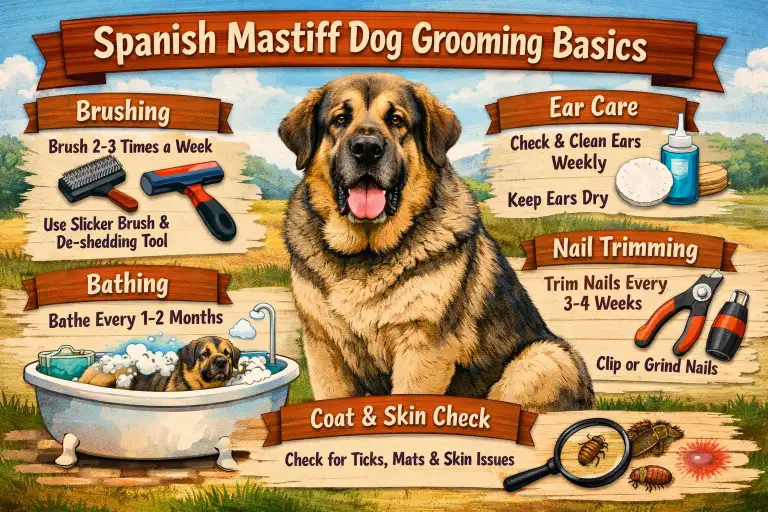
Grooming a Spanish Mastiff is an essential part of keeping this giant guardian breed healthy, comfortable, and looking its best. Despite their imposing size and outdoor lifestyle, these dogs are often misunderstood as “low maintenance” because of their rugged appearance. In reality, proper grooming prevents matting, reduces shedding, controls odor, and allows you to spot early signs of skin or health issues before they become serious.
Spanish Mastiffs have a thick double coat designed to protect them from harsh weather, predators, and rough terrain. This dense outer coat and soft undercoat require regular attention to avoid tangles, debris accumulation, and seasonal coat blows. Skipping routine care can lead to discomfort, skin infections, and more challenging grooming sessions later.
For owners, grooming is not just about appearance—it’s a vital component of their overall well-being. A consistent grooming routine strengthens the bond between dog and owner, reduces the risk of injury from overgrown nails or ear infections, and ensures your Spanish Mastiff remains comfortable and healthy, whether they spend most of their time indoors or outdoors.
This guide will give you practical, step-by-step advice to make grooming manageable, even for such a large and heavy-coated breed, covering brushing, bathing, nail care, ear cleaning, skin monitoring, and common mistakes to avoid.
Spanish Mastiff Coat Type, Shedding, and Grooming Frequency
The Spanish Mastiff has a double coat, which means it has two layers: a soft undercoat and a thick outer coat. The undercoat keeps them warm in cold weather, while the outer coat protects them from rain, snow, and rough terrain. This double coat is what makes grooming important because dirt, debris, and loose hair can get trapped easily.
Spanish Mastiffs shed a lot, especially during spring and fall. This is called a coat blow, when the undercoat comes out in big amounts. During these times, regular brushing is essential to keep mats and tangles away. Even outside of shedding season, brushing helps keep the coat clean, shiny, and healthy.
groom a Spanish Mastiff based on coat condition and season:
| Coat Condition / Season | Brushing Frequency | Bathing Frequency | Notes |
|---|---|---|---|
| Normal coat, non-shedding | 1–2 times per week | Every 6–8 weeks | Keep coat free of dust and light debris |
| Heavy shedding season (spring/fall) | 3–5 times per week | Every 6 weeks | Use undercoat rake to remove loose hair |
| Dirty after outdoor work | Daily brushing | As needed | Rinse off dirt and debris; spot clean if needed |
| Mats or tangles forming | Daily brushing | As needed | Gently detangle with comb or dematting tool |
Regular grooming not only removes loose hair but also helps spot skin problems early, like dryness, irritation, or ticks. Owners who stick to this routine will have a happier, healthier Spanish Mastiff with a coat that is easier to manage.
How to Groom a Spanish Mastiff at Home (Brushing, Bathing, Tools)
Grooming a Spanish Mastiff at home may feel like a big job, but with the right tools and routine, it becomes much easier. Regular grooming keeps your dog clean, comfortable, and healthy. It also prevents mats, tangles, and skin problems.
Brushing is the most important part of grooming. Use a slicker brush or undercoat rake to remove loose hair, especially during shedding season. Start brushing from the head and work towards the tail. Always brush gently to avoid hurting your dog. Focus on areas where mats form easily, like behind the ears, under the legs, and around the collar.
Bathing should not be too frequent. Over-bathing can dry out the skin. Use a dog-specific shampoo that is gentle on the coat. Rinse thoroughly to remove all soap, and dry your dog completely with a towel or pet dryer on a safe temperature. Never leave a Spanish Mastiff damp, as moisture can lead to skin infections.
Here is a table showing essential grooming tools for a Spanish Mastiff and how to use them:
| Tool | Purpose | How Often to Use | Tips |
|---|---|---|---|
| Slicker brush | Remove loose hair and light tangles | 2–5 times per week | Brush gently; avoid scratching skin |
| Undercoat rake | Remove loose undercoat during shedding season | 3–5 times per week in spring/fall | Focus on thick areas of the undercoat |
| Wide-tooth comb | Detangle mats | As needed | Use after brushing; hold hair close to skin to avoid pulling |
| Dog shampoo | Clean coat and skin | Every 6–8 weeks or as needed | Choose gentle, dog-specific shampoo; rinse well |
| Towels / Pet dryer | Dry coat after bath | Every bath | Keep dryer on low to medium heat; avoid ears and face |
| Nail clippers | Trim nails safely | Every 4–6 weeks | Be careful not to cut too short; check for thick nails |
Using these tools regularly keeps the coat healthy, reduces shedding, and makes your Spanish Mastiff more comfortable.
Nail, Ear, and Skin Care for Spanish Mastiffs
Taking care of nails, ears, and skin is an important part of grooming a Spanish Mastiff. These large dogs can develop problems if these areas are ignored. Regular checks help prevent pain, infections, and long-term health issues.
Nail care is essential because long nails can hurt your dog’s feet and joints. Trim nails every 4–6 weeks. Use large dog nail clippers and be careful not to cut too close to the quick, which can cause bleeding.
Ear care helps prevent infections. Check the ears weekly for dirt, wax, or bad smells. Clean gently with a dog-safe ear cleaner. Avoid putting water or soap directly in the ear canal.
Skin and coat health is important for spotting problems early. Look for redness, bumps, dry patches, or parasites like ticks and fleas. Grooming gives you a chance to see these issues before they get worse.
Here is a table to help you quickly check your Spanish Mastiff’s nails, ears, and skin:
| Body Part | What to Check | Signs of Problem | Action |
|---|---|---|---|
| Nails | Length and cracks | Nails too long, broken, or black quick | Trim carefully, consult vet if quick is dark or infected |
| Ears | Cleanliness and smell | Wax build-up, foul odor, redness | Clean with dog-safe solution, visit vet if infection suspected |
| Skin | Coat and skin | Redness, bald patches, dry flakes, bumps, ticks/fleas | Brush regularly, apply dog-friendly conditioner if needed, see vet if persistent |
| Coat | Shine and tangles | Dull coat, mats, shedding clumps | Brush daily during shedding season, use undercoat rake |
Checking these areas while grooming keeps your Spanish Mastiff comfortable, healthy, and happy.
Common Grooming Mistakes, Professional Grooming, and FAQs
Many Spanish Mastiff owners make simple mistakes that can cause discomfort or coat problems. Knowing these common errors and how to avoid them keeps your dog healthy and happy.
Shaving the coat is a frequent mistake. Shaving a double coat can damage the undercoat, reduce protection from heat or cold, and cause the coat to grow back unevenly. Over-bathing dries the skin and can lead to irritation. Ignoring nail trimming or ear cleaning because the dog is large can cause pain or infections.
Sometimes, home grooming may not be enough. Professional groomers have the experience, tools, and space to manage very large dogs safely. If your Spanish Mastiff is heavily matted, anxious, or extremely dirty, calling a professional is the best option.
Here’s a simple table of common grooming mistakes and how to fix them:
| Common Mistake | Why it’s Harmful | Correct Approach |
|---|---|---|
| Shaving the double coat | Damages undercoat and skin protection | Brush and trim mats, do not shave the coat |
| Over-bathing | Dries out skin, removes natural oils | Bathe every 6–8 weeks, spot clean if needed |
| Skipping nail trimming | Long nails hurt feet and joints | Trim every 4–6 weeks, use proper clippers |
| Ignoring ears | Can lead to infections | Clean weekly with dog-safe ear cleaner |
| Not brushing during shedding season | Mats, tangles, heavy hair around home | Brush 3–5 times per week in spring/fall |
Here are some frequent owner questions:
- Do Spanish Mastiffs really need grooming if they live outdoors?
Yes. Even outdoor dogs need brushing, nail care, and skin checks to stay healthy. - How much do they shed?
They shed heavily, especially in spring and fall, so regular brushing is required. - Can I shave them in summer?
No. Shaving can harm the coat and skin. Focus on brushing and keeping the dog cool in other ways.
Following these tips ensures your Spanish Mastiff stays comfortable, healthy, and looking great, whether you groom at home or with a professional.
For more tips on dog grooming tools and techniques, you can visit the American Kennel Club’s grooming guide here.

Ata Ur Rehman is the founder of Pet Age in Human Years Calculator, an educational platform that provides age conversion charts and lifespan guides for dogs, cats, birds, and other companion animals. His work focuses on helping pet owners understand how animal ages translate into human years using commonly accepted age conversion formulas and published lifespan averages.
The website compiles breed and species lifespan data from kennel clubs, breed organizations, and general animal lifespan studies to present simple and easy-to-understand guides for pet owners worldwide.
This website was created to centralize animal age conversion charts into one easy reference platform for pet owners.