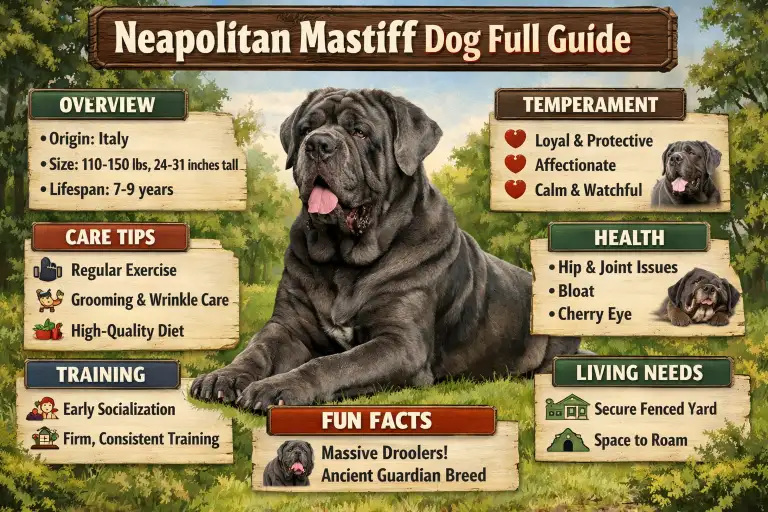
The Neapolitan Mastiff is not a modern family pet shaped by convenience—it is a purpose-built guardian with centuries of history behind its imposing presence. This is a giant, territorial, deeply loyal breed developed to protect property and people through quiet authority rather than flashy aggression. Understanding why the Neapolitan Mastiff exists is essential before considering whether it belongs in a modern home.
Historically rooted in ancient Molosser-type dogs, the Neapolitan Mastiff evolved in southern Italy as a serious estate and household guardian. These dogs were valued for their intimidating appearance, natural suspicion of strangers, and unwavering attachment to their owners. Unlike alert-driven watchdogs, the Neapolitan Mastiff’s strength lies in deterrence—its massive size, loose skin, and calm vigilance were meant to discourage threats without constant confrontation.
After World War II, dedicated Italian breeders preserved and standardized the breed, emphasizing its guardian instincts, heavy structure, and unmistakable wrinkled appearance. That original function still defines the modern Neapolitan Mastiff today. This is a dog that observes first, reacts deliberately, and bonds intensely with its family—traits that make it exceptional in the right environment and overwhelming in the wrong one.
Before diving deeper into size, temperament, and care, the snapshot below provides a quick, realistic overview of what living with a Neapolitan Mastiff actually entails.
Neapolitan Mastiff Breed Overview
| Trait | Details |
|---|---|
| Breed Type | Giant guardian dog |
| Origin | Italy |
| Original Purpose | Estate and family protection |
| Size Category | Giant |
| Energy Level | Low to moderate |
| Temperament Core | Calm, watchful, protective |
| Barking Tendency | Low |
| Experience Level | Advanced owners recommended |
It’s important to be clear from the start: the Neapolitan Mastiff is not a casual companion breed. It thrives with confident, consistent owners who respect its instincts, manage its environment, and understand the responsibility that comes with owning a powerful guardian dog. For those prepared for that role, the Neapolitan Mastiff offers unmatched loyalty, presence, and quiet protection that few breeds can replicate.
Neapolitan Mastiff Size, Appearance, and Physical Characteristics
The Neapolitan Mastiff is one of the largest and heaviest dog breeds in the world. Most people notice this breed because of its massive body, loose skin, and deep wrinkles. This dog is built to look powerful and serious, and that look is not by accident. Every part of its body was shaped for guarding and protection.
This is not a tall and slim dog. The Neapolitan Mastiff is wide, heavy, and slow-moving. Even when resting, it takes up a lot of space. Owners must be ready for a dog that is physically overwhelming, especially indoors.
Neapolitan Mastiff Size and Weight
| Sex | Height (at shoulder) | Weight |
|---|---|---|
| Male | 26–31 inches | 150–200+ lbs |
| Female | 24–29 inches | 110–150 lbs |
Neapolitan Mastiffs grow fast in their first year but take a long time to fully mature. Most do not reach full body mass until 3 to 4 years of age. Because of their size, puppies must not be over-exercised, or their joints can be damaged.
Physical Traits at a Glance
| Feature | Description |
|---|---|
| Build | Very large, heavy-boned, wide chest |
| Head | Huge head with deep wrinkles |
| Skin | Loose, thick, and folded |
| Coat | Short and dense |
| Shedding | Moderate |
| Drooling | Very heavy |
| Gait | Slow, rolling walk |
The loose skin and wrinkles are one of the breed’s most famous features. While they look dramatic, they also need care. Dirt, moisture, and food can get trapped in skin folds, which can cause infections if not cleaned regularly.
The coat is short and easy to brush, but shedding still happens year-round. Drooling is a major part of daily life with this breed. Water bowls, floors, walls, and furniture often get wet from drool, especially after eating or drinking.
Neapolitan Mastiffs come in solid colors such as black, blue, mahogany, and tawny, as well as brindle patterns. Their dark eyes and serious expression often make them look calm, watchful, and intimidating even when they are relaxed.
Because of their size and body shape, these dogs need strong flooring, large beds, wide doorways, and enough room to turn around comfortably. Small living spaces can feel cramped very quickly with a Neapolitan Mastiff.
Neapolitan Mastiff Temperament, Personality, and Real-Life Behavior
The Neapolitan Mastiff is calm, serious, and very protective. This dog does not act silly or playful like many family breeds. It watches its home quietly and stays close to its people. Most of the time, it is relaxed and slow-moving, but it is always aware of what is happening around it.
This breed was made to guard, not to greet strangers. That means its behavior is very different from friendly dogs that love visitors. A Neapolitan Mastiff thinks first, then acts. This makes it a strong protector, but it also means owners must guide its behavior from an early age.
Below is a clear look at the main temperament traits owners see in daily life.
Neapolitan Mastiff temperament traits explained
| Trait | What it means in real life |
|---|---|
| Protectiveness | Strong and natural, not trained |
| Aggression | Low when raised and handled correctly |
| Loyalty | Deep bond with family |
| Independence | High, makes its own decisions |
| Alertness | Quiet but always watching |
| Confidence | Very strong and steady |
With family members, the Neapolitan Mastiff is usually gentle and calm. It often stays close to one person but protects the whole household. These dogs like routine and feel safest when they know who belongs in the home.
With strangers, the behavior is very different. This breed does not rush to greet new people. It may stand still, stare, or place itself between the owner and the visitor. This is normal guardian behavior. Owners must introduce guests calmly and clearly so the dog understands there is no danger.
Behavior in common situations
| Situation | Typical behavior |
|---|---|
| With family | Calm, loyal, protective |
| With guests | Reserved, watchful |
| With children | Gentle but size can be risky |
| With other dogs | Possible same-sex aggression |
| Alone at home | Can handle short periods |
With children, the Neapolitan Mastiff is usually patient, but its size is a serious concern. Even a gentle movement can knock a child down. Children should never climb, pull, or sit on this dog. Adult supervision is always needed.
With other pets, results vary. Some Neapolitan Mastiffs live peacefully with other dogs and cats, especially if raised together. Others may show dominance or same-sex aggression. Early social exposure helps, but this breed should never be left to “figure it out” on its own.
Many people ask if Neapolitan Mastiffs are aggressive. The truth is they are protective, not aggressive. Problems happen when owners skip training, allow bad habits, or fail to control introductions. A well-managed Neapolitan Mastiff is calm and stable, but a poorly managed one can become a risk.
Training, Exercise, and Daily Care Requirements
The Neapolitan Mastiff needs calm handling, clear rules, and steady care. This breed is not very active, but it is very strong. Training and daily routines are important to keep both the dog and the people safe.
Training should start early, even when the puppy is small. These dogs grow fast and become powerful. Waiting too long to train can lead to problems that are hard to fix later. The Neapolitan Mastiff is smart but independent. It listens best to owners who are calm, confident, and consistent.
Daily care is not hard, but it must be done the right way. Below is a simple look at what this breed needs each day.
Daily care breakdown
| Care area | What is needed |
|---|---|
| Exercise | 30–60 minutes per day |
| Training | Short, calm sessions |
| Mental activity | Watching, learning routines |
| Grooming | Low coat care, high skin care |
| Heat tolerance | Poor |
| Space needs | Large indoor space |
Exercise should be gentle and controlled. Long walks, light play, and short training sessions work best. Running, jumping, or hard exercise can damage joints, especially in puppies. This breed does not need heavy workouts, but it does need daily movement to stay healthy.
Mental activity is just as important. Neapolitan Mastiffs like routine. They feel safe when they know who comes into the home and what is expected of them. Simple obedience work and calm exposure to new places help keep their minds balanced.
Grooming is easy in some ways and demanding in others. The coat is short and simple to brush, but the skin folds need regular cleaning. If skin folds stay wet or dirty, infections can start quickly. Drooling is heavy, so owners should expect to clean faces, floors, and walls often.
Common training and care challenges
| Challenge | Why it matters |
|---|---|
| Leash pulling | Dog is very strong |
| Late training | Bad habits become dangerous |
| Harsh methods | Causes fear or shutdown |
| Over-exercise | Joint damage risk |
| Skin fold care | Prevents infections |
This breed does not respond well to yelling or force. Harsh training can make the dog shut down or lose trust. Calm leadership works best. Clear rules, steady voice, and patience lead to better results.
Because of their size and weight, Neapolitan Mastiffs do not handle heat well. Hot weather can be dangerous. Shade, water, and indoor cooling are very important, especially in warm climates.
Health, Cost, Pros and Cons, and Is the Neapolitan Mastiff Right for You?
The Neapolitan Mastiff is a powerful and loyal dog, but it also comes with serious health needs and high costs. This is not a breed to choose based on looks alone. Owners must be ready for vet care, daily cleaning, and a shorter lifespan than many other dogs.
Health and lifespan overview
| Health factor | What owners should know |
|---|---|
| Average lifespan | 7–9 years |
| Joint problems | Hip and elbow dysplasia are common |
| Eye issues | Loose eyelids can cause eye trouble |
| Heart problems | Seen more often in giant breeds |
| Skin infections | High risk in skin folds |
| Bloat risk | Life-threatening emergency |
Most Neapolitan Mastiffs live shorter lives because of their size. Joint pain, heart disease, and skin problems are common. Regular vet visits and buying from a responsible breeder can help, but they do not remove all risks.
Cost to own a Neapolitan Mastiff
| Expense type | Cost level |
|---|---|
| Puppy price | High |
| Food costs | Very high |
| Vet care | High |
| Grooming supplies | Moderate |
| Insurance | Often needed |
Food costs are high because this dog eats a lot. Vet bills are also higher because large dogs need more medicine and stronger equipment. Many owners choose pet insurance to help manage costs.
Pros and cons of the Neapolitan Mastiff
| Pros | Cons |
|---|---|
| Extremely loyal | Short lifespan |
| Excellent natural guardian | Very large and heavy |
| Calm indoors | Heavy drooling |
| Low barking | High medical costs |
| Strong family bond | Needs experienced owner |
Is this breed right for you?
This breed is best for people who:
- Have experience with large or guarding dogs
- Have a large home and secure yard
- Can afford high food and vet costs
- Want a calm but protective dog
This breed is not a good choice for:
- First-time dog owners
- Small homes or apartments
- Families who want a playful, social dog
- Owners who cannot manage size and strength
The Neapolitan Mastiff is a serious dog for serious owners. In the right home, it is calm, loyal, and deeply protective. In the wrong home, it can become a risk and a heavy burden. Choosing this breed should be done with care, honesty, and full understanding.
For official breed standards, history, and recognized characteristics, you can also review the Neapolitan Mastiff profile from the American Kennel Club:
https://www.akc.org/dog-breeds/neapolitan-mastiff/

Ata Ur Rehman is the founder of Pet Age in Human Years Calculator, an educational platform that provides age conversion charts and lifespan guides for dogs, cats, birds, and other companion animals. His work focuses on helping pet owners understand how animal ages translate into human years using commonly accepted age conversion formulas and published lifespan averages.
The website compiles breed and species lifespan data from kennel clubs, breed organizations, and general animal lifespan studies to present simple and easy-to-understand guides for pet owners worldwide.
This website was created to centralize animal age conversion charts into one easy reference platform for pet owners.