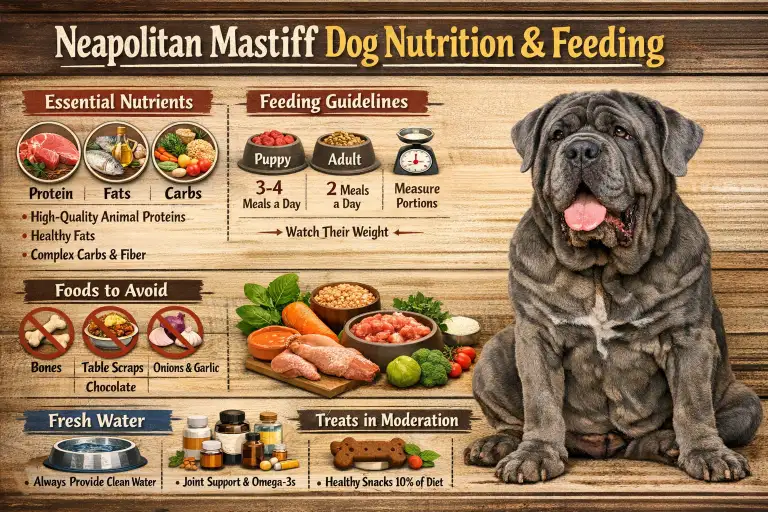
Neapolitan Mastiffs are not just “large dogs that eat more.” They are a giant, heavy-boned, slow-maturing breed with very specific nutritional vulnerabilities. What you feed—and how you feed—directly affects their joint health, growth rate, digestion, skin condition, weight, and lifespan far more than many owners realize.
This guide is designed to help you make safe, evidence-based feeding decisions for a Neapolitan Mastiff at every life stage, whether you’re raising a fast-growing puppy, managing an adult guardian, or supporting an aging dog with joint issues.
Why nutrition is especially critical for Neapolitan Mastiffs
Neapolitan Mastiffs place enormous mechanical stress on their bodies simply by existing. Poor nutrition doesn’t just cause cosmetic issues—it can create lifelong orthopedic and metabolic problems.
Key breed-specific reasons diet matters:
- Slow, controlled growth is essential
Overfeeding calories, protein, or minerals during puppyhood can accelerate growth too quickly, increasing the risk of hip dysplasia, elbow dysplasia, and long-term joint damage. - Joint health is a lifelong concern
Excess weight, improper calcium-to-phosphorus balance, and inflammatory diets all worsen joint wear in a breed already predisposed to mobility issues. - Obesity happens easily—and silently
Neapolitan Mastiffs are often low-activity indoors. Even “normal” portions can lead to gradual weight gain that owners don’t notice under loose skin and heavy bone. - Digestive sensitivity is common
Large meals, rapid food changes, low-quality ingredients, or excess fat can trigger gas, loose stools, and discomfort in this breed. - Skin folds and coat health reflect diet quality
Poor nutrition can worsen skin infections, excessive oiliness, dandruff, and fold irritation, while balanced fats and micronutrients can significantly improve skin resilience.
What this guide will help you do
By the end of this article, you’ll be able to:
- Understand what a proper Neapolitan Mastiff diet actually looks like (beyond marketing claims)
- Choose food that supports joint health, digestion, and controlled growth
- Feed the right amount, not just the amount on the bag
- Adjust feeding for puppies, adults, seniors, and different activity levels
- Avoid common feeding mistakes that shorten lifespan or worsen mobility
- Recognize when nutrition alone isn’t enough and professional guidance is needed
What to Feed a Neapolitan Mastiff: Core Nutritional Requirements
Feeding a Neapolitan Mastiff is not about giving “more food” because the dog is big. It is about giving the right nutrients, in the right balance, to support a heavy body, large joints, and slow growth. A poor balance can cause joint pain, stomach problems, skin issues, and weight gain.
The right nutrient balance for a Neapolitan Mastiff
A good Neapolitan Mastiff diet must support muscle without pushing the dog to grow or gain weight too fast. These dogs need moderate, controlled nutrition, not extreme levels.
Ideal Nutrient Ranges for Neapolitan Mastiffs (Adult Dogs)
| Nutrient | Recommended Range | Why It Matters for This Breed | Risk if Too High or Too Low |
|---|---|---|---|
| Protein | 22–26% | Maintains muscle without stressing joints | Too high may cause rapid weight gain |
| Fat | 10–14% | Provides energy without obesity | Too much fat causes weight gain and loose stool |
| Calcium | 0.8–1.2% | Supports bones and joints | Excess can damage growing joints |
| Phosphorus | 0.6–1.0% | Works with calcium for bone strength | Imbalance harms bone growth |
| Calcium : Phosphorus | ~1.2:1 | Essential for large-breed bone health | Wrong ratio increases joint disease risk |
| Fiber | 3–6% | Helps digestion and stool quality | Too much can reduce nutrient absorption |
| Omega-3 fats | Present (EPA/DHA) | Reduces joint and skin inflammation | Deficiency worsens joints and skin |
For puppies, these ranges are even more important, especially calcium and calories. Too much is far more dangerous than too little in giant breeds.
Protein, fats, and carbs in simple terms
- Protein builds muscle and supports repair. Neapolitan Mastiffs need steady protein, not very high levels. More protein does not mean stronger joints.
- Fats give energy and help skin and coat health. Too much fat is a common cause of obesity and gas.
- Carbohydrates are not bad. Good carbs provide energy and fiber, helping digestion and stool quality.
The key is balance, not extremes.
Micronutrients that matter most for this breed
Large mastiff breeds rely heavily on certain vitamins and minerals to stay mobile and healthy.
Key Micronutrients for Joint, Skin, and Gut Health
| Nutrient | Main Benefit | Natural Sources | Supplement Needed? |
|---|---|---|---|
| Omega-3s (EPA/DHA) | Joint and skin support | Fish oil, salmon | Sometimes helpful |
| Zinc | Skin and immune health | Meat, fish | Only if deficient |
| Vitamin E | Skin and cell protection | Oils, meats | Usually in food |
| Glucosamine | Joint support | Added to some foods | Optional, vet-guided |
| Probiotics | Digestive health | Fermented additives | Helpful for sensitive dogs |
Never add supplements “just in case.” Too many supplements can be harmful, especially calcium in puppies.
How to read dog food labels (without confusion)
When choosing food for a Neapolitan Mastiff, always check:
- The food is labeled “complete and balanced”
- It meets standards for large or giant breeds
- Protein and fat fall within safe ranges
- Calcium and phosphorus are clearly listed
- Marketing words like “premium” or “ancestral” are not used instead of real numbers
Avoid foods that:
- Hide mineral levels
- Promote extremely high protein or fat
- Push fast growth for puppies
Good food is boring, consistent, and balanced.
How Much to Feed a Neapolitan Mastiff (Calories, Portions, and Schedule)
Knowing what food to choose is only half the job. The biggest feeding mistakes with Neapolitan Mastiffs happen when owners give too much food, even when the food itself is good.
Because this breed is large, slow-moving, and heavy-boned, overfeeding is easy and dangerous. Extra weight puts stress on the joints, heart, and spine.
Daily calorie needs by weight and activity level
Neapolitan Mastiffs do not burn as many calories as people expect. Many are calm indoors and only moderately active.
Daily Calorie Needs for Neapolitan Mastiffs
| Dog Weight | Low Activity | Moderate Activity | High Activity |
|---|---|---|---|
| 110 lb (50 kg) | 1,900 kcal | 2,300 kcal | 2,700 kcal |
| 130 lb (59 kg) | 2,100 kcal | 2,500 kcal | 2,900 kcal |
| 150 lb (68 kg) | 2,300 kcal | 2,700 kcal | 3,100 kcal |
| 170 lb (77 kg) | 2,500 kcal | 3,000 kcal | 3,400 kcal |
Low activity means short walks and mostly resting.
High activity means regular long walks, training, or working roles.
These are starting points, not fixed rules.
Why scoops cause overfeeding
Most dog food bags show feeding amounts in cups. This often leads to weight gain because:
- Cups are not exact
- Different foods have different calories
- Treats are usually ignored in the count
Calories matter more than volume.
Portion Size Examples by Food Type
| Food Type | Calories per Cup / Unit | Example Daily Amount | Common Mistake |
|---|---|---|---|
| Dry kibble | 350–450 kcal per cup | 5–7 cups total | Using a large scoop |
| Fresh food | 150–250 kcal per cup | 9–14 cups total | Mixing without measuring |
| Canned food | 300–400 kcal per can | 5–8 cans | Feeding only canned |
| Raw diet | Varies widely | Weight-based | No calorie tracking |
Using a kitchen scale gives better results than guessing.
Feeding schedule by life stage
Large dogs digest food better when meals are split.
Feeding Frequency by Age
| Life Stage | Meals Per Day | Why It Helps |
|---|---|---|
| Puppy | 3 meals | Supports steady growth |
| Adult | 2 meals | Helps digestion and weight |
| Senior | 2 smaller meals | Easier on joints and stomach |
Avoid one large meal per day. It increases the risk of bloating and stomach discomfort.
Checking if you are feeding the right amount
A healthy Neapolitan Mastiff should:
- Have ribs you can feel but not see
- Have a waist when viewed from above
- Move easily without heavy breathing
Loose skin can hide fat, so hands-on checks matter more than looks.
If weight goes up slowly, reduce food by 5–10% and recheck in two weeks.
Best Food Types and Safe Feeding Choices for Neapolitan Mastiffs
Many owners feel confused when choosing food for a Neapolitan Mastiff. There are many options, and each claims to be the best. The truth is that no single food type is perfect for every dog. What matters is safety, balance, and how your dog responds to the food.
Comparing common dog food types
Neapolitan Mastiffs do best on foods that are easy to digest, not too rich, and properly balanced for large breeds.
Dog Food Types for Neapolitan Mastiffs
| Food Type | Pros | Cons | Best For | Safety Notes |
|---|---|---|---|---|
| Dry kibble | Easy to store, balanced, affordable | Can be high in calories | Most owners | Choose large-breed formulas |
| Fresh food | Highly digestible, tasty | Expensive, needs storage | Picky eaters | Must be complete & balanced |
| Canned food | Soft texture, high moisture | High cost, large portions | Seniors | Watch calorie intake |
| Raw diet | Natural ingredients | Risk of bacteria, imbalance | Experienced owners | Vet guidance needed |
| Freeze-dried | Convenient raw option | Expensive | Travel feeding | Rehydrate fully |
| Homemade | Full ingredient control | Easy to imbalance | Special cases | Nutritionist required |
For most Neapolitan Mastiffs, a high-quality large-breed kibble or fresh food is the safest and easiest choice.
Grain-free vs grain-inclusive foods
Grains are not bad for dogs. Many Neapolitan Mastiffs digest grains well.
Grain-free diets should only be used if:
- Your dog has a diagnosed grain sensitivity
- A veterinarian recommends it
Grain-free food is not healthier by default and should not be chosen because of trends.
Safe and unsafe human foods
Many owners share food with their dogs. Some foods are safe, but others can be dangerous.
Safe vs Unsafe Human Foods for Neapolitan Mastiffs
| Food | Safe or Toxic | Feeding Notes | Risk Level |
|---|---|---|---|
| Plain cooked chicken | Safe | No bones or seasoning | Low |
| Rice | Safe | Good for digestion | Low |
| Carrots | Safe | Feed raw or cooked | Low |
| Apples | Safe | Remove seeds | Low |
| Grapes | Toxic | Can cause kidney failure | High |
| Chocolate | Toxic | Affects heart and nerves | High |
| Onions | Toxic | Damages red blood cells | High |
| Garlic | Toxic | Causes stomach upset | High |
| Xylitol | Toxic | Life-threatening | Extreme |
If you are unsure, do not feed it.
Treats and snacks
Treats should make up less than 10% of daily calories.
Good treat choices:
- Small pieces of cooked meat
- Single-ingredient dog treats
- Low-calorie training treats
Avoid:
- Fatty table scraps
- Sugary snacks
- Large treats that add hidden calories
Water and hydration
Neapolitan Mastiffs need constant access to clean water. Because they drool, bowls should be:
- Large and heavy
- Cleaned daily
- Refilled often
Poor hydration can worsen digestion and joint stiffness.
Special Diets, Common Problems, and Real-Life Feeding Scenarios
Even with good food and correct portions, many Neapolitan Mastiffs need diet changes at different times of life. Puppies grow fast, adults gain weight easily, and seniors slow down. Some dogs also have stomach or skin problems that need special care.
Feeding Adjustments for Common Neapolitan Mastiff Problems
| Problem | Diet Focus | Foods to Choose | Foods to Limit or Avoid |
|---|---|---|---|
| Fast-growing puppy | Slow, steady growth | Large-breed puppy food | Extra calcium, rich foods |
| Overweight adult | Calorie control | High-protein, lower-fat food | Treats, table scraps |
| Joint pain or stiffness | Anti-inflammatory support | Omega-3 rich foods | Excess weight, fatty foods |
| Sensitive stomach | Easy digestion | Limited-ingredient diets | Sudden food changes |
| Loose stool or gas | Gut balance | Moderate fiber, probiotics | High fat foods |
| Skin or allergy issues | Clean ingredients | Novel proteins | Multiple protein mixes |
Small diet changes can make a big difference in comfort and movement.
Picky Eaters and Slow Eaters (What to Do)
| Situation | What to Do | Why It Helps |
|---|---|---|
| Dog refuses food | Feed at the same times daily | Builds a routine |
| Dog eats very slowly | Remove bowl after 20 minutes | Prevents food control issues |
| Dog waits for extras | Do not add toppers every time | Stops picky habits |
| Dog wants hand-feeding | Avoid hand-feeding | Encourages normal eating |
| Owner worries about hunger | Stay calm | Healthy dogs won’t starve |
Fast Eaters and Food Safety
| Problem | Safe Feeding Action | Benefit |
|---|---|---|
| Dog eats too fast | Use a slow-feeder bowl | Slows eating |
| Large meals | Split meals into smaller parts | Easier digestion |
| Excited after eating | Keep calm after meals | Reduces stomach stress |
| Heavy exercise after food | Avoid activity right after meals | Lowers bloating risk |
Feeding More Than One Dog
| Situation | Best Practice | Why It Matters |
|---|---|---|
| Multiple dogs | Feed in separate areas | Prevents fighting |
| Leftover food | Pick up bowls after meals | Avoids overeating |
| Different dog sizes | Measure food for each dog | Controls weight |
| One dog steals food | Do not allow shared bowls | Prevents food guarding |
Switching Dog Food Safely
| Day Range | Food Mix | What to Watch |
|---|---|---|
| Days 1–2 | 75% old, 25% new | Check stool |
| Days 3–5 | 50% old, 50% new | Watch appetite |
| Days 6–7 | 25% old, 75% new | Look for gas |
| After day 7 | 100% new food | Stop if diarrhea starts |
Fast food changes can upset the stomach.
When to See a Veterinarian
| Warning Sign | Why It’s Serious |
|---|---|
| No eating for 48 hours | May signal illness |
| Weight loss without reason | Possible health issue |
| Long-lasting diarrhea | Risk of dehydration |
| Vomiting often | Digestive problem |
| Severe itching or skin sores | Possible allergy |
| Trouble standing or walking | Joint or nerve issue |
A vet or nutrition expert can adjust the diet safely.
For official nutrition standards that guide safe, balanced dog foods, you can review the Association of American Feed Control Officials (AAFCO) dog food nutrient profiles, which explain how complete and balanced diets are defined for different life stages.

Ata Ur Rehman is the founder of Pet Age in Human Years Calculator, an educational platform that provides age conversion charts and lifespan guides for dogs, cats, birds, and other companion animals. His work focuses on helping pet owners understand how animal ages translate into human years using commonly accepted age conversion formulas and published lifespan averages.
The website compiles breed and species lifespan data from kennel clubs, breed organizations, and general animal lifespan studies to present simple and easy-to-understand guides for pet owners worldwide.
This website was created to centralize animal age conversion charts into one easy reference platform for pet owners.