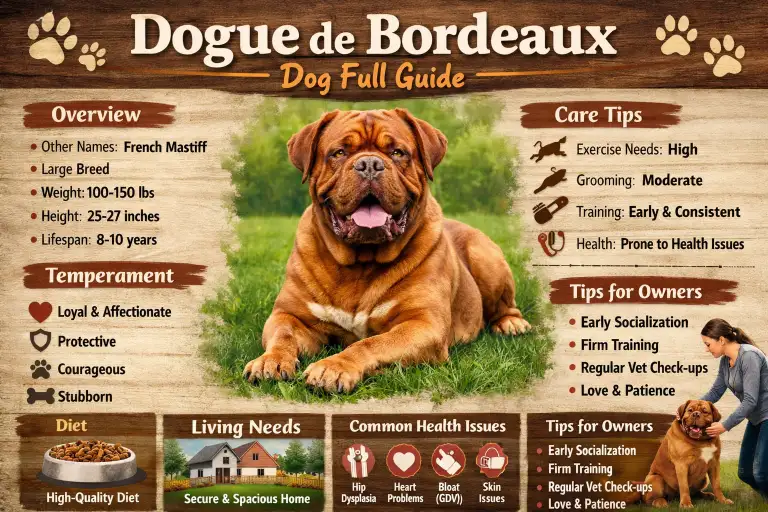
| Attribute | Details |
|---|---|
| Origin | France |
| Common name | French Mastiff |
| Breed type | Molosser / Mastiff-type |
| Size category | Giant |
| Typical weight | Males: 110–145 lb (50–66 kg) • Females: 99–130 lb (45–59 kg) |
| Height | 23–27 in (58–69 cm) |
| Coat | Short, fine, smooth |
| Drooling level | Very high |
| Energy level | Low to moderate |
| Life expectancy | 5–8 years |
This snapshot reflects real-world averages, not optimistic marketing figures. The Dogue de Bordeaux is a true giant breed with heavy bone, immense head structure, and a short lifespan compared to many other dogs—facts that strongly shape ownership experience.
Size and Physical Characteristics
| Feature | Description |
|---|---|
| Overall build | Extremely muscular, broad-chested, heavy-boned |
| Head | Massive, wrinkled, one of the largest head-to-body ratios in dogs |
| Coat colors | Fawn (light to dark), red, mahogany |
| Mask types | Black mask, brown mask, or no mask |
| Skin | Loose with pronounced facial wrinkles |
| Movement | Powerful but not agile; short bursts of strength |
The Dogue de Bordeaux is instantly recognizable by its enormous head, deep wrinkles, and compact power. Unlike taller mastiff breeds, it is shorter, wider, and heavier per inch of height, giving it a low center of gravity and tremendous pulling strength.
History and Origin
The Dogue de Bordeaux traces its roots back hundreds of years to ancient Molosser-type dogs, used across Europe for guarding, war, and heavy work. In France, the breed evolved into a versatile working dog used for estate guarding, livestock protection, and pulling carts. Its intimidating appearance made it especially valued as a deterrent dog rather than a pursuit or chase breed.
The breed nearly disappeared during periods of social upheaval in France, particularly around the World Wars. Modern Dogue de Bordeaux dogs descend from a narrow genetic pool, which helps explain both their consistent appearance and their higher prevalence of inherited health issues today.
What Makes the Breed Physically Challenging to Own
The Dogue de Bordeaux’s appearance is not just cosmetic—it directly affects daily life:
- The short muzzle and massive head increase heat sensitivity and breathing strain.
- Heavy bone and rapid early growth put stress on joints and the heart.
- Loose skin and facial folds require regular cleaning to prevent infections.
- Extreme drooling is a daily reality, not an occasional trait.
This breed was designed for presence, power, and deterrence, not endurance or agility. Prospective owners who admire the look must also be prepared for the physical care demands that come with it.
Dogue de Bordeaux Temperament, Personality, and Real-Life Behavior
| Trait | What to Expect |
|---|---|
| Loyalty | Extremely loyal to its family |
| Protectiveness | Naturally protective, especially of home |
| Energy level | Calm indoors, low to moderate activity |
| Confidence | Confident and steady, not nervous |
| Trainability | Moderate; learns but can be stubborn |
| Sensitivity | Emotionally sensitive to owner tone |
| Stranger tolerance | Reserved, slow to trust |
The Dogue de Bordeaux is best described as calm, serious, and deeply loyal. This is not a playful, goofy dog that loves everyone. It forms a strong bond with its owner and prefers to stay close to its family. Once bonded, this breed is devoted and watchful.
Behavior With Family and Children
| Situation | Typical Behavior |
|---|---|
| With adult family members | Calm, affectionate, very attached |
| With young children | Patient but must be supervised |
| With rough play | Tolerant, but dislikes chaos |
| Inside the home | Quiet, relaxed, observant |
| Separation from owners | Can become anxious if left alone too long |
With its own family, the Dogue de Bordeaux is usually gentle and caring. Many owners describe it as a “shadow dog” because it likes to stay in the same room as its people. With children, it is often patient, but its huge size and strength mean supervision is always needed. Accidental bumps can happen even without bad intent.
| Scenario | Likely Response |
|---|---|
| New visitors entering home | Alert, watchful, reserved |
| Familiar guests | Accepting but not overly friendly |
| Delivery people | Strong guarding response |
| Public places | Calm but aware of surroundings |
This breed is naturally suspicious of strangers, which makes it a strong guard dog. It does not rush to greet new people. Instead, it watches quietly and decides if a person is a threat. Proper socialization is very important. Without it, the dog may become overly protective.
Being protective does not mean aggressive. Most Dogue de Bordeaux dogs do not attack without reason. They rely more on their presence and deep bark to stop problems before they start.
Behavior With Other Dogs and Pets
| Situation | Common Outcome |
|---|---|
| Same-sex dogs | Possible dominance issues |
| Opposite-sex dogs | Usually easier |
| Cats raised together | Often acceptable |
| Small animals | Prey interest may exist |
The Dogue de Bordeaux can live with other pets, but it depends on early training and management. Same-sex dog aggression can be a problem in some lines. This breed is not always a good fit for busy multi-dog homes unless the owner has experience handling large, dominant dogs.
Myths vs Reality
| Myth | Reality |
|---|---|
| “They are aggressive dogs” | They are protective, not reckless |
| “They are lazy and harmless” | Calm, but very powerful |
| “They love everyone” | Loyal to family, reserved with strangers |
The biggest mistake owners make is underestimating this breed’s strength and instincts. A well-raised Dogue de Bordeaux is calm and stable, but poor training or lack of boundaries can lead to serious behavior problems.
Training, Exercise, and Daily Care Requirements
| Area | What Owners Should Know |
|---|---|
| Trainability | Medium; learns well but can be stubborn |
| Best training style | Calm, firm, reward-based |
| Daily exercise | 30–60 minutes total |
| Mental needs | Short training sessions, routine |
| First-time owner friendly | No, needs confident handling |
The Dogue de Bordeaux is smart but strong-willed. It understands commands, but it may choose not to follow them if training is unclear. This breed does best with calm leadership, not shouting or harsh punishment. Owners who stay patient and consistent get better results.
Training should start early. Because this dog grows very large, bad habits become dangerous habits if not corrected when the dog is young. Short, daily sessions work better than long ones.
| Exercise Type | Safe Level |
|---|---|
| Leash walks | Daily, steady pace |
| Free running | Limited, not for long distances |
| Jumping | Not recommended |
| Stairs | Limit, especially as puppies |
| Playtime | Gentle, controlled |
Despite its size, the Dogue de Bordeaux is not a high-energy dog. It does not need hours of exercise. In fact, too much activity can harm its joints and heart. Slow walks and light play are enough. Puppies should never be forced to exercise heavily, as this can cause long-term damage.
Mental exercise is just as important. Simple commands, calm routines, and short training games help prevent boredom and bad behavior.
| Care Task | Frequency |
|---|---|
| Brushing | Once per week |
| Bathing | Every 6–8 weeks |
| Wrinkle cleaning | Several times per week |
| Nail trimming | Every 3–4 weeks |
| Ear cleaning | Weekly check |
| Teeth care | Several times per week |
Daily care for this breed is simple but important. The short coat is easy to maintain, but wrinkle care cannot be skipped. Moist skin folds can trap dirt and cause infections. Drool should also be wiped often to keep skin healthy.
This breed does not handle heat well. Hot weather can cause breathing trouble very fast. Walks should be done early morning or late evening in warm climates. Always provide shade and fresh water.
| Common Owner Mistakes | Why It’s a Problem |
|---|---|
| Skipping training | Leads to control issues |
| Over-exercising puppies | Causes joint damage |
| Using harsh methods | Breaks trust |
| Ignoring heat limits | Risk of heat stroke |
The Dogue de Bordeaux is calm by nature, but it needs clear rules and daily structure. Owners who understand this raise stable, safe dogs. Those who ignore training or care needs often struggle later.
Health, Lifespan, and Cost of Owning a Dogue de Bordeaux
| Health Area | What Owners Should Know |
|---|---|
| Average lifespan | 5–8 years |
| Overall health | Fragile compared to smaller breeds |
| Vet visits | More frequent than average |
| Emergency risk | High due to size and heart issues |
The Dogue de Bordeaux is a loving dog, but it does not live as long as many other breeds. Its large body, fast growth, and heavy heart workload shorten its lifespan. Owners should be ready for higher medical care needs from a young age.
| Common Health Problem | Risk Level | Why It Matters |
|---|---|---|
| Heart disease | High | Can shorten life suddenly |
| Hip dysplasia | High | Causes pain and mobility loss |
| Elbow dysplasia | Medium | Affects walking and comfort |
| Breathing problems | Medium | Short nose limits airflow |
| Cancer | High | Common cause of early death |
| Skin infections | Medium | Caused by wrinkles and moisture |
Many Dogue de Bordeaux dogs come from a small gene pool, which increases health risks. Responsible breeders test parents, but problems can still appear later in life. Regular vet checks help catch issues early.
| Age Stage | Health Focus |
|---|---|
| Puppy | Controlled growth, joint protection |
| Adult | Heart checks, weight control |
| Senior | Pain care, cancer screening |
Weight control is very important. Extra weight puts pressure on the heart and joints. Even a few extra pounds can reduce comfort and shorten life.
| Cost Area | Typical Expectation |
|---|---|
| Puppy price | High |
| Annual vet care | Above average |
| Emergency care | Very expensive |
| Medication costs | Common in later years |
| Pet insurance | Strongly recommended |
Owning this breed is not cheap. Vet bills are higher because of body size and health risks. Emergency care, surgery, and medication cost more than for smaller dogs. Many owners say pet insurance is not optional for this breed.
| Financial Reality | Why It Matters |
|---|---|
| Short lifespan | Emotional and financial impact |
| High medical needs | Ongoing costs |
| Large body size | Higher treatment prices |
Before choosing a Dogue de Bordeaux, families should think about both heart and budget. This breed gives deep love, but it also asks for strong commitment.
Pros, Cons, and Similar Breeds: Is the Dogue de Bordeaux Right for You?
| Pros | Why Owners Like This Breed |
|---|---|
| Very loyal | Strong bond with family |
| Calm indoors | Quiet and relaxed at home |
| Natural guard dog | Protective without constant barking |
| Low grooming effort | Short coat, simple care |
| Confident presence | Strong and steady personality |
The Dogue de Bordeaux is best for people who want a calm but powerful dog. Many owners love how devoted this breed is. It does not need nonstop activity and is happy staying close to its people.
| Cons | Why This Can Be Hard |
|---|---|
| Short lifespan | Often only 5–8 years |
| High vet costs | Health care is expensive |
| Heavy drooling | Daily cleaning needed |
| Heat sensitive | Struggles in hot weather |
| Not beginner-friendly | Needs confident handling |
This breed is not easy for everyone. The biggest challenge is health. Many owners say losing their dog early is very painful. Daily care, medical costs, and physical strength also make this breed a poor choice for casual owners.
| Lifestyle Situation | Good Match? |
|---|---|
| Families with older kids | Yes, with supervision |
| Families with toddlers | Risky due to size |
| First-time dog owners | No |
| Apartment living | Sometimes, if quiet area |
| Active runners | No |
| Experienced dog owners | Yes |
The Dogue de Bordeaux does best with experienced owners who understand large dogs. It is not a jogging partner and does not enjoy chaos. Calm homes with clear rules work best.
| Breed | Key Difference |
|---|---|
| Bullmastiff | Longer lifespan, less drooling |
| Cane Corso | More active, higher training needs |
| English Mastiff | Larger, often calmer |
| Neapolitan Mastiff | More wrinkles, heavier care |
People who love the Dogue de Bordeaux usually want a strong, loyal, quiet guardian. Those who want longer lifespan or lower vet bills may be happier with another mastiff-type breed.
| Final Question | Honest Answer |
|---|---|
| Is this breed right for you? | Only if you accept the risks |
| Can you handle the strength? | Must be confident |
| Can you afford the care? | Budget is essential |
| Can you manage health issues? | Expect challenges |
The Dogue de Bordeaux gives deep loyalty and strong protection, but it asks for serious commitment in return. This breed is not about looks alone. It is about responsibility, patience, and readiness.
For official breed standards and responsible breeding guidance, you can also refer to the American Kennel Club’s profile on the Dogue de Bordeaux: https://www.akc.org/dog-breeds/dogue-de-bordeaux/

Ata Ur Rehman is the founder of Pet Age in Human Years Calculator, an educational platform that provides age conversion charts and lifespan guides for dogs, cats, birds, and other companion animals. His work focuses on helping pet owners understand how animal ages translate into human years using commonly accepted age conversion formulas and published lifespan averages.
The website compiles breed and species lifespan data from kennel clubs, breed organizations, and general animal lifespan studies to present simple and easy-to-understand guides for pet owners worldwide.
This website was created to centralize animal age conversion charts into one easy reference platform for pet owners.