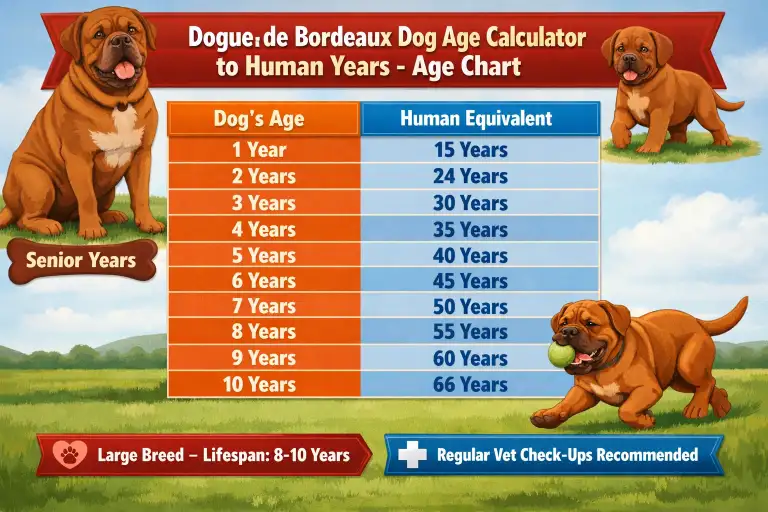
If you’ve ever wondered “How old is my Dogue de Bordeaux in human years?” you’re not alone. This breed ages very differently from humans—and very differently from small or medium dogs. That’s why a breed-specific Dogue de Bordeaux age calculator is essential for accuracy.
Most generic dog age calculators rely on outdated averages or the old “1 dog year = 7 human years” rule. That approach significantly misrepresents aging in giant breeds like the Dogue de Bordeaux, which mature quickly, reach physical adulthood early, and typically enter senior years much sooner than smaller dogs.
This guide uses modern dog-aging science and giant-breed lifespan data to help you convert your Dogue de Bordeaux’s age into a realistic human-age equivalent. The goal isn’t just a number—it’s helping you understand what life stage your dog is actually in, so you can make better decisions about nutrition, exercise, and health care.
Below is a quick snapshot for readers who want an immediate reference before diving deeper.
Quick Dogue de Bordeaux Age Lookup
| Dog Age (Years) | Human Age Equivalent | Life Stage |
|---|---|---|
| 1 | 15–18 years | Puppy |
| 3 | 30–35 years | Adult |
| 6 | 50–55 years | Senior |
These values reflect giant-breed aging patterns, not averages across all dogs. As you move through the article, you’ll see a full Dogue de Bordeaux age chart, a breakdown of how and why this breed ages faster, and practical guidance for supporting your dog at every stage of life.
How Dogue de Bordeaux Dogs Age Compared to Humans
Dogs do not age the same way humans do, and this difference is even bigger in giant breeds like the Dogue de Bordeaux. Many people still believe that 1 dog year equals 7 human years, but this rule is not correct and can be very misleading for large, heavy dogs.
A Dogue de Bordeaux grows extremely fast in the first two years of life. During this short time, the body changes from a small puppy into a full-grown, powerful adult. Bones, muscles, joints, and organs all develop quickly. This fast growth is one reason giant breeds tend to age sooner later in life.
After reaching adulthood, aging slows down for a short period. This is the “prime adult” stage, when your Dogue de Bordeaux is strong, active, and confident. However, compared to humans, this stage does not last very long. As the dog moves past middle age, the aging process speeds up again.
In humans, aging is more gradual. People grow slowly, stay adults for many decades, and usually enter senior years much later. Dogs, especially large and giant breeds, follow a curved aging pattern—very fast at the start, slower in the middle, and faster again as seniors.
This is why using human-style math does not work for dogs. A 6-year-old Dogue de Bordeaux is not “middle-aged” in the same way a 42-year-old human would be. In reality, that dog is already entering senior years.
Dogue de Bordeaux Aging Speed Compared to Humans
| Life Phase | Dogue de Bordeaux Aging Speed | Rough Human Comparison |
|---|---|---|
| Puppy years | Very fast growth and aging | Childhood to teenage years |
| Adult years | Slower, more stable aging | 20s to early 40s |
| Senior years | Aging speeds up again | Late 50s and older |
This aging pattern explains why Dogue de Bordeaux dogs usually have shorter lifespans than smaller breeds. Their bodies work harder, grow faster, and experience more physical stress over time.
Understanding this difference helps owners set realistic expectations and make better care choices at each stage of life.
Dogue de Bordeaux Age Chart: Dog Years to Human Years
Dogue de Bordeaux dogs grow fast, mature early, and usually become seniors sooner than small dogs. Because of this, their human-age equivalents increase more quickly as they get older.
Use the chart like this:
- Find your dog’s age on the left
- Look across to see the human-age equivalent
- Check the life stage to understand where your dog is in life
Dogue de Bordeaux Age to Human Years Chart
| Dog Age (Years) | Human Age Equivalent | Life Stage |
|---|---|---|
| 1 | 15–18 years | Puppy |
| 2 | 24–27 years | Young adult |
| 3 | 30–35 years | Adult |
| 4 | 38–42 years | Adult |
| 5 | 45–48 years | Adult |
| 6 | 50–55 years | Senior |
| 7 | 58–62 years | Senior |
| 8 | 65–70 years | Senior |
| 9 | 72–75 years | Geriatric |
| 10 | 78–82 years | Geriatric |
As you can see, a Dogue de Bordeaux reaches the senior stage around 6 years old, which surprises many owners. This does not mean your dog is “old and done,” but it does mean the body needs more care, monitoring, and comfort than before.
Remember, this chart shows average values. Some dogs age a little slower or faster depending on genetics, weight, diet, exercise, and health care. Still, this table gives a much more accurate picture than simple math rules.
Dogue de Bordeaux Life Stages and Aging Signs
A Dogue de Bordeaux goes through clear life stages, and each stage comes with different body changes and needs. Knowing these stages helps you understand what is normal for your dog and when extra care may be needed.
In the puppy stage, growth is very fast. Puppies gain size quickly, and their bones and joints are still soft. They may look strong, but their bodies are not fully ready for heavy exercise. Too much jumping or rough play at this age can harm their joints later in life.
The adult stage is when a Dogue de Bordeaux is at its strongest. Energy levels are steady, muscles are fully developed, and behavior is more settled. This is usually the healthiest time of life, but weight control is very important. Extra weight puts stress on the heart and joints.
The senior stage often starts earlier than many owners expect, usually around 6 years old. Aging signs may appear slowly at first. Your dog may rest more, move slower, or take longer to stand up. These changes are common in large, heavy dogs and should not be ignored.
Dogue de Bordeaux Life Stages and What to Expect
| Life Stage | Age Range | Common Changes | What Owners Should Watch |
|---|---|---|---|
| Puppy | 0–2 years | Fast growth, clumsy movement | Joint safety, controlled exercise |
| Adult | 3–5 years | Peak strength and energy | Weight gain, fitness level |
| Senior | 6–8 years | Stiffness, lower energy | Mobility, breathing, comfort |
| Geriatric | 9+ years | Slower movement, fatigue | Pain signs, quality of life |
Some common aging signs in Dogue de Bordeaux dogs include:
- Trouble getting up or lying down
- Slower walking or shorter walks
- Heavy breathing after light activity
- Sleeping more than usual
- Less interest in play
These signs do not always mean illness, but they do mean your dog may need changes in daily care.
How to Help a Dogue de Bordeaux Live a Longer, Healthier Life
A Dogue de Bordeaux may not live as long as smaller dogs, but good daily care can improve both lifespan and quality of life. Small choices made every day have a big impact, especially as this breed reaches senior years earlier than expected.
Food and weight control are very important. Dogue de Bordeaux dogs gain weight easily, and extra weight puts heavy pressure on the heart, lungs, and joints. Feeding the right amount for your dog’s age and activity level helps slow down aging and reduces pain later in life.
Exercise should match your dog’s age. Puppies need gentle play, not long runs or hard jumping. Adult dogs benefit from steady walks and light strength activity. Senior dogs still need movement, but shorter and slower walks help keep joints flexible without causing pain.
Vet care becomes more important with age. Giant breeds should see the vet more often as seniors. Early checks can find joint problems, heart issues, or breathing concerns before they become serious.
Comfort at home matters too. Soft bedding, warm sleeping areas, and help getting up or down can make a big difference for older dogs. Even small changes can improve daily comfort.
Age-Based Care Tips for Dogue de Bordeaux
| Age Range | Food Focus | Exercise Style | Vet Care |
|---|---|---|---|
| Puppy (0–2) | Controlled growth diet | Short, gentle play | Growth and joint checks |
| Adult (3–5) | Weight control | Regular walks, light strength | Yearly exams |
| Senior (6–8) | Joint-support nutrition | Slow, low-impact walks | Twice-yearly exams |
| Geriatric (9+) | Easy-to-digest food | Very gentle movement | Pain and comfort monitoring |
Helping your Dogue de Bordeaux age well is not about doing one big thing. It is about consistent care, early attention, and understanding how this breed ages. With the right support, many dogs stay happy and comfortable well into their senior years.
For official breed information, health considerations, and general care guidance, you can also review the Dogue de Bordeaux breed profile from the American Kennel Club: https://www.akc.org/dog-breeds/dogue-de-bordeaux/

Ata Ur Rehman is the founder of Pet Age in Human Years Calculator, an educational platform that provides age conversion charts and lifespan guides for dogs, cats, birds, and other companion animals. His work focuses on helping pet owners understand how animal ages translate into human years using commonly accepted age conversion formulas and published lifespan averages.
The website compiles breed and species lifespan data from kennel clubs, breed organizations, and general animal lifespan studies to present simple and easy-to-understand guides for pet owners worldwide.
This website was created to centralize animal age conversion charts into one easy reference platform for pet owners.