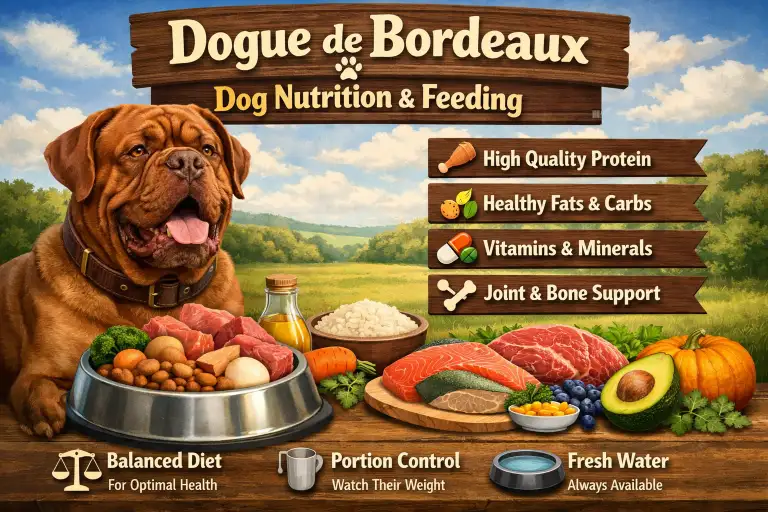
The Dogue de Bordeaux diet matters more than it does for many other breeds because this dog combines giant size, heavy bone structure, moderate energy levels, and known health vulnerabilities. Feeding mistakes that a smaller or more athletic dog might tolerate can quickly lead to joint strain, excess weight, digestive trouble, or reduced lifespan in a Dogue de Bordeaux.
This breed grows fast, carries substantial body mass, and tends to mature into a low-endurance adult rather than a high-stamina athlete. Nutrition therefore isn’t about maximizing calories or protein—it’s about controlled growth, steady energy, and long-term joint and heart support.
Many owners unintentionally overfeed Dogue de Bordeaux dogs because they equate size with higher food needs. In reality, this breed often needs fewer calories than expected for its weight, especially after adulthood. Poor portion control is one of the most common reasons Dogue de Bordeaux dogs become overweight by middle age.
Another key factor is digestion. Dogue de Bordeaux dogs are prone to sensitive stomachs, loose stools, and food intolerances, especially when foods are switched too quickly or when diets are overly rich. A balanced, digestible diet with consistent feeding habits is critical.
The table below summarizes why nutrition deserves special attention for this breed.
Key Nutrition Risks in Dogue de Bordeaux Dogs
| Area | Why It Matters |
|---|---|
| Joint health | Heavy body weight places constant stress on hips, elbows, and knees |
| Weight gain | Low daily stamina increases obesity risk if calories are too high |
| Heart health | Breed predisposition makes diet quality and fat balance important |
| Digestion | Sensitive stomachs are common, especially with rich or sudden diet changes |
| Growth rate | Rapid puppy growth increases the risk of orthopedic problems |
Feeding a Dogue de Bordeaux correctly is not about following generic “large dog” advice. It requires breed-aware decisions—choosing the right nutrient balance, controlling portions carefully, and adjusting food based on age, activity level, and body condition rather than appetite alone.
Best Nutrition Requirements for a Dogue de Bordeaux
Feeding a Dogue de Bordeaux is not about giving the richest or most expensive food. It is about balance, control, and digestibility. This breed needs steady nutrition that supports muscles and joints without causing fast weight gain or stomach upset.
Because Dogue de Bordeaux dogs are large and heavy, their diet must support strong bones, healthy joints, and a stable heart, while keeping calories under control. Too much of the wrong nutrients can be just as harmful as too little.
Protein, Fat, and Carbohydrates
Protein helps maintain muscle, but more protein is not always better. Extremely high-protein foods can be hard on digestion and do not improve strength in low-endurance breeds. Fat provides energy, but excess fat is a common cause of weight gain in this breed.
Carbohydrates are not “bad” for Dogue de Bordeaux dogs when they come from digestible sources like rice, oats, or potatoes. They help provide energy without overloading fat intake.
Ideal Macronutrient Ranges for Dogue de Bordeaux
| Nutrient | Recommended Range | Why It Matters |
|---|---|---|
| Protein | 22–28% (adult) | Supports muscle without stressing digestion |
| Fat | 10–16% | Provides energy without rapid weight gain |
| Carbohydrates | Moderate | Helps balance calories and digestion |
Key Vitamins and Minerals
Large and giant breeds are sensitive to mineral balance. Too much calcium, especially in puppies, can cause abnormal bone growth. A balanced commercial diet made for large breeds usually controls this correctly.
Some nutrients are especially helpful for Dogue de Bordeaux dogs as they age, including joint and heart-support nutrients.
Important Micronutrients to Look For
| Nutrient | Why It Is Important |
|---|---|
| Calcium & Phosphorus | Supports proper bone development |
| Omega-3 fatty acids | Helps joints, skin, and heart health |
| Glucosamine & Chondroitin | Supports joints under heavy body weight |
| Antioxidants | Helps reduce cell damage with age |
How to Read Dog Food Labels
When choosing food, do not focus on front-label claims like “premium” or “natural.” Instead, check:
- The first ingredients should be named animal proteins
- The food should be labeled for large or giant breeds, especially for puppies
- The guaranteed analysis should match moderate protein and fat levels
- Avoid foods with very high fat unless advised by a veterinarian
Foods made for large breeds are usually safer because they control calories and mineral levels better than general formulas.
How Much to Feed a Dogue de Bordeaux (By Age, Size, and Activity)
Many Dogue de Bordeaux dogs are overfed, not because owners do not care, but because this breed looks like it needs more food than it really does. These dogs are big and heavy, but they usually have low to moderate activity levels, especially as adults.
Feeding the right amount helps protect joints, keeps the heart healthier, and prevents obesity. Instead of feeding by bowl size or appetite, it is better to feed by calories, age, and activity level.
A Dogue de Bordeaux that spends most of the day resting needs fewer calories than one that walks daily, trains, or works. Puppies also need more frequent meals, but not excessive portions, to support slow and safe growth.
Daily Calorie Needs for Adult Dogue de Bordeaux Dogs
| Dog Weight | Low Activity | Moderate Activity |
|---|---|---|
| 45 kg (100 lb) | ~1,700 calories | ~2,100 calories |
| 55 kg (120 lb) | ~1,900 calories | ~2,400 calories |
| 65 kg (145 lb) | ~2,200 calories | ~2,700 calories |
These numbers are starting points. If your dog gains weight, reduce portions slightly. If your dog is losing weight or looks thin, increase food slowly.
Feeding Frequency by Life Stage
| Life Stage | Meals Per Day | Why |
|---|---|---|
| Puppy (2–6 months) | 3–4 meals | Supports steady growth and digestion |
| Puppy (6–18 months) | 2–3 meals | Prevents fast growth and joint stress |
| Adult | 2 meals | Helps control hunger and energy |
| Senior | 2 smaller meals | Easier on digestion and weight control |
Free-feeding is not recommended for this breed. Scheduled meals help prevent overeating and make it easier to notice appetite changes, which can be early signs of health problems.
A helpful tool is the body condition score. You should be able to feel your dog’s ribs under a light fat layer, but they should not stick out. From the side, your dog should have a small waist behind the ribs. If the belly hangs low or the waist is gone, portions are likely too large.
Best Dog Food Types for Dogue de Bordeaux Dogs
There is no single “perfect” food for every Dogue de Bordeaux. The best choice depends on your dog’s age, weight, health, and digestion. What matters most is that the food is balanced, easy to digest, and not too high in calories.
Below is a simple comparison of the most common dog food types so you can see what works best for this breed.
Dog Food Types: Pros and Cons for Dogue de Bordeaux
| Food Type | Pros | Cons |
|---|---|---|
| Dry kibble | Easy to store, balanced nutrition, affordable | Quality varies by brand |
| Fresh dog food | Very tasty, easy to digest | Expensive, needs refrigeration |
| Raw diet | Owner controls ingredients | Safety and balance risks if not planned |
| Canned food | Adds moisture, soft texture | High calories, can cause weight gain |
| Freeze-dried food | Convenient, long shelf life | Costly, still needs balance |
| Homemade diet | Full ingredient control | High risk of missing nutrients |
For most Dogue de Bordeaux dogs, a high-quality large-breed kibble or fresh diet is the safest and easiest option. Raw or homemade diets should only be used with guidance from a veterinarian or dog nutrition expert.
Foods Dogue de Bordeaux Dogs Can Eat and Must Avoid
| Safe Human Foods (Plain) | Unsafe or Toxic Foods |
|---|---|
| Cooked chicken or turkey | Chocolate |
| Plain rice or pasta | Grapes and raisins |
| Pumpkin | Onions and garlic |
| Carrots | Xylitol (sweetener) |
| Apples (no seeds) | Alcohol |
Human food should never replace a balanced dog diet. Treats and table scraps should make up no more than 10% of daily calories.
Treats, Chews, and Water Needs
Because Dogue de Bordeaux dogs are heavy chewers, treats and chews should be large, strong, and low in fat. Avoid very hard bones that can crack teeth.
Water is also important. This breed drools a lot and needs fresh water available at all times, especially when eating dry food.
Common Feeding Problems, Special Diets, and Owner FAQs
Many feeding problems in Dogue de Bordeaux dogs are caused by portion mistakes, fast food changes, or the wrong food type. The good news is that most issues can be fixed with small, careful changes.
This breed is known for weight gain, sensitive digestion, and joint stress, so feeding problems should never be ignored for long.
Common Feeding Problems and Simple Fixes
| Problem | Common Cause | What to Do |
|---|---|---|
| Weight gain | Too much food or treats | Reduce portions and track calories |
| Loose stool | Sudden food change | Switch foods slowly over 7–10 days |
| Always hungry | Low fiber or habit feeding | Use measured meals, not free-feeding |
| Picky eating | Too many toppers | Stick to a feeding schedule |
| Gas or bloating | Rich or fatty food | Choose lower-fat, digestible food |
If your Dogue de Bordeaux is overweight, weight loss should be slow and controlled. Cutting food too fast can cause muscle loss and weakness. Smaller portions and fewer treats work better than sudden diet changes.
Special Diet Situations
| Situation | Feeding Focus |
|---|---|
| Puppies | Large-breed puppy food for slow growth |
| Seniors | Lower calories, joint support |
| Sensitive stomach | Simple ingredients, easy digestion |
| Food allergies | Limited-ingredient or vet-approved diet |
| Low activity dogs | Fewer calories, careful portions |
Raw and homemade diets should only be used with professional guidance. Missing nutrients can cause long-term health problems, especially in large breeds.
When to See a Veterinarian or Nutritionist
Some signs mean you should get professional help.
| Sign | Why It Matters |
|---|---|
| Rapid weight gain or loss | Can signal diet or health issues |
| Long-term diarrhea | May point to food intolerance |
| Loss of appetite | Possible illness or pain |
| Limping or stiffness | Weight and diet affect joints |
| Poor coat condition | Nutrient imbalance |
Common Owner Questions
- “My dog skips meals. Is this normal?”
Yes, but frequent skipping can signal stress, illness, or overfeeding. - “Can I mix kibble with fresh food?”
Yes, but count all calories and keep portions controlled. - “How often should I change food?”
Only when needed, and always slowly.
For more veterinary guidance on skin folds and wrinkle care, the American Kennel Club (AKC) explains safe cleaning and infection prevention for wrinkled breeds: https://www.akc.org/expert-advice/health/how-to-clean-dog-wrinkles/

Ata Ur Rehman is the founder of Pet Age in Human Years Calculator, an educational platform that provides age conversion charts and lifespan guides for dogs, cats, birds, and other companion animals. His work focuses on helping pet owners understand how animal ages translate into human years using commonly accepted age conversion formulas and published lifespan averages.
The website compiles breed and species lifespan data from kennel clubs, breed organizations, and general animal lifespan studies to present simple and easy-to-understand guides for pet owners worldwide.
This website was created to centralize animal age conversion charts into one easy reference platform for pet owners.