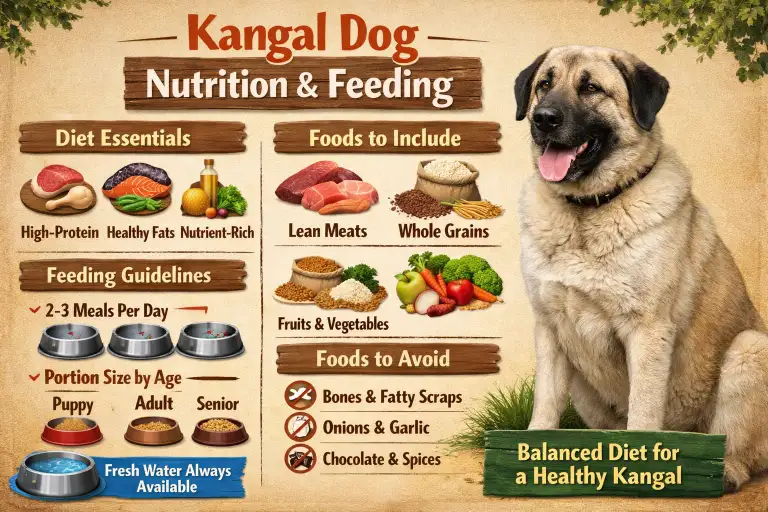
Feeding a Kangal dog the right way is essential for ensuring its long-term health, proper growth, and optimal performance. Kangals are one of the largest livestock guardian breeds, with adults often weighing between 110 and 145 pounds (50–66 kg) and standing over 28 inches (71 cm) at the shoulder. Their size, combined with their naturally high energy and working instincts, means that they have unique nutritional requirements compared to average domestic dogs.
Proper nutrition for a Kangal affects far more than just body weight. It supports muscle development, joint and bone strength, immune system function, and cognitive health. Puppies require carefully balanced meals to avoid rapid growth that can stress developing joints, while adult and senior Kangals benefit from diets that maintain a healthy weight and reduce the risk of joint problems like hip dysplasia.
Unlike smaller breeds, Kangals need a high-quality, nutrient-dense diet that provides enough calories to fuel their activity without promoting unnecessary fat gain. Feeding mistakes, such as overfeeding kibble, providing unbalanced homemade meals, or ignoring breed-specific nutrient needs, can lead to lifelong health issues, including obesity, digestive problems, and skeletal stress.
This guide is designed to help Kangal owners understand their dog’s nutritional requirements, create balanced feeding routines, and make informed choices about food types, portion sizes, and supplements. By the end of this article, you will have a clear roadmap to feed your Kangal safely, effectively, and in a way that supports its health from puppyhood through senior years.
Understanding Kangal Nutritional Needs
Kangals are large dogs with special nutritional needs. Feeding them the right balance of nutrients is very important for growth, energy, and long-term health. Kangals need protein, fat, carbohydrates, vitamins, and minerals in the right amounts. Puppies, adults, and senior Kangals all have slightly different needs, so it is important to adjust their diet as they grow.
Protein helps build strong muscles, fat gives energy, and carbohydrates provide fuel for daily activity. Vitamins and minerals keep bones, joints, and the immune system healthy. Too little or too much of any nutrient can cause health problems, especially in growing puppies.
Here is a simple table showing the macronutrient ranges for Kangals at different life stages:
| Life Stage | Protein (% of diet) | Fat (% of diet) | Carbohydrates (% of diet) |
|---|---|---|---|
| Puppy | 25–30% | 15–20% | 45–55% |
| Adult | 22–26% | 12–18% | 50–55% |
| Senior | 20–24% | 10–15% | 55–60% |
Vitamins and minerals are just as important. Here is a simple guide to essential nutrients for Kangals:
| Nutrient | Why It Matters | Notes / Supplements |
|---|---|---|
| Calcium & Phosphorus | Strong bones and joints | Important for puppies, avoid too much in growing dogs |
| Omega-3 Fatty Acids | Joint health and shiny coat | Fish oil or flaxseed |
| Vitamin A | Vision and immune system | Usually in meat and liver |
| Vitamin E | Antioxidant, skin, and coat health | Found in vegetable oils |
| Zinc | Skin, coat, and immune function | Balanced in commercial diets |
By using these tables, Kangal owners can quickly see the amounts of nutrients their dog needs. Feeding a balanced diet ensures that puppies grow safely, adults stay strong, and seniors maintain healthy joints and energy levels.
Feeding Guidelines: How Much and How Often
Feeding your Kangal the right amount at the right time is very important. Overfeeding can make your dog overweight, and underfeeding can slow growth and make them weak. The amount of food a Kangal needs depends on age, weight, and activity level. Puppies grow fast and need more protein and calories, while adults and seniors need fewer calories but still enough nutrients to stay healthy.
Here is a table showing daily feeding amounts based on weight and life stage:
| Life Stage | Weight (kg) | Food per Day (grams) | Notes |
|---|---|---|---|
| Puppy | 10–20 | 300–500 | Feed 3–4 times a day |
| Puppy | 20–40 | 500–900 | Feed 3 times a day |
| Adult | 40–60 | 900–1,400 | Feed 2 times a day |
| Adult | 60–70+ | 1,400–1,800 | Feed 2 times a day |
| Senior | 40–70+ | 1,200–1,600 | Adjust if less active |
Feeding frequency is also important. Puppies do best with 3–4 meals per day, adults usually do well with 2 meals per day, and seniors can continue with 2 meals, sometimes smaller portions if they are less active.
You can also use the Body Condition Score (BCS) to check if your Kangal is the right weight. Look at their ribs, waist, and belly:
| BCS Score | What It Means | Action |
|---|---|---|
| 1–2 | Underweight | Increase portions or check health |
| 3–4 | Ideal | Keep feeding plan |
| 5–6 | Overweight | Reduce portions and increase exercise |
| 7+ | Obese | Consult vet and adjust diet |
Using these tables, owners can quickly see how much to feed their Kangal and how often. Monitoring BCS helps keep your dog at a healthy weight and prevents joint problems.
Food Types, Safe Foods, and Treats
Kangals can eat many types of food, but each type has its pros and cons. Choosing the right food helps keep your dog healthy, strong, and full of energy. You can feed kibble, raw, fresh, canned, freeze-dried, or homemade meals.
Here is a table comparing the main food types for Kangals:
| Food Type | Pros | Cons | Notes |
|---|---|---|---|
| Kibble | Easy to store, balanced | Some low-quality brands exist | Choose high-quality large-breed formula |
| Raw | High protein, natural diet | Risk of bacteria, requires prep | Use safe handling and balanced recipes |
| Fresh | High nutrient quality | Short shelf life, more expensive | Often comes as pre-made meals or subscription |
| Canned | Tasty, good hydration | Expensive, can be high in fat | Can mix with kibble or feed alone |
| Homemade | Full control over ingredients | Needs careful balance | Consult vet or nutritionist to prevent deficiencies |
It is also important to know which human foods are safe and which are toxic:
| Safe Foods | Treat in Moderation | Foods to Avoid (Toxic) |
|---|---|---|
| Chicken, Turkey | Cheese, yogurt | Chocolate |
| Carrots, Green Beans | Peanut butter | Grapes, Raisins |
| Rice, Pumpkin | Apples (no seeds) | Onions, Garlic |
| Fish (cooked) | Small eggs | Xylitol (sweeteners) |
| Sweet Potato | Macadamia nuts |
Treats are okay but should not be more than 10% of daily calories. Here is a simple treat guideline:
| Treat Type | Calories per Treat | Notes |
|---|---|---|
| Small dog biscuit | 20–30 | Limit number per day |
| Large dog biscuit | 50–60 | Adjust daily food accordingly |
| Carrot stick / fruit | 5–15 | Healthy, low-calorie option |
| Peanut butter dollop | 30–50 | Use sparingly, watch sugar content |
Using these tables, Kangal owners can quickly see which foods are best, which are safe, and how to give treats without overfeeding.
Special Diets, Common Challenges, and Expert Advice
Some Kangals need special diets or extra care. Puppies, adult working dogs, and senior Kangals all have different needs. Some dogs have allergies, sensitive stomachs, or weight problems. Understanding these issues helps owners keep their dogs healthy and happy.
Here is a table for special diets and feeding tips:
| Situation | Feeding Tips / Recommendations |
|---|---|
| Puppy with rapid growth | Feed large-breed puppy formula, monitor calcium intake |
| Adult working Kangal | High protein, moderate fat, more calories for energy |
| Senior Kangal | Lower calories, joint supplements, easy-to-digest food |
| Allergies / sensitive stomach | Limited ingredient diet, avoid common allergens like beef or grains |
| Overweight Kangal | Reduce calories, increase fiber, more exercise |
Many owners face common feeding challenges. These include picky eaters, multiple dogs with different needs, digestive upset, or food aggression. Here is a simple troubleshooting table:
| Problem | Possible Cause | Solution / Advice |
|---|---|---|
| Dog refuses breakfast | Too much food last night | Reduce evening meal, try morning treats |
| Loose stool after new food | Sudden diet change | Switch gradually over 7–10 days |
| Dog constantly hungry | Low nutrient food / high activity | Increase high-quality protein and fiber |
| Food aggression | Resource guarding | Feed separately, use positive reinforcement |
Even with the best plan, sometimes you need help. Consult a vet or canine nutritionist if:
- Your Kangal is not growing as expected
- Weight is too low or high despite proper feeding
- Chronic diarrhea, vomiting, or skin problems appear
- You want to create a homemade diet
Using these tables, owners can see solutions for most feeding problems quickly and know when to get professional help.
For more information on large breed dog nutrition and health, visit the American Kennel Club’s guide to feeding large dogs.

Ata Ur Rehman is the founder of Pet Age in Human Years Calculator, an educational platform that provides age conversion charts and lifespan guides for dogs, cats, birds, and other companion animals. His work focuses on helping pet owners understand how animal ages translate into human years using commonly accepted age conversion formulas and published lifespan averages.
The website compiles breed and species lifespan data from kennel clubs, breed organizations, and general animal lifespan studies to present simple and easy-to-understand guides for pet owners worldwide.
This website was created to centralize animal age conversion charts into one easy reference platform for pet owners.