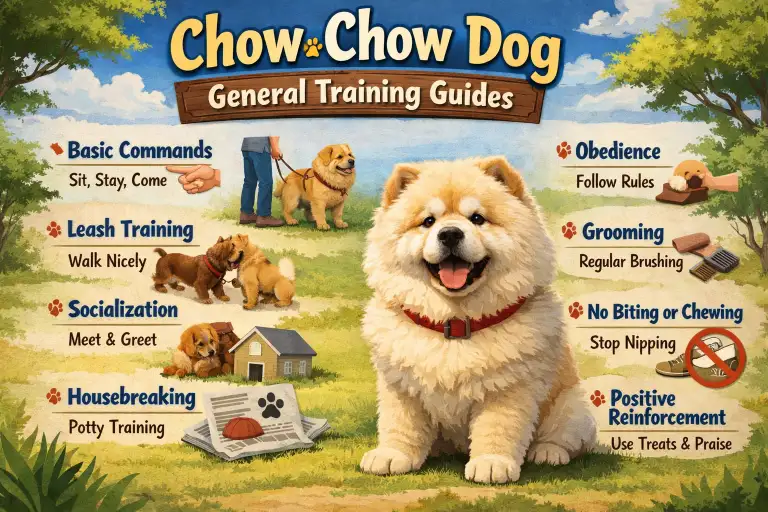
Chow Chows are a unique and fascinating breed. Known for their lion-like appearance, thick coat, and dignified personality, they are intelligent but often independent and reserved. This combination can make training both rewarding and challenging. Whether you have a puppy or an adult Chow Chow, understanding the breed’s temperament is the first step toward successful training.
This guide is designed to help you teach your Chow Chow essential obedience skills, improve socialization, and ensure safe and confident behavior at home and in public. By following this guide, you’ll learn how to work with your dog’s natural instincts rather than against them, making training more effective and enjoyable for both of you.
Chow Chows thrive with consistent routines, positive reinforcement, and clear boundaries. Early training and socialization are especially important, as they help prevent stubbornness, aloofness, and unwanted guarding behaviors later in life. With patience and the right approach, even the most independent Chow Chow can become a well-mannered companion.
Chow Chow at a Glance
| Trait | Description | Training Tip |
|---|---|---|
| Temperament | Independent, reserved | Use consistent positive reinforcement |
| Energy Level | Moderate | Include short daily training sessions |
| Socialization | Can be selective | Start socialization early with controlled exposure |
This table provides a quick snapshot of what to expect when training a Chow Chow. Use it as a reference throughout your training journey to understand your dog’s natural tendencies and tailor your approach accordingly.
Why Training Your Chow Chow Matters
Training your Chow Chow is not just about teaching tricks. It is about keeping your dog safe, happy, and well-behaved. Chow Chows are smart but can be stubborn. Without proper training, they may ignore commands, guard food or toys, or act shy or aloof around strangers.
Training gives your dog structure, confidence, and social skills. It also strengthens the bond between you and your Chow Chow. Using gentle and consistent methods helps your dog learn faster and prevents fear or aggression. Positive reinforcement, like treats, praise, or play, works best because Chow Chows respond better to rewards than punishment.
Here are some reasons why training is so important:
| Problem Without Training | Potential Issue | Training Benefit |
|---|---|---|
| Stubbornness | Ignores commands | Obedience and cooperation |
| Guarding instincts | Growling or snapping over toys or food | Safe interactions with family and visitors |
| Aloofness | Avoids new people or dogs | Confident and calm social behavior |
| Lack of socialization | Fear or aggression around strangers or other pets | Friendly and relaxed around new situations |
Training also helps you prevent future problems. For example, teaching your dog to walk nicely on a leash now will stop pulling or lunging later. Socializing your puppy to people, other dogs, and new environments ensures they grow up confident, not fearful.
By understanding why training matters, you can focus your efforts on the behaviors that will make life easier for both you and your dog. Consistency and patience are the keys to success with this independent breed.
Understanding Chow Chow Behavior
Chow Chows are independent and can be reserved, so understanding their behavior is important for successful training. They often think for themselves and may not always follow commands right away. By learning to read their body language, you can respond in a way that keeps training positive and effective.
Chow Chows are also protective of their home and family. Some may show aloofness or caution around strangers. Early socialization helps your dog become confident and friendly, reducing fear or guarding behaviors later.
Here are some common signs and what they mean:
| Behavior | Meaning | Owner Action |
|---|---|---|
| Tail stiff and raised | Alert or possible guarding | Approach calmly, avoid sudden movements |
| Ears back | Fear or discomfort | Give space, use treats to reassure |
| Lip licking or yawning | Stress | Pause training, let your dog relax |
| Turning head away | Avoidance | Don’t force interaction, redirect attention to positive activity |
| Relaxed body, soft eyes | Calm and attentive | Proceed with training or socialization |
By watching these signals, you can adjust your training methods, avoid misunderstandings, and prevent stress or aggression. Knowing what your Chow Chow is trying to communicate will help you build trust and make learning easier.
Step-by-Step Chow Chow Training Plan
Training your Chow Chow works best when it is consistent, short, and positive. Chow Chows can be independent, so short daily sessions help them stay focused and motivated. Use treats, praise, or play as rewards to encourage learning.
Start with the basics and build up to more advanced skills. Training should include core commands, leash manners, and socialization. Here is a simple daily training plan:
Daily Training Checklist
| Command / Skill | Session Length | Frequency | Reward Type |
|---|---|---|---|
| Sit | 5-10 min | 2-3 times/day | Treat or praise |
| Come / Recall | 5 min | 2 times/day | Treat or verbal praise |
| Leash Walking | 10 min | 1-2 times/day | Treat or clicker |
| Socialization | 10-15 min | Daily | Treat or positive interaction |
Behavior shaping helps Chow Chows learn step by step, especially for stubborn, fearful, or guarding behaviors. Breaking tasks into small steps and rewarding success helps them progress without stress.
Behavior Shaping & Desensitization Guide
| Behavior | Training Method | Progress Indicator |
|---|---|---|
| Stubborn refusal | Break tasks into small steps, reward compliance | Responds within 3-5 repetitions |
| Fear of strangers | Gradual exposure + treats | Calm approach within 2 weeks |
| Guarding toys | Trade game + positive reinforcement | Exchanges without growling |
| Leash pulling | Stop-and-go method, reward slack leash | Walks calmly for 5-10 minutes |
Using this structured plan and rewards, your Chow Chow can learn commands, improve social skills, and become confident in daily life. Keep sessions short, positive, and consistent for the best results.
Common Challenges and When to Seek Professional Help
Even with consistent training, Chow Chows can have challenges because of their independent and sometimes stubborn nature. Recognizing problems early and knowing how to respond will make training easier and safer.
Some common issues include ignoring commands, guarding food or toys, pulling on the leash, and being aloof or shy around strangers. Most of these can be corrected with patience and consistent training, but some serious behaviors may require professional help.
Here is a quick guide to common problems and how to fix them:
| Problem | Likely Cause | Step-by-Step Fix |
|---|---|---|
| Ignoring commands | Stubbornness or lack of motivation | Use short sessions, high-value treats, and consistent cues |
| Resource guarding | Territorial instincts | Use trade and reward method; never punish |
| Leash pulling | Excitement or poor leash habits | Stop-and-go method, reward slack leash |
| Aloofness / avoidance | Low socialization | Gradually expose your dog to people, pets, and new places |
| Aggression or fear-biting | Fear or anxiety | Seek professional trainer or veterinary behaviorist immediately |
If your Chow Chow shows serious aggression, fear-based biting, or extreme anxiety, it is important to consult a professional trainer or veterinary behaviorist. They can assess your dog and create a safe, effective plan to address these behaviors.
With patience, consistency, and the right guidance, most Chow Chows can become confident, well-behaved companions who enjoy life with their families.
For more tips on dog behavior and training techniques, visit the American Kennel Club’s expert guide on Chow Chows here.

Ata Ur Rehman is the founder of Pet Age in Human Years Calculator, an educational platform that provides age conversion charts and lifespan guides for dogs, cats, birds, and other companion animals. His work focuses on helping pet owners understand how animal ages translate into human years using commonly accepted age conversion formulas and published lifespan averages.
The website compiles breed and species lifespan data from kennel clubs, breed organizations, and general animal lifespan studies to present simple and easy-to-understand guides for pet owners worldwide.
This website was created to centralize animal age conversion charts into one easy reference platform for pet owners.