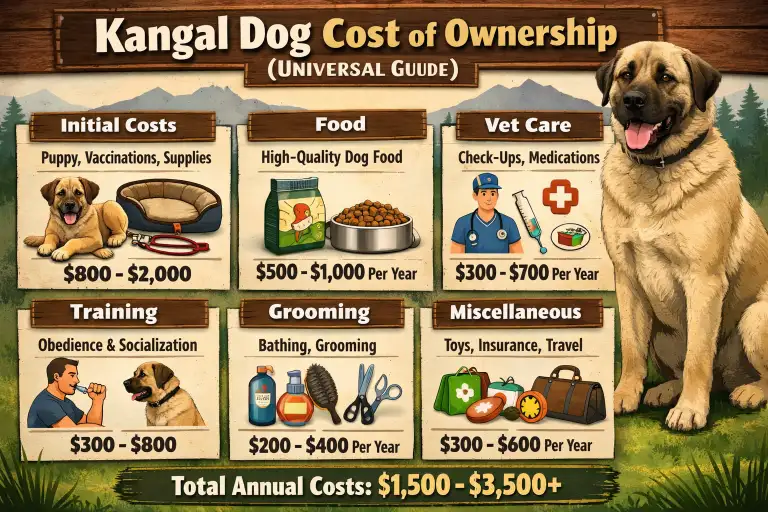
Owning a Kangal dog can be a rewarding experience, but it’s important to understand the financial commitment before bringing one home. Kangals are a large, powerful breed known for their protective instincts and loyalty, which also means they require more food, larger supplies, and consistent healthcare than smaller breeds.
Most prospective owners underestimate the true cost of ownership. Expenses go beyond the initial purchase or adoption fee — they include veterinary care, food, grooming, training, insurance, and hidden costs that can add up quickly. On average, a Kangal’s first-year costs can range from $3,500 to $6,500 depending on location, breeder, and care standards, while annual costs for adult dogs typically fall between $2,000 and $4,000. Over a 10–12 year lifespan, total expenses can reach $25,000 to $50,000 or more.
This guide breaks down all aspects of Kangal dog ownership costs, from one-time setup expenses to ongoing monthly and annual costs. By the end, you’ll have a clear picture of what it truly costs to care for a Kangal dog and how to plan your budget effectively.
Key takeaways for prospective owners:
- Kangals are large and high-maintenance, requiring careful budgeting.
- First-year costs are higher due to initial vet care, supplies, and training.
- Ongoing costs include premium food, regular vet visits, grooming, and insurance.
- Hidden expenses, emergencies, and lifestyle factors can significantly impact your budget.
One-Time Costs: Buying a Kangal and Setting Up
Bringing a Kangal dog home involves several one-time expenses that are easy to overlook. These costs are mainly for buying or adopting the dog, initial vet care, and setting up your home with the right supplies. Understanding these expenses helps you plan a realistic first-year budget and avoid surprises.
Here’s a breakdown of the main one-time costs for a Kangal dog:
| Item | Estimated Cost Range | Notes |
|---|---|---|
| Puppy purchase from breeder | $1,500 – $4,000 | Depends on breeder reputation and location |
| Adoption fee | $300 – $800 | Adoption from rescue or shelter |
| Initial vet care | $200 – $500 | Vaccines, microchip, health check, spay/neuter |
| Crate | $100 – $300 | Large crate suitable for a Kangal |
| Bed | $50 – $200 | Durable bed for a large dog |
| Leash & collar | $30 – $100 | Strong, heavy-duty for safety |
| Toys & enrichment | $50 – $150 | Chew toys and mental stimulation |
| Food setup (bowls, initial stock) | $50 – $150 | Large bowls and starter food supply |
Most first-time owners spend $2,000 to $5,000 in the first year, depending on whether they buy from a breeder or adopt, and the quality of supplies they choose. Kangals grow fast, so it’s important to invest in strong, durable equipment that can handle their size and strength.
Planning for these one-time costs will make the first year smoother and prevent unexpected expenses. Keep in mind that puppies often need extra vet visits and training, which can increase first-year costs slightly.
Ongoing Monthly and Annual Expenses
After the first year, owning a Kangal dog comes with regular costs. These include food, vet care, grooming, training, insurance, and other recurring expenses. Knowing these costs helps you budget properly and avoid surprises.
Here’s a table showing typical monthly and annual costs for a Kangal:
| Expense | Monthly Cost | Annual Cost | Notes |
|---|---|---|---|
| Food | $120 – $200 | $1,440 – $2,400 | Kangals eat a lot due to their size |
| Preventatives & medications | $20 – $50 | $240 – $600 | Flea, tick, heartworm, joint supplements |
| Routine vet visits | $25 – $50 | $300 – $600 | Annual checkups and vaccines |
| Grooming | $20 – $50 | $240 – $600 | Nail trimming, ear cleaning, coat care |
| Training | $15 – $50 | $180 – $600 | Obedience classes or private sessions |
| Insurance | $40 – $80 | $480 – $960 | Large-breed coverage, optional but recommended |
| Licenses & permits | $5 – $15 | $60 – $180 | Local registration or dog license fees |
On average, monthly costs for an adult Kangal are between $240 and $485, and annual costs range from $2,500 to $5,000, depending on food quality, grooming, and veterinary care.
These recurring costs are high because Kangals are large dogs. They need more food, stronger equipment, and regular health checkups. Planning for these expenses will ensure your Kangal stays healthy and happy without causing financial stress.
Major Cost Drivers and Variations
The cost of owning a Kangal dog can change a lot depending on several factors. These include the size of your dog, your living situation, health issues, and emergencies. Understanding these differences will help you plan your budget better.
Here’s a table showing how costs can vary:
| Factor | Impact on Cost | Notes |
|---|---|---|
| Dog size (large vs extra-large) | $50 – $150 more per month | Larger dogs eat more food and need bigger supplies |
| Living situation (apartment vs house) | $0 – $200 one-time or monthly | Houses may require fencing or extra space for large dogs |
| Multi-dog households | $100 – $300 more per month | Each additional dog increases food, vet, and supplies costs |
| Health issues | $500 – $2,000+ per year | Chronic conditions, allergies, or injuries increase vet bills |
| Emergency vet care | $500 – $3,000+ per incident | Accidents or serious illness can be very expensive |
| First-year vs adult-year | $1,000 – $2,000 difference | Puppies need more vet visits, vaccinations, and training |
Kangals are big, strong dogs, so their food, equipment, and health care can cost more than smaller breeds. Living in a city or apartment may add extra costs like fencing, while having multiple dogs or health problems will raise expenses significantly.
By knowing these major cost drivers, you can budget for the worst-case scenarios and avoid surprises.
Budgeting, Saving, and Preparing for Hidden Costs
Owning a Kangal dog comes with some hidden costs that many owners forget. These can include emergency vet visits, dental care, boarding, travel, or even chewed furniture and toys. Planning for these costs helps you avoid surprises and ensures your dog gets the care it needs.
Here’s a table showing first-year, adult-year, and lifetime cost estimates for a Kangal dog:
| Cost Type | First Year | Adult Year | Lifetime (10–12 years) | Notes |
|---|---|---|---|---|
| Food | $1,500 – $2,400 | $1,440 – $2,400 | $15,000 – $28,800 | Large breed, eats more than smaller dogs |
| Vet care (routine & emergency) | $500 – $1,000 | $400 – $800 | $4,500 – $10,000 | Includes vaccines, checkups, and possible emergencies |
| Grooming & training | $250 – $600 | $250 – $600 | $2,500 – $7,200 | Nail trimming, coat care, training classes |
| Insurance | $480 – $960 | $480 – $960 | $4,800 – $11,520 | Optional but recommended for large breeds |
| Supplies & equipment | $300 – $900 | $100 – $300 | $1,300 – $3,500 | Beds, crates, toys, leash replacements |
| Hidden/extra costs | $200 – $500 | $200 – $500 | $2,000 – $6,000 | Boarding, travel, destroyed items, dental |
Tips to save money without hurting care:
- Buy food and supplies in bulk to lower costs
- Schedule regular vet checkups to prevent expensive emergencies
- Use durable toys and chew items to reduce replacements
- Consider pet insurance to manage large vet bills
By budgeting for first-year expenses, ongoing yearly costs, and hidden emergencies, you can provide a healthy and happy life for your Kangal without financial stress. This table helps you see the total cost over the dog’s lifetime and plan accordingly.
For more detailed information about large dog breeds and their care, you can visit the American Kennel Club’s Kangal breed page: https://www.akc.org/dog-breeds/kangal

Ata Ur Rehman is the founder of Pet Age in Human Years Calculator, an educational platform that provides age conversion charts and lifespan guides for dogs, cats, birds, and other companion animals. His work focuses on helping pet owners understand how animal ages translate into human years using commonly accepted age conversion formulas and published lifespan averages.
The website compiles breed and species lifespan data from kennel clubs, breed organizations, and general animal lifespan studies to present simple and easy-to-understand guides for pet owners worldwide.
This website was created to centralize animal age conversion charts into one easy reference platform for pet owners.