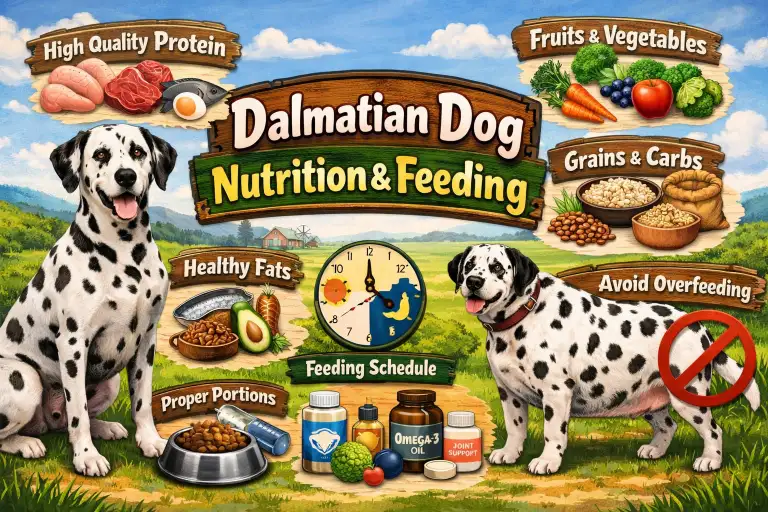
Dalmatian nutrition is not just about choosing a good-quality dog food. This breed has special body traits that make diet one of the most important parts of their long-term health. Feeding a Dalmatian the same way as other dogs can slowly increase the risk of serious health problems, especially urinary issues.
Dalmatians process purines differently from most dogs. Instead of safely breaking purines down, their bodies turn them into uric acid. This uric acid can form crystals and bladder stones. What your Dalmatian eats directly affects how much uric acid is made, which makes diet a health decision, not just a food choice.
Nutrition also affects energy levels, weight control, skin and coat health, digestion, and kidney and bladder function. Because Dalmatians are active dogs, the wrong food can cause low energy or weight gain over time.
This guide focuses on simple, science-based feeding. The goal is to help owners understand why diet matters so much for Dalmatians and how daily food choices can prevent problems before they start.
How diet affects common Dalmatian health risks:
| Health Issue | How Nutrition Affects It | Why Diet Matters |
|---|---|---|
| Urate bladder stones | High-purine foods raise uric acid | Right diet lowers stone risk |
| Obesity | Too many calories | Extra weight harms joints and bladder |
| Digestive problems | Poor ingredients or fast changes | Causes gas and loose stool |
| Skin and coat issues | Poor fats or protein quality | Diet affects skin barrier |
| Low or high energy | Wrong calorie balance | Proper food improves stamina |
Many owners think high protein is bad for Dalmatians. This is not fully true. Dalmatians need protein, but it must come from low-purine sources. Treats, table scraps, and human foods often add hidden purines and calories.
Feeding a Dalmatian is daily preventive care. When the diet is right, many health problems never appear.
What to Feed a Dalmatian: Nutritional Needs, Protein Sources, and Food Labels
Feeding a Dalmatian means choosing the right nutrients from the right sources. This breed needs balanced food that supports energy, digestion, and urinary health without adding extra purines.
You do not need a complex diet. You need a steady and smart one.
Core nutrition needs for Dalmatians:
| Nutrient | Why It Matters | Simple Guidance |
|---|---|---|
| Protein | Muscle and energy | Choose low-purine sources |
| Fat | Energy and coat health | Moderate levels |
| Carbohydrates | Energy and fiber | Cooked grains or veggies |
| Fiber | Digestion | Helps stool quality |
| Water | Flushes uric acid | Always available |
Low-purine and high-purine protein sources:
| Protein Source | Purine Level | Good for Dalmatians |
|---|---|---|
| Eggs | Very low | Yes |
| Chicken (muscle meat) | Low | Yes |
| Turkey (muscle meat) | Low | Yes |
| Lamb | Low to moderate | Yes, in moderation |
| Beef (lean) | Moderate | Limited |
| Organ meats | Very high | No |
| Sardines, anchovies | Very high | No |
| Yeast ingredients | High | No |
Recommended nutrient ranges for adult Dalmatians:
| Nutrient | Target Range |
|---|---|
| Protein | 18–25% |
| Fat | 10–15% |
| Fiber | 3–6% |
| Moisture | Higher is better |
Higher moisture helps protect the bladder.
How to read dog food labels:
| Label Part | What to Look For | What to Avoid |
|---|---|---|
| Ingredients | Chicken or turkey listed first | Liver, kidney, by-products |
| Protein source | Muscle meat | Fish or organ meals |
| Nutrition statement | Complete and balanced | No feeding claim |
| Marketing words | Clear nutrition info | Trend-based terms |
Grain-free food is not always better. Whole grains like rice or oats are usually safe. Some grain-free foods use peas or lentils, which may raise purine levels.
Key points from this section:
- Dalmatians need balanced diets
- Protein source matters more than protein amount
- Avoid high-purine foods
- Always read labels carefully
How Much to Feed a Dalmatian: Calories, Portions, and Feeding Frequency
Knowing how much to feed is just as important as choosing the right food. Overfeeding can cause weight gain and urinary problems. Underfeeding can cause low energy and weak muscles.
Daily calorie needs for Dalmatians:
| Weight | Low Activity | Normal Activity | High Activity |
|---|---|---|---|
| 15 kg | 700–800 | 850–950 | 1,050–1,150 |
| 20 kg | 850–950 | 1,000–1,100 | 1,200–1,350 |
| 25 kg | 1,000–1,100 | 1,150–1,300 | 1,400–1,600 |
| 30 kg | 1,150–1,300 | 1,300–1,500 | 1,600–1,800 |
Portion control tips:
- Measure food with a cup
- Adjust based on body shape
- Treats should be under 10% of calories
Feeding frequency by age:
| Life Stage | Meals Per Day |
|---|---|
| Puppy (2–6 months) | 3–4 |
| Puppy (6–12 months) | 2–3 |
| Adult | 2 |
| Senior | 2 small meals |
Signs your Dalmatian is a healthy weight:
| Check | What You Should See |
|---|---|
| Ribs | Easy to feel |
| Waist | Visible from above |
| Belly | Tucked up |
| Energy | Active, not tired |
Best and Worst Foods for Dalmatians
Some foods protect a Dalmatian’s bladder, while others raise health risks.
Best food types:
| Food Type | Why It Helps | Watch Out |
|---|---|---|
| Dry kibble | Easy and affordable | Must be low-purine |
| Wet food | Adds moisture | Higher calories |
| Fresh cooked | High quality | Must be balanced |
| Freeze-dried | Easy to serve | Needs water |
| Raw food | Popular trend | Often high purine |
Safe human foods in small amounts:
| Food | Why It’s Safe |
|---|---|
| Eggs | Very low purine |
| Plain chicken | Easy to digest |
| Turkey | Low purine |
| Rice | Gentle |
| Carrots | Low calorie |
| Apples (no seeds) | Fiber |
Foods to avoid:
| Food | Why Avoid |
|---|---|
| Organ meats | Very high purine |
| Sardines | High purine |
| Yeast | Raises uric acid |
| Grapes | Toxic |
| Onions | Harmful |
| Chocolate | Toxic |
Water is very important:
| Tip | Benefit |
|---|---|
| Fresh water always | Dilutes urine |
| Wet food | Adds moisture |
| More water after exercise | Prevents dehydration |
Special Diets, Common Feeding Problems, and Dalmatian Owner FAQs
Some Dalmatians need extra diet care due to health or lifestyle.
Low-purine diet basics:
| Focus | What to Do |
|---|---|
| Protein | Eggs, chicken, turkey |
| Avoid | Organ meats, fish |
| Water | Encourage drinking |
| Food type | Wet or fresh preferred |
Food sensitivity help:
| Problem | Possible Fix |
|---|---|
| Itchy skin | Simple protein diet |
| Loose stool | Add fiber |
| Gas | Avoid fatty foods |
| Ear issues | Limited ingredients |
Weight problems:
| Issue | What Helps |
|---|---|
| Weight gain | Cut treats |
| Always hungry | Add fiber |
| Weight loss | Vet check |
| Low energy | Review calories |
Common feeding mistakes:
| Mistake | Problem |
|---|---|
| Too many treats | Hidden calories |
| Free-feeding | Overeating |
| Table scraps | Purines and fat |
| Fast food changes | Diarrhea |
When to see a vet:
| Sign | Possible Issue |
|---|---|
| Blood in urine | Bladder stones |
| Straining to pee | Blockage |
| Sudden weight loss | Illness |
| Refusing food | Pain |
For more expert tips on keeping your Dalmatian healthy and happy, you can visit the American Kennel Club’s guide on Dalmatian care.For more detailed guidance on dog life expectancy and care, you can visit the American Kennel Club’s page on Dalmatian lifespan and health.

Ata Ur Rehman is the founder of Pet Age in Human Years Calculator, an educational platform that provides age conversion charts and lifespan guides for dogs, cats, birds, and other companion animals. His work focuses on helping pet owners understand how animal ages translate into human years using commonly accepted age conversion formulas and published lifespan averages.
The website compiles breed and species lifespan data from kennel clubs, breed organizations, and general animal lifespan studies to present simple and easy-to-understand guides for pet owners worldwide.
This website was created to centralize animal age conversion charts into one easy reference platform for pet owners.