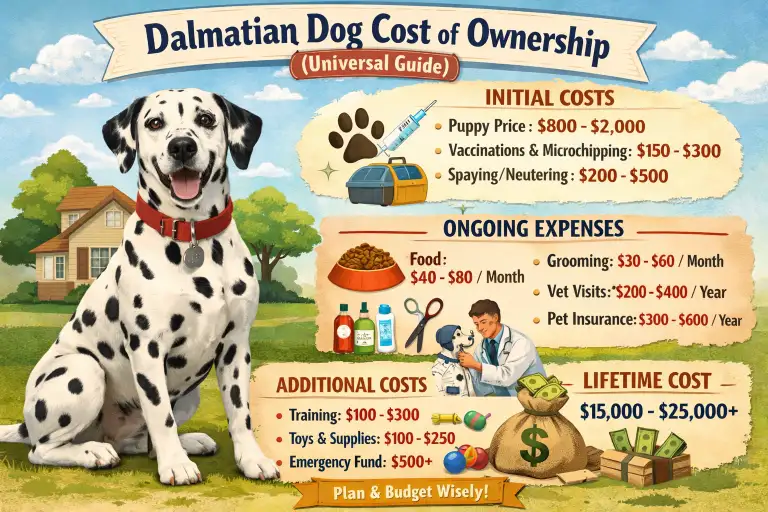
If you are asking how much it really costs to own a Dalmatian, you are already thinking responsibly. Many first-time owners focus only on the puppy price or adoption fee and are surprised later by the long-term expenses of this active, medium-large breed.
The cost of owning a Dalmatian goes far beyond buying the dog. Food for an energetic dog, regular vet care, breed-specific health risks, training, and unexpected costs all add up over time. This guide gives a realistic view of Dalmatian ownership costs, not a best-case estimate.
Dalmatians are not a low-maintenance or budget breed. They need quality food, regular training, and proactive health care. Breed-specific concerns like hearing testing and urinary stone risk can also affect long-term costs if not managed early.
By the end of this guide, you should be able to decide honestly whether owning a Dalmatian fits your financial situation, not just your lifestyle.
Dalmatian First-Year Costs: Puppy vs Adult Dog
The first year of owning a Dalmatian is usually the most expensive. This is when many owners feel financial pressure for the first time. Costs depend on whether you choose a puppy or an adult dog and how prepared you are.
Puppies generally cost more in the first year because of vaccinations, training, and early care. Adult dogs often come with some of these already completed.
Dalmatian first-year cost comparison:
| Expense Category | Dalmatian Puppy | Adult Dalmatian |
|---|---|---|
| Adoption or purchase fee | Higher | Lower |
| Initial vet visits and vaccines | Higher | Moderate |
| BAER hearing test | Required | Sometimes done |
| Spay or neuter | Usually required | Often included |
| Supplies and setup | High | Moderate |
| Training | High | Moderate |
| Overall first-year cost | Highest year | Lower than puppy |
Planning for first-year costs helps prevent stress and rushed decisions later.
Monthly and Annual Dalmatian Expenses
After the first year, costs become more predictable but do not disappear. These are the expenses you will pay every month and every year for your Dalmatian’s entire life.
Because Dalmatians are active and medium-large, their ongoing costs are higher than many small breeds.
Typical monthly costs:
| Expense | Average Monthly Cost |
|---|---|
| Food | Moderate |
| Flea, tick, heartworm prevention | Low to moderate |
| Grooming and care | Low |
| Training and enrichment | Low to moderate |
| Miscellaneous supplies | Low |
Typical annual costs:
| Expense | Average Annual Cost |
|---|---|
| Vet checkups and vaccines | Moderate |
| Preventative medications | Moderate |
| Grooming services | Low to moderate |
| License and ID renewal | Low |
| Replacement toys and supplies | Low to moderate |
These routine costs make up most of the lifetime expense of owning a Dalmatian.
Dalmatian Health, Insurance, and Major Cost Drivers
Some Dalmatian owners spend much more than others due to health, location, and lifestyle. Health care is one of the biggest factors that can increase costs.
Dalmatians have known breed-specific risks. Hearing loss is one concern, which is why BAER hearing tests are often recommended. Urinary stones are another major risk and can require long-term management or surgery if not prevented. Skin allergies can also cause ongoing costs.
Common Dalmatian health-related costs:
| Health Issue or Service | Cost Level |
|---|---|
| BAER hearing test | Low to moderate |
| Urinary stone treatment | High |
| Allergy testing and medication | Moderate |
| Emergency surgery or hospitalization | Very high |
Pet insurance can help manage large vet bills. Monthly insurance costs vary based on coverage, age, and location. Some owners prefer insurance, while others save money monthly for emergencies.
Other major cost drivers include where you live, how active your dog is, and your dog’s age. Older Dalmatians usually cost more due to medical needs.
Dalmatian Lifetime Cost, Hidden Expenses, and Budget Reality
Owning a Dalmatian is a long-term financial responsibility. Most Dalmatians live 12 to 14 years, and costs continue every year.
Lifetime cost overview:
| Life Stage | Cost Pattern |
|---|---|
| First year | Highest yearly cost |
| Adult years | Steady yearly cost |
| Senior years | Higher medical cost |
| Total lifetime cost | High overall |
Hidden costs many owners forget:
| Expense | Why It Matters |
|---|---|
| Boarding or pet sitting | Needed during travel |
| Dental cleanings | Often expensive |
| Home or furniture damage | Active dogs cause wear |
| Replacing beds and toys | Frequent replacement |
| Special diets or medications | Needed if health issues arise |
The best way to manage costs is to plan ahead. Many owners set aside money monthly for vet care or emergencies. Others use pet insurance. Skipping care to save money often leads to higher costs later.
Dalmatians are loyal, smart, and fun dogs, but they are not cheap to own. If you can plan for routine care and unexpected expenses, owning a Dalmatian can be very rewarding. If not, it is better to wait than to struggle later.
For more detailed guidance on dog life expectancy and care, you can visit the American Kennel Club’s page on Dalmatian lifespan and health.

Ata Ur Rehman is the founder of Pet Age in Human Years Calculator, an educational platform that provides age conversion charts and lifespan guides for dogs, cats, birds, and other companion animals. His work focuses on helping pet owners understand how animal ages translate into human years using commonly accepted age conversion formulas and published lifespan averages.
The website compiles breed and species lifespan data from kennel clubs, breed organizations, and general animal lifespan studies to present simple and easy-to-understand guides for pet owners worldwide.
This website was created to centralize animal age conversion charts into one easy reference platform for pet owners.