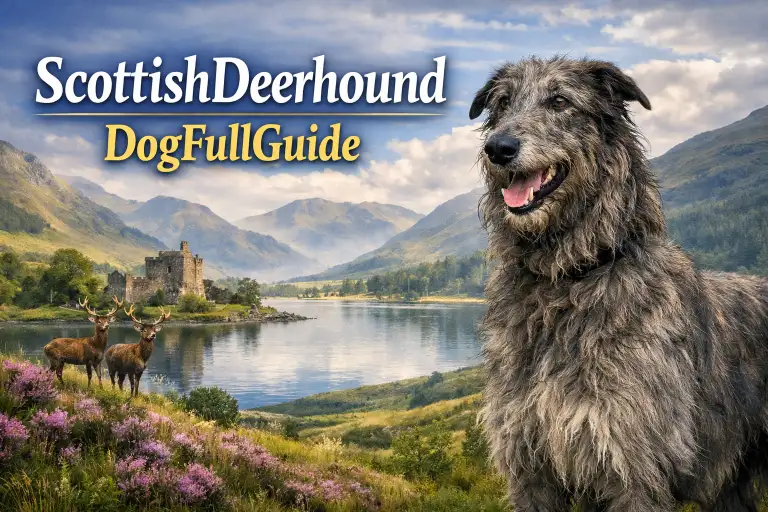
The Scottish Deerhound is often described as a “gentle giant,” and this description is accurate in most homes. Despite their very large size, these dogs are calm, soft-natured, and emotionally sensitive. They are not loud, pushy, or aggressive. In fact, many owners are surprised by how quiet and well-mannered a Scottish Deerhound is indoors.
With family members, the Scottish Deerhound is loyal and deeply bonded, but not clingy. They enjoy being close to their people, often choosing to lie nearby rather than demand constant attention. This breed forms strong emotional connections and does best in homes where they are treated as part of the family, not kept outdoors or isolated.
With strangers, Scottish Deerhounds are usually reserved. They are polite but distant, rarely showing excitement or suspicion. This makes them poor guard dogs. They may alert you to something unusual, but they are unlikely to protect property or act defensively. Their natural response is observation, not confrontation.
Scottish Deerhounds can do well with children when handled correctly. They are gentle and patient, but their size means accidents can happen. Small children may be knocked over without the dog meaning to do so. This breed is best suited for homes with older children who understand how to respect a large dog’s space and calm nature.
When it comes to other pets, behavior depends heavily on what kind of animal they are raised with. Scottish Deerhounds usually get along well with other dogs, especially those of similar size. However, they have a strong prey drive. Small animals like cats, rabbits, or small dogs can trigger chasing behavior, especially outdoors. Even well-trained Deerhounds should not be trusted off-leash around small animals in open areas.
Barking is not a major issue with this breed. Scottish Deerhounds are generally quiet and only bark when there is a clear reason. If a Deerhound barks excessively, it is often a sign of boredom, stress, or lack of exercise rather than a natural habit.
The table below gives a quick, easy overview of key temperament traits
| Temperament Trait | Level | What This Means in Daily Life |
|---|---|---|
| Affection | High | Bonds closely but not demanding |
| Aggression | Very Low | Not suitable as a guard dog |
| Prey Drive | High | Strong urge to chase moving animals |
| Independence | Medium to High | Thinks before obeying commands |
| Barking | Low | Quiet and calm in most homes |
| Sensitivity | High | Does best with gentle handling |
Overall, the Scottish Deerhound is best described as calm, dignified, and emotionally gentle. They are not a high-energy chaos dog, but they are also not passive ornaments. Their behavior reflects their history as independent hunters and their need for respect, space, and understanding from their owners.
Scottish Deerhound Exercise, Training, and Grooming Needs
Scottish Deerhounds may look calm and relaxed indoors, but they still need regular exercise to stay healthy and happy. This breed was built to run, and short walks alone are not enough. A daily routine should include long walks and, when possible, safe areas where the dog can run freely. Because of their strong prey drive, open spaces must be fully fenced. Letting a Scottish Deerhound run off-leash in an unfenced area is risky, even for well-trained dogs.
Mental exercise is also important. Scottish Deerhounds are intelligent but independent. They enjoy calm activities, problem-solving toys, and gentle interaction with their owners. Without enough activity, they may become bored, restless, or destructive in the home.
Training a Scottish Deerhound requires patience and a soft approach. This breed does not respond well to shouting or harsh correction. They are sensitive dogs and may shut down if treated roughly. Training works best when sessions are short, calm, and rewarding. Recall training is one of the biggest challenges because their instinct to chase moving objects is very strong. Even experienced owners often keep this breed on a leash in open areas for safety.
Grooming needs for the Scottish Deerhound are moderate and manageable. Their rough, wiry coat does not tangle easily, but it does need regular brushing to remove loose hair and dirt. Bathing is only needed when the dog becomes dirty or starts to smell. Over-bathing can dry out their skin and coat.
Nail care is especially important for such a large breed. Long nails can cause pain and affect how the dog walks. Ears should be checked regularly for dirt or infection, and teeth should be cleaned to prevent dental disease. Scottish Deerhounds also handle cold weather well but struggle in hot climates. Extra care is needed during summer months to avoid overheating.
The table below gives a simple overview of daily care needs
| Care Area | Level | What Owners Should Know |
|---|---|---|
| Daily Exercise | High | Needs long walks and safe running space |
| Mental Stimulation | Moderate | Calm games and interaction work best |
| Training Difficulty | Moderate | Gentle methods only |
| Grooming | Low to Moderate | Weekly brushing is usually enough |
| Shedding | Low | Slight increase during seasonal changes |
| Heat Tolerance | Low | Needs shade and cool areas in summer |
When their exercise, training, and grooming needs are met, Scottish Deerhounds are peaceful and easy to live with indoors. Most problems seen in this breed come from lack of movement, poor training methods, or unrealistic expectations.
Scottish Deerhound Health, Lifespan, and Cost to Own
Scottish Deerhounds are generally calm and strong dogs, but their very large size means they do not live as long as smaller breeds. The average Scottish Deerhound lifespan is usually between 8 and 11 years. Some live longer with excellent care, good genetics, and early health screening.
Like many giant breeds, Scottish Deerhounds are more likely to face certain health problems. Heart disease is one of the most serious concerns, especially a condition called dilated cardiomyopathy. Cancer, including bone cancer, is also seen more often in this breed than in smaller dogs. Another major risk is bloat, a life-threatening stomach condition that needs emergency treatment. Because of these risks, regular vet checkups and responsible breeding are very important.
Owners should work with breeders who test their dogs and can show health records. Many vets also recommend heart checks and careful feeding routines to lower the risk of bloat. While Scottish Deerhounds are not fragile dogs, their size makes health problems more serious and more expensive to treat.
The table below shows the most common health concerns
| Health Issue | Risk Level | Why It Matters |
|---|---|---|
| Heart Disease | Moderate to High | Can shorten lifespan if not detected early |
| Bloat (GDV) | High | Medical emergency needing fast treatment |
| Bone Cancer | Moderate | More common in giant breeds |
| Joint Problems | Moderate | Weight and growth control are important |
| Anesthesia Risk | Moderate | Giant breeds need special care during surgery |
Owning a Scottish Deerhound is also a financial commitment. The puppy price from a responsible breeder is usually high because the breed is rare and expensive to raise. Daily costs like food and routine care are also higher due to the dog’s size. Vet bills can be costly, especially for emergency care or long-term treatment. Many owners choose pet insurance to help manage these expenses.
The table below gives a simple cost overview
| Expense Type | Estimated Cost Range |
|---|---|
| Puppy Price | High |
| Food | Moderate to High |
| Routine Vet Care | Moderate |
| Emergency Medical Care | High |
| Grooming | Low |
| Pet Insurance | Moderate |
Scottish Deerhounds are not the most expensive dogs in every category, but their large size and health risks mean owners must be financially prepared. Planning ahead helps prevent stress and allows the dog to receive proper care throughout its life.
For more detailed information on Scottish Deerhound health testing and breed standards, you can visit the American Kennel Club’s Scottish Deerhound page.

Ata Ur Rehman is the founder of Pet Age in Human Years Calculator, an educational platform that provides age conversion charts and lifespan guides for dogs, cats, birds, and other companion animals. His work focuses on helping pet owners understand how animal ages translate into human years using commonly accepted age conversion formulas and published lifespan averages.
The website compiles breed and species lifespan data from kennel clubs, breed organizations, and general animal lifespan studies to present simple and easy-to-understand guides for pet owners worldwide.
This website was created to centralize animal age conversion charts into one easy reference platform for pet owners.