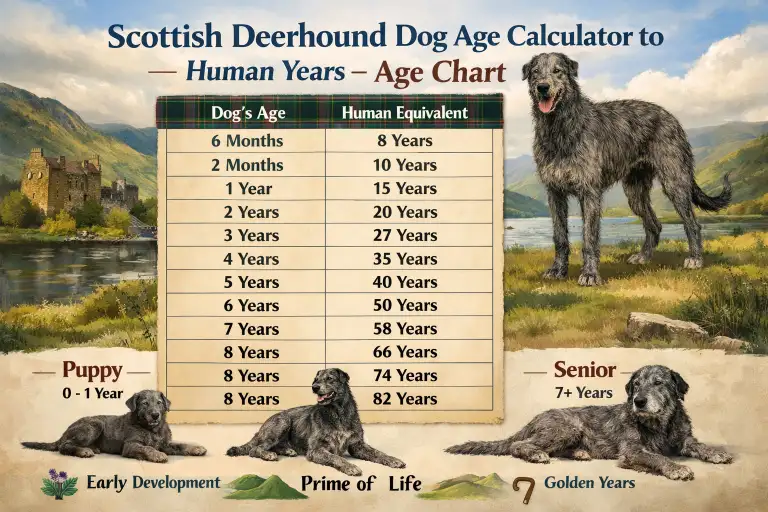
A Scottish Deerhound age calculator helps translate your dog’s age into human-equivalent years using science-based aging models rather than outdated rules of thumb. Because Scottish Deerhounds are a giant breed, they age very differently from smaller dogs and from humans—especially during their first few years of life.
For decades, many people believed that one dog year equals seven human years. This idea is now known to be inaccurate, and it is especially misleading for giant breeds like the Scottish Deerhound. These dogs mature rapidly in puppyhood, reach adulthood early, and then age faster biologically once they pass their prime. Using a simple 7-year multiplier can underestimate how quickly a Deerhound is aging and may delay important health screenings or lifestyle adjustments.
Scottish Deerhounds grow at an extraordinary rate during their first 12 to 18 months. In that short time, they pass through developmental stages that would take humans more than a decade to experience. After reaching adulthood, their aging curve shifts again, with senior changes appearing earlier than in medium or small breeds. This unique pattern is why a breed-specific age calculator is necessary.
A proper Scottish Deerhound dog-years–to–human-years calculator considers:
- Giant-breed growth speed during puppyhood
- Earlier onset of senior and geriatric stages
- Shorter average lifespan compared to smaller dogs
- Biological aging rather than calendar age alone
The goal of this calculator is not just to provide a number, but to help owners understand what stage of life their Scottish Deerhound is truly in. Knowing whether your dog is biologically comparable to a young adult, middle-aged person, or senior can guide decisions about nutrition, exercise, veterinary care, and long-term health planning.
Scottish Deerhound Age Chart (Dog Age to Human Years)
This Scottish Deerhound age chart shows how a dog’s age compares to human years using a giant-breed aging model. It gives you a quick and easy way to understand how old your Deerhound is in human terms and what life stage they are in.
Scottish Deerhounds age fast in their early years and are considered seniors sooner than many other dogs. That is why their human-age equivalent may feel higher than expected.
Use the table below as a general guide, not an exact medical rule. Every dog is unique, but this chart reflects how most Scottish Deerhounds age.
Scottish Deerhound Dog Age to Human Years Chart
| Scottish Deerhound Age | Human Age Equivalent | Life Stage |
|---|---|---|
| 6 months | ~10 years | Puppy |
| 1 year | ~18–20 years | Late puppy |
| 2 years | ~24–28 years | Young adult |
| 3 years | ~35 years | Adult |
| 4 years | ~42–45 years | Adult |
| 5 years | ~50–55 years | Mature adult |
| 6 years | ~58–62 years | Early senior |
| 7 years | ~65–70 years | Senior |
| 8 years | ~75 years | Senior |
| 9 years | ~80+ years | Geriatric |
| 10 years | ~85+ years | Geriatric |
This chart helps owners quickly answer questions like:
- “Is my Scottish Deerhound already a senior?”
- “Why does my dog seem older than other breeds at the same age?”
- “When should I change care, food, or exercise?”
Remember, biological age matters more than calendar age. Two Scottish Deerhounds of the same age may age differently depending on health, weight, diet, and lifestyle.
How Scottish Deerhounds Age Compared to Humans
Scottish Deerhounds do not age at the same speed as humans. They grow up much faster, especially in their first two years, and then their bodies begin to age sooner than smaller dogs. This is normal for giant breeds.
In the puppy stage, a Scottish Deerhound’s body changes very quickly. Bones grow fast, muscles develop early, and the heart and joints work hard to keep up with the body’s size. In human terms, this short puppy stage is like moving from a baby to a teenager in just one year.
After reaching adulthood, aging slows for a short time. Many Scottish Deerhounds seem strong and healthy between ages 3 and 5. Even though they look fit, their bodies are already aging on the inside. This is why vets often suggest health checks earlier for giant breeds.
As Scottish Deerhounds get older, aging speeds up again. Joint stiffness, lower energy, and slower movement often appear sooner than in smaller dogs. By 6 or 7 years old, many Scottish Deerhounds are already considered seniors.
Scientists studying dog aging have found that dogs do not age in a straight line like humans. Dogs age quickly when young, slow down for a while, and then age faster again later in life. This curved aging pattern explains why a simple math rule does not work.
Dog Aging Speed Compared to Human Aging
| Life Phase | Scottish Deerhound Aging Speed | Human Comparison |
|---|---|---|
| Puppyhood | Very fast | Baby to teen years |
| Early adult | Slower | Young adult |
| Middle age | Moderate | Middle-aged adult |
| Senior years | Fast | Older adult |
Understanding this pattern helps owners make better choices. A dog that looks “not that old” may still need senior care because its body is aging faster than expected.
Scottish Deerhound Lifespan and Life Stages
Scottish Deerhounds have a shorter lifespan than many other dog breeds because of their large size. Most Scottish Deerhounds live about 8 to 11 years, though some may live a little longer with good care and genetics.
Because they age faster, Scottish Deerhounds are usually considered seniors earlier than smaller dogs. Many begin senior changes around 6 years old, even if they still look strong on the outside.
Each life stage comes with clear changes that owners often notice. Knowing these stages helps you understand what your dog needs at different ages.
Scottish Deerhound Life Stages Overview
| Life Stage | Age Range | What Owners Often Notice |
|---|---|---|
| Puppy | 0–1.5 years | Very fast growth, high energy |
| Adolescent | 1.5–3 years | Strong muscles, calmer behavior |
| Adult | 3–5 years | Peak strength and stamina |
| Senior | 6–8 years | Slower movement, joint stiffness |
| Geriatric | 9+ years | Low energy, health challenges |
During the puppy stage, Scottish Deerhounds grow quickly and need careful feeding to protect their joints.
In the adult years, they are usually calm, tall, and powerful dogs with steady energy.
When they reach the senior stage, many start slowing down. You may notice longer rest times, stiffness after sleep, or less interest in long walks.
In the geriatric stage, comfort and quality of life become the main focus.
It is important to remember that aging signs do not appear at the same time for every dog. Diet, exercise, weight, and vet care all play a big role in how a Scottish Deerhound ages.
How to Help a Scottish Deerhound Age Healthily
Helping your Scottish Deerhound stay healthy as they grow older is very important. Because they are a giant breed and age faster, planning for each stage of life can improve their quality of life and help them live longer.
Nutrition is one of the most important factors. Puppies need food that supports fast growth without overloading their joints. Adult Deerhounds benefit from a balanced diet that keeps them lean and strong. For senior dogs, high-quality protein and joint-support nutrients can help maintain muscle and mobility.
Exercise should match your Deerhound’s age. Puppies need short bursts of activity to protect growing bones. Adults enjoy long walks and moderate running. Seniors need gentler exercise to prevent stiffness while keeping muscles healthy.
Regular veterinary visits are essential. Checkups help catch health problems early, including heart, bone, and joint issues that are common in Scottish Deerhounds. Preventive care, vaccines, and screenings become even more important as your dog gets older.
At-home care can also make a big difference. Support joints with soft bedding, provide ramps or steps to help them reach favorite spots, and monitor weight carefully. Small lifestyle changes can significantly improve comfort for senior dogs.
Age-Based Care Tips for Scottish Deerhounds
| Age Range | Key Care Focus |
|---|---|
| Puppy (0–1.5 yrs) | Balanced growth diet, joint protection, training |
| Adolescent (1.5–3 yrs) | Controlled exercise, lean muscle building |
| Adult (3–5 yrs) | Maintain healthy weight, regular checkups, heart and joint health |
| Early Senior (6–7 yrs) | Gentle exercise, monitor stiffness, start preventive screenings |
| Senior/Geriatric (8+ yrs) | Soft bedding, mobility support, pain management, regular vet visits |
Following these tips helps your Scottish Deerhound enjoy each stage of life comfortably and stay as healthy as possible.
For more detailed information on Scottish Deerhound health and care, you can visit the American Kennel Club guide here.

Ata Ur Rehman is the founder of Pet Age in Human Years Calculator, an educational platform that provides age conversion charts and lifespan guides for dogs, cats, birds, and other companion animals. His work focuses on helping pet owners understand how animal ages translate into human years using commonly accepted age conversion formulas and published lifespan averages.
The website compiles breed and species lifespan data from kennel clubs, breed organizations, and general animal lifespan studies to present simple and easy-to-understand guides for pet owners worldwide.
This website was created to centralize animal age conversion charts into one easy reference platform for pet owners.