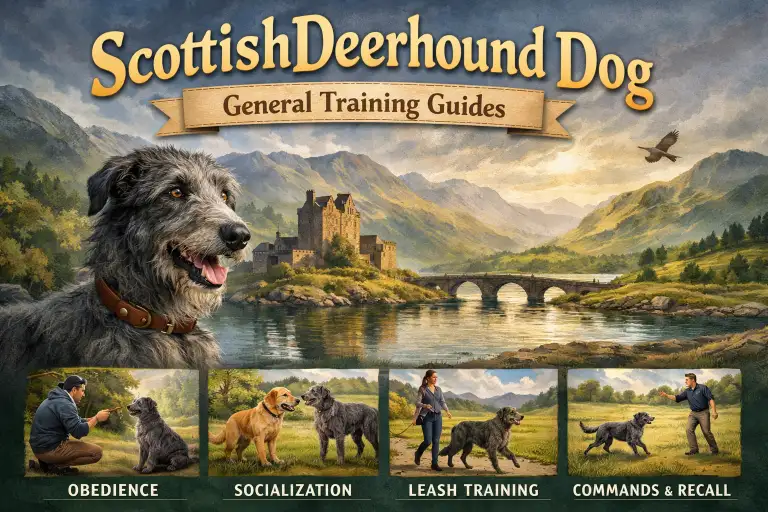
Training a Scottish Deerhound is less about strict obedience and more about building cooperation, trust, and motivation. This breed was developed for hunting by sight, not for following constant human direction, which means their training needs are very different from those of herding or working breeds. Owners who understand this early tend to have calmer, more responsive dogs and far fewer frustrations.
This guide is designed for anyone living with a Scottish Deerhound, whether you are raising a puppy, navigating the challenging adolescent phase, or working with an adult or rescue dog. It focuses on practical, real-world training that fits normal households, not competition-style obedience or unrealistic expectations.
Scottish Deerhounds are gentle, sensitive, and independent. They are capable learners, but they do not respond well to pressure, repetition without reward, or harsh corrections. Training succeeds best when it respects the breed’s psychology, uses positive reinforcement, and prioritizes safety, especially given their size, speed, and strong prey drive.
Throughout this guide, you’ll learn what training goals are realistic for a Scottish Deerhound, how long progress usually takes, and which skills matter most for everyday life. The emphasis is on creating a well-mannered companion who can safely enjoy walks, respond reliably in controlled environments, and live comfortably within a family home.
Understanding Scottish Deerhound Temperament and Behavior
Scottish Deerhounds are calm, gentle, and very sensitive dogs. They are known for being friendly and quiet at home, but this does not mean they are naturally easy to train. Their minds work differently from many other dog breeds, and understanding this is the first step to successful training.
This breed is a sighthound. That means Scottish Deerhounds were bred to chase moving animals by sight, not to wait for instructions from humans. When they see something run, their instinct tells them to chase first and think later. This is why recall training and leash control are so important for safety.
Scottish Deerhounds are also independent thinkers. They are not stubborn or disobedient on purpose. If a command does not seem useful or rewarding to them, they may simply ignore it. Harsh corrections or raised voices can make them shut down, lose trust, or avoid training altogether.
They are very sensitive to tone, body language, and stress in the home. Calm, patient training works far better than force. Short sessions, clear rewards, and a relaxed environment help them learn faster and feel safe.
Scottish Deerhounds also mature slowly. Puppies may grow very fast in size, but their minds take much longer to catch up. Many Deerhounds do not show reliable behavior until they are well into adulthood. This is normal for the breed and not a sign of failure.
Scottish Deerhound Traits and Training Impact
| Trait | What Owners Often Notice | What It Means for Training |
|---|---|---|
| Independent nature | Ignores commands sometimes | Needs motivation, not pressure |
| High prey drive | Sudden chasing outdoors | Recall must be trained carefully |
| Sensitivity | Shuts down with harsh tone | Gentle, positive training works best |
| Calm indoors | Lazy at home | Needs mental work, not force |
| Slow maturity | Late reliability | Patience and long timelines are normal |
Understanding these traits helps owners stop blaming the dog and start adjusting the training approach. When training matches how a Scottish Deerhound thinks, progress becomes smoother and more enjoyable for both dog and owner.
Step-by-Step Scottish Deerhound Training Methods
Scottish Deerhounds learn best with short, calm, and clear training sessions. Long drills or strict routines often cause boredom or stress. Training should feel simple and rewarding, not forced.
Start with short sessions that last only a few minutes. Two or three short sessions each day work better than one long session. Always train when your dog is calm and slightly hungry, as food rewards work best at these times.
Use positive reinforcement. This means you reward the behavior you want instead of punishing mistakes. Soft treats, praise, gentle touch, or a short play break can all be rewards. Give the reward right away, within one or two seconds, so your dog understands what action earned it.
Begin training indoors where there are fewer distractions. Teach basic skills like name response, eye contact, sit, and walking calmly on a leash. Once your dog does well inside, slowly move training to the yard, then quiet outdoor places.
Recall training is one of the most important skills for Scottish Deerhounds. Because of their strong prey drive, never trust recall in open areas without practice. Use long leashes at first and reward heavily every time your dog comes back to you.
Leash training should focus on calm walking, not control. If your dog pulls, stop walking and wait until the leash loosens. Reward the moment the leash is relaxed. This teaches your dog that pulling does not work.
Socialization is also part of training. Let your Deerhound safely meet people, dogs, sounds, and places at a slow pace. Good social experiences help prevent fear and stress later in life.
Daily Training Schedule Example
| Dog Age | Session Length | Sessions Per Day | Main Focus |
|---|---|---|---|
| Puppy | 5–10 minutes | 2–3 | Name, focus, recall basics |
| Adolescent | 10–15 minutes | 2 | Leash skills, calm behavior |
| Adult | 10 minutes | 1–2 | Reliability and refreshers |
Training Priority Guide
| Skill | Why It Matters | When to Start |
|---|---|---|
| Focus | Builds listening skills | First week at home |
| Recall | Prevents accidents | As early as possible |
| Leash walking | Controls strong movement | Puppy stage |
| Socialization | Reduces fear | Early puppy months |
Keep training simple and steady. Progress may feel slow at times, but consistency matters more than speed. Small daily steps lead to long-term success with this breed.
Common Scottish Deerhound Training Problems and Solutions
Many Scottish Deerhound owners worry that their dog is not learning fast enough. In most cases, the dog is normal and the training plan just needs small changes. Knowing the most common problems helps you fix them early.
One of the biggest issues is poor recall. Scottish Deerhounds may come when called indoors but ignore you outside. This usually happens because distractions are stronger than the reward. Training needs to move more slowly, with better treats and controlled spaces.
Leash pulling is another common problem. These dogs are large and powerful, and they move fast. Pulling often comes from excitement, not bad behavior. Calm walking must be taught step by step.
Some owners say their Deerhound is stubborn or lazy. In reality, the dog may not see a reason to work. Training improves when rewards are valuable and sessions stay short.
Training setbacks are common during adolescence. Dogs may forget things they already learned. This stage does not mean training failed. It means the dog’s brain is still growing.
Many problems come from simple mistakes. Training in places with too many distractions, repeating commands too much, or ending sessions when the dog is tired can slow progress.
Training Problems and Simple Fixes
| Problem | Likely Reason | What to Do |
|---|---|---|
| Poor recall | Too many distractions | Train with a long leash and better treats |
| Pulling on leash | Overexcitement | Stop walking until leash is loose |
| Ignores commands | Low motivation | Change rewards or shorten sessions |
| Training regression | Adolescent phase | Go back to easier steps |
| Shuts down | Stress or pressure | Use calm voice and gentle handling |
Most training problems improve with patience and clear rewards. Avoid blaming your dog. Adjust the training instead.
When to Seek Professional Help for Scottish Deerhound Training
Most Scottish Deerhounds can be trained at home with patience, consistency, and the right approach. However, some situations require professional help to keep your dog safe and ensure training success.
If your dog shows fear, anxiety, or aggression, it is important to get help early. These behaviors can be dangerous and are harder to fix if ignored. A professional trainer or behaviorist can provide guidance and a safe plan.
Problems with recall that do not improve, especially outdoors or around other animals, may also require professional support. Because Scottish Deerhounds have a strong prey drive, uncontrolled chasing can be risky.
If training progress is very slow despite consistent practice, a trainer can check your technique. Sometimes small adjustments make a big difference in understanding and motivation.
Choosing the right professional matters. Look for trainers who use positive reinforcement and have experience with sighthounds or large breeds. Avoid harsh or force-based methods, as these can harm sensitive Deerhounds.
When to Get Help Table
| Behavior | Can Try at Home | Get Professional Help |
|---|---|---|
| Slow progress | Yes | Sometimes |
| Poor recall | Yes | If persistent outdoors |
| Fear or anxiety | No | Yes |
| Aggression | No | Immediately |
Getting help early ensures your Scottish Deerhound grows into a safe, confident, and happy companion. Professional guidance complements home training and keeps both owner and dog stress-free.
For more expert guidance on dog behavior and training methods, visit the American Kennel Club training resources.

Ata Ur Rehman is the founder of Pet Age in Human Years Calculator, an educational platform that provides age conversion charts and lifespan guides for dogs, cats, birds, and other companion animals. His work focuses on helping pet owners understand how animal ages translate into human years using commonly accepted age conversion formulas and published lifespan averages.
The website compiles breed and species lifespan data from kennel clubs, breed organizations, and general animal lifespan studies to present simple and easy-to-understand guides for pet owners worldwide.
This website was created to centralize animal age conversion charts into one easy reference platform for pet owners.