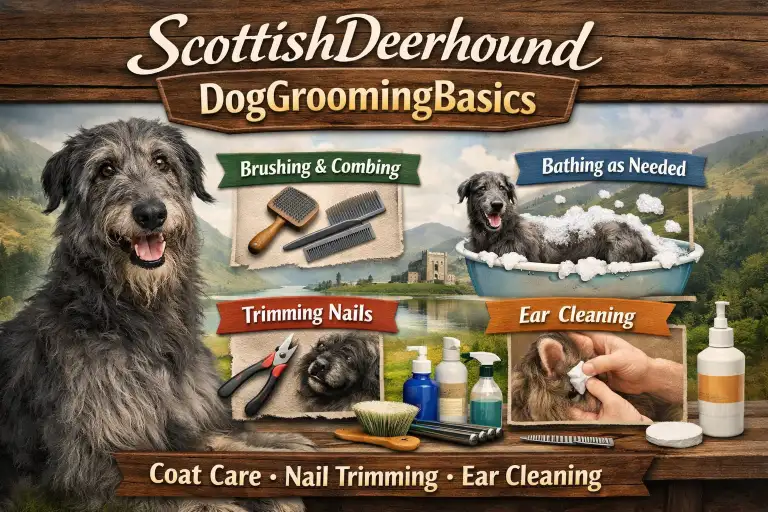
Scottish Deerhound grooming is often described as “low maintenance,” but that phrase is one of the most common reasons owners accidentally neglect important coat and skin care. While this breed does not require frequent haircuts or elaborate styling, it does need a consistent, informed grooming routine to stay comfortable, clean, and healthy.
This guide focuses on practical Scottish Deerhound grooming basics that work for real owners. You’ll learn what grooming actually involves for this rough-coated sighthound, how much effort it truly takes, and which tasks matter most. The goal is not perfection or show grooming, but maintaining a healthy coat, comfortable skin, and good overall hygiene throughout your dog’s life.
Scottish Deerhounds have a wiry, weather-resistant coat designed to protect them outdoors. That coat does not mat easily like a long, silky coat, but it can trap dirt, dead hair, and debris if brushing is skipped. Over time, poor grooming can lead to skin irritation, odor, and discomfort—issues owners often mistake for “normal dog smell” or aging.
Grooming also plays a role beyond appearance. Regular brushing helps distribute natural oils, supports the skin barrier, and allows you to notice early signs of problems such as dry patches, redness, parasites, or unexplained sensitivity. Nail care, ear cleaning, and dental hygiene all affect posture, balance, and long-term health, especially in a tall, athletic breed like the Scottish Deerhound.
Most Scottish Deerhound grooming can be done at home with simple tools and a steady routine. Professional grooming is usually occasional rather than frequent, and only necessary in specific situations. Understanding what truly needs to be done—and what does not—prevents over-grooming, product misuse, and common mistakes that can damage the coat.
The table below gives a quick overview of what Scottish Deerhound grooming typically involves,
| Grooming Area | Difficulty Level | Time Needed | At Home or Professional |
|---|---|---|---|
| Brushing | Easy | 10–15 minutes | At home |
| Bathing | Moderate | 30–45 minutes | At home |
| Nail trimming | Moderate | 10 minutes | At home or professional |
| Ear cleaning | Easy | 5 minutes | At home |
| Full grooming session | Low–moderate | — | Occasional professional |
Scottish Deerhound Coat Type, Shedding, and Grooming Frequency
The Scottish Deerhound has a rough, wiry coat that is made to protect the body from cold, wind, and rough ground. This coat is not soft or fluffy, and it does not grow long like the hair of some other breeds. Because of this, Scottish Deerhounds do not need haircuts, trimming, or shaving as part of normal grooming.
Many owners ask if Scottish Deerhounds shed a lot. The answer is no, not compared to double-coated breeds. However, they do shed some hair all year and a bit more during seasonal coat changes, usually in spring and fall. Loose hair often stays trapped in the coat instead of falling onto the floor, which is why regular brushing is still important.
The wiry coat can collect dirt, dust, leaves, and dead hair, especially on the legs, chest, belly, and behind the ears. If these areas are ignored, the coat can feel rough, look dull, and start to smell. Light tangles can also form in spots where the legs move or where a collar rubs.
How often you groom a Scottish Deerhound depends on the task, not on looks. Brushing keeps the coat clean and healthy, bathing keeps odors under control, and nail and ear care prevent discomfort and health problems. Most grooming tasks are simple and do not take much time when done on a schedule.
The table below shows how often common grooming tasks should be done for a Scottish Deerhound.
| Grooming Task | How Often | Why It Matters |
|---|---|---|
| Brushing | 1–2 times per week | Removes loose hair and dirt |
| Bathing | Every 6–8 weeks | Controls odor without drying skin |
| Nail trimming | Every 2–4 weeks | Supports posture and comfort |
| Ear cleaning | About once a month | Helps prevent infections |
| Skin check | Once a week | Finds problems early |
Scottish Deerhounds have a low risk of heavy matting, but certain areas still need attention. Mats are most likely to form behind the ears, under the arms, around the collar, and on the back of the legs. Brushing these spots gently on a regular basis prevents problems before they start.
The table below gives a simple look at the Scottish Deerhound’s coat traits and what they mean for grooming.
| Coat Feature | What It Means for Grooming |
|---|---|
| Rough, wiry texture | No trimming or shaving needed |
| Light to moderate shedding | Regular brushing keeps hair under control |
| Seasonal coat changes | Extra brushing in spring and fall |
| Low matting risk | Focus on friction areas |
At-Home Scottish Deerhound Grooming Routine (Tools, Brushing, Bathing)
Grooming a Scottish Deerhound at home is simple when you follow the right steps and use the correct tools. This breed does not need fancy products or long grooming sessions. A calm routine done a little at a time works best for both the dog and the owner.
Before you start, it helps to have all your grooming tools ready. Using the wrong brush or shampoo can make grooming harder and may irritate the skin. Scottish Deerhounds do best with gentle tools that work with their wiry coat, not against it.
The table below shows the basic grooming tools most Scottish Deerhound owners need.
| Grooming Tool | What It Is Used For | Must Have |
|---|---|---|
| Slicker or pin brush | Removes loose hair and dirt | Yes |
| Metal comb | Finds small tangles | Yes |
| Dog shampoo (mild) | Cleans coat and skin | Yes |
| Nail clippers or grinder | Keeps nails short | Yes |
| Towel | Drying after baths | Yes |
| Blow dryer (low heat) | Faster drying | Optional |
Brushing is the most important part of the grooming routine. For most Scottish Deerhounds, brushing once or twice a week is enough. Brush gently in the direction the hair grows. Pay extra attention to the legs, chest, belly, behind the ears, and around the collar. These areas collect dirt and loose hair more easily.
If you find a small tangle, use your fingers or a comb to loosen it slowly. Pulling hard can hurt the skin and make your dog dislike grooming. Short, calm brushing sessions work better than trying to do everything at once.
Bathing should not be done too often. Washing a Scottish Deerhound too much can dry out the skin and make the coat rough. Most dogs only need a bath every six to eight weeks, or when they are truly dirty.
The table below explains safe bathing basics for Scottish Deerhounds.
| Bathing Question | Simple Answer |
|---|---|
| How often to bathe | Every 6–8 weeks |
| Water temperature | Warm, not hot |
| Shampoo type | Dog-only, gentle |
| Conditioner needed | Usually no |
| Drying method | Towel first, low heat if needed |
When bathing, wet the coat fully, apply shampoo gently, and rinse very well. Leftover soap can cause itching. Dry your dog with a towel first. If you use a dryer, keep it on low heat and do not hold it too close to the skin.
Nail, Ear, Dental, and Skin Care for Scottish Deerhounds
Some grooming tasks do not involve the coat but are just as important for your Scottish Deerhound’s comfort and health. Nail care, ear cleaning, dental care, and skin checks help prevent pain and health problems that owners often notice too late.
Scottish Deerhounds are tall dogs with long legs. If their nails grow too long, it can change how they stand and walk. Long nails may also crack or split. Most dogs need their nails trimmed every two to four weeks. If you hear nails clicking on the floor, they are usually too long.
Ear care is simple for this breed, but it should not be ignored. Scottish Deerhounds have drop ears, which can trap dirt and moisture. Clean the ears about once a month, or sooner if they look dirty. Use a dog-safe ear cleaner and a soft cloth or cotton pad. Never push anything deep into the ear.
Dental care helps protect your dog’s teeth and gums. Large breeds like Scottish Deerhounds can still get plaque and bad breath. Brushing the teeth two or three times a week is ideal. Dental chews can help, but they do not replace brushing.
Skin checks are an easy habit that can catch problems early. While brushing or petting your dog, look for redness, dry patches, bumps, sores, or strong smells. These signs can point to allergies, infections, or parasites.
The table below shows how often these extra grooming tasks should be done and what mistakes to avoid.
| Care Area | How Often | Common Mistakes |
|---|---|---|
| Nail trimming | Every 2–4 weeks | Cutting too short |
| Ear cleaning | About once a month | Using cotton swabs |
| Teeth brushing | 2–3 times per week | Skipping dental care |
| Skin checks | Once a week | Ignoring early signs |
The next table helps you understand early skin and coat warning signs and what they may mean.
| Warning Sign | What It May Mean |
|---|---|
| Red or itchy skin | Allergy or irritation |
| Flaky skin | Dryness or over-bathing |
| Bad odor | Possible infection |
| Hair thinning | Skin or health issue |
Grooming Mistakes, Safety Tips, and When to See a Professional
Even though Scottish Deerhounds are relatively easy to groom, owners often make mistakes that can cause discomfort or health issues. Knowing what to avoid, how to stay safe, and when to ask for help is an important part of grooming.
Shaving or cutting a Scottish Deerhound’s coat is usually not needed. Their rough, wiry coat protects the skin and helps keep them warm in winter and cool in summer. Shaving can damage the coat and remove this natural protection.
Over-bathing is another common mistake. Bathing too often dries out the skin and can make the coat look dull. Stick to a bath every six to eight weeks unless the dog gets very dirty.
Using human shampoos, harsh brushes, or digging too far into the ears can irritate the skin and ears. Long nails that are not trimmed can affect walking and posture. Skipping dental care can lead to plaque, bad breath, or gum problems.
The table below summarizes common grooming mistakes and why they matter.
| Mistake | Why It’s a Problem |
|---|---|
| Shaving the coat | Removes natural protection, can cause skin damage |
| Over-bathing | Dries skin and coat, may cause itching |
| Using human products | Wrong pH, can irritate skin |
| Skipping nail care | Can affect posture and walking |
| Ignoring ear or dental care | Leads to infections or dental disease |
Knowing when to do grooming at home versus seeing a professional is important. Most brushing, nail trimming, and bathing can be done at home. Professional groomers are helpful for anxious dogs, senior dogs, or when the coat needs special attention. Veterinarians should be consulted if skin issues, infections, or unexplained hair loss appear.
The table below helps decide when home grooming is enough and when to seek professional help.
| Situation | Home Grooming | Professional Groomer |
|---|---|---|
| Routine brushing | ✔ | — |
| Nail trimming (if confident) | ✔ | ✔ |
| Severe matting | ✖ | ✔ |
| Senior or anxious dog | — | ✔ |
| Skin or coat problems | ✖ | Vet or Pro |
With these guidelines, you can keep your Scottish Deerhound healthy and comfortable while avoiding common pitfalls. This completes the article.
For more expert tips on dog coat care and grooming tools, visit the American Kennel Club’s guide on dog grooming.

Ata Ur Rehman is the founder of Pet Age in Human Years Calculator, an educational platform that provides age conversion charts and lifespan guides for dogs, cats, birds, and other companion animals. His work focuses on helping pet owners understand how animal ages translate into human years using commonly accepted age conversion formulas and published lifespan averages.
The website compiles breed and species lifespan data from kennel clubs, breed organizations, and general animal lifespan studies to present simple and easy-to-understand guides for pet owners worldwide.
This website was created to centralize animal age conversion charts into one easy reference platform for pet owners.