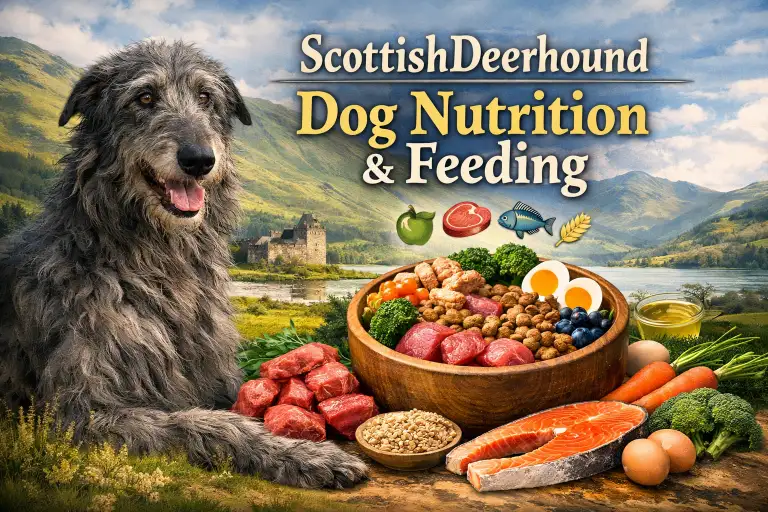
Scottish Deerhounds are not just large dogs—they are giant, slow-maturing sighthounds with very specific nutritional needs. What you feed a Scottish Deerhound, how much you feed, and how you manage their growth and body condition all have a direct impact on their bone development, heart health, joint longevity, digestive comfort, and overall lifespan.
Unlike many robust large breeds, Scottish Deerhounds are naturally lean, lightly built, and prone to issues when overfed or fed inappropriate diets. Excess calories, poorly balanced minerals, or trendy but unsuitable foods can quietly cause long-term damage, especially during puppyhood. At the same time, underfeeding or low-quality nutrition can lead to muscle loss, low energy, weak immunity, and poor coat condition.
Nutrition matters even more in this breed because Scottish Deerhounds:
- Grow slowly but to an extremely large size, making mineral balance critical
- Have a deep chest, increasing the risk of bloat if feeding practices are poor
- Are genetically predisposed to heart and joint concerns, which nutrition can either support or worsen
- Tend to maintain a naturally lean body type, often misleading owners into thinking the dog is underweight
Many new owners unintentionally make feeding mistakes by applying “generic large-breed advice” or following feeding charts meant for bulkier breeds like Mastiffs or Newfoundlands. Scottish Deerhounds require a measured, evidence-based approach that supports steady growth, maintains lean muscle, and avoids unnecessary stress on the skeleton and cardiovascular system.
This guide is designed to help you make confident, informed feeding decisions at every life stage—from puppyhood through senior years—using veterinary-aligned principles, real-world feeding experience, and practical advice you can apply daily. Whether you are raising a fast-growing puppy, feeding an active adult, or adjusting meals for an aging Deerhound, proper nutrition is one of the most powerful tools you have to protect your dog’s long-term health.
What to Feed a Scottish Deerhound: Core Nutritional Requirements
Scottish Deerhounds need a balanced, simple, and breed-appropriate diet. They do not need extreme protein levels, fancy superfoods, or trendy diets. What they need most is correct balance—especially because they grow slowly, stay lean, and reach a very large adult size.
Feeding the wrong balance can cause problems that may not show right away, such as weak bones, joint pain, heart strain, or poor digestion later in life.
Below is a clear breakdown of what really matters in a Scottish Deerhound’s diet.
Scottish Deerhounds need high-quality protein to maintain lean muscle and support the heart. Protein should come from real animal sources like chicken, turkey, lamb, fish, or beef. Too little protein can lead to muscle loss and low energy. Too much, especially in puppies, is usually not helpful and can push growth too fast.
Healthy fats are important for energy, skin, coat, and joint health. Fats also help dogs absorb vitamins. However, very high-fat diets can cause weight gain or stomach upset in less active Deerhounds.
Carbohydrates are not bad for dogs. For Scottish Deerhounds, carbs can provide steady energy and help digestion when they come from good sources like rice, oats, barley, or vegetables. Fiber from carbs also supports gut health and stool quality.
Minerals and vitamins are where many owners make mistakes. Scottish Deerhounds are a giant breed, and their bones are sensitive to mineral imbalance. Too much calcium, especially during puppyhood, can lead to joint and bone problems. This is why large-breed or giant-breed formulas are so important.
The table below shows general nutritional targets
| Nutrient | Recommended Range | Why It Matters |
|---|---|---|
| Protein | 22–26% (dry matter) | Supports lean muscle and heart health |
| Fat | 10–15% | Provides energy without excess weight |
| Calcium | 1.0–1.3% | Protects bones and joints during growth |
| Phosphorus | 0.8–1.1% | Works with calcium for strong bones |
| Calcium : Phosphorus Ratio | About 1.2 : 1 | Prevents skeletal problems |
| Fiber | 3–5% | Aids digestion and stool quality |
| Omega-3 Fatty Acids | Present (from fish or fish oil) | Supports joints, heart, and skin |
Many owners wonder about grain-free diets. Grain-free food is not needed for most Scottish Deerhounds unless a true grain allergy is diagnosed by a veterinarian. Some grain-free diets have been linked to heart problems in dogs when poorly formulated. For this breed, a well-made grain-inclusive diet is usually the safest and most reliable choice.
When reading a dog food label, look for:
- A named animal protein as the first ingredient
- A statement that the food meets AAFCO standards for large or giant breeds
- Clear feeding guidelines, not vague marketing claims
Avoid foods that promise “extreme muscle,” “rapid growth,” or “all-life-stages” feeding for a giant-breed puppy unless your veterinarian approves it.
How Much to Feed a Scottish Deerhound (Puppy, Adult, Senior)
Knowing how much to feed a Scottish Deerhound is just as important as choosing the right food. Feeding too much can lead to fast growth, joint stress, and weight gain. Feeding too little can cause low energy, muscle loss, and poor health. The goal is to keep your Deerhound lean, strong, and well-balanced, not bulky.
Scottish Deerhounds grow slowly and reach a very large adult size. Puppies should never be pushed to grow fast. Adults should stay slim, and seniors often need fewer calories but high-quality nutrients.
Below is a simple feeding chart based on average body weight and life stage.
| Dog Weight | Puppy (Meals per Day) | Adult (Cups per Day) | Senior (Cups per Day) |
|---|---|---|---|
| 60–80 lbs | 3–4 meals | 3.5–4.5 cups | 3–4 cups |
| 80–100 lbs | 3 meals | 4–5.5 cups | 3.5–4.5 cups |
| 100–120 lbs | 3 meals | 5–6.5 cups | 4–5.5 cups |
| 120–140 lbs | 2–3 meals | 6–7.5 cups | 5–6 cups |
These amounts are based on a high-quality dry food with normal calorie density. If you feed fresh, raw, or canned food, the portion size will look different even if the calories are the same.
Calories also change based on how active your dog
| Activity Level | Daily Calorie Estimate |
|---|---|
| Low activity (mostly indoors) | 18–22 calories per lb |
| Moderate activity (daily walks, play) | 22–26 calories per lb |
| High activity (running, coursing) | 26–30 calories per lb |
Scottish Deerhounds should usually eat two meals per day as adults. Puppies need three to four smaller meals. Feeding smaller meals helps lower the risk of bloat, which is a serious condition in deep-chested dogs.
Always check your dog’s body shape. You should be able to feel the ribs with light pressure, see a waist from above, and notice a tuck-up behind the ribs. If the ribs are very sharp, increase food slightly. If the waist disappears, reduce portions.
Do not raise food bowls unless your vet tells you to. Raised bowls do not prevent bloat and may increase risk in some dogs.
Fresh water should always be available, but try to limit heavy drinking right before or after meals.
Best Dog Food Types for Scottish Deerhounds
Scottish Deerhounds can eat many types of dog food, but not all foods are equally safe or suitable for this giant breed. Choosing the right food helps maintain their lean body, supports joints and heart, and prevents digestive upset. It is important to match the food type to your dog’s life stage, activity level, and any special needs.
Here is a clear comparison of the main dog food types:
| Food Type | Pros | Cons | Best For |
|---|---|---|---|
| Kibble | Easy to store, convenient, usually balanced for nutrients | Can be dry, some brands low-quality, portion control needed | Most adult Deerhounds |
| Canned | High moisture, tasty, easier for picky eaters | More expensive, spoils quickly | Seniors or picky eaters |
| Fresh (cooked) | Very digestible, high-quality ingredients | Needs refrigeration, expensive | Puppies, adults with sensitive stomachs |
| Raw | High protein, natural diet | Risk of bacterial contamination, careful balance needed | Experienced owners, with vet guidance |
| Freeze-dried | Convenient, high-quality ingredients, shelf-stable | More expensive, rehydration needed | Travel or supplement to diet |
| Homemade | Full control of ingredients | Time-consuming, requires correct formulation | Owners willing to plan diets carefully |
Many owners wonder about grain-free diets. For most Scottish Deerhounds, grain-free food is not necessary and may carry risks if poorly formulated. Instead, choose large-breed or giant-breed formulas with balanced minerals and high-quality protein.
Scottish Deerhounds also enjoy treats and human foods in moderation. Safe examples include cooked chicken, carrots, green beans, and small amounts of fruit like apples or blueberries. Avoid chocolate, grapes, raisins, onions, garlic, and anything fatty or heavily seasoned.
Here is a simple table for safe vs unsafe foods:
| Safe Foods | Unsafe Foods |
|---|---|
| Cooked chicken | Chocolate |
| Turkey | Grapes and raisins |
| Carrots | Onions and garlic |
| Green beans | Avocado |
| Apples (no seeds) | Alcohol |
| Blueberries | Raw fatty meat or bones that splinter |
Always check labels, and introduce new foods gradually to prevent digestive upset. Monitor your dog’s body condition and energy after switching foods, and adjust portions as needed.
Special Diets, Feeding Problems, and Expert Tips for Scottish Deerhounds
Even with the best food, Scottish Deerhounds can face feeding challenges. Puppies, adults, and seniors may have different needs, and some dogs develop picky eating habits, food sensitivities, or weight issues. Knowing how to handle these situations keeps your Deerhound healthy and happy.
Some Deerhounds may have sensitive stomachs. Signs include loose stool, vomiting, or gas. Switching to a gentle, high-quality diet with limited ingredients can help. Puppies with rapid growth may need large-breed puppy formulas to protect joints and bones. Adult and senior dogs may need fewer calories but high protein to maintain muscle.
Picky eaters are common in this breed. Feeding at consistent times, offering smaller meals, or slightly warming food can encourage eating. Avoid letting your Deerhound skip meals regularly, as this can cause weight loss and low energy.
Weight management is important. Many Scottish Deerhounds are naturally lean, but inactivity or overfeeding can lead to weight gain, stressing joints and the heart. Feeding based on body condition score rather than bowl fullness is the safest approach.
Here is a practical table of common feeding problems and solutions:
| Problem | Likely Cause | What to Do | When to See a Vet |
|---|---|---|---|
| Loose stool | Sensitive stomach or sudden food change | Switch gradually to gentle food, monitor fiber | Persistent diarrhea over 2–3 days |
| Vomiting | Eating too fast or rich food | Feed smaller meals, slow feeder bowl | Repeated vomiting, lethargy, or blood in vomit |
| Underweight | High activity or poor absorption | Increase quality calories, check for parasites | No weight gain after 2–3 weeks |
| Overweight | Overfeeding, low activity | Reduce portions, increase exercise | Rapid weight gain or breathing problems |
| Picky eater | Taste preferences, stress | Feed consistent schedule, slightly warm food | Loss of appetite for more than 2 days |
| Food allergy | Skin issues, itching, soft stool | Limited ingredient or hypoallergenic diet | Severe itching, hair loss, chronic diarrhea |
Switching foods should always be gradual, over 7–10 days. Mix increasing amounts of the new food with the old food to prevent digestive upset.
Always monitor your Scottish Deerhound’s energy, coat, and body condition. When in doubt, consult a veterinarian or a veterinary nutritionist, especially for giant-breed puppies, senior dogs, or dogs with special health issues.
For more expert guidance on dog nutrition standards, visit the AAFCO Dog Food Nutrient Profiles.

Ata Ur Rehman is the founder of Pet Age in Human Years Calculator, an educational platform that provides age conversion charts and lifespan guides for dogs, cats, birds, and other companion animals. His work focuses on helping pet owners understand how animal ages translate into human years using commonly accepted age conversion formulas and published lifespan averages.
The website compiles breed and species lifespan data from kennel clubs, breed organizations, and general animal lifespan studies to present simple and easy-to-understand guides for pet owners worldwide.
This website was created to centralize animal age conversion charts into one easy reference platform for pet owners.