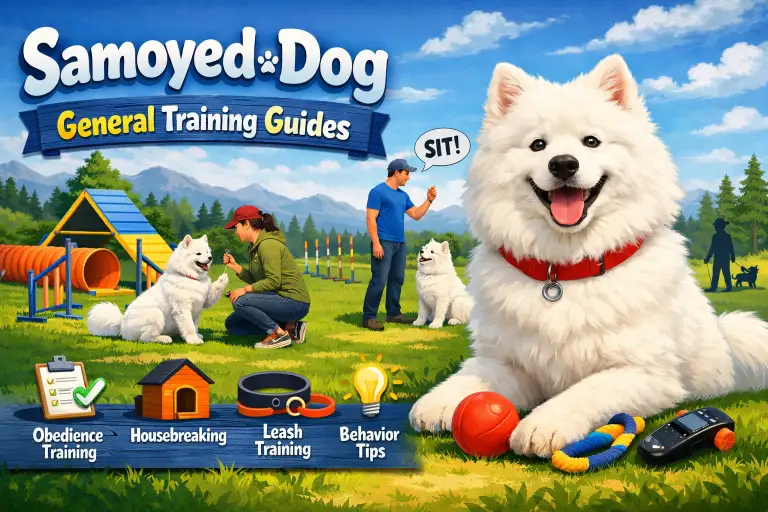
Training a Samoyed is not about forcing obedience — it’s about understanding how this intelligent, independent working breed learns and responds to the world. Samoyeds are quick thinkers with strong problem-solving skills, but they were bred to work with humans, not blindly obey them. That difference matters in training.
Many owners search for Samoyed training help after realizing their dog is smart but selectively listens, pulls on the leash, or seems to “talk back.” This guide is designed to fix that gap. It focuses on how Samoyeds actually learn, not generic dog-training advice that fails with independent breeds.
This article is for:
- New Samoyed puppy owners who want to start correctly
- Owners struggling with adolescent stubbornness
- Adult or rescue Samoyeds with little or inconsistent training
The approach used throughout this guide is reward-based, breed-aware, and realistic. No harsh corrections, no dominance myths, and no “one-size-fits-all” methods that ignore Samoyed temperament.
Before diving into techniques, it’s important to set expectations.
Is the Samoyed Easy or Hard to Train?
| Training Factor | What It Means for Samoyeds | What Owners Should Expect |
|---|---|---|
| Intelligence | Very high problem-solving ability | Learns fast, but questions repetition |
| Desire to please | Moderate | Works best with motivation, not pressure |
| Independence | High | May ignore commands if rewards feel weak |
| Sensitivity | Emotionally sensitive | Shuts down with harsh corrections |
| Best training style | Positive reinforcement | Short, engaging, reward-driven sessions |
Samoyeds are not difficult because they’re unintelligent — they’re challenging because they’re independent thinkers. Once owners understand this, training becomes far more effective and far less frustrating.
Understanding Samoyed Behavior and Learning Style
To train a Samoyed well, you must first understand how this breed thinks. Many training problems happen because owners expect Samoyeds to behave like eager-to-please breeds. Samoyeds are different.
Samoyeds were bred to work in cold climates, make decisions on their own, and stay close to people. This history shaped how they learn today. They are smart, social, and alert — but also independent and easily bored.
Here is what that means in real life:
- A Samoyed may understand a command but choose not to follow it
- Repeating commands too often makes them ignore you
- Harsh tones or punishment can make them shut down or avoid training
- They respond best when training feels rewarding and fun
Many owners call this “stubbornness,” but it is really independent thinking.
How Samoyed Traits Affect Training
| Samoyed Trait | What Owners Often See | How It Affects Training |
|---|---|---|
| High intelligence | Learns commands quickly | Gets bored with repetition |
| Independence | Selective listening | Needs strong motivation |
| Social nature | Loves people and attention | Praise and play work well |
| Sensitivity | Avoids harsh voices | Gentle guidance works best |
| Vocal behavior | Barking or “talking” | Communication, not defiance |
Samoyeds learn best when:
- Rewards come fast
- Sessions are short
- Training feels like a game
- They are not pressured or forced
Food rewards work well, but so do toys, praise, and attention. The key is timing. Rewards must come right after the correct behavior. Even a few seconds late can confuse the dog.
Environment also matters. A Samoyed may listen well indoors but ignore commands outside. This does not mean training failed. It means the environment is more exciting, and training needs to be practiced slowly in new places.
Understanding these behavior patterns helps prevent frustration and mistakes. Once you train with your Samoyed’s nature instead of against it, progress becomes much easier.
Step-by-Step Samoyed Training Approach
Samoyeds learn best when training is simple, short, and consistent. Long sessions, yelling, or repeating commands do not work well for this breed. A calm and clear plan makes training easier for both you and your dog.
Start with the basics. Every Samoyed needs a strong foundation before moving to harder skills.
Training should be:
- Short and fun
- Done every day
- Based on rewards
- Practiced in quiet places first
Most Samoyeds do best with 5 to 10 minute sessions, two to three times a day.
Samoyed Training Schedule by Age
| Age Stage | Session Length | Times Per Day | Main Focus |
|---|---|---|---|
| Puppy (8–16 weeks) | 3–5 minutes | 3–5 times | Name, focus, simple cues |
| Young dog (4–12 months) | 5–10 minutes | 2–3 times | Recall, leash skills |
| Adult Samoyed | 10 minutes | 1–2 times | Obedience, manners |
| Rescue or untrained adult | 5–10 minutes | 2 times | Trust, basics, routine |
Always end sessions on a good note. One success is better than many mistakes.
Next, focus on what to teach first. Many owners try to train too many things at once. That slows progress.
What to Train First
| Skill | Why It Matters | Common Mistake |
|---|---|---|
| Name response | Gets attention fast | Saying name too often |
| Recall (come) | Keeps dog safe | Calling without rewards |
| Loose leash walking | Prevents pulling | Letting pulling work |
| Sit and down | Builds control | Asking too much too soon |
| Calm behavior | Reduces jumping | Rewarding excitement |
Reward your Samoyed right away when they do something right. Use small treats, praise, or play. Do not wait. Timing is very important.
Training should slowly move to harder places. Start indoors. Then try the yard. Then quiet outdoor areas. Jumping to busy parks too soon often causes failure.
If your Samoyed stops listening, it usually means:
- The reward is not good enough
- The area is too distracting
- The session is too long
Adjust the training instead of blaming the dog.
Common Samoyed Training Problems and Solutions
Many Samoyed owners feel frustrated when training does not go as planned. Most problems are common and fixable once you understand the cause. Samoyeds are not being bad on purpose. They are often confused, bored, or overstimulated.
Here are the most common training issues and what actually helps.
| Training Problem | Why It Happens | What Helps Most |
|---|---|---|
| Samoyed does not listen | Too many distractions | Train in quiet places first |
| Pulling on the leash | Dog learns pulling works | Stop moving when leash is tight |
| Excessive barking | Boredom or attention seeking | More exercise and mental games |
| Ignores recall | Reward not strong enough | Use high-value treats |
| Training works indoors only | New place is exciting | Practice slowly in new areas |
| Behavior gets worse as dog grows | Teen phase | Stay patient and consistent |
One common mistake is repeating commands. Saying “sit” many times teaches your Samoyed to wait before listening. Say the command once. If your dog does not respond, reset and try again.
Another mistake is training when the dog has too much energy. A short walk or play time before training often improves focus.
Progress takes time. Most owners see:
- Small improvements in 1–2 weeks
- Clear changes in 4–6 weeks
- Strong habits in 2–3 months
Setbacks are normal, especially during adolescence. This does not mean training failed.
If a problem feels unsafe, stressful, or does not improve with practice, outside help may be needed.
When to Get Professional Training Help
Most Samoyeds can be trained at home with time and patience. But some situations need extra help. Getting support early can prevent bigger problems later.
You should think about professional help if:
- Your Samoyed shows fear or panic
- Your dog growls, snaps, or tries to bite
- Training causes stress for you or your dog
- The behavior is getting worse, not better
- Safety is a concern for people or other pets
Some problems are not about obedience.
| Situation | Can You Handle It at Home? | Professional Help Needed |
|---|---|---|
| Basic obedience | Yes | No |
| Pulling on leash | Yes | No |
| Loud barking | Sometimes | Sometimes |
| Fear of people or dogs | No | Yes |
| Aggression or biting | No | Yes |
| Extreme escape behavior | No | Yes |
There are different types of professionals:
- Dog trainers help with skills and manners
- Behavior specialists help with fear and aggression
- Veterinary behaviorists help when anxiety or medical issues are involved
If your Samoyed shows sudden behavior changes, a vet check is important. Pain or illness can affect behavior.
Asking for help is not failure. It shows you care about your dog’s well-being.
For more science-backed guidance on humane, reward-based dog training, you can also review the recommendations from the American Veterinary Society of Animal Behavior (AVSAB):
https://avsab.org/resources/position-statements/

Ata Ur Rehman is the founder of Pet Age in Human Years Calculator, an educational platform that provides age conversion charts and lifespan guides for dogs, cats, birds, and other companion animals. His work focuses on helping pet owners understand how animal ages translate into human years using commonly accepted age conversion formulas and published lifespan averages.
The website compiles breed and species lifespan data from kennel clubs, breed organizations, and general animal lifespan studies to present simple and easy-to-understand guides for pet owners worldwide.
This website was created to centralize animal age conversion charts into one easy reference platform for pet owners.