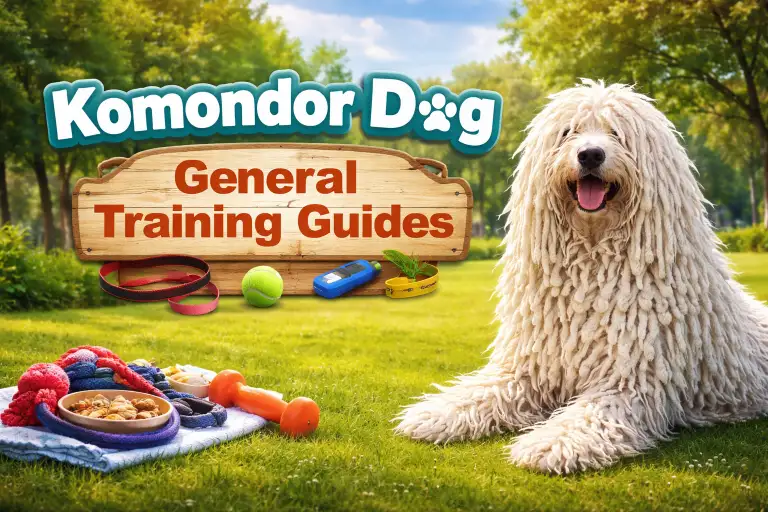
Training a Komondor is different from training most other dogs. This breed was created to guard livestock, which means it thinks independently and makes its own decisions. It doesn’t wait for constant commands from humans, so owners need patience and clear communication.
This guide is for anyone who wants a Komondor to be well-behaved at home, calm with visitors, and reliable in daily life. Expect realistic results: Komondors aren’t instant obeyers, but with proper guidance, they can be trained safely and confidently.
Training a Komondor is about trust, clear rules, and consistent routines. When done correctly, it helps the dog use its guarding instincts in the right way while staying safe, calm, and manageable around family and strangers.
Komondor Training Expectations vs Typical Family Dogs
| Feature | Komondor | Typical Family Dog |
|---|---|---|
| Learning style | Independent thinker | Follows instructions quickly |
| Guarding instinct | Strong, automatic | Low to moderate |
| Response to commands | Pauses to assess | Usually immediate |
| Training approach | Calm, consistent, patient | Can handle repetition |
| Owner involvement | High consistency needed | Moderate consistency |
Why Proper Komondor Training Is Essential
Komondors are large, powerful, and naturally protective. Without proper training, their instincts can cause problems such as excessive barking, blocking guests, or reacting aggressively. Because of their size, even small behavior issues can be unsafe.
Training gives your Komondor clear rules for when guarding behavior is okay. It also helps the dog stay calm in everyday situations, such as visitors at home or walking past strangers. Early training prevents anxiety, overprotectiveness, and behavioral problems later in life.
Trained vs Untrained Komondor Outcomes
| Area | Trained Komondor | Untrained Komondor |
|---|---|---|
| Response to commands | Listens reliably | Often ignores or refuses |
| Behavior with guests | Alert but calm | Blocking, barking, or threatening |
| Leash control | Calm and manageable | Pulling, resisting, reacting |
| Guarding instincts | Controlled and predictable | Overprotective or inappropriate |
| Stress level | Confident and relaxed | Easily stressed or anxious |
Understanding the Komondor’s Guardian Breed Behavior
To train a Komondor, you must understand how it thinks. Komondors were bred to guard livestock independently, so they observe, think, and decide before acting. This pause is normal—it doesn’t mean stubbornness. They evaluate commands to decide if they make sense.
Komondors also protect their home, yard, and family strongly. Without clear rules, they may decide who belongs and who doesn’t. Puppies are curious and open to guidance, while adults are more cautious and set in their habits.
Komondor Puppy vs Adult Learning Behavior
| Area | Puppy | Adult |
|---|---|---|
| Attention span | Short but flexible | Longer but selective |
| Response to new people | Curious but cautious | Very cautious |
| Willingness to learn | Open to guidance | Needs clear purpose |
| Reaction to pressure | Shuts down easily | May resist |
| Training focus | Socialization and basics | Boundaries and control |
Understanding these differences helps owners stay patient and train more effectively.
How to Train a Komondor: Step-by-Step Method
Komondors respond best to calm, clear, and consistent training. Short sessions—5 to 10 minutes, once or twice a day—work better than long, repetitive sessions. Always start in a quiet place and gradually add distractions.
Focus on basic commands first: come, sit, stay, leash walking, and stopping unwanted behavior. These are safety commands, not tricks. Reward immediately after the dog does the right thing using food, praise, or a favorite toy. Reduce treats over time and rely on praise and routine.
Socialization is critical. Komondors must stay calm around people, other dogs, and normal daily events. Proper exposure from puppyhood prevents fear and overprotectiveness later.
Komondor Training Schedule and Progress Timeline
| Age Range | Training Focus | Session Length | Expected Progress |
|---|---|---|---|
| 8–16 weeks | Socialization, name, leash intro | 5 min | Basic awareness |
| 4–6 months | Sit, come, calm walking | 5–10 min | Learning basic obedience |
| 6–12 months | Boundaries, impulse control | 10 min | Testing limits |
| Adult | Reliability, reinforcement | 10 min | Steady response |
Patience is key. Progress may be slow, but consistent training builds strong, lifelong habits.
Common Komondor Training Problems and When to Get Help
Even trained Komondors may have challenges. Common problems include ignoring commands, over-protective behavior, leash pulling, or excessive barking. These often happen when training is inconsistent, rushed, or unclear.
Owner mistakes, like repeating commands, using punishment, or allowing bad behavior occasionally, make problems worse. Understanding what is normal for the breed and what is unsafe helps owners act correctly.
Common Komondor Training Problems and Solutions
| Problem | Why It Happens | What Helps |
|---|---|---|
| Ignoring commands | Independent thinking | Clear cues, patience |
| Over-guarding guests | Poor boundaries | Controlled introductions |
| Leash resistance | Desire to lead | Calm, steady practice |
| Barking too much | Unclear role | Consistent rules |
| Setbacks in teens | Testing limits | Stay consistent |
Normal Guardian Behavior vs Red Flags
| Normal Behavior | Red Flag |
|---|---|
| Alert watching | Lunging or snapping |
| Pausing before obeying | Complete refusal |
| Barking briefly | Constant, intense barking |
| Protective but calm | Fearful or aggressive |
If your Komondor shows fear, aggression, or unsafe behavior, consult a professional trainer or veterinary behavior expert experienced with guardian breeds. Early intervention prevents serious problems later.
For more expert guidance on keeping guardian breeds healthy and happy, visit the American Kennel Club’s Komondor breed page.

Ata Ur Rehman is the founder of Pet Age in Human Years Calculator, an educational platform that provides age conversion charts and lifespan guides for dogs, cats, birds, and other companion animals. His work focuses on helping pet owners understand how animal ages translate into human years using commonly accepted age conversion formulas and published lifespan averages.
The website compiles breed and species lifespan data from kennel clubs, breed organizations, and general animal lifespan studies to present simple and easy-to-understand guides for pet owners worldwide.
This website was created to centralize animal age conversion charts into one easy reference platform for pet owners.