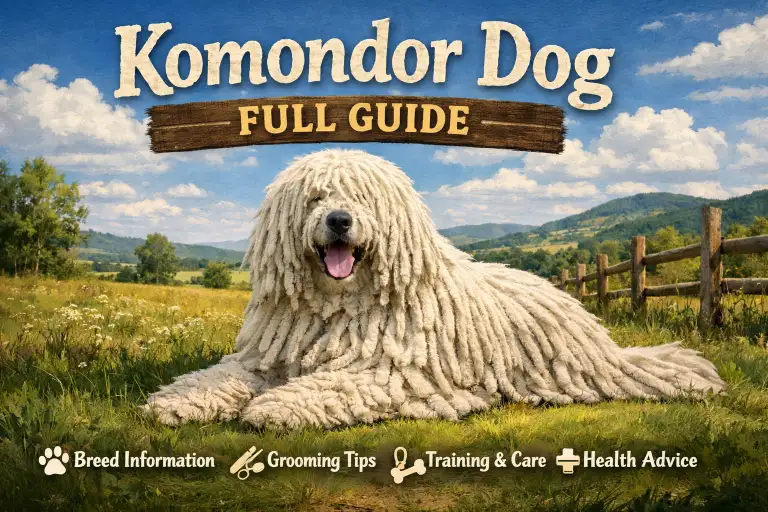
The Komondor dog breed is a large, strong, and rare livestock guardian from Hungary. Its most famous feature is its long, corded coat, which makes it look like it has dreadlocks. But every part of this dog’s body has a purpose. Komondors were bred to protect sheep and livestock from predators like wolves and bears, often working alone with little human guidance.
Komondors are large and powerful. Males usually weigh over 100 pounds, and females are slightly smaller but still strong. Their muscles and bone structure allow them to move efficiently while guarding. They are calm and observant, but they can act quickly if a threat appears.
The corded coat develops naturally over time. It protects the dog from harsh weather and animal bites and helps it blend with the flock. Owners need to guide the cords in early years so they don’t mat. Komondors are always white or ivory, which also helped them blend in with sheep historically.
Komondor Breed Snapshot
| Trait | Details |
|---|---|
| Breed Group | Livestock Guardian Dog |
| Origin | Hungary |
| Size | Large |
| Weight | Males 100+ lb, Females 80–100 lb |
| Height | Males 27.5+ in, Females 25.5+ in |
| Coat | Naturally corded |
| Color | White / Ivory |
| AKC Recognition | Working Group |
This section helps readers understand why the Komondor behaves the way it does. Its appearance, size, and coat are all tied to its work as a guardian dog.
Komondor Temperament and Real-World Behavior
The Komondor is calm, serious, and protective. It is not overly playful or attention-seeking. This dog was bred to think and act independently, which makes it very alert to its surroundings.
At home, Komondors are usually quiet and relaxed with their family. They bond deeply with household members and are extremely loyal. With strangers, they are cautious and may not approach, which is normal for this breed. A well-socialized Komondor will not attack without reason but will stay alert.
Komondors can be gentle with children, especially those in their family. But because of their size and strength, supervision is needed during play. With other pets, they usually do well with animals they grow up with. Introducing new pets later requires patience. Barking is normal for this breed, but it is usually purposeful — alerting the family to activity or intruders.
Komondor Temperament at a Glance
| Trait | Level | What This Means |
|---|---|---|
| Loyalty | Very High | Bonds strongly with family |
| Stranger Tolerance | Low | Naturally cautious |
| Independence | Very High | Thinks and acts on its own |
| Trainability | Moderate to Low | Smart but not eager to obey |
| Barking | Moderate to High | Alerts to movement or sounds |
| Aggression | Low when stable | Protective, not reactive |
Understanding temperament is key for anyone considering this breed. A Komondor is not unfriendly, but it is not a social dog for everyone.
Is a Komondor Right for You? Lifestyle and Suitability
Komondors are best for experienced owners who understand guardian breeds. They need space and a clear area to patrol. Apartments or small homes are not suitable.
For families with children, Komondors can be loving and protective. However, their size and strength require supervision. They are not recommended for first-time dog owners. Training takes patience, and the dog requires confident, calm leadership.
Living with other pets is possible if the dog is raised with them. Introducing new animals later takes care. Seniors or owners with limited mobility may struggle to handle this large, strong breed.
Komondor Suitability Matrix
| Lifestyle Situation | Suitable? | What to Expect |
|---|---|---|
| Families with children | Depends | Protective, supervision required |
| First-time dog owners | No | Needs experience |
| Apartment living | No | Needs space and territory |
| Rural or farm homes | Yes | Ideal environment |
| Seniors | No | Physically demanding |
| Multi-pet homes | Depends | Works best with early exposure |
Choosing a Komondor is about matching your lifestyle to the breed’s natural instincts. The right match leads to a loyal and confident companion.
Care, Training, Exercise, and Health Requirements
Komondors need consistent care, training, and attention to health. Training is challenging because this breed is intelligent but independent. Short, calm, and fair sessions work best. Harsh methods often fail.
Exercise is moderate. Daily walks, yard patrol, and light activities are enough. Mental stimulation is important; Komondors like having a “job,” such as watching property or following commands for tasks.
Grooming is intensive. The corded coat needs to be separated regularly, especially in early years. Bathing takes time, and drying can take hours. Neglecting the coat can cause skin problems. The breed sheds very little, but grooming effort is high.
Health is generally good, but large-breed issues like hip dysplasia, bloat, and skin infections under cords can occur. Regular vet checks and preventive care are crucial.
Komondor Care Breakdown
| Care Area | Level | What Owners Should Know |
|---|---|---|
| Exercise | Moderate | Walks and yard time are enough |
| Training | Challenging | Needs calm and consistent leadership |
| Grooming | Very High | Cord care takes time and skill |
| Shedding | Low | Hair stays in cords |
| Heat Tolerance | Low | Thick coat holds heat |
| Lifespan | 10–12 years | Typical for large breeds |
With proper care, Komondors are calm, confident, and stable. Without it, they can become stressed or difficult to manage.
Pros, Cons, Costs, and Final Verdict
The Komondor can be a rewarding but demanding breed. It is an excellent guardian, deeply loyal, and calm indoors. It has low shedding and a unique, eye-catching coat.
The downsides are significant. Training is not easy, grooming takes hours, and the dog needs space and boundaries. Owners must be prepared for the breed’s size and strength.
Costs are higher than average. Puppies are expensive, grooming is time-intensive, and vet care for a large dog can be costly. Many owners also use pet insurance.
Komondor Pros and Cons
| Pros | Cons |
|---|---|
| Excellent natural guard dog | Not beginner-friendly |
| Very loyal to family | Hard to train |
| Calm and quiet indoors | Very high grooming effort |
| Low shedding | Needs space |
| Rare and unique breed | Suspicious of strangers |
Typical Komondor Costs
| Expense | Estimated Range |
|---|---|
| Puppy price | $1,500–$3,000 |
| Grooming | High (time and money) |
| Vet care | Large-breed level |
| Insurance | Strongly recommended |
The Komondor is best for experienced owners with space, patience, and respect for guardian instincts. For the right person, it becomes a loyal, protective companion. For the wrong person, it can be challenging and overwhelming.
For more detailed guidance on raising and training livestock guardian dogs, you can visit the American Kennel Club Komondor Breed Page.

Ata Ur Rehman is the founder of Pet Age in Human Years Calculator, an educational platform that provides age conversion charts and lifespan guides for dogs, cats, birds, and other companion animals. His work focuses on helping pet owners understand how animal ages translate into human years using commonly accepted age conversion formulas and published lifespan averages.
The website compiles breed and species lifespan data from kennel clubs, breed organizations, and general animal lifespan studies to present simple and easy-to-understand guides for pet owners worldwide.
This website was created to centralize animal age conversion charts into one easy reference platform for pet owners.