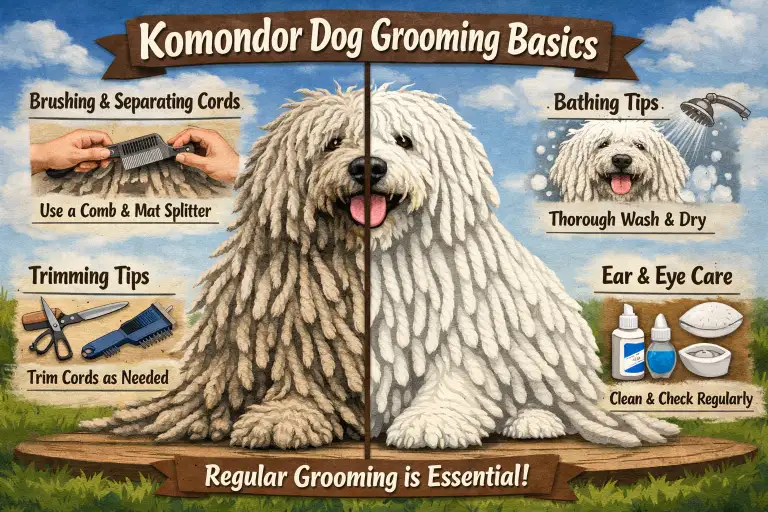
Grooming a Komondor is very different from grooming most other dogs. Their coat is made to form thick cords that protect the dog from weather, predators, and injuries. Because of this, brushing or cutting like other breeds can ruin the coat and harm the skin.
Proper grooming keeps your Komondor comfortable, clean, and healthy. Moisture trapped in cords can lead to odor, itching, and skin infections. Many serious skin problems come from grooming mistakes, not disease.
Owners need to know that grooming a Komondor takes patience. It is not about daily brushing, but about consistent care, checking cords, keeping them dry, and maintaining skin health. Skipping steps can lead to mats, smell, or skin issues that are harder to fix later.
This guide will help Komondor owners understand how to groom at home, what is safe, and when to seek professional help. Learning the basics early keeps the coat strong and the skin healthy.
| Grooming Aspect | What to Expect | Why It Matters |
|---|---|---|
| Time commitment | Several hours per grooming session | Ensures cords are clean and dry |
| Coat complexity | Forms rope-like cords | Needs hands-on care instead of brushing |
| Health checks | Weekly skin and cord inspection | Prevents infections and odor |
| Professional help | Occasionally | For severe matting or skin issues |
Understanding the Komondor Corded Coat and How It Grows
A Komondor’s coat is unique. Puppies start with a soft, fluffy coat, and as they grow, it naturally forms cords. This usually happens between 8 months and 2 years. These cords need careful handling; brushing or cutting can damage them permanently.
The coat also affects shedding, airflow, and odor. Hair stays trapped in the cords, and air must reach the skin to prevent odor or skin issues. Hand-separating cords and keeping them dry is essential.
| Komondor Coat Stage | What the Coat Looks Like | What Owners Should Do |
|---|---|---|
| Puppy (0–8 months) | Soft, fluffy | Light cleaning only, no brushing |
| Transition (8–24 months) | Clumps forming | Hand-separate into cords |
| Adult (2+ years) | Fully formed cords | Maintain cords, monitor skin, avoid brushing |
| Grooming Method | Is It Safe? | Why |
|---|---|---|
| Hand separating cords | Yes | Keeps cords clean and prevents matting |
| Bathing with dog-safe shampoo | Yes | Cleans cords and skin safely |
| Brushing or combing | No | Breaks cords and causes frizz |
| Shaving the coat | No | Damages coat and exposes skin |
| Rushing drying | No | Traps moisture causing odor and infection |
Komondor Grooming Routine at Home (Bathing, Drying, and Cord Care)
At home, grooming focuses on bathing, drying, and cord maintenance. Most work is done with your hands, not brushes. A calm routine prevents odor, mats, and skin problems.
| Grooming Task | How Often | Why It Matters |
|---|---|---|
| Check cords and skin | 2–3 times a week | Finds dirt, moisture, or skin problems early |
| Hand-separate cords | Weekly or as needed | Prevents mats and pulls on skin |
| Bathing | Every 6–12 weeks | Cleans skin and cords safely |
| Full drying | Every bath | Stops mildew, odor, and infection |
Bathing a Komondor requires soaking cords completely and using gentle shampoo. Rinsing is very important, as soap left in the cords can irritate the skin. Drying is the hardest step. Towels alone are not enough—airflow with a fan or dog dryer is needed, sometimes taking 8–24 hours depending on lifestyle.
| Lifestyle | Bathing Frequency | Drying Time |
|---|---|---|
| Indoor, low activity | Every 10–12 weeks | 8–12 hours |
| Moderate outdoor time | Every 8–10 weeks | 10–16 hours |
| Farm or muddy areas | Every 6–8 weeks | 12–24 hours |
Cord maintenance between baths involves gently separating cords with clean hands, especially behind ears, under legs, and around the collar. Cutting cords should only be done by a professional.
| Tool | Purpose |
|---|---|
| Gentle dog shampoo | Cleans without irritating skin |
| Towels | Remove surface water |
| Dog dryer/fan | Dries cords fully |
| Clean hands | Best for separating cords |
Skin, Hygiene, and Health Care Under the Cords
Even though the cords are thick, the skin underneath needs attention. Moist, dirty, or irritated skin can quickly lead to infections. Regular checks are critical.
| Skin Problem | Common Signs | What to Do |
|---|---|---|
| Yeast infection | Strong odor, greasy cords, itching | Vet treatment needed |
| Bacterial infection | Red, sore, painful | Vet visit required |
| Hot spots | Wet, painful patches | Immediate vet care |
| Skin irritation | Flaking, mild redness | Improve drying and hygiene |
Nails, ears, and teeth also need regular care. Long nails can affect walking, cords can trap moisture near the ears, and dental care prevents pain and gum disease.
| Care Area | How Often | Why |
|---|---|---|
| Nail trimming | Every 3–4 weeks | Prevents pain and joint strain |
| Ear check | Weekly | Prevents moisture and infection |
| Teeth brushing | 2–3 times a week | Reduces dental disease |
| Skin check | Weekly | Finds problems early |
Regular checks prevent small issues from becoming serious problems. Komondors often hide discomfort, so grooming time is the best chance to catch issues early.
Common Komondor Grooming Mistakes, Safety Rules, and When to Use a Professional
Many grooming problems come from using the wrong techniques. Komondors are not like other dogs, so typical grooming mistakes can harm the coat and skin.
Shaving removes protection and can prevent cords from growing correctly. Rushing drying or over-bathing traps moisture, causing odor and skin infections. Using harsh shampoos can irritate the skin, and ignoring small issues can lead to major problems.
| Grooming Mistake | What Can Go Wrong |
|---|---|
| Shaving the coat | Skin injury, sunburn, damaged coat growth |
| Brushing or combing | Breaks cords and causes matting |
| Rushing drying | Odor, mildew, skin infections |
| Using harsh shampoo | Dry, itchy, irritated skin |
| Ignoring skin issues | Serious infections later |
Some tasks are safe at home, while others need professional help. Groomers can handle severe matting or coat repair, and vets should handle infections or painful skin conditions.
| Situation | Best Choice |
|---|---|
| Routine cord checks and separation | At home |
| Regular bathing and drying | At home (with time and tools) |
| Severe matting or coat damage | Professional groomer |
| Skin infections or hot spots | Veterinarian |
Knowing what to do and when to ask for help keeps your Komondor healthy and makes grooming less stressful for both owner and dog. For more expert tips on dog coat care and grooming, visit the American Kennel Club’s grooming guide: https://www.akc.org/expert-advice/dog-care/grooming/.

Ata Ur Rehman is the founder of Pet Age in Human Years Calculator, an educational platform that provides age conversion charts and lifespan guides for dogs, cats, birds, and other companion animals. His work focuses on helping pet owners understand how animal ages translate into human years using commonly accepted age conversion formulas and published lifespan averages.
The website compiles breed and species lifespan data from kennel clubs, breed organizations, and general animal lifespan studies to present simple and easy-to-understand guides for pet owners worldwide.
This website was created to centralize animal age conversion charts into one easy reference platform for pet owners.