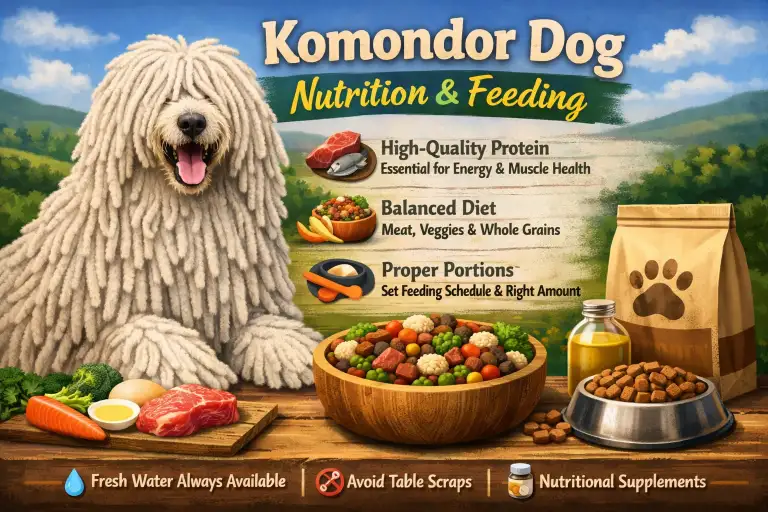
Komondors are large, powerful dogs with thick, corded coats and slow growth. Their nutrition is very important because it affects growth, joints, coat, digestion, and energy. Feeding mistakes can lead to joint problems, weight gain, or poor coat health.
These dogs grow slower than many breeds, so overfeeding or giving too rich food during puppyhood can stress bones and joints. Underfeeding can weaken immunity and reduce muscle and coat quality.
Lifestyle matters too. A working Komondor burns a lot of energy, while a companion dog in an apartment may need fewer calories. Matching diet to activity level keeps your dog healthy and prevents problems.
To feed your Komondor well, focus on balanced nutrition, proper portion sizes, and consistent meals. Regular checks of body condition under the cords help spot problems early.
How Proper Nutrition Impacts a Komondor
| Health Aspect | Benefit of Balanced Diet |
|---|---|
| Growth & joints | Strong bones, reduced risk of hip/elbow problems |
| Coat & skin | Healthy cords, less matting, shiny coat |
| Digestion | Firm stools, better nutrient absorption |
| Weight & energy | Stable weight, steady energy levels |
| Immunity | Fewer infections and illnesses |
What to Feed a Komondor: Nutritional Needs and Best Diet Choices
Komondors need balanced nutrition with the right protein, fat, fiber, and minerals. Overfeeding or underfeeding can cause health issues.
Key nutrients for Komondors:
| Nutrient | Why it matters |
|---|---|
| Protein | Builds muscles and supports immunity |
| Fat | Energy and healthy skin & coat |
| Carbohydrates | Fuel for daily activity |
| Calcium & Phosphorus | Supports bones and joints |
| Fiber | Helps digestion and stool quality |
| Vitamins & Minerals | General health and immunity |
Recommended nutrient ranges:
| Nutrient | Guideline |
|---|---|
| Protein | 22–26% |
| Fat | 10–16% |
| Fiber | Moderate |
| Calcium & Phosphorus | Balanced, not excessive |
Reading dog food labels:
| Label Part | What to check |
|---|---|
| Ingredient list | Real animal protein first |
| Guaranteed analysis | Protein and fat in recommended range |
| AAFCO statement | “Complete and balanced” |
| Marketing terms | Ignore “premium” or “ancestral” |
Grain-free diets are usually unnecessary unless the vet confirms a grain allergy. Large-breed formulas are safer because they control calories and balance minerals for healthy growth.
How Much and How Often to Feed a Komondor
Feeding a Komondor depends on weight, age, activity, and body condition. Overfeeding can stress joints, underfeeding can weaken the dog. Portioning and schedules are key.
Daily calorie needs:
| Weight | Low activity | Moderate activity | High / working |
|---|---|---|---|
| 90–100 lbs | 1,800–2,000 kcal | 2,100–2,300 kcal | 2,500+ kcal |
| 100–120 lbs | 2,000–2,200 kcal | 2,300–2,600 kcal | 2,800+ kcal |
| 120–130 lbs | 2,200–2,400 kcal | 2,600–2,900 kcal | 3,100+ kcal |
Feeding schedule:
| Life Stage | Meals per Day |
|---|---|
| Puppy 2–6 months | 3 |
| Puppy 6–12 months | 2–3 |
| Adult | 2 |
| Senior | 2 smaller meals |
Body condition check:
| Condition | What you feel |
|---|---|
| Underweight | Ribs sharp and visible |
| Ideal | Ribs easy to feel, waist visible |
| Overweight | Ribs hard to feel, no waist |
Adjust portions slowly if your dog gains or loses weight, or if activity changes.
Best Dog Food Types for Komondors (Kibble, Raw, Fresh, and More)
Different food types have different benefits and risks. Choose based on your dog’s age, health, activity, and your ability to feed safely.
Comparison of food types:
| Food Type | Pros | Cons | Best for |
|---|---|---|---|
| Kibble | Balanced, convenient, affordable | Can be high-carb | Most Komondors |
| Raw | High moisture, palatable | Safety risk, expensive | Experienced owners, vet-supervised |
| Fresh | Easy to digest, tasty | Expensive, short shelf life | Picky eaters, sensitive stomachs |
| Canned | High moisture, appetizing | Expensive, less dental benefit | Seniors, poor appetite |
| Freeze-dried | Nutrient-dense, convenient | Needs rehydration, pricey | Travel or rotation |
| Homemade | Full control | Risk of imbalance | Only with vet guidance |
Treats: Limit to 10% of daily calories. Safe options: cooked meat, carrots, cucumber, plain pumpkin. Avoid fatty, seasoned, or sugary treats.
Safe vs toxic foods:
| Safe (small amounts) | Avoid | Toxic |
|---|---|---|
| Chicken, rice, pumpkin, carrots | Fried, spicy, seasoned food | Chocolate, grapes, onions, garlic, xylitol, alcohol |
Special Diets, Feeding Problems, and Real Komondor Owner Questions
Komondors have different needs based on age, health, and activity. Puppies, seniors, and sensitive dogs require special care.
Puppies: Feed large-breed puppy food with controlled calcium, split into multiple meals. Avoid overfeeding to prevent joint problems.
Weight issues: Komondors gain weight easily. Signs include no visible waist and hard-to-feel ribs. Reduce portions slowly and increase gentle activity.
Sensitive stomachs or allergies: Loose stools, gas, or itching often come from sudden food changes, too many treats, or low-quality ingredients. Switch food gradually and use simpler diets.
Common feeding problems and fixes:
| Problem | Fix |
|---|---|
| Won’t eat breakfast | Stick to fixed meal times |
| Always hungry | Measure food, limit treats |
| Loose stool | Slow transition, add fiber |
| Weight gain | Reduce portions by 10% |
| Picky eater | Stop topping food daily |
When to see a vet:
If your Komondor stops eating, loses weight, has ongoing diarrhea, or shows skin or coat changes.
For more detailed guidance on large-breed dog nutrition and feeding, you can visit the American Kennel Club (AKC) dog care resources.

Ata Ur Rehman is the founder of Pet Age in Human Years Calculator, an educational platform that provides age conversion charts and lifespan guides for dogs, cats, birds, and other companion animals. His work focuses on helping pet owners understand how animal ages translate into human years using commonly accepted age conversion formulas and published lifespan averages.
The website compiles breed and species lifespan data from kennel clubs, breed organizations, and general animal lifespan studies to present simple and easy-to-understand guides for pet owners worldwide.
This website was created to centralize animal age conversion charts into one easy reference platform for pet owners.