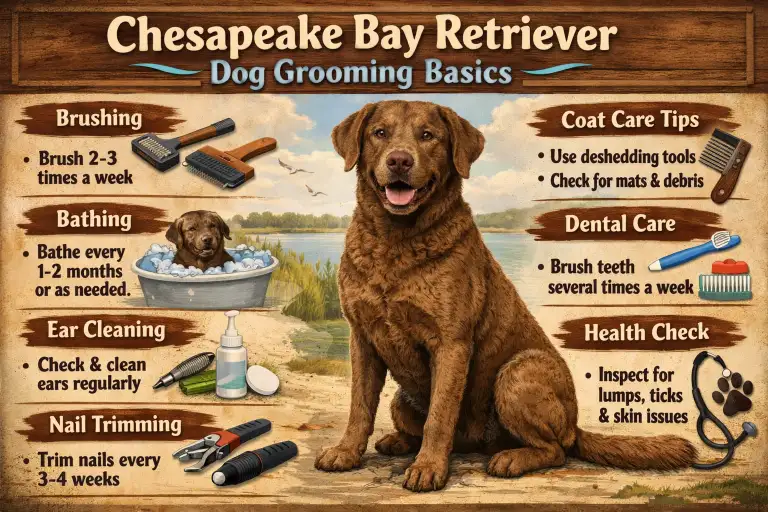
The Chesapeake Bay Retriever has a double coat that is short, thick, and slightly oily. This coat was made for cold water and rough weather. The outer coat repels water, while the undercoat keeps the dog warm and dry.
Because of this coat:
- The dog dries faster than many breeds
- Dirt often falls off when dry
- Natural oils are very important
- Too much bathing causes skin problems
Chesapeakes shed all year but shed much more in spring and fall. Even though the coat is short, it can still trap loose hair close to the skin.
Shaving this breed is a serious mistake. Shaving damages the coat, removes protection, and can cause uneven regrowth.
Coat Facts at a Glance
| Feature | What It Means |
|---|---|
| Double coat | Needs brushing, not shaving |
| Oily texture | Do not over-bathe |
| Waterproof | Use mild dog shampoo only |
| Seasonal shedding | Extra brushing needed |
Owners often think short coats need less care. With Chesapeakes, the opposite is true. The coat needs correct care, not aggressive cleaning.
Core Grooming Routine at Home for a Chesapeake Bay Retriever
Home grooming for a Chesapeake is simple when done regularly. You do not need many tools, but the right ones matter.
Brushing should be done 1–2 times per week, and more often during shedding season. Brushing removes loose hair, spreads natural oils, and keeps skin healthy.
Bathing should be done only when needed, usually every 6–8 weeks or when the dog smells or gets very dirty. Too much bathing causes dry skin and strong odor.
Basic Grooming Tools
| Tool | Purpose |
|---|---|
| Rubber brush | Removes loose hair gently |
| Slicker brush | Helps during heavy shedding |
| Dog shampoo (gentle) | Cleans without stripping oils |
| Towels | Absorb water after baths |
When bathing:
- Use lukewarm water
- Wet the coat fully
- Use a small amount of shampoo
- Rinse very well
- Towel dry first, then air dry
Do not use human shampoo. It damages dog skin and causes itching.
Extra Care: Nails, Ears, Teeth, and Skin Health
Chesapeake Bay Retrievers love water, which makes ear care very important. Wet ears can easily get infections.
Nails should be trimmed every 3–4 weeks. Long nails can cause pain and joint stress.
Teeth should be brushed several times per week to prevent bad breath and dental disease.
Extra Care Checklist
| Area | How Often |
|---|---|
| Nails | Every 3–4 weeks |
| Ears | Weekly, more after swimming |
| Teeth | 2–3 times per week |
| Skin check | During brushing |
Watch for signs of skin trouble:
- Red or smelly skin
- Constant scratching
- Hot spots
- Greasy or flaky areas
If these signs do not improve, a vet visit is needed.
Special Situations, Safety, and Professional Grooming
Puppies should start grooming early with short, calm sessions. This helps them stay relaxed as adults.
Senior Chesapeakes may need slower grooming and softer brushes due to joint pain or thin skin.
Seasonal shedding happens mainly in spring and fall. During this time, brushing may be needed every few days.
Common Grooming Mistakes
| Mistake | Why It’s Bad |
|---|---|
| Bathing too often | Causes dry, itchy skin |
| Shaving the coat | Damages protection |
| Skipping ear drying | Leads to infections |
| Using harsh shampoo | Irritates skin |
Professional groomers are helpful if:
- The dog has heavy shedding problems
- The dog is anxious or hard to handle
- Skin or coat issues keep returning
Choose a groomer who understands working retriever coats.
Quick Reference, FAQs, and Grooming Routine Summary
Quick Grooming Schedule
| Task | Frequency |
|---|---|
| Brushing | 1–2 times weekly |
| Bathing | Every 6–8 weeks |
| Nails | Monthly |
| Ears | Weekly |
| Teeth | Several times weekly |
Common Owner Questions
Do Chesapeakes smell naturally?
No. Strong smell usually means too much oil buildup or skin problems.
Can I shave my Chesapeake in summer?
No. The coat protects from heat and sun.
Do they need professional grooming?
Most owners can groom at home, but pros help during heavy shedding or skin issues.
When to see a vet or groomer:
- Ongoing skin redness or odor
- Pain during grooming
- Repeated ear infections
For more breed-specific background and general care standards, you can also review the American Kennel Club’s official Chesapeake Bay Retriever breed profile, which outlines the breed’s coat purpose and maintenance needs.

Ata Ur Rehman is the founder of Pet Age in Human Years Calculator, an educational platform that provides age conversion charts and lifespan guides for dogs, cats, birds, and other companion animals. His work focuses on helping pet owners understand how animal ages translate into human years using commonly accepted age conversion formulas and published lifespan averages.
The website compiles breed and species lifespan data from kennel clubs, breed organizations, and general animal lifespan studies to present simple and easy-to-understand guides for pet owners worldwide.
This website was created to centralize animal age conversion charts into one easy reference platform for pet owners.