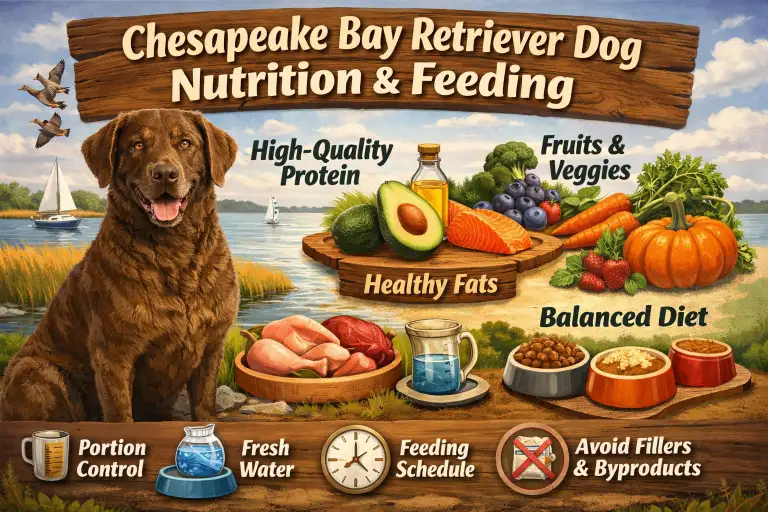
Chesapeake Bay Retrievers are not average dogs when it comes to food. They are strong, muscular, and built for hard work, cold water, and long days of activity. Because of this, their nutrition needs are different from many other breeds.
Good nutrition helps a Chesapeake Bay Retriever:
- Build and maintain strong muscles
- Stay lean and avoid unhealthy weight gain
- Support joints and bones that work hard
- Keep a thick, oily coat healthy
- Have steady energy without being overfed
Many Chessies live as family dogs, not working dogs. When activity drops but food stays the same, weight gain happens fast. Breed-specific feeding helps prevent this problem before it starts.
This guide focuses on real-life feeding, not just theory. It helps owners choose the right food, feed the right amount, and avoid common mistakes that shorten a dog’s healthy years.
Core Nutritional Needs of a Chesapeake Bay Retriever
Chesapeake Bay Retrievers need balanced nutrition, but with special attention to protein, fat, and joint support.
They do best on diets made for active, medium-to-large sporting dogs.
Key nutrition basics for this breed
- High-quality animal protein for muscle and strength
- Healthy fats for energy and coat health
- Controlled carbs to avoid weight gain
- Vitamins and minerals to support joints and immunity
Important nutrient focus
| Nutrient | Why It Matters for Chessies |
|---|---|
| Protein | Supports muscle, strength, and recovery |
| Fat | Fuels endurance and keeps coat waterproof |
| Fiber | Helps digestion and stool quality |
| Omega-3s | Supports joints, skin, and inflammation |
| Calcium & Phosphorus | Supports bones and joints |
Adult Chesapeake Bay Retrievers usually do well with:
- Protein: moderate to high
- Fat: moderate (higher for working dogs, lower for house dogs)
Avoid foods that are very low in protein or very high in empty calories. These dogs stay healthiest when food quality is high and portions are controlled.
How Much to Feed a Chesapeake Bay Retriever (Calories, Portions, Life Stage)
How much you feed matters just as much as what you feed. Overfeeding is one of the most common problems in Chesapeake Bay Retrievers.
Daily calorie needs (general guide)
| Dog Weight | Low Activity | Moderate Activity | High Activity |
|---|---|---|---|
| 55 lb | ~1,200 kcal | ~1,450 kcal | ~1,800 kcal |
| 65 lb | ~1,350 kcal | ~1,650 kcal | ~2,050 kcal |
| 75 lb | ~1,500 kcal | ~1,850 kcal | ~2,300 kcal |
These numbers are starting points. Always adjust based on body shape and energy level.
Feeding by life stage
| Life Stage | Meals per Day | Key Notes |
|---|---|---|
| Puppy | 3–4 | Slow, steady growth is important |
| Adult | 2 | Helps control hunger and energy |
| Senior | 2 | Lower calories, joint support needed |
Portion control tips
- You should feel ribs easily, not see them
- Waist should be visible when viewed from above
- Cut food slightly if weight gain starts
- Measure food instead of guessing
Many Chessies act hungry even when properly fed. This does not always mean they need more food.
Best Types of Food for Chesapeake Bay Retrievers (Kibble, Fresh, Raw & More)
There is no single “perfect” food, but some choices work better for this breed than others.
Common food types compared
| Food Type | Pros | Cons |
|---|---|---|
| Dry kibble | Easy, affordable, balanced | Quality varies a lot |
| Canned food | Tasty, high moisture | Higher cost, softer stools |
| Fresh food | Very digestible | Expensive, short shelf life |
| Raw diet | High protein, palatable | Risky if unbalanced |
| Freeze-dried | Convenient raw option | Costly |
Grain-free vs grain-inclusive
Most Chesapeake Bay Retrievers do well on grain-inclusive foods. Grain-free diets are not needed unless a real allergy is confirmed.
Safe and unsafe human foods
| Safe in Small Amounts | Never Feed |
|---|---|
| Plain chicken | Chocolate |
| Cooked eggs | Grapes / raisins |
| Plain rice | Onions |
| Carrots | Xylitol |
| Plain yogurt | Cooked bones |
Treats should make up less than 10% of daily calories. Chessies are food-motivated and can gain weight quickly from treats.
Common Feeding Problems, Special Diets, and Real-Life Chesapeake Scenarios
Many Chesapeake Bay Retriever feeding problems are caused by overfeeding, fast food changes, or wrong food choices.
Common issues and fixes
| Problem | Likely Cause | What Helps |
|---|---|---|
| Weight gain | Too many calories | Reduce portions |
| Loose stool | Fast food switch | Slow transition |
| Itchy skin | Food sensitivity | Simple diet trial |
| Low energy | Poor-quality food | Higher protein |
Special situations
- Puppies need controlled growth, not high-calorie overload
- Seniors benefit from joint support and fewer calories
- Neutered dogs often need less food
- Working dogs may need more fat during active seasons
Switching food safely
- Take 7–10 days to switch
- Mix old and new food slowly
- Watch stool, appetite, and energy
If your dog stops eating, loses weight fast, or has long-term stomach issues, talk to a vet before changing diets again.
For official, science-based nutrition standards used by veterinarians and pet-food manufacturers, you can also review the AAFCO Dog Food Nutrient Profiles, which explain minimum nutrient requirements for dogs at different life stages:
https://www.aafco.org/consumers/understanding-pet-food/dog-food-nutrient-profiles/

Ata Ur Rehman is the founder of Pet Age in Human Years Calculator, an educational platform that provides age conversion charts and lifespan guides for dogs, cats, birds, and other companion animals. His work focuses on helping pet owners understand how animal ages translate into human years using commonly accepted age conversion formulas and published lifespan averages.
The website compiles breed and species lifespan data from kennel clubs, breed organizations, and general animal lifespan studies to present simple and easy-to-understand guides for pet owners worldwide.
This website was created to centralize animal age conversion charts into one easy reference platform for pet owners.