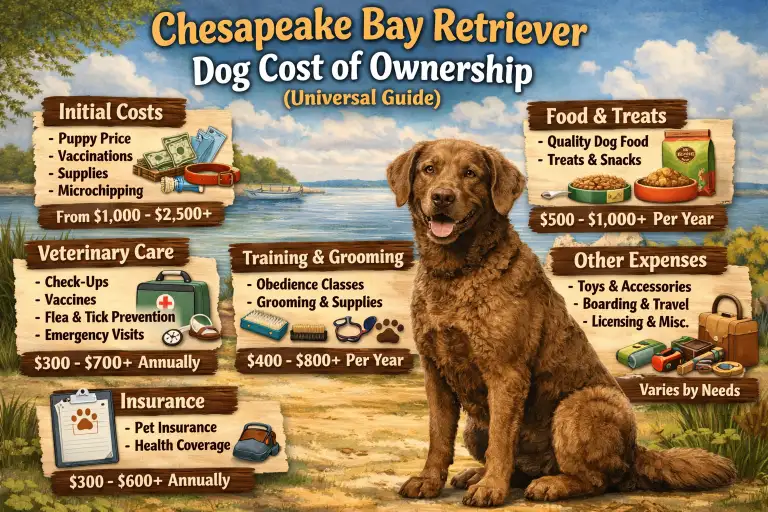
Owning a Chesapeake Bay Retriever is a long-term financial commitment. This breed is strong, active, and built for hard work, which means its care costs are higher than many average dogs. Many people focus only on the puppy price, but that is only a small part of the total cost.
A Chesapeake Bay Retriever usually costs more because it eats more food, needs strong training, and often requires higher vet and insurance budgets. This guide explains real costs in a clear way, so you know what to expect before bringing one home.
Here is a quick cost snapshot to set expectations.
| Cost Type | Estimated Amount (USD) |
|---|---|
| First-year cost | $3,500 – $6,500 |
| Average yearly cost (after year one) | $2,000 – $3,500 |
| Monthly cost | $170 – $290 |
| Lifetime cost (10–12 years) | $22,000 – $40,000 |
These numbers change based on where you live, your dog’s health, and lifestyle. City living, emergency care, and high activity levels increase costs quickly.
First-Year Cost of Owning a Chesapeake Bay Retriever
The first year is always the most expensive. Puppies need vaccines, training, supplies, and frequent vet visits. Adult rescues usually cost less in the first year but still need setup expenses.
Here is a realistic breakdown of first-year costs.
| First-Year Expense | Typical Cost Range |
|---|---|
| Puppy purchase or adoption | $300 – $2,500 |
| Initial vet visits & vaccines | $300 – $600 |
| Spay or neuter | $200 – $600 |
| Crate, bed, bowls, leash, toys | $300 – $700 |
| Training classes | $150 – $500 |
| Food (first year) | $600 – $1,000 |
| Flea, tick, heartworm prevention | $200 – $400 |
Strong crates, durable leashes, and heavy-duty toys are important for this breed. Cheap items often get destroyed and replaced, raising costs later.
Puppies usually cost more than adult dogs because of training and vet care. Adult rescues may already be spayed, vaccinated, and trained, which lowers first-year spending.
Monthly and Annual Chesapeake Bay Retriever Expenses
After the first year, costs become more steady. However, this breed is large and active, so monthly expenses remain higher than small dogs.
Here is what owners usually spend each month and year.
| Ongoing Expense | Monthly Cost | Annual Cost |
|---|---|---|
| Food | $50 – $90 | $600 – $1,080 |
| Routine vet care | $20 – $40 | $250 – $500 |
| Preventatives & supplements | $20 – $35 | $240 – $420 |
| Grooming & nail care | $15 – $30 | $180 – $360 |
| Training refreshers & enrichment | $10 – $25 | $120 – $300 |
| Licenses & fees | — | $20 – $50 |
Chesapeake Bay Retrievers have a short coat but shed heavily. Grooming costs are lower than long-coated breeds, but nail trimming and bathing still add up.
Food is a major cost. A healthy adult Chessie can eat 3 to 4 cups of quality food per day, which makes cheap diets risky for long-term health.
Major Cost Factors That Affect Chesapeake Bay Retriever Expenses
Not all Chesapeake Bay Retrievers cost the same to own. Several factors can raise or lower your total spending.
| Cost Factor | How It Affects Cost |
|---|---|
| Dog size & sex | Larger dogs eat more and cost more |
| Activity level | Working or hunting dogs cost more |
| Health risks | Joint issues raise vet bills |
| Location | Urban areas cost more than rural |
| Insurance choice | Low plans save monthly, risk higher bills |
This breed is known for hip and elbow issues. Emergency care, joint treatments, or long-term medication can add thousands of dollars over a lifetime.
Pet insurance often makes sense for Chesapeake Bay Retrievers. Monthly insurance usually costs $40–$80, but it can prevent huge emergency bills.
Owners who hunt, compete, or train heavily should expect higher food, gear, and vet costs.
Lifetime Cost, Hidden Expenses, and Budgeting Tips
Over a full lifetime, Chesapeake Bay Retrievers are a serious financial commitment. Many owners underestimate hidden and surprise costs.
Here is a realistic lifetime cost estimate.
| Ownership Stage | Estimated Cost |
|---|---|
| First year | $3,500 – $6,500 |
| Each adult year | $2,000 – $3,500 |
| Lifetime total (10–12 years) | $22,000 – $40,000 |
Hidden costs often include:
- Emergency vet visits ($1,000–$5,000+)
- Boarding or pet sitters during travel
- Dental cleanings under anesthesia
- Chewed furniture, beds, and toys
- Long-term medication for joints or allergies
To budget wisely:
- Save at least $1,500–$3,000 for emergencies
- Use insurance for big risks, not small bills
- Buy durable gear once instead of replacing cheap items
- Do training early to avoid damage and behavior problems
Many people think large dogs are only “a little more expensive.” In reality, small monthly differences turn into tens of thousands of dollars over time.
For more general cost benchmarks and national averages, you can compare your expenses with the American Society for the Prevention of Cruelty to Animals (ASPCA) annual dog cost estimates, which provide a trusted baseline for dog ownership costs in the U.S.

Ata Ur Rehman is the founder of Pet Age in Human Years Calculator, an educational platform that provides age conversion charts and lifespan guides for dogs, cats, birds, and other companion animals. His work focuses on helping pet owners understand how animal ages translate into human years using commonly accepted age conversion formulas and published lifespan averages.
The website compiles breed and species lifespan data from kennel clubs, breed organizations, and general animal lifespan studies to present simple and easy-to-understand guides for pet owners worldwide.
This website was created to centralize animal age conversion charts into one easy reference platform for pet owners.