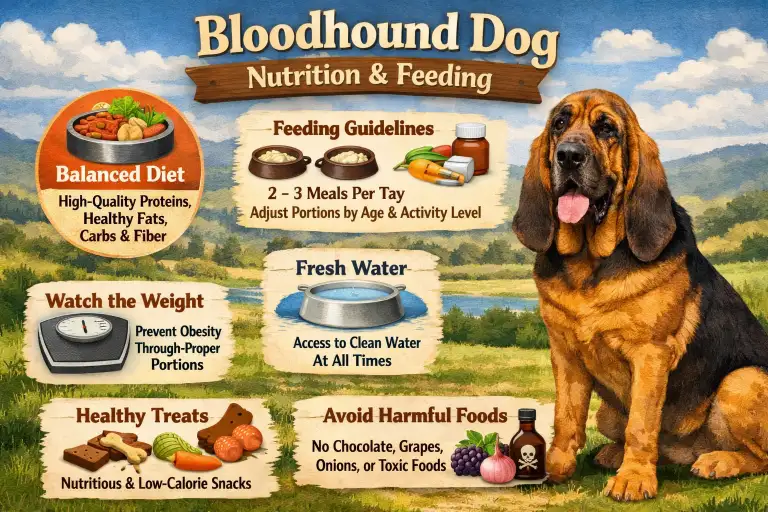
Bloodhounds are not just large dogs with big appetites — they are a unique, heavy-boned, scent-driven breed with nutritional needs that differ noticeably from many other dogs. The right diet plays a central role in how well a Bloodhound moves, works, digests food, and ages over time. Poor feeding choices, on the other hand, often show up quickly in this breed as excess weight, joint strain, digestive trouble, or chronic low energy.
One of the biggest challenges with Bloodhound nutrition is weight management. Bloodhounds tend to have a slower metabolism than lighter, more athletic breeds, yet they are extremely food-motivated. Many owners unintentionally overfeed because the dog “always seems hungry” or looks lean due to loose skin. Over time, even a small daily calorie surplus can place significant stress on joints, ligaments, and the cardiovascular system of a dog that may already weigh well over 100 pounds.
Diet also directly affects joint health and mobility, which is especially important for a breed known for its large frame and long working life. Bloodhounds are prone to joint wear as they age, and nutrition that supports controlled growth, lean muscle maintenance, and anti-inflammatory support can make a measurable difference in how comfortably they move in adulthood and senior years.
Another area where nutrition matters greatly is digestion and bloat risk. Bloodhounds are deep-chested dogs, which places them at higher risk for gastric dilation-volvulus (bloat). Feeding practices — including portion size, meal timing, and food composition — all influence digestive comfort and safety. Diets that are too rich, fed in large single meals, or paired with poor feeding routines often lead to gas, loose stool, or discomfort.
Skin and ear health are also closely tied to what a Bloodhound eats. With their loose skin and long ears, this breed can be prone to inflammation and recurrent infections when nutrition is unbalanced or of poor quality. Adequate essential fatty acids, trace minerals, and digestible proteins support the skin barrier and immune response, helping reduce chronic irritation.
This guide is designed to help Bloodhound owners make informed, practical feeding decisions, whether you are raising a growing puppy, managing an adult companion, or supporting an aging dog. Instead of generic advice, the focus is on real-world Bloodhound needs — how to feed for long-term health, prevent common nutrition-related problems, and build a diet that supports both the body and the working instincts of this remarkable breed.
What to Feed a Bloodhound: Nutritional Needs and Food Quality
Feeding a Bloodhound is not about buying the most expensive food or following trends. It is about meeting the breed’s real nutritional needs in a safe, balanced, and consistent way. Because Bloodhounds are large, heavy dogs with slower metabolisms, food quality matters just as much as food quantity.
A Bloodhound’s diet should support strong muscles, healthy joints, good digestion, and steady energy, without causing weight gain. This starts with understanding what nutrients matter most.
Protein is important for keeping muscles strong and helping the body repair itself. Bloodhounds do best with moderate to good-quality animal protein, not extremely high levels. Too little protein can lead to muscle loss, while too much calorie-dense food can cause weight gain.
Fat provides energy and helps keep the skin and coat healthy. However, Bloodhounds do not need very high-fat diets unless they are doing intense scent or working activities. For most family Bloodhounds, moderate fat levels help prevent obesity and stomach upset.
Carbohydrates and fiber help with digestion and provide steady energy. Easily digestible carbs and enough fiber can reduce gas, loose stool, and hunger between meals. Bloodhounds with sensitive stomachs often do better on foods that are simple and not overly rich.
Large-breed puppies need special attention. Too much calcium or an improper calcium-to-phosphorus balance can cause bone and joint problems as they grow. This is why large-breed puppy formulas are important for Bloodhound puppies.
Certain nutrients are especially helpful for this breed:
- Omega-3 fatty acids for skin, ears, and joints
- Glucosamine and chondroitin for joint support
- Zinc and vitamins for immune and skin health
The table below gives a simple overview of what Bloodhounds generally need from their food.
Key Nutritional Targets for Bloodhounds
| Nutrient | General Target | Why It Matters |
|---|---|---|
| Protein | Moderate, animal-based | Maintains muscle without excess weight |
| Fat | Moderate | Supports energy and skin health |
| Fiber | Moderate | Helps digestion and stool quality |
| Calcium & Phosphorus | Balanced (especially puppies) | Supports safe bone growth |
| Omega-3s | Present | Helps joints, skin, and ears |
Choosing good food also means knowing how to read the label. Many dog foods use attractive words that do not always mean better nutrition. Bloodhound owners should focus on facts, not marketing.
Look for a clear feeding statement that says the food meets AAFCO nutritional standards for the dog’s life stage. Check that real animal protein is listed near the top of the ingredient list. Avoid foods that rely heavily on fillers or are extremely high in calories for a low-activity dog.
The table below helps explain common label terms in simple language.
Dog Food Label Cheat Sheet for Bloodhound Owners
| Label Term | What It Means | What to Look For |
|---|---|---|
| “Complete and Balanced” | Meets basic nutrition rules | Must list AAFCO standards |
| “By-products” | Animal parts not muscle meat | Not always bad, but quality matters |
| “Grain-free” | No grains used | Not needed unless medically required |
| “Natural” | Marketing term | Does not guarantee quality |
| “Large Breed Formula” | Adjusted minerals and calories | Very important for Bloodhounds |
Bloodhounds can eat dry kibble, canned food, fresh food, freeze-dried diets, or even homemade meals, but balance and safety always come first. Raw or homemade diets should never be used without professional guidance, as missing nutrients can cause serious health problems over time.
The goal is simple: choose food that is easy to digest, not overly rich, and made for large dogs. This helps your Bloodhound stay active, comfortable, and healthy for years.
How Much Should a Bloodhound Eat? Feeding Amounts and Schedules
Knowing how much to feed a Bloodhound is one of the most important parts of good nutrition. This breed is large, heavy, and very food-driven. Many Bloodhounds will keep eating if food is offered, even when they do not need it. Because of this, portion control matters more than appetite.
The amount of food a Bloodhound needs depends on body weight, age, and activity level. A working or very active Bloodhound needs more calories than a dog that spends most of the day resting at home. Puppies also need different feeding amounts than adults or seniors.
Instead of guessing by bowl size or label pictures, it is better to think in daily calories. This gives a clearer picture and helps prevent slow weight gain over time.
The table below shows general daily calorie needs for Bloodhounds. These numbers are averages and should be adjusted based on your dog’s body condition and activity.
Daily Calorie Needs for Bloodhounds
| Body Weight | Low Activity | Moderate Activity | High Activity / Working |
|---|---|---|---|
| 80 lbs (36 kg) | 1,500–1,700 kcal | 1,800–2,000 kcal | 2,200+ kcal |
| 100 lbs (45 kg) | 1,800–2,000 kcal | 2,100–2,300 kcal | 2,500+ kcal |
| 120 lbs (54 kg) | 2,000–2,300 kcal | 2,400–2,700 kcal | 2,900+ kcal |
How often a Bloodhound eats is just as important as how much. Feeding very large meals once a day can increase the risk of stomach problems and bloat. Most Bloodhounds do better with two meals per day, spaced evenly.
Puppies need more frequent meals to support growth and avoid stomach upset. Seniors may need fewer calories but still benefit from regular meal times.
Bloodhound Feeding Schedule by Life Stage
| Life Stage | Meals Per Day | Feeding Notes |
|---|---|---|
| Puppy (up to 12 months) | 3 meals | Supports steady growth and digestion |
| Adult (1–7 years) | 2 meals | Helps control weight and digestion |
| Senior (7+ years) | 2 smaller meals | Supports slower metabolism and joints |
Because Bloodhounds have loose skin, it can be hard to tell by looking if they are overweight. A simple way to check is by using hands-on body checks. You should be able to feel the ribs with light pressure, but they should not stick out sharply. From above, the waist should be visible behind the ribs.
If your Bloodhound is always hungry, do not increase food right away. Hunger can come from habit, boredom, or low fiber in the diet. Adding structure to meals and choosing the right food often solves the problem without adding calories.
To lower the risk of bloat and stomach upset:
- Feed measured meals, not free-feeding
- Avoid heavy exercise right before and after meals
- Encourage slow eating if your dog eats too fast
Feeding the right amount helps protect joints, keeps energy steady, and supports a longer, healthier life.
Best Dog Food Types, Treats, and Safe Human Foods for Bloodhounds
Bloodhounds can eat many types of dog food, but not every type works well for every dog. The best choice depends on your Bloodhound’s activity level, stomach health, and weight. The goal is always the same: easy digestion, steady energy, and good weight control.
Dry kibble is the most common choice for Bloodhounds. It is easy to store, affordable, and helps keep feeding portions consistent. For most family Bloodhounds, a high-quality large-breed kibble works very well.
Canned food has more moisture and can help picky eaters. It is often higher in calories, so portions must be watched carefully. Some owners mix a small amount of canned food with kibble to improve taste.
Fresh and freeze-dried foods are becoming popular. These foods can be very tasty and easy to digest, but they are usually more expensive. It is important to choose brands that are properly balanced and made for large dogs.
Raw and homemade diets are sometimes used, but they come with risks. Without proper planning, these diets can miss key nutrients and cause health problems. Raw diets also carry a risk of bacteria. These options should only be used with help from a veterinarian or canine nutrition expert.
The table below compares common dog food types for Bloodhounds.
Dog Food Types for Bloodhounds
| Food Type | Pros | Cons | Best For |
|---|---|---|---|
| Dry Kibble | Easy to feed, affordable, balanced | Less moisture | Most Bloodhounds |
| Canned Food | Tasty, higher moisture | High calories | Picky eaters |
| Fresh Food | Highly digestible | Expensive | Sensitive stomachs |
| Freeze-Dried | Long shelf life | Costly | Travel or training |
| Raw / Homemade | Full control | High risk if unbalanced | Vet-guided plans only |
Treats are useful for training, especially for scent work, but they can quickly add extra calories. Treats should make up no more than 10% of daily calories. Small, soft treats or food rewards work best.
Many Bloodhounds enjoy human foods, but not all foods are safe. Some can help as healthy snacks, while others are dangerous and should never be given.
Safe vs Unsafe Human Foods for Bloodhounds
| Food | Safe or Unsafe | Notes |
|---|---|---|
| Cooked chicken | Safe | No bones or seasoning |
| Carrots | Safe | Low calorie, crunchy |
| Apples | Safe | Remove seeds |
| Grapes | Unsafe | Can cause kidney failure |
| Chocolate | Unsafe | Toxic even in small amounts |
| Onions | Unsafe | Damages red blood cells |
Always introduce new foods slowly and watch for stomach upset. When in doubt, stick to dog-safe foods made for large breeds.
Special Diets, Feeding Problems, and When to See a Vet
Some Bloodhounds have special feeding needs or face common problems that make diet more complicated. Understanding these issues early helps your dog stay healthy and happy.
Bloodhounds are prone to weight gain, so overweight dogs need diets with controlled calories and balanced nutrients. Feeding too much, even of healthy food, can lead to joint stress, heart problems, and shorter life expectancy. Dogs with a slower metabolism or low activity level especially benefit from large-breed adult formulas with moderate fat and protein.
Some Bloodhounds have sensitive stomachs or food allergies. Signs include diarrhea, gas, itchy skin, or recurring ear infections. For these dogs, foods with limited ingredients, novel proteins, or hypoallergenic formulas are often best. Always introduce new diets gradually to avoid digestive upset.
Switching foods should be done slowly over 7–10 days. Start with mostly the old food and gradually increase the new food while decreasing the old. This helps prevent diarrhea, vomiting, or reluctance to eat.
Bloodhounds may also show common feeding problems:
- Refusing food or being picky
- Always seeming hungry
- Gas, bloating, or loose stool
The table below shows these common issues, their likely causes, practical solutions, and when to see a veterinarian.
Common Bloodhound Feeding Problems and Solutions
| Problem | Likely Cause | Practical Fix | When to Call the Vet |
|---|---|---|---|
| Refusing food | Sudden food change or illness | Gradual food transition, warm meals | If refusal lasts more than 24–48 hours |
| Always hungry | Low fiber, habit, boredom | Use measured meals, high-fiber food, enrichment | Persistent weight loss or excessive appetite |
| Gas or loose stool | Food intolerance or rapid change | Slow transition, digestible food | Chronic diarrhea or vomiting |
| Overweight | Overfeeding, low activity | Portion control, exercise, weight management food | Obesity with joint pain or lethargy |
| Bloating | Large meals, exercise after eating | Smaller meals, wait 1 hour before/after exercise | Immediate vet attention — bloat is an emergency |
Bloodhounds with multiple dogs in the household or frequent travel may need special feeding routines to ensure each dog gets the right food and calories. Using separate bowls, meal timers, or travel-friendly pre-portioned food helps manage this.
Knowing when to consult a veterinarian or veterinary nutritionist is crucial. Seek professional help if your Bloodhound has:
- Chronic diarrhea or vomiting
- Rapid weight gain or loss
- Signs of allergies or intolerances
- Medical conditions requiring specialized diets
Following the right diet, watching for problems, and acting early can prevent most serious health issues and help your Bloodhound live a long, active life.
For more guidance on large breed dog nutrition standards, check out the AAFCO Dog Food Nutrient Profiles.

Ata Ur Rehman is the founder of Pet Age in Human Years Calculator, an educational platform that provides age conversion charts and lifespan guides for dogs, cats, birds, and other companion animals. His work focuses on helping pet owners understand how animal ages translate into human years using commonly accepted age conversion formulas and published lifespan averages.
The website compiles breed and species lifespan data from kennel clubs, breed organizations, and general animal lifespan studies to present simple and easy-to-understand guides for pet owners worldwide.
This website was created to centralize animal age conversion charts into one easy reference platform for pet owners.