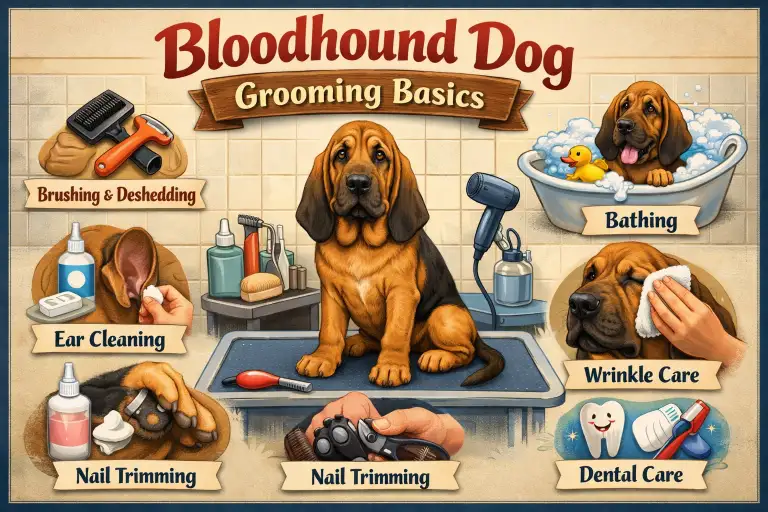
Bloodhound grooming isn’t just about keeping your dog looking clean—it’s a core part of maintaining their health, comfort, and overall quality of life. While Bloodhounds have a short coat that can seem low-maintenance at first glance, their unique combination of loose skin, heavy ears, and higher natural oil production means grooming plays a much bigger role than many owners expect.
Regular grooming helps manage shedding, control odor, reduce the risk of skin and ear infections, and allows you to spot problems early—before they turn into expensive or painful veterinary issues. From a groomer’s perspective, Bloodhounds that follow a consistent home routine are noticeably healthier, easier to handle, and far less prone to chronic skin and ear problems than those groomed only occasionally.
Bloodhounds are also a breed where grooming directly affects comfort and behavior. Dirty skin folds can cause irritation and itching, neglected ears can lead to painful infections, and overgrown nails can change the way a large, heavy dog moves. Grooming isn’t cosmetic for this breed—it’s preventative care.
Why grooming is especially important for Bloodhounds
| Grooming area | Why it matters for Bloodhounds |
|---|---|
| Coat care | Controls shedding, distributes natural oils, and reduces that “hound smell” |
| Skin folds and wrinkles | Prevents moisture buildup, yeast growth, and skin infections |
| Ear care | Reduces the high risk of chronic ear infections caused by poor airflow |
| Skin health checks | Helps catch allergies, hot spots, and infections early |
| Odor management | Controls bacteria, oils, and drool-related smells without over-bathing |
Many owners are surprised to learn that most Bloodhound grooming problems don’t come from lack of bathing—they come from inconsistent routine care. Skipping brushing, ignoring wrinkles, or forgetting ear cleaning allows moisture and bacteria to build up, which is why some Bloodhounds struggle with ongoing odor or recurring infections.
When grooming is done correctly and consistently, Bloodhounds tend to have healthier skin, fewer vet visits for ear or skin issues, and a noticeably better overall comfort level. This guide focuses on practical, realistic grooming habits that fit into everyday life—so grooming stays manageable, effective, and stress-free for both you and your dog.
Understanding the Bloodhound Coat, Skin, and Ears
To groom a Bloodhound properly, it helps to understand how their body is built. Bloodhounds look simple on the outside, but their coat, skin, and ears create very specific grooming needs. Once you understand these features, the rest of the grooming routine makes much more sense.
Bloodhounds have a short, dense double coat. This means they shed year-round, with heavier shedding during seasonal changes. Even though the hair is short, it still falls out in large amounts and can build up quickly on furniture and floors if brushing is skipped. Regular brushing removes loose hair and spreads natural skin oils, which keeps the coat healthier and helps reduce odor.
Their loose skin and deep wrinkles are one of the most important grooming concerns. Moisture, dirt, and bacteria can collect inside skin folds, especially around the face, neck, and lips. If these areas are not cleaned and dried often, they can become red, sore, and infected. This is one of the most common grooming-related problems seen in Bloodhounds.
Bloodhounds also have very long, floppy ears that hang low and block airflow. Warmth and moisture get trapped inside the ear canal, creating the perfect environment for yeast and bacteria. Without regular ear cleaning, infections can develop quickly and often come back again and again.
The table below shows how these physical features affect grooming care.
| Bloodhound feature | What it’s like | Why it affects grooming |
|---|---|---|
| Coat | Short, thick double coat | Sheds often and needs regular brushing |
| Skin | Loose and wrinkled | Traps moisture and dirt in folds |
| Ears | Long, floppy, low airflow | High risk of ear infections |
| Natural oils | Higher oil production | Can cause strong odor if unmanaged |
Because of these traits, Bloodhounds are not a “wash and forget” breed. Grooming needs to happen on a regular schedule, even when the dog looks clean. Most skin and ear problems start slowly and are easy to miss unless you check these areas often.
Bloodhound Grooming Routine at Home (Step-by-Step)
A good grooming routine keeps a Bloodhound clean, healthy, and comfortable. The key is doing small tasks often, instead of waiting until problems show up. This routine is simple, safe, and easy to follow at home.
Brushing should be done two to three times each week. Even though the coat is short, Bloodhounds shed a lot. Brushing removes loose hair, helps control odor, and keeps skin oils balanced. A rubber curry brush works very well for this breed and is gentle on the skin.
Bathing should be done every six to eight weeks, or sooner if your Bloodhound gets very dirty. Bathing too often can dry out the skin and make odor worse over time. Always use a dog shampoo, not human shampoo. Choose a mild shampoo made for sensitive skin if your dog has allergies or itchy skin.
Drying is very important after a bath. Moist skin folds and ears can lead to infections. Towel-dry first, then use a low-heat dryer if needed. Make sure the ears and skin folds are fully dry before letting your dog rest.
Some Bloodhounds need quick wipe-downs between baths, especially around the face and neck where drool collects. Grooming wipes or a damp cloth can help keep these areas clean without another full bath.
The table below shows a simple home grooming routine.
| Grooming task | How often | What you need |
|---|---|---|
| Brushing | 2–3 times per week | Rubber curry brush |
| Bathing | Every 6–8 weeks | Mild dog shampoo |
| Drying | After every bath | Towels, low-heat dryer |
| Wipe-downs | As needed | Grooming wipes or damp cloth |
Using the right tools makes grooming easier and safer.
| Grooming tool | Why it works for Bloodhounds |
|---|---|
| Rubber curry brush | Removes loose hair and spreads oils |
| Dog shampoo | Protects skin and coat health |
| Towels | Absorb moisture and reduce odor |
| Low-heat dryer | Helps dry skin folds safely |
A good grooming routine keeps a Bloodhound clean, healthy, and comfortable. The key is doing small tasks often, instead of waiting until problems show up. This routine is simple, safe, and easy to follow at home.
Brushing should be done two to three times each week. Even though the coat is short, Bloodhounds shed a lot. Brushing removes loose hair, helps control odor, and keeps skin oils balanced. A rubber curry brush works very well for this breed and is gentle on the skin.
Bathing should be done every six to eight weeks, or sooner if your Bloodhound gets very dirty. Bathing too often can dry out the skin and make odor worse over time. Always use a dog shampoo, not human shampoo. Choose a mild shampoo made for sensitive skin if your dog has allergies or itchy skin.
Drying is very important after a bath. Moist skin folds and ears can lead to infections. Towel-dry first, then use a low-heat dryer if needed. Make sure the ears and skin folds are fully dry before letting your dog rest.
Some Bloodhounds need quick wipe-downs between baths, especially around the face and neck where drool collects. Grooming wipes or a damp cloth can help keep these areas clean without another full bath.
The table below shows a simple home grooming routine.
| Grooming task | How often | What you need |
|---|---|---|
| Brushing | 2–3 times per week | Rubber curry brush |
| Bathing | Every 6–8 weeks | Mild dog shampoo |
| Drying | After every bath | Towels, low-heat dryer |
| Wipe-downs | As needed | Grooming wipes or damp cloth |
Using the right tools makes grooming easier and safer.
| Grooming tool | Why it works for Bloodhounds |
|---|---|
| Rubber curry brush | Removes loose hair and spreads oils |
| Dog shampoo | Protects skin and coat health |
| Towels | Absorb moisture and reduce odor |
| Low-heat dryer | Helps dry skin folds safely |
Extra Bloodhound Grooming Care: Ears, Wrinkles, Nails, Teeth, and Skin
Bloodhounds need extra care in certain areas because of their body shape and size. These areas can cause health problems if they are ignored, but they are easy to manage with a simple routine.
Wrinkles and skin folds should be checked and cleaned several times a week. Dirt, moisture, and drool can collect in these folds and cause redness or a bad smell. Use a soft cloth or dog-safe wipe to clean the folds, then gently dry them. Never leave skin folds damp.
Ear cleaning is very important for Bloodhounds. Their long ears trap heat and moisture, which can lead to infections. Clean the ears once a week using a dog ear cleaner. Gently wipe the inside of the ear flap. Do not push anything deep into the ear canal. If you notice a strong smell, dark discharge, or your dog shaking their head often, contact a vet.
Nail trimming should be done every three to four weeks. Long nails can cause pain and make it harder for a large dog to walk properly. If you hear clicking sounds on the floor, the nails are too long. Use dog nail clippers and trim a small amount at a time.
Teeth care is often forgotten, but it matters. Bloodhounds can build up plaque quickly, especially because of drool. Brush your dog’s teeth two to three times a week using a dog toothbrush and dog toothpaste. This helps prevent bad breath and gum disease.
Skin should be checked during every grooming session. Look for red spots, scabs, hair loss, or signs of itching. Catching skin problems early can prevent serious infections.
The table below shows how often each care task should be done and what to watch for.
| Care area | How often | Signs of trouble |
|---|---|---|
| Wrinkles | 2–4 times per week | Redness, odor, wet skin |
| Ears | Weekly | Head shaking, bad smell |
| Nails | Every 3–4 weeks | Clicking on the floor |
| Teeth | 2–3 times per week | Bad breath, red gums |
| Skin checks | Every grooming session | Itching, sores, hair loss |
Some signs need fast attention from a vet.
| Warning sign | What it may mean |
|---|---|
| Strong yeasty smell | Yeast infection |
| Red, wet skin folds | Skin fold infection |
| Dark ear discharge | Ear infection |
| Constant scratching | Allergies or skin issue |
Grooming Frequency, Safety Tips, and When to See a Professional
Bloodhounds need a regular grooming schedule to stay healthy, but the exact timing depends on the task. Following a routine helps prevent problems before they start.
Brushing should happen two to three times per week to manage shedding. Bathing is needed every six to eight weeks, unless your Bloodhound gets very dirty. Wrinkles and ears require cleaning more often—wrinkles two to four times per week, and ears at least once a week. Nails should be trimmed every three to four weeks, and teeth brushed two to three times per week.
Some grooming tasks are best left to professionals. Deep ear cleaning, nail trimming for anxious dogs, or handling severe mats may require a groomer or vet. Professional grooming every two to four months helps with tasks you cannot safely do at home and keeps your Bloodhound comfortable.
The table below summarizes the recommended grooming frequency for quick reference.
| Grooming task | How often | Notes |
|---|---|---|
| Brushing | 2–3 times per week | Use rubber curry brush |
| Bathing | Every 6–8 weeks | Use mild dog shampoo |
| Wrinkle cleaning | 2–4 times per week | Dry thoroughly |
| Ear cleaning | Weekly | Check for odor or discharge |
| Nail trimming | Every 3–4 weeks | Trim small amounts carefully |
| Teeth brushing | 2–3 times per week | Use dog toothpaste |
Safety is important when grooming. Always use dog-specific tools and products. Avoid pushing cotton swabs into the ear canal. Trim nails slowly to avoid cutting the quick. Keep a calm environment, and if your dog resists, take breaks or ask a professional for help.
The table below helps you decide what can be done at home and what may need a professional groomer.
| Task | DIY at Home | Professional Groomer |
|---|---|---|
| Brushing | Yes | Optional |
| Bathing | Yes | Optional for deep cleaning |
| Wrinkle cleaning | Yes | Can assist with stubborn folds |
| Ear cleaning | Light cleaning | Deep cleaning if infection risk |
| Nail trimming | Sometimes | Recommended for anxious dogs |
| Mats or heavy shedding | No | Professional handling |
Following this schedule and using safe techniques ensures your Bloodhound stays clean, healthy, and comfortable.
For additional veterinary-backed guidance on skin, ear, and coat health in dogs, see the American Veterinary Medical Association’s dog care resources: https://www.avma.org/resources-tools/pet-owners/petcare/dogs

Ata Ur Rehman is the founder of Pet Age in Human Years Calculator, an educational platform that provides age conversion charts and lifespan guides for dogs, cats, birds, and other companion animals. His work focuses on helping pet owners understand how animal ages translate into human years using commonly accepted age conversion formulas and published lifespan averages.
The website compiles breed and species lifespan data from kennel clubs, breed organizations, and general animal lifespan studies to present simple and easy-to-understand guides for pet owners worldwide.
This website was created to centralize animal age conversion charts into one easy reference platform for pet owners.