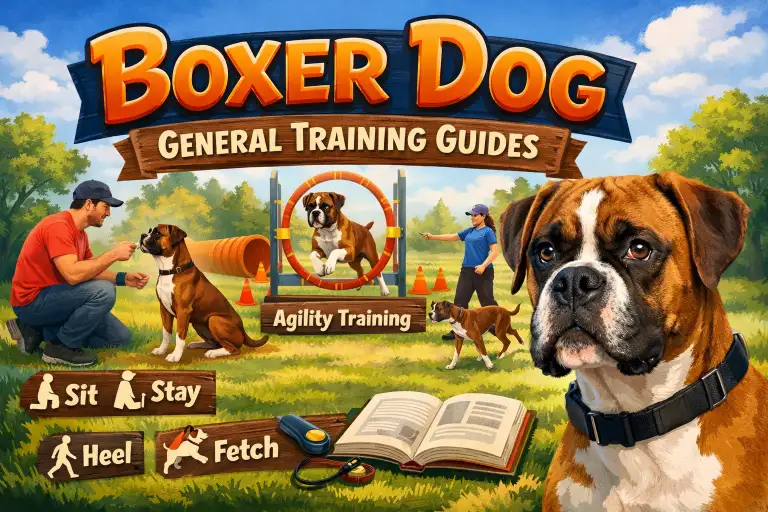
Boxer dog training starts with understanding how Boxers think, mature, and react to the world. Many owners struggle not because they are training incorrectly, but because they’re applying generic dog-training expectations to a breed that develops differently.
Boxers are high-energy, emotionally sensitive dogs that mature slowly—both mentally and behaviorally. It’s common for a Boxer to behave like an oversized puppy well into adolescence and even early adulthood. This delayed maturity often leads owners to believe their Boxer is stubborn, dominant, or “not listening,” when in reality the dog is overstimulated, under-skilled, or mentally overwhelmed.
A key challenge in Boxer training is impulse control. Boxers are enthusiastic greeters, fast movers, and highly people-focused. Without structured training, this shows up as jumping, mouthing, leash pulling, and difficulty settling in busy environments. These behaviors are not signs of bad temperament—they are signs that the dog hasn’t yet learned how to regulate excitement.
Boxers are also extremely sensitive to tone and handling. Harsh corrections, yelling, or physical punishment often backfire with this breed, leading to shutdown, avoidance, or increased frustration behaviors. Training methods that rely on pressure tend to damage trust rather than improve obedience. Boxers learn best when training feels engaging, clear, and rewarding.
Another factor that affects Boxer training success is attention span. While Boxers are intelligent, they can become mentally overloaded quickly. Long, repetitive training sessions often result in sloppy responses or ignored cues. Short, focused sessions with clear goals are far more effective than drilling commands.
Understanding these traits early helps owners adjust expectations and choose the right training approach. When training is built around the Boxer’s natural energy, social drive, and sensitivity, progress becomes faster, more reliable, and far less frustrating—for both dog and owner.
Best Training Methods for Boxer Dogs
Boxer dogs learn best when training is clear, positive, and consistent. This breed wants to please but can become confused or frustrated if training feels harsh or rushed. The right method makes a big difference in how fast your Boxer learns and how well the behavior lasts.
Positive reinforcement works especially well for Boxers. This means rewarding good behavior with treats, praise, toys, or play. When a Boxer understands exactly which action earned the reward, learning becomes faster and more enjoyable. Rewards should come right after the correct behavior so the dog can connect the action to the reward.
Training sessions should be short and frequent. Most Boxers do best with sessions that last 5 to 10 minutes, one to three times a day. Long sessions often lead to jumping, barking, or ignored commands because the dog becomes overexcited or tired. A quiet space with few distractions helps your Boxer focus, especially in the early stages.
Routine is very important for this breed. Training at similar times each day and using the same words and signals helps your Boxer understand what is expected. Everyone in the home should follow the same rules. Mixed messages slow training and cause confusion.
Harsh corrections do not work well for Boxers. Yelling, leash jerks, or physical punishment often cause stress and make training harder. Many Boxers shut down or become more excited when punished. Calm guidance and rewards lead to better results and stronger trust.
Below is a simple table showing which training methods work best for Boxers and which ones usually fail.
| Training Approach | Works for Boxers? | Why |
|---|---|---|
| Positive rewards | Yes | Builds focus and motivation |
| Play and praise | Yes | Matches Boxer energy |
| Short sessions | Yes | Prevents frustration |
| Long drills | No | Causes loss of focus |
| Harsh punishment | No | Leads to stress or shutdown |
Using the right training method helps your Boxer stay calm, focused, and eager to learn. This makes everyday training easier and more enjoyable for both you and your dog.
Step-by-Step Boxer Training Plan (Puppy to Adult)
Boxer training works best when it follows a clear order. Skipping steps often leads to frustration and slow progress. This simple plan helps both puppies and adult Boxers learn in a calm and steady way.
Training should start as soon as your Boxer comes home. Young puppies can learn basic skills, while adult dogs can still be trained with the same steps. The key is patience and steady practice.
The first goal is focus. Teach your Boxer to look at you when you say their name. This builds attention and makes all other training easier. Practice this in a quiet place before moving to busy areas.
Next, teach basic commands like sit, down, and come. These help control excitement and improve safety. Keep sessions short and reward every correct action right away. Practice a little every day.
After basic commands, work on impulse control. This means teaching your Boxer to wait, stay calm, and not rush toward people or objects. Skills like “wait,” “stay,” and calm greetings are very important for this breed.
Once your Boxer can stay calm indoors, move training outside. Start leash training in quiet areas before busy streets. Slowly add more distractions so your dog learns to listen even when excited.
Below is a simple training timeline to help set realistic expectations.
| Age or Stage | Training Focus | What to Expect |
|---|---|---|
| 8–16 weeks | Name response, social skills | Short attention span |
| 4–6 months | Sit, down, leash basics | Easily distracted |
| 6–18 months | Impulse control, manners | High energy phase |
| Adult dogs | Practice and consistency | Slow but steady progress |
Training takes time. Most Boxers improve in small steps, not overnight. Staying calm and consistent helps your dog learn faster and feel more confident.
Common Boxer Training Problems and Practical Fixes
Many Boxer owners face the same training problems. These behaviors are common for the breed and usually come from too much excitement, not enough calm training, or unclear rules. The good news is that most of these issues can be improved with the right approach.
One common problem is jumping on people. Boxers love greeting humans and often jump because they are excited. Teaching calm greetings and rewarding your dog for keeping all four paws on the floor helps reduce this behavior.
Another issue is mouthy play and biting, especially in puppies. Boxers use their mouths during play. Instead of punishment, redirect this behavior to safe toys and stop play if biting gets too rough.
Leash pulling is also very common. Many Boxers pull because they are excited to move and explore. Teaching your dog to focus on you before walking and rewarding loose-leash steps works better than pulling back on the leash.
Some Boxers seem to ignore commands. This often happens when the dog is distracted or overexcited. Going back to easier training steps and practicing in quiet areas helps rebuild focus.
Below is a quick table to help you spot common problems and what usually works best.
| Problem | Why It Happens | What Helps Most |
|---|---|---|
| Jumping | Overexcitement | Reward calm greetings |
| Mouthing | Play behavior | Redirect to toys |
| Leash pulling | High energy | Practice focus first |
| Ignoring cues | Too distracted | Train in quiet spaces |
| Hyper behavior | Lack of calm skills | Teach settle and wait |
Some behavior issues need extra help. If your Boxer shows fear, aggression, or extreme anxiety, professional support may be needed.
When to Seek Professional Help
Most Boxer training problems improve with time, patience, and steady practice. However, some behaviors need help from a professional dog trainer or behavior expert. Knowing when to ask for help can keep both you and your dog safe.
You should seek professional help if your Boxer shows fear, aggression, or strong anxiety. These signs may include growling, snapping, hiding, shaking, or refusing to approach people or other dogs. These behaviors are not just training problems and should not be ignored.
Another reason to get help is no progress after consistent training. If you have trained calmly for several weeks and see no improvement, a trainer can spot mistakes and adjust the plan. Sometimes small changes make a big difference.
Busy homes can also be challenging. Families with children, multiple pets, or frequent visitors may benefit from guided training. A professional can help create clear rules that work for everyone in the home.
Below is a simple guide to help decide when extra support is needed.
| Situation | What It Means | Best Action |
|---|---|---|
| Growling or snapping | Stress or fear | Contact a professional |
| Strong anxiety signs | Emotional overload | Get expert guidance |
| No training progress | Plan needs adjustment | Hire a trainer |
| Safety concerns | Risk of injury | Act quickly |
Choosing a qualified trainer matters. Look for someone who uses positive methods, understands the Boxer breed, and explains training in simple steps. Early help often prevents small problems from becoming serious.
For more breed-specific guidance and responsible ownership standards, you can also review the American Kennel Club’s Boxer breed information, which explains Boxer temperament and care in detail:
https://www.akc.org/dog-breeds/boxer/

Ata Ur Rehman is the founder of Pet Age in Human Years Calculator, an educational platform that provides age conversion charts and lifespan guides for dogs, cats, birds, and other companion animals. His work focuses on helping pet owners understand how animal ages translate into human years using commonly accepted age conversion formulas and published lifespan averages.
The website compiles breed and species lifespan data from kennel clubs, breed organizations, and general animal lifespan studies to present simple and easy-to-understand guides for pet owners worldwide.
This website was created to centralize animal age conversion charts into one easy reference platform for pet owners.