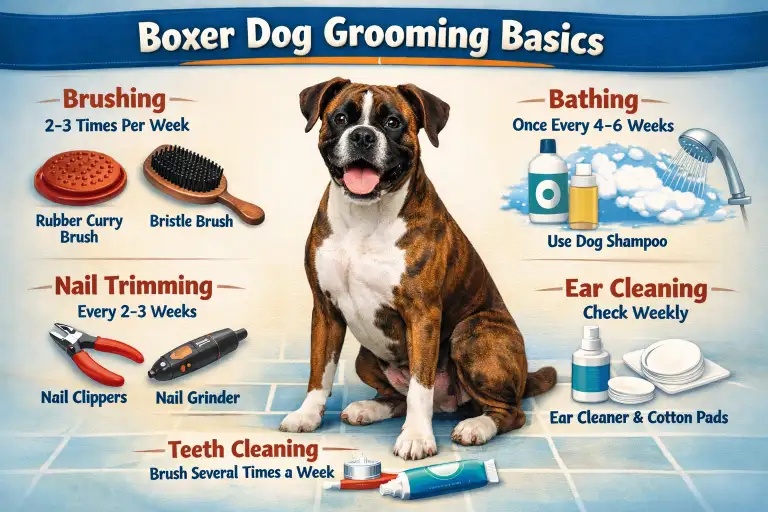
Many owners assume that Boxer dogs are “low-maintenance” because of their short, sleek coats. In reality, Boxer dog grooming is less about trimming hair and more about maintaining healthy skin, controlling shedding, and preventing common issues like odor, itching, and irritation. Regular grooming plays a direct role in a Boxer’s comfort, appearance, and long-term health.
Even though Boxers don’t mat like long-haired breeds, they shed year-round and have skin that is more sensitive than many owners realize. Without routine brushing and proper bathing, dead hair, dirt, and skin oils build up quickly. This often leads to excessive shedding around the home, a dull coat, and that unmistakable “dog smell” many Boxer owners notice.
Grooming also allows you to spot problems early. While brushing or bathing your Boxer, you’re more likely to notice dry patches, redness, bumps, or signs of allergies before they turn into painful skin infections. From a groomer’s perspective, many severe skin cases could have been managed earlier with simple at-home grooming habits.
Beyond physical health, grooming affects behavior and comfort. Boxers that are regularly handled for brushing, nail trimming, and baths tend to be calmer during grooming sessions and veterinary visits. These routines help puppies learn tolerance early and make grooming much less stressful as they grow.
In short, proper Boxer dog grooming isn’t about making your dog look fancy. It’s about keeping shedding under control, protecting sensitive skin, reducing odors, and supporting overall well-being. Even with a short coat, consistent grooming is one of the simplest ways to keep a Boxer healthy and comfortable year-round.
Understanding the Boxer Coat, Shedding, and Skin Sensitivities
Boxers have a short, smooth coat, but that does not mean they are maintenance-free. Their coat sits close to the skin, which makes shedding, skin oils, and irritation more noticeable. Understanding how a Boxer’s coat and skin work helps owners groom correctly and avoid common problems.
Boxers are moderate shedders. They lose hair all year, with heavier shedding during spring and fall. Because the hair is short, it often sticks to furniture, clothes, and carpets instead of clumping on the floor. Regular brushing is the main way to control this.
Another important thing to know is that Boxers are known for sensitive skin. Many Boxers deal with allergies, dry skin, or itching at some point in their lives. This makes gentle grooming very important. Using the wrong shampoo or bathing too often can make skin problems worse instead of better.
Here is a quick overview of what makes the Boxer coat unique:
| Coat and Skin Feature | What It Means for Grooming |
|---|---|
| Coat type | Short, single coat |
| Shedding level | Moderate, year-round |
| Seasonal shedding | Heavier in spring and fall |
| Skin sensitivity | High compared to many breeds |
| Odor buildup | Can happen without regular bathing |
Because their coat is short, skin issues are easier to see if you know what to look for. Grooming time is the best chance to spot early warning signs before they turn into bigger problems.
Common skin issues Boxer owners notice include:
| Skin Issue | Early Signs to Watch For |
|---|---|
| Allergies | Scratching, red skin, licking paws |
| Dry skin | Flakes, rough or dull coat |
| Yeast problems | Strong smell, greasy feel |
| Hot spots | Red, sore, wet patches |
If your Boxer seems itchy, smells bad even after bathing, or has red or flaky skin, grooming alone may not be enough. These signs often mean the skin needs special care or a vet check.
Understanding shedding and skin sensitivity sets the foundation for proper grooming. Once you know what your Boxer’s coat needs, it becomes much easier to choose the right tools, brushing routine, and bathing schedule.
How to Groom a Boxer Dog at Home: Tools, Brushing, and Bathing
Grooming a Boxer dog at home is simple when you have the right tools and follow a clear routine. Because Boxers have short coats, you do not need clippers or fancy equipment. Most grooming time is spent brushing, bathing, and checking the skin.
The first step is having the right grooming tools. Using proper tools makes grooming faster and more comfortable for your Boxer.
| Grooming Tool | Why It Is Useful |
|---|---|
| Rubber brush or grooming mitt | Removes loose hair and feels gentle on skin |
| Soft bristle brush | Smooths the coat and spreads natural oils |
| Dog shampoo for sensitive skin | Cleans without drying or irritating |
| Towels | Helps dry the coat after bathing |
| Nail clippers or grinder | Keeps nails short and safe |
Brushing is the most important part of Boxer grooming. Even short hair needs brushing. Brushing removes loose hair, helps control shedding, and improves skin health. Most Boxers only need brushing one or two times each week. During heavy shedding seasons, brushing more often can help keep hair off furniture and clothes.
Bathing keeps a Boxer clean and helps control odor. Boxers do not need frequent baths. Bathing too often can dry the skin and cause itching. Use warm water and a dog shampoo made for sensitive skin. Avoid human shampoo because it can irritate your dog’s skin.
Here is a simple grooming schedule most Boxer owners can follow:
| Grooming Task | How Often to Do It |
|---|---|
| Brushing | 1 to 2 times per week |
| Bathing | Every 4 to 6 weeks |
| Skin check | During every grooming session |
When bathing your Boxer, rinse well so no shampoo stays on the skin. Leftover soap can cause itching. Dry your dog with towels and let them air dry in a warm area. Boxers dry quickly because of their short coats.
Grooming at home also gives you time to check for skin problems. Look for red spots, bumps, dry patches, or strong smells. Catching these early can prevent bigger issues later.
Once brushing and bathing are part of your routine, grooming becomes quick and stress-free for both you and your Boxer.
Nail Trimming, Ear Cleaning, Dental Care, and Skin Health in Boxers
This part of Boxer grooming focuses on small tasks that make a big difference. Nails, ears, teeth, and skin are often ignored, but problems in these areas can cause pain and health issues if not cared for regularly.
Nail trimming is very important for Boxers. Long nails can make walking uncomfortable and may cause joint pain over time. If you hear your Boxer’s nails clicking on the floor, they are too long. Most Boxers need nail trimming every two to four weeks. Go slowly and trim a little at a time to avoid cutting the quick.
| Grooming Area | What to Check |
|---|---|
| Nails | Clicking sounds, curling tips |
| Ears | Redness, bad smell |
| Teeth | Yellow buildup, bad breath |
| Skin | Red spots, scabs, flakes |
Ear cleaning helps prevent infections, especially if your Boxer has allergies. Healthy ears should look clean and smell neutral. Use a dog-safe ear cleaner and gently wipe the outer ear. Never push anything deep into the ear.
Dental care is also part of grooming. Many Boxers develop dental problems as they age. Brushing your dog’s teeth a few times a week helps reduce bad breath and keeps gums healthy. Dental chews can help, but they do not replace brushing.
Skin checks should be done during every grooming session. Boxers are prone to skin issues, so early spotting is important. Look for redness, hair loss, bumps, or sores. Strong smells or greasy skin may also signal a problem.
Some issues need more than home grooming. Knowing when to ask for help keeps your Boxer safe.
| Sign | What to Do |
|---|---|
| Constant scratching | Visit a veterinarian |
| Repeated ear infections | Vet check needed |
| Pain during grooming | Stop and seek advice |
| Open sores or hot spots | See a vet right away |
Regular care of nails, ears, teeth, and skin keeps your Boxer comfortable and helps avoid serious health problems.
Boxer Grooming Frequency, Common Mistakes, FAQs, and When to See a Professional
Having a simple grooming schedule makes Boxer care easier and less stressful. Boxers do best with regular, gentle grooming instead of long or harsh sessions. Keeping a routine also helps you notice changes in your dog’s skin, coat, or behavior early.
Here is a simple grooming guide most Boxer owners can follow:
| Boxer Age | Grooming Focus |
|---|---|
| Puppy | Gentle brushing, nail handling, short baths |
| Adult | Regular brushing, skin checks, nail care |
| Senior | Comfort-focused grooming, shorter sessions |
Some grooming mistakes are very common with Boxers. Avoiding these mistakes can prevent skin problems and discomfort.
| Common Mistake | Why It Causes Problems |
|---|---|
| Bathing too often | Dries skin and increases itching |
| Using human shampoo | Harms dog skin and causes irritation |
| Skipping brushing | Leads to more shedding and odor |
| Ignoring nail care | Causes pain and joint stress |
| Shaving the coat | Does not reduce heat and can damage skin |
Many Boxer owners ask similar grooming questions. Here are quick answers to the most common ones.
| Question | Short Answer |
|---|---|
| Do Boxers need grooming? | Yes, for skin health and shedding control |
| How often should I groom my Boxer? | Weekly brushing, monthly baths |
| Are Boxers easy to groom? | Yes, with a simple routine |
| Can I shave my Boxer? | No, shaving does not help and may harm skin |
| Why does my Boxer smell? | Skin oils, shedding, or bathing too rarely |
Some grooming issues should not be handled at home. Professional help keeps your Boxer safe when problems go beyond normal care.
| Situation | Who to See |
|---|---|
| Severe itching or hair loss | Veterinarian |
| Repeated ear infections | Veterinarian |
| Pain during nail trimming | Professional groomer |
| Skin sores or hot spots | Veterinarian |
A professional groomer can also help with nail trimming, ear care, and difficult grooming tasks. A vet should be involved if skin problems do not improve with proper grooming.
With the right routine, Boxer grooming is simple, quick, and effective. Regular care keeps shedding under control, protects sensitive skin, and helps your Boxer stay healthy and comfortable.
For general breed information and care standards, you can also review the American Kennel Club’s Boxer breed guide, which offers additional insights into Boxer health and maintenance: https://www.akc.org/dog-breeds/boxer/

Ata Ur Rehman is the founder of Pet Age in Human Years Calculator, an educational platform that provides age conversion charts and lifespan guides for dogs, cats, birds, and other companion animals. His work focuses on helping pet owners understand how animal ages translate into human years using commonly accepted age conversion formulas and published lifespan averages.
The website compiles breed and species lifespan data from kennel clubs, breed organizations, and general animal lifespan studies to present simple and easy-to-understand guides for pet owners worldwide.
This website was created to centralize animal age conversion charts into one easy reference platform for pet owners.