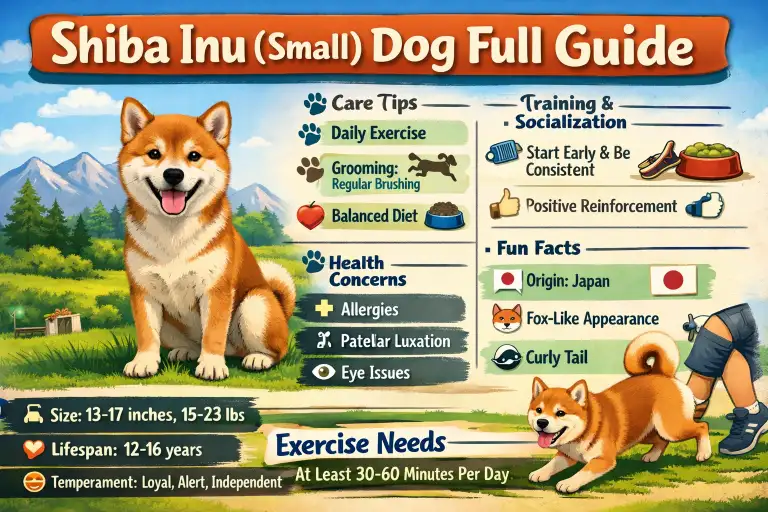
The Shiba Inu is a small dog by size, but not by presence. Originally bred in Japan for hunting small game in rugged terrain, this breed combines a compact frame with surprising strength, agility, and confidence. Many first-time owners underestimate the Shiba Inu because of its fox-like appearance and modest height, but in day-to-day life, this dog behaves more like a primitive working breed than a typical companion toy or lap dog.
Adult Shiba Inus are sturdy, well-balanced, and athletic rather than delicate. Males typically stand around 14.5 to 16.5 inches tall at the shoulder and weigh between 23 and 26 pounds, while females are slightly smaller, averaging 13.5 to 15.5 inches in height and 17 to 23 pounds in weight. Despite their small stature, Shibas are dense and muscular, which often surprises owners when they lift or handle them.
The breed has a square, well-proportioned body with strong legs, a deep chest, and a firm topline. This build allows for quick turns, bursts of speed, and excellent balance—traits that once made the Shiba Inu an efficient hunter and today contribute to its reputation as an agile escape artist. Their movement is light, fluid, and confident, reflecting both alertness and self-assurance.
One of the Shiba Inu’s most recognizable features is its double coat. The outer coat is straight and coarse, while the undercoat is soft and dense, providing insulation against both cold and heat. Common coat colors include red (the most popular), black and tan, and sesame variations. Cream-colored Shibas also exist, though they are generally considered non-standard in show lines. This weather-resistant coat contributes to the breed’s clean habits, but it also leads to heavy seasonal shedding, especially during spring and fall “coat blow” periods.
The fox-like face, erect triangular ears, and tightly curled tail give the Shiba Inu a sharp, alert expression that often reflects its independent nature. These physical traits are not just aesthetic—they align closely with the breed’s personality. The Shiba Inu’s appearance communicates confidence, self-control, and a strong sense of autonomy, all of which play a major role in what it’s like to live with this small but formidable dog.
Shiba Inu Size & Physical Traits
| Trait | Typical Range |
|---|---|
| Height | 13.5–16.5 inches |
| Weight | 17–26 pounds |
| Body Type | Compact, muscular, athletic |
| Coat Type | Double coat (coarse outer, dense undercoat) |
| Tail | Thick, curled over the back |
Shiba Inu Breed Snapshot
| Characteristic | Level |
|---|---|
| Energy Level | Moderate to high |
| Shedding | Heavy (seasonal) |
| Trainability | Low to moderate |
| Barking | Low |
| Independence | Very high |
Shiba Inu Temperament, Personality & Real-Life Behavior
The Shiba Inu is a smart, confident, and independent small dog. Unlike some friendly breeds that are always eager to please, Shibas often think for themselves. They are loyal to their family but can be shy or reserved around strangers. This combination makes them very alert watchdogs, but also a little stubborn at times.
Shibas are known for their “Shiba scream,” a high-pitched yelp they make when they are excited, scared, or frustrated. This is normal for the breed and usually happens during play, vet visits, or when they are upset.
With children, Shibas can be gentle, but they prefer calm, respectful kids. Rough play can stress them out or trigger defensive behaviors. They can live with other dogs or pets, but because they have a strong prey drive, small animals like rabbits or hamsters should be supervised or avoided. Socialization from an early age helps reduce fear or aggression around strangers and other animals.
Shibas are independent, which means they often do things their way. This can make training a challenge, but it also means they are clever problem-solvers. They enjoy exploring their environment and are prone to escaping if left unsupervised. Daily walks and mental stimulation are important to prevent boredom, which can lead to destructive behavior.
Shibas are clean dogs. They often groom themselves like cats, and many are easy to house-train. They may carry an air of aloofness, but their family members quickly learn to read their moods and enjoy their playful, mischievous side.
Shiba Inu Temperament Traits
| Trait | What it Looks Like | Owner Impact |
|---|---|---|
| Independence | Does things on its own | Requires patient training |
| Loyalty | Bonds with family | Strong family attachment |
| Confidence | Not easily scared | Can be brave in new situations |
| Alertness | Watches environment | Good watchdog |
| Stubbornness | May ignore commands | Needs consistent training |
| Playfulness | Enjoys toys & games | Needs daily engagement |
| Prey Drive | Chases small animals | Supervision required |
Training, Exercise & Daily Care Needs
Shiba Inus are smart dogs, but they like to do things their own way. This means training can be tricky. They understand commands, but they may choose not to follow them. Patience and consistency are very important. Positive reinforcement works best, such as treats, praise, or playtime. Avoid harsh training methods because Shibas respond poorly to force. Early socialization helps them behave well with strangers, other dogs, and new experiences.
Shibas need daily exercise to stay happy and healthy. They enjoy walks, short runs, and playtime. Mental stimulation is also important. Puzzle toys, scent games, and training exercises keep their minds active. Without enough exercise or mental challenges, Shibas can become bored and may chew things, dig, or try to escape.
Grooming is not hard but needs attention. Shibas are very clean dogs and often groom themselves. They shed a lot, especially twice a year when their coat “blows.” Brushing a few times a week helps reduce loose hair. Bathing is only needed occasionally. Nails should be trimmed, ears checked, and teeth brushed regularly. Shibas handle cold weather well, but hot weather requires care because they can overheat quickly.
Shiba Inu Daily Care & Exercise Table
| Care Area | Recommendation |
|---|---|
| Daily Exercise | 1 hour (walks, play, or runs) |
| Mental Stimulation | Puzzle toys, training, scent games |
| Grooming | Brush 2–3 times a week, occasional baths |
| Shedding | Heavy during spring & fall |
| Nail Care | Trim monthly |
| Teeth & Ears | Brush teeth 2–3 times/week, check ears weekly |
| Apartment Living | Possible if walked daily and mentally stimulated |
Health, Lifespan & Cost to Own a Shiba Inu
Shiba Inus are generally healthy dogs, but like all breeds, they can have some health issues. Common problems include patellar luxation (knee issues), allergies, and eye conditions such as glaucoma or progressive retinal atrophy. Regular checkups with a veterinarian help catch problems early. Responsible breeders also screen for these conditions to reduce risks.
The average lifespan of a Shiba Inu is around 12 to 15 years. Factors that affect longevity include genetics, diet, exercise, and regular veterinary care. Keeping a Shiba at a healthy weight and giving daily exercise can help them live longer and stay active.
Owning a Shiba Inu comes with costs beyond the purchase price. Puppies from responsible breeders usually cost between $1,500 and $3,500 depending on the bloodline and location. Annual expenses include food, routine vet care, vaccinations, grooming tools, and preventive medications. Health insurance is recommended because accidents or sudden illnesses can be expensive.
Shiba Inu Health & Lifespan Table
| Health Aspect | Risk Level | Notes |
|---|---|---|
| Patellar Luxation | Moderate | Can affect walking; monitor knees |
| Allergies | Low to Moderate | Skin or food sensitivities |
| Eye Conditions | Low to Moderate | Regular eye checks recommended |
| Dental Problems | Low | Brush teeth 2–3 times/week |
| Overall Lifespan | 12–15 years | Healthy diet & exercise improve longevity |
Shiba Inu Cost Table
| Expense | Typical Cost |
|---|---|
| Puppy Price | $1,500–$3,500 |
| Food | $400–$700/year |
| Grooming | $100–$300/year |
| Routine Vet Care | $300–$600/year |
| Health Insurance | $25–$60/month |
| Training & Toys | $100–$300/year |
Is a Shiba Inu the Right Small Dog for You? (Pros, Cons & FAQs)
Shiba Inus are small dogs with big personalities. They are smart, independent, and playful, but they are not for everyone. They need owners who are patient, consistent, and willing to spend time on training, exercise, and daily care.
Shibas are loyal and clean dogs, making them great for families who understand their needs. They can do well in apartments if they get enough walks and mental stimulation. However, they are not ideal for first-time dog owners or people who want a dog that always follows commands. Their independent nature and high prey drive can be challenging without experience.
Shiba Inu Pros & Cons Table
| Pros | Cons |
|---|---|
| Loyal to family | Independent & stubborn |
| Smart & curious | Can be difficult to train |
| Clean and easy to house-train | Heavy shedding seasonally |
| Small but strong | Strong prey drive, may chase small pets |
| Playful and alert | Can be shy or reserved with strangers |
Shiba Inu Owner Suitability Table
| Owner Type | Suitability |
|---|---|
| First-time owners | Low to Moderate – needs patient approach |
| Families with children | Moderate – best with calm kids |
| Apartment living | Possible – must provide daily exercise |
| Active owners | High – enjoys walks, runs, hiking |
| Seniors | Moderate – independent but low-maintenance once trained |
| Multi-pet households | Moderate – careful with small animals and other dogs |
FAQs
- Are Shiba Inus aggressive? They are usually not aggressive, but they are independent and cautious with strangers.
- Can Shibas live in apartments? Yes, if they get enough daily exercise and mental stimulation.
- Why do Shibas scream? It is a high-pitched yelp they use when excited, scared, or frustrated.
- Do Shibas bark a lot? No, they are generally quiet but will alert you to unusual sounds.
- Can Shibas live with cats or other pets? Sometimes, but supervision is needed because of their prey drive.
- Are male or female Shibas easier? Both can be trained successfully, but personality varies individually.
“For more detailed information about this breed, visit the American Kennel Club’s official breed page.”

Ata Ur Rehman is the founder of Pet Age in Human Years Calculator, an educational platform that provides age conversion charts and lifespan guides for dogs, cats, birds, and other companion animals. His work focuses on helping pet owners understand how animal ages translate into human years using commonly accepted age conversion formulas and published lifespan averages.
The website compiles breed and species lifespan data from kennel clubs, breed organizations, and general animal lifespan studies to present simple and easy-to-understand guides for pet owners worldwide.
This website was created to centralize animal age conversion charts into one easy reference platform for pet owners.