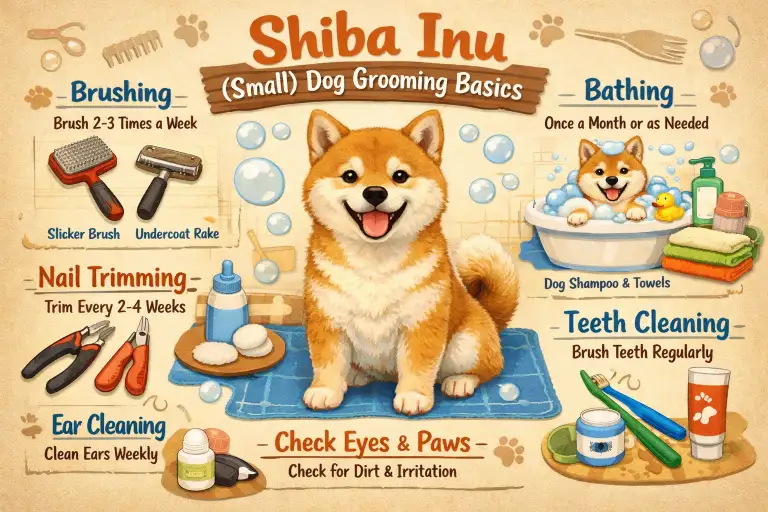
Shiba Inus may be small dogs, but their grooming needs are very different from other small breeds. Many owners expect a Shiba Inu to be “low maintenance” because of their size, only to be surprised by heavy shedding, coat blow seasons, and strong opinions about being handled. Understanding what makes this breed unique is the foundation of proper grooming.
Shiba Inus have a dense double coat made up of a stiff outer layer (guard hairs) and a soft, insulating undercoat. This coat is designed to protect them from heat, cold, dirt, and moisture. Because of this structure, Shiba Inu grooming is not about frequent bathing or trimming—it’s about maintaining coat health, managing shedding, and protecting the skin underneath.
One of the most important things to know is that Shiba Inus shed heavily. While they shed lightly year-round, they go through intense seasonal shedding periods, often called “blowing coat,” usually in spring and fall. During these times, large amounts of undercoat release in a short window. Grooming routines that work for other small dogs often fail here, leading owners to over-bathe, use the wrong tools, or consider shaving—none of which are safe or effective for this breed.
Another defining trait is temperament. Shiba Inus are famously independent and often dislike being restrained. In grooming settings, this can show up as resistance to brushing, nail trimming, or bathing. Some Shibas tolerate grooming calmly, while others strongly object, especially if they were not introduced to grooming early. This means grooming success depends as much on handling technique and routine consistency as it does on tools and products.
Finally, Shiba Inu grooming must always respect the double coat. Shaving or clipping the coat short can permanently damage its structure, interfere with natural temperature regulation, and increase the risk of skin problems. Proper grooming works with the coat, not against it.
Shiba Inu Coat Type, Shedding, and Grooming Frequency
Shiba Inus have a double coat, which means they have two layers of fur. The outer layer is stiff and protects the dog from dirt, rain, and snow. The inner layer is soft and keeps them warm. This double coat is beautiful but also the reason Shibas shed a lot, especially during shedding seasons in spring and fall.
Shibas shed lightly most of the year. During the blow coat season, you might find clumps of undercoat coming off every day. Regular brushing helps remove loose hair and keeps the coat healthy. Shaving is never recommended because it can damage the coat and skin.
How often you groom a Shiba Inu depends on the season and the coat. Here’s a simple table to make it easy:
Grooming Frequency for Shiba Inus
| Task | Normal Weeks | Shedding Season (Blow Coat) |
|---|---|---|
| Brushing | 2–3 times per week | Daily or every other day |
| Bathing | Every 2–3 months | As needed (usually 1–2 times) |
| Nail trimming | Every 3–4 weeks | Same |
| Ear cleaning | Every 2–3 weeks | Same |
During shedding season, brushing is the most important task. It removes loose undercoat before it spreads around your home. Bathing can help, but over-bathing may dry out the skin. Always use a dog-specific shampoo designed for double coats.
By following this schedule, you help your Shiba Inu stay clean, reduce shedding, and keep the skin healthy. Regular grooming also gives you a chance to check for hot spots, irritation, or unusual bumps.
Brushing, Bathing, and Deshedding a Shiba Inu at Home
Grooming a Shiba Inu at home is simple if you have the right tools and know the steps. The goal is to keep the coat clean, reduce shedding, and prevent mats without hurting your dog.
Brushing is the most important part. Use a slicker brush or undercoat rake to remove loose hair. Brush gently in the direction of hair growth. During shedding season, brushing every day helps keep loose hair from spreading around the house.
Bathing should be done every 2–3 months or when your Shiba Inu gets dirty. Use a dog shampoo for double coats. Avoid human shampoos—they can dry out the skin. Rinse thoroughly to remove all soap, then dry with a towel or a low-heat dryer. Never shave the coat; it can damage the hair and skin.
Deshedding is a part of brushing. During heavy shedding, use the undercoat rake first to remove loose undercoat, then finish with a slicker brush to smooth the top coat. This keeps the coat healthy and shiny.
Shiba Inu Grooming Tools and How to Use Them
| Task | Tool | How to Use |
|---|---|---|
| Remove loose undercoat | Undercoat rake | Gently rake through the coat, avoid pressing too hard |
| Smooth top coat | Slicker brush | Brush in hair direction, short gentle strokes |
| Remove tangles/mats | Metal comb | Work slowly through any mats, start at ends, move toward skin |
| Bathing | Dog shampoo + soft brush | Wet coat, lather gently, rinse thoroughly, towel dry |
| Drying | Towel or low-heat dryer | Pat dry, use low heat to avoid skin burns |
Shiba Inu Brushing & Bathing Frequency
| Task | Normal Weeks | Shedding Season |
|---|---|---|
| Brushing | 2–3 times | Daily or every other day |
| Bathing | Every 2–3 months | 1–2 times if dirty |
| Deshedding | Once per week | Every 2–3 days during heavy shedding |
Regular brushing and proper bathing help your Shiba Inu stay comfortable, reduce shedding, and avoid mats. It also gives you a chance to check their skin for any redness, bumps, or irritation.
Nail Trimming, Ears, Teeth, and Skin Care for Shiba Inus
Taking care of your Shiba Inu’s nails, ears, teeth, and skin is just as important as brushing and bathing. These areas affect their health, comfort, and hygiene.
Nail trimming should be done every 3–4 weeks. Use a dog nail clipper and cut just the tip of the nail. Avoid the pink part called the quick, which can bleed if cut. If your Shiba Inu is nervous, trim one or two nails at a time and give treats for calm behavior.
Ear cleaning is important for upright ears like Shibas. Use a soft cotton ball or a dog-specific ear cleaner. Wipe gently inside the ear without pushing deep. Clean ears every 2–3 weeks or more often if dirt builds up.
Dental care keeps your Shiba Inu healthy. Brush their teeth with a dog toothbrush and toothpaste 2–3 times per week. Dental chews can also help reduce plaque, but brushing is the most effective.
Skin and coat health should be checked during every grooming session. Look for dry patches, redness, hot spots, or bumps. These can be signs of allergies, infections, or other health problems. If you notice anything unusual, consult your veterinarian.
Shiba Inu Extra Care Checklist
| Task | Frequency | Key Tips |
|---|---|---|
| Nail trimming | Every 3–4 weeks | Trim a little at a time, avoid the quick |
| Ear cleaning | Every 2–3 weeks | Use cotton ball, do not push deep |
| Teeth brushing | 2–3 times per week | Use dog toothpaste, go slow |
| Skin check | Every grooming session | Look for redness, bumps, or irritation |
Signs of Skin or Health Issues
| Sign | Possible Cause | Action |
|---|---|---|
| Red patches or irritation | Allergies or infection | Consult vet |
| Hot spots | Moisture + scratching | Clean and treat, call vet if severe |
| Hair loss or thinning | Seasonal shedding or skin problem | Brush, monitor, vet if excessive |
| Smelly ears | Bacterial or yeast infection | Clean gently, vet if persistent |
Taking care of these areas keeps your Shiba Inu comfortable, healthy, and happy. Regular checks also prevent small issues from becoming bigger problems.
Grooming Challenges, Mistakes, and Professional Help
Shiba Inus can be stubborn and independent, which makes grooming a challenge for many owners. Some dogs may resist brushing, nail trimming, or bathing, and some even vocalize loudly, often called the “Shiba scream.” Understanding these challenges and how to handle them is key to safe and effective grooming.
Common grooming mistakes include over-bathing, shaving the coat, using human shampoos, and neglecting nails, ears, or teeth. Shaving a Shiba Inu can permanently damage the double coat and cause skin problems. Over-bathing dries the skin and strips natural oils.
Sometimes, home grooming is not enough. Professional groomers have the tools and experience to handle anxious dogs, heavy shedders, and seasonal blow coats. They can also help with mats, nail trimming, and deep cleaning.
Common Shiba Inu Grooming Challenges
| Challenge | Why It Happens | How to Handle |
|---|---|---|
| Resistance to brushing | Independent personality, anxiety | Use calm handling, short sessions, treats |
| Nail trimming fear | Sensitive quick, unfamiliar tool | Trim a few nails at a time, reward calm behavior |
| Heavy shedding | Seasonal blow coat | Brush daily, deshed with undercoat rake |
| Mats forming | Dense undercoat, lack of brushing | Regular brushing, use metal comb for tangles |
| Shiba scream | Fear or dislike of restraint | Move slowly, use positive reinforcement |
Home Grooming vs Professional Grooming
| Grooming Task | Home Grooming | Professional Groomer |
|---|---|---|
| Brushing | 2–3 times per week | Full undercoat removal during blow coat |
| Bathing | Every 2–3 months | Safe handling, medicated shampoos if needed |
| Nail trimming | Every 3–4 weeks | Handle difficult dogs, avoid injuries |
| Ear cleaning | Every 2–3 weeks | Detect infections early |
| Mat removal | Small tangles only | Severe mats removed safely without skin damage |
By understanding these challenges and knowing when to get professional help, grooming becomes safer and less stressful for both you and your Shiba Inu.
“For more detailed information about this breed, visit the American Kennel Club’s official breed page.”

Ata Ur Rehman is the founder of Pet Age in Human Years Calculator, an educational platform that provides age conversion charts and lifespan guides for dogs, cats, birds, and other companion animals. His work focuses on helping pet owners understand how animal ages translate into human years using commonly accepted age conversion formulas and published lifespan averages.
The website compiles breed and species lifespan data from kennel clubs, breed organizations, and general animal lifespan studies to present simple and easy-to-understand guides for pet owners worldwide.
This website was created to centralize animal age conversion charts into one easy reference platform for pet owners.