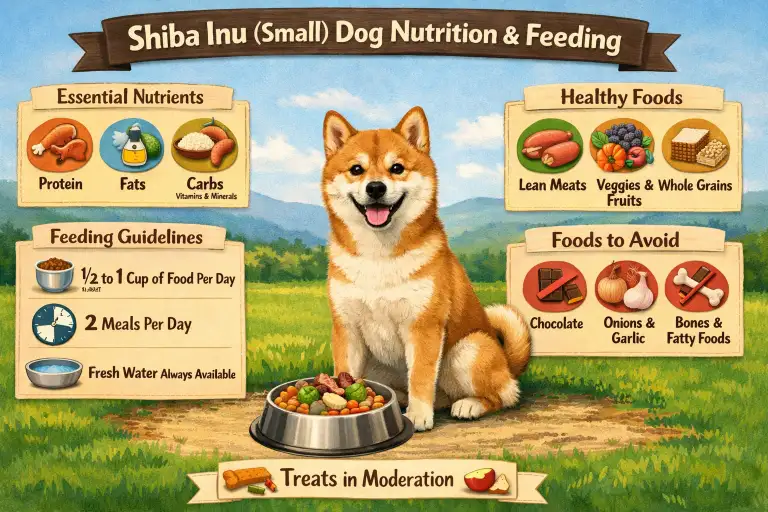
Shiba Inus may be small in size, but their nutritional needs are not “generic small-dog needs.” This is a compact, muscular, primitive breed with a naturally efficient metabolism, strong food preferences, and a well-documented tendency toward skin sensitivities and picky eating. Feeding a Shiba Inu correctly is less about volume and more about nutrient quality, calorie control, and consistency.
A properly balanced Shiba Inu diet supports:
- A dense, weather-resistant double coat with controlled shedding
- Lean muscle maintenance without unnecessary weight gain
- Stable energy levels without hyperactivity or crashes
- Healthy skin and reduced itching, flaking, or recurrent ear issues
- Long-term metabolic and joint health as the dog ages
What “balanced nutrition” really means for a Shiba Inu
From a veterinary nutrition standpoint, a healthy Shiba Inu diet must meet AAFCO nutritional adequacy standards for the dog’s life stage (growth, adult maintenance, or all life stages). This ensures the food provides complete and balanced levels of essential nutrients—not just calories.
For Shiba Inus specifically, balance means:
- Adequate animal-based protein to maintain lean muscle and support coat quality
- Sufficient fat to fuel energy needs and support skin health, without tipping into excess calories
- Digestible carbohydrates and fiber to support gut health and stool quality
- Essential vitamins and minerals to prevent long-term deficiencies
Because Shiba Inus have relatively small stomachs but moderate energy needs, foods that are too low in nutrient density can lead to under-feeding, while overly rich foods can cause rapid weight gain or digestive upset.
Core nutritional benchmarks for Shiba Inu dogs
The ranges below reflect commonly accepted veterinary nutrition targets for healthy small-breed dogs, including Shiba Inus, when fed complete and balanced commercial diets.
| Nutrient | General Target Range | Why It Matters for Shiba Inus |
|---|---|---|
| Protein | ~22–30% (dry matter) | Supports lean muscle, coat quality, and satiety |
| Fat | ~12–18% (dry matter) | Primary energy source; excess can cause weight gain |
| Fiber | ~3–6% | Helps stool quality and digestive stability |
| Omega-3s | Present in meaningful amounts | Supports skin, coat, and inflammation control |
| Calories | Calorie-dense, portion-controlled | Prevents overfeeding in a small, efficient body |
These are guidelines, not rigid rules. Individual needs vary based on age, activity level, neuter status, and health conditions.
Why “more food” is rarely better for Shiba Inus
One of the most common feeding mistakes with Shiba Inus is assuming that a small dog needs to eat frequently or generously to stay healthy. In reality, many Shibas:
- Maintain weight easily
- Gain fat quickly if portions are not controlled
- Appear “hungry” even when calorie needs are met
This is why portion control and calorie awareness matter more than bowl volume. A cup of food that works for one Shiba may cause slow, unnoticed weight gain in another.
How Much Should a Shiba Inu Eat? Feeding Amounts, Calories, and Schedules
Feeding your Shiba Inu the right amount is one of the most important parts of keeping them healthy. Small dogs like Shibas can gain weight easily if we overfeed them, but underfeeding can lead to low energy and poor coat health. The key is knowing their calories, portions, and how often to feed.
Shiba Inus’ needs depend on their age, weight, activity level, and whether they are neutered or intact. Puppies grow fast and need more frequent meals. Adults need fewer calories but still need nutrient-rich food. Seniors may need lower calories and extra joint or skin support.
Daily Calorie Needs
On average, a healthy Shiba Inu needs about 30–40 calories per pound of body weight per day. Active dogs need the higher end, and less active or older dogs need the lower end.
| Life Stage | Weight Range | Calories per Day | Notes |
|---|---|---|---|
| Puppy (2–6 months) | 3–5 kg (6.5–11 lbs) | 250–350 | Feed 3–4 times daily to support growth |
| Puppy (6–12 months) | 5–8 kg (11–18 lbs) | 350–450 | Feed 2–3 times daily |
| Adult (1–7 years) | 7–11 kg (15–24 lbs) | 300–400 | Feed 2 meals daily, adjust for activity |
| Senior (7+ years) | 7–11 kg (15–24 lbs) | 250–350 | Feed 2 meals daily, consider lower fat food |
Portion Control
Using body condition score is the best way to check if your Shiba Inu is getting the right amount of food. You should be able to feel the ribs without pressing too hard, and the dog should have a visible waist when viewed from above.
Tips for portioning:
- Measure food with a standard cup, not by eyeballing
- Adjust daily portions if your dog gains or loses weight
- Treats should make up less than 10% of daily calories
Feeding Schedule
Shibas do best with 2 meals a day as adults. Puppies need 3–4 smaller meals to keep energy levels steady. Seniors may need the same schedule but with smaller portions or more digestible food.
| Age | Meals per Day | Notes |
|---|---|---|
| Puppy | 3–4 | Keeps energy levels high and supports growth |
| Adult | 2 | Prevents hunger and overeating |
| Senior | 2 | Smaller portions may be needed; monitor weight |
Best Food for Shiba Inu: Kibble, Fresh, Raw, Wet, and Homemade Options
Choosing the right food for your Shiba Inu is key to keeping them healthy, happy, and full of energy. Small dogs like Shibas have fast metabolisms, so they need high-quality, nutrient-rich food. There are many types of food, and each has pros and cons.
Kibble is convenient and helps keep teeth clean. Wet food is tasty and good for hydration. Fresh or homemade meals can be very healthy if balanced. Raw or freeze-dried food can work, but you must follow safety rules to avoid bacteria.
When picking food, look at protein, fat, and calories first. Shibas also do well with food that supports skin, coat, and digestion. Avoid foods that are too low in nutrients or too high in fillers.
| Food Type | Pros | Cons | Best For |
|---|---|---|---|
| Kibble | Easy to store, helps teeth, balanced | Some brands low quality, may cause picky eating | Everyday meals |
| Wet/Canned | Tasty, higher moisture | More expensive, can spoil fast | Picky eaters, added hydration |
| Fresh/Prepared | Highly digestible, customizable | Costly, requires prep | Small active dogs, special diets |
| Raw | High protein, natural | Risk of bacteria, needs careful prep | Experienced owners, healthy immune system |
| Freeze-dried | Nutrient-dense, long shelf life | Expensive, needs rehydration | Travel, supplements, variety |
| Homemade | Fully controlled ingredients | Must be balanced, time-consuming | Owners who want full control, allergies |
Tips for Shiba Inu owners:
- Mix food types if your dog prefers variety, but transition slowly to avoid upset stomach
- Avoid feeding only table scraps or human food
- Make sure all meals meet AAFCO or veterinary nutrition standards
Foods Shiba Inus Can Eat, Foods to Avoid, and Treat Guidelines
Knowing what your Shiba Inu can and cannot eat is very important. Some human foods are safe and healthy, while others can be dangerous or even toxic. Treats are great for training and bonding, but too many can lead to weight gain.
Safe foods include lean meats, cooked vegetables, some fruits, and high-quality commercial dog treats. Toxic foods include chocolate, grapes, raisins, onions, garlic, and anything with xylitol.
Treats should make up no more than 10% of daily calories, and it’s best to use them strategically for training or special rewards rather than free-feeding.
| Food Category | Safe Examples | Unsafe Examples | Notes |
|---|---|---|---|
| Meat & Protein | Chicken, turkey, lean beef, cooked eggs | Raw pork, bones that splinter | Always cook meat to reduce bacteria |
| Vegetables | Carrots, green beans, pumpkin | Onions, garlic, chives | Cook or steam if needed for digestion |
| Fruits | Blueberries, apple slices, banana | Grapes, raisins, avocado | Remove seeds or pits |
| Treats | Small commercial treats, freeze-dried meat | High-fat human snacks, chocolate | Use in moderation |
| Dairy | Plain yogurt, small cheese pieces | High-fat or sugary dairy | Watch for lactose intolerance |
Tips for owners:
- Introduce new foods slowly to avoid upset stomach
- Keep treats small, especially for Shibas with small mouths
- Always monitor your dog after introducing new foods
Special Diets, Common Feeding Problems, and When to See a Vet
Some Shiba Inus need special diets because of allergies, sensitive stomachs, weight issues, or medical conditions. Others may have picky eating habits, skip meals, or gain weight easily. Understanding these problems helps you keep your dog healthy.
Food allergies or sensitivities can show up as itchy skin, flaky coat, or soft stool. Sensitive stomachs may cause vomiting or diarrhea. Weight problems happen if the dog eats too many calories for its activity level. Picky eaters may refuse food or only eat certain flavors.
Switching foods should always be done gradually over 7–10 days. Sudden changes can cause stomach upset. If your Shiba shows ongoing problems, it’s best to see a veterinarian or veterinary nutritionist.
| Problem | Signs | Recommended Action |
|---|---|---|
| Food Allergies | Itchy skin, red ears, hair loss | Try hypoallergenic food, consult vet |
| Sensitive Stomach | Vomiting, diarrhea, gas | Feed easily digestible food, small frequent meals |
| Weight Gain | Belly fat, difficulty feeling ribs | Reduce portions, choose lower-calorie food, increase exercise |
| Weight Loss | Too thin, visible ribs, low energy | Increase nutrient-dense food, vet check for illness |
| Picky Eating | Refuses meals, only eats certain foods | Rotate flavors, try wet/fresh mix, avoid table scraps |
Tips for owners:
- Track your dog’s weight and body condition weekly
- Use portion control and calorie tracking
- Observe reactions to new foods before fully switching
“For more detailed information about this breed, visit the American Kennel Club’s official breed page.”

Ata Ur Rehman is the founder of Pet Age in Human Years Calculator, an educational platform that provides age conversion charts and lifespan guides for dogs, cats, birds, and other companion animals. His work focuses on helping pet owners understand how animal ages translate into human years using commonly accepted age conversion formulas and published lifespan averages.
The website compiles breed and species lifespan data from kennel clubs, breed organizations, and general animal lifespan studies to present simple and easy-to-understand guides for pet owners worldwide.
This website was created to centralize animal age conversion charts into one easy reference platform for pet owners.