American Bobtail Diet Guide: Nutrition, Feeding & Portions
American Bobtail Shorthair Diet Basics: What This Breed Really Needs
| Nutrition Element | Why It Matters for This Breed | Priority Level |
|---|---|---|
| Animal protein | Supports muscle, energy, and overall health | Very high |
| Healthy fats | Provides energy for an active body | High |
| Carbohydrates | Small energy source, not essential | Low |
| Moisture | Helps support hydration and urinary health | High |
| Balanced nutrients | Prevents deficiencies over time | Very high |
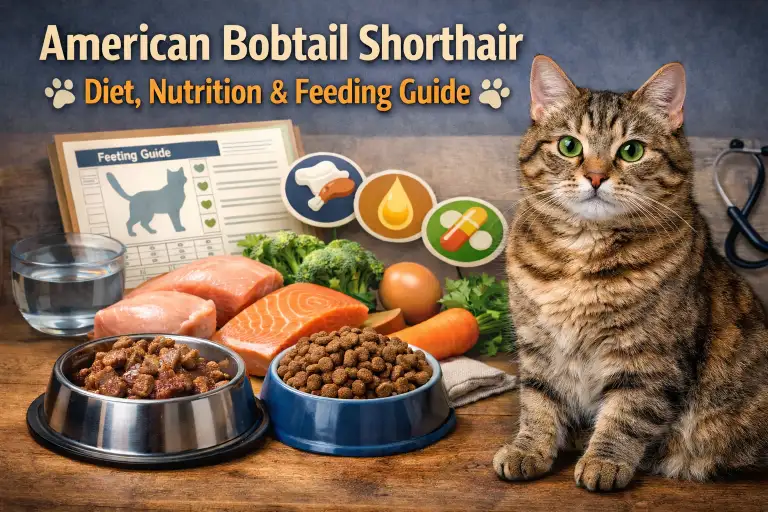
American Bobtail Shorthair cats are active, strong, and playful. Their diet needs to support daily movement, muscle strength, and steady energy. Like all cats, they are obligate carnivores, which means their bodies are built to use nutrients from animal-based foods.
Recommended Dog Care Products
Based on your dog’s age, these products may help with comfort, health, grooming, and daily care.

Purina Pro Plan Veterinary Supplements
Daily probiotics for dogs to support digestive and gut health.
View on Amazon ↗
Earth Rated Poop Bags for Dogs
Leak-proof, extra thick waste bag refill rolls with lavender scent.
View on Amazon ↗
Greenies Pill Pockets for Dogs
Large dog treats for capsule medication, peanut butter flavor.
View on Amazon ↗
HONEY CARE All-Absorb Dog Wrap
Small male dog wraps, 50 count, useful for daily care support.
View on Amazon ↗
Seresto Flea & Tick Collar
Flea and tick treatment and prevention for dogs over 18 lbs.
View on Amazon ↗
Milk-Bone MaroSnacks
Small dog treats with real bone marrow in a 40 oz canister.
View on Amazon ↗
Vital Essentials Dog Treats
Freeze dried beef liver dog treats, grain free and single ingredient.
View on Amazon ↗
Stain & Odor Eliminator
Enzyme cleaner for pet stains, carpet messes, and strong odors.
View on Amazon ↗
Pur Luv Chicken Jerky Treats
Dog treats made with real chicken breast, high protein and chew-friendly.
View on Amazon ↗
Milk-Bone Flavor Snacks
Mini crunchy dog biscuits in a 36 oz canister for small rewards.
View on Amazon ↗As an Amazon Associate, we may earn from qualifying purchases.
Protein is the most important part of the American Bobtail diet. Good-quality animal protein helps maintain muscle and keeps the cat feeling satisfied after meals. Diets that are too low in protein may lead to low energy, poor coat condition, or weight changes.
Fats are also important. They give energy and help keep the skin and coat healthy. Because American Bobtails tend to stay active, they often use fat as a steady fuel source throughout the day.
Carbohydrates are not harmful in small amounts, but they are not a main need for cats. Cats do not rely on carbs the way humans do. A balanced diet focuses on protein first, then fats, with carbs playing a smaller role.
Moisture matters more than many owners realize. Cats naturally have a low thirst drive. Diets that include moisture can help support hydration, especially for indoor cats.
When a diet is not working well, signs may show up in simple ways. Dull coat, low energy, frequent hunger, or litter box changes can all point to feeding issues.
Understanding these basics helps owners make better food choices without stress or extremes.
Nutrition Explained: Protein, Fats, Carbs, and Essential Nutrients
| Nutrient | What It Does for Cats | Why It Matters |
|---|---|---|
| Protein | Builds muscle and supports organs | Cats need animal protein to survive |
| Fat | Provides energy and supports skin | Active cats use fat for fuel |
| Carbohydrates | Minor energy source | Not essential for cats |
| Taurine | Supports heart and eye health | Cats cannot make enough on their own |
| Vitamins & minerals | Support body functions | Needed in the right balance |
Protein is the most important nutrient in a cat’s diet. Cats use protein to build muscle, repair tissues, and support their immune system. For American Bobtail Shorthairs, strong muscles help support their playful and active nature. Protein should come mainly from animal sources.
Fats are the second key nutrient. They provide concentrated energy and help keep the coat shiny and the skin healthy. Healthy fats also make food taste better, which helps picky cats eat well.
Carbohydrates often cause confusion. Cats do not need carbs the way people do. Small amounts are not harmful, but cats should not rely on carbs for energy. Diets too high in carbs may lead to weight gain or poor energy balance.
Recommended Dog Care Products
Based on your dog’s age, these products may help with comfort, health, grooming, and daily care.
Purina Pro Plan Veterinary Supplements
Daily probiotics for dogs to support digestive and gut health.
View on Amazon ↗
Earth Rated Poop Bags for Dogs
Leak-proof, extra thick waste bag refill rolls with lavender scent.
View on Amazon ↗
Greenies Pill Pockets for Dogs
Large dog treats for capsule medication, peanut butter flavor.
View on Amazon ↗
HONEY CARE All-Absorb Dog Wrap
Small male dog wraps, 50 count, useful for daily care support.
View on Amazon ↗
Seresto Flea & Tick Collar
Flea and tick treatment and prevention for dogs over 18 lbs.
View on Amazon ↗
Milk-Bone MaroSnacks
Small dog treats with real bone marrow in a 40 oz canister.
View on Amazon ↗
Vital Essentials Dog Treats
Freeze dried beef liver dog treats, grain free and single ingredient.
View on Amazon ↗
Stain & Odor Eliminator
Enzyme cleaner for pet stains, carpet messes, and strong odors.
View on Amazon ↗
Pur Luv Chicken Jerky Treats
Dog treats made with real chicken breast, high protein and chew-friendly.
View on Amazon ↗
Milk-Bone Flavor Snacks
Mini crunchy dog biscuits in a 36 oz canister for small rewards.
View on Amazon ↗As an Amazon Associate, we may earn from qualifying purchases.
Taurine is an essential nutrient for cats. Without enough taurine, cats can develop serious health problems over time. This is why cats should eat food made specifically for cats, not dog food or homemade meals without guidance.
Vitamins and minerals support many body functions, from bones to nerves. Cats cannot balance these nutrients on their own. A complete and balanced cat food is designed to provide them in safe amounts.
Good nutrition is about balance, not extremes. A diet that meets all these needs helps American Bobtail Shorthairs stay active, healthy, and comfortable.
Wet Food, Dry Food, and Mixed Feeding for American Bobtail Shorthairs
| Feeding Type | Benefits | Drawbacks | When It Works Best |
|---|---|---|---|
| Wet food | High moisture, strong flavor | Higher cost, shorter shelf life | Cats that need more hydration |
| Dry food | Convenient, easy to measure | Low moisture content | Busy homes with set routines |
| Mixed feeding | Balance of moisture and convenience | Needs portion awareness | Most healthy adult cats |
Many owners wonder whether wet food or dry food is better. The truth is that both can work well when chosen carefully and fed in the right amounts.
Wet food contains a lot of moisture. This helps support hydration, which is important because cats do not always drink enough water on their own. Wet food is often helpful for indoor cats or cats that eat small meals.
Dry food is easy to store and serve. It can work well for cats that prefer grazing or for owners with busy schedules. The main downside is lower moisture, so water intake becomes more important.
Mixed feeding combines both types. This approach gives cats moisture from wet food and the convenience of dry food. Many American Bobtail Shorthairs do well on a mixed routine when portions are controlled.
What matters more than food type is overall quality and balance. The food should be complete and made for cats, with animal protein as the main focus.
Watch how your cat responds. Good energy, healthy weight, normal stools, and a shiny coat are signs the feeding style is working.
Feeding Schedule, Portion Control, and Life-Stage Feeding
| Life Stage | Meals Per Day | Main Feeding Focus |
|---|---|---|
| Kittens | 3–4 meals | Growth and energy support |
| Adult cats | 2 meals | Weight balance and routine |
| Senior cats | 2 smaller meals | Easy digestion and comfort |
| Feeding Pattern | What You May Notice | What It Can Mean |
|---|---|---|
| Weight gain | Ribs hard to feel | Too many calories |
| Always hungry | Begging or stealing food | Portions too small or low protein |
| Low energy | Sleeping more than usual | Diet may not meet needs |
| Weight loss | Visible bones | Not eating enough or poor absorption |
Most American Bobtail Shorthairs do best with scheduled meals instead of free feeding. Set meal times help control portions and make it easier to notice appetite changes early.
Recommended Dog Care Products
Based on your dog’s age, these products may help with comfort, health, grooming, and daily care.
Purina Pro Plan Veterinary Supplements
Daily probiotics for dogs to support digestive and gut health.
View on Amazon ↗
Earth Rated Poop Bags for Dogs
Leak-proof, extra thick waste bag refill rolls with lavender scent.
View on Amazon ↗
Greenies Pill Pockets for Dogs
Large dog treats for capsule medication, peanut butter flavor.
View on Amazon ↗
HONEY CARE All-Absorb Dog Wrap
Small male dog wraps, 50 count, useful for daily care support.
View on Amazon ↗
Seresto Flea & Tick Collar
Flea and tick treatment and prevention for dogs over 18 lbs.
View on Amazon ↗
Milk-Bone MaroSnacks
Small dog treats with real bone marrow in a 40 oz canister.
View on Amazon ↗
Vital Essentials Dog Treats
Freeze dried beef liver dog treats, grain free and single ingredient.
View on Amazon ↗
Stain & Odor Eliminator
Enzyme cleaner for pet stains, carpet messes, and strong odors.
View on Amazon ↗
Pur Luv Chicken Jerky Treats
Dog treats made with real chicken breast, high protein and chew-friendly.
View on Amazon ↗
Milk-Bone Flavor Snacks
Mini crunchy dog biscuits in a 36 oz canister for small rewards.
View on Amazon ↗As an Amazon Associate, we may earn from qualifying purchases.
Portion control does not require strict calorie counting for most healthy cats. The goal is to feed enough to maintain a healthy body shape. You should be able to feel the ribs with light pressure but not see them clearly.
Kittens need more frequent meals because they are growing fast and burn energy quickly. Adult cats usually do well with two meals a day. Senior cats may benefit from smaller, more gentle meals that are easier to digest.
Treats should make up only a small part of the diet. Too many treats can quickly lead to weight gain and unbalanced nutrition, even if the main food is good quality.
Watch your cat’s body condition and behavior. Changes in weight, appetite, or energy often mean the feeding routine needs adjustment.
Feeding Mistakes, Special Situations, and When to Ask a Vet
| Common Mistake | Why It’s a Problem | Safer Approach |
|---|---|---|
| Overfeeding | Leads to weight gain and low energy | Measure meals and watch body shape |
| Too many treats | Unbalanced nutrition | Keep treats under 10% of daily food |
| Sudden food changes | Digestive upset | Switch foods slowly |
| Feeding table scraps | Can cause stomach issues | Stick to cat-safe foods only |
| Ignoring weight changes | Problems go unnoticed | Check weight and body condition |
Feeding mistakes are common, even with good intentions. One of the biggest mistakes is feeding too much, especially for indoor cats. Extra weight can affect joints, energy levels, and long-term health.
Another issue is treat overload. Treats should be occasional, not a daily habit. Human food, even in small amounts, can upset digestion or lead to bad habits.
Some American Bobtail Shorthairs live in multi-cat homes. In these cases, one cat may eat more than others. Separate feeding areas or timed meals can help ensure each cat eats the right amount.
Spayed and neutered cats often need fewer calories. After surgery, appetite may stay the same while energy needs drop. Watching portions becomes more important during this stage.
You should consult a veterinarian if your cat shows sudden weight loss, ongoing digestive problems, strong appetite changes, or refuses food for more than a day. Feeding guides can help, but they do not replace professional advice when something seems wrong.
Good feeding habits are built over time. Small adjustments, steady routines, and paying attention to your cat’s signals help support long-term health.
Recommended Dog Care Products
Based on your dog’s age, these products may help with comfort, health, grooming, and daily care.
Purina Pro Plan Veterinary Supplements
Daily probiotics for dogs to support digestive and gut health.
View on Amazon ↗
Earth Rated Poop Bags for Dogs
Leak-proof, extra thick waste bag refill rolls with lavender scent.
View on Amazon ↗
Greenies Pill Pockets for Dogs
Large dog treats for capsule medication, peanut butter flavor.
View on Amazon ↗
HONEY CARE All-Absorb Dog Wrap
Small male dog wraps, 50 count, useful for daily care support.
View on Amazon ↗
Seresto Flea & Tick Collar
Flea and tick treatment and prevention for dogs over 18 lbs.
View on Amazon ↗
Milk-Bone MaroSnacks
Small dog treats with real bone marrow in a 40 oz canister.
View on Amazon ↗
Vital Essentials Dog Treats
Freeze dried beef liver dog treats, grain free and single ingredient.
View on Amazon ↗
Stain & Odor Eliminator
Enzyme cleaner for pet stains, carpet messes, and strong odors.
View on Amazon ↗
Pur Luv Chicken Jerky Treats
Dog treats made with real chicken breast, high protein and chew-friendly.
View on Amazon ↗
Milk-Bone Flavor Snacks
Mini crunchy dog biscuits in a 36 oz canister for small rewards.
View on Amazon ↗As an Amazon Associate, we may earn from qualifying purchases.
For evidence-based guidance on complete and balanced feline nutrition standards, readers can review the cat food nutrition information from the Association of American Feed Control Officials, which explains how cat foods are formulated to meet essential nutrient needs:
https://www.aafco.org/consumers/understanding-pet-food/

Ata Ur Rehman is the founder of Pet Age in Human Years Calculator, an educational platform that provides age conversion charts and lifespan guides for dogs, cats, birds, and other companion animals. His work focuses on helping pet owners understand how animal ages translate into human years using commonly accepted age conversion formulas and published lifespan averages.
The website compiles breed and species lifespan data from kennel clubs, breed organizations, and general animal lifespan studies to present simple and easy-to-understand guides for pet owners worldwide.
This website was created to centralize animal age conversion charts into one easy reference platform for pet owners.