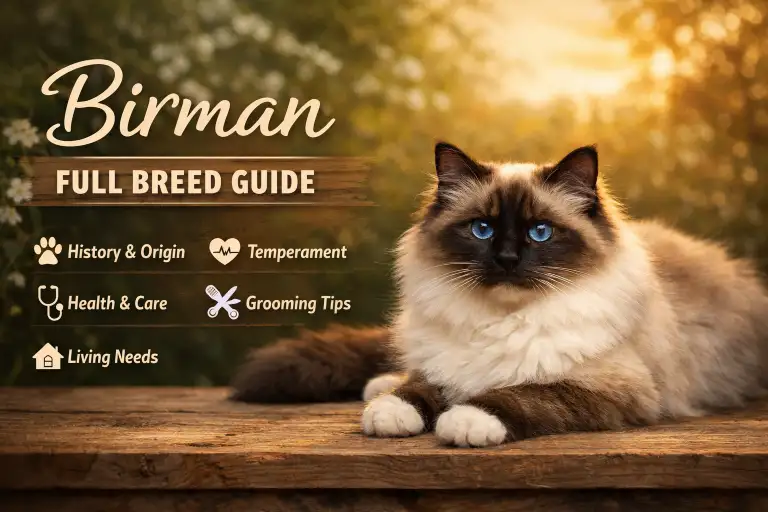
Birman Cat Full Breed Guide Covering Care, Traits, and Lifespan
The Birman cat is a medium-to-large, blue-eyed, colorpoint breed best known for its gentle temperament, striking white “gloves,” and deep attachment to its people. Often called the Sacred Cat of Burma, the Birman combines the beauty of a long-haired cat with a personality that is calm, affectionate, and quietly social, making it one of the most family-friendly pedigree breeds.
Recommended Dog Care Products
Based on your dog’s age, these products may help with comfort, health, grooming, and daily care.

Purina Pro Plan Veterinary Supplements
Daily probiotics for dogs to support digestive and gut health.
View on Amazon ↗
Earth Rated Poop Bags for Dogs
Leak-proof, extra thick waste bag refill rolls with lavender scent.
View on Amazon ↗
Greenies Pill Pockets for Dogs
Large dog treats for capsule medication, peanut butter flavor.
View on Amazon ↗
HONEY CARE All-Absorb Dog Wrap
Small male dog wraps, 50 count, useful for daily care support.
View on Amazon ↗
Seresto Flea & Tick Collar
Flea and tick treatment and prevention for dogs over 18 lbs.
View on Amazon ↗
Milk-Bone MaroSnacks
Small dog treats with real bone marrow in a 40 oz canister.
View on Amazon ↗
Vital Essentials Dog Treats
Freeze dried beef liver dog treats, grain free and single ingredient.
View on Amazon ↗
Stain & Odor Eliminator
Enzyme cleaner for pet stains, carpet messes, and strong odors.
View on Amazon ↗
Pur Luv Chicken Jerky Treats
Dog treats made with real chicken breast, high protein and chew-friendly.
View on Amazon ↗
Milk-Bone Flavor Snacks
Mini crunchy dog biscuits in a 36 oz canister for small rewards.
View on Amazon ↗As an Amazon Associate, we may earn from qualifying purchases.
Birmans are not extreme in any one trait. They are neither overly vocal nor completely silent, neither clingy nor aloof. Instead, they tend to follow their owners from room to room, settle nearby rather than demanding constant lap time, and form strong emotional bonds without becoming overwhelming. Many long-time Birman owners describe them as “emotionally present” cats—attentive, responsive, and deeply tuned in to household routines.
Historically, the breed is surrounded by legend, with stories linking Birmans to temple cats in Southeast Asia. While the romantic myths are part of the breed’s charm, the modern Birman as we know it was developed and standardized in Europe during the early 20th century. Selective breeding focused not just on appearance, but also on preserving the breed’s famously gentle, people-oriented nature.
Today, the Birman is widely regarded as an ideal indoor companion cat. It adapts well to apartments and houses alike, tolerates respectful children, and usually integrates smoothly into multi-pet households when properly introduced. Unlike some high-energy or highly independent breeds, Birmans thrive most in homes where they receive regular human interaction and predictable daily routines.
For prospective owners seeking a cat that offers companionship without chaos, beauty without high-maintenance grooming, and affection without excessive noise, the Birman cat stands out as a balanced, emotionally intelligent breed well suited to modern family life.
Birman Cat Appearance and Size
The Birman cat has a soft, balanced look that makes it easy to recognize. This breed is not slim like an Oriental cat and not heavy like some large long-haired breeds. Instead, the Birman has a strong but gentle build that looks well-proportioned from head to tail.
Overall Size and Weight
Birmans are considered a medium-to-large cat breed. They grow slowly and may not reach full size until about three years of age.
| Feature | Birman Cat |
|---|---|
| Average Weight (Male) | 9–12 pounds |
| Average Weight (Female) | 7–10 pounds |
| Body Length | Medium to long |
| Bone Structure | Solid but not heavy |
| Growth Rate | Slow, matures around 3 years |
Body Shape and Build
The body of a Birman is sturdy and muscular, but never bulky. The chest is broad, the legs are strong, and the paws are rounded. This gives the Birman a calm, grounded appearance rather than an athletic or wild look.
Coat Type and Texture
Birmans have a semi-long coat that feels soft and silky to the touch. Unlike many long-haired cats, the Birman has very little undercoat. This means:
Recommended Dog Care Products
Based on your dog’s age, these products may help with comfort, health, grooming, and daily care.
Purina Pro Plan Veterinary Supplements
Daily probiotics for dogs to support digestive and gut health.
View on Amazon ↗
Earth Rated Poop Bags for Dogs
Leak-proof, extra thick waste bag refill rolls with lavender scent.
View on Amazon ↗
Greenies Pill Pockets for Dogs
Large dog treats for capsule medication, peanut butter flavor.
View on Amazon ↗
HONEY CARE All-Absorb Dog Wrap
Small male dog wraps, 50 count, useful for daily care support.
View on Amazon ↗
Seresto Flea & Tick Collar
Flea and tick treatment and prevention for dogs over 18 lbs.
View on Amazon ↗
Milk-Bone MaroSnacks
Small dog treats with real bone marrow in a 40 oz canister.
View on Amazon ↗
Vital Essentials Dog Treats
Freeze dried beef liver dog treats, grain free and single ingredient.
View on Amazon ↗
Stain & Odor Eliminator
Enzyme cleaner for pet stains, carpet messes, and strong odors.
View on Amazon ↗
Pur Luv Chicken Jerky Treats
Dog treats made with real chicken breast, high protein and chew-friendly.
View on Amazon ↗
Milk-Bone Flavor Snacks
Mini crunchy dog biscuits in a 36 oz canister for small rewards.
View on Amazon ↗As an Amazon Associate, we may earn from qualifying purchases.
- Less matting
- Easier brushing
- Lighter shedding compared to similar breeds
The fur lies close to the body and becomes longer around the neck, tail, and belly.
Coat Colors and Patterns
The Birman is always a colorpoint cat. This means the face, ears, legs, and tail are darker than the body. Common Birman colors include:
- Seal
- Blue
- Chocolate
- Lilac
- Red and cream (less common)
One of the most famous features of the Birman is the white “gloves” on the front paws and white “laces” on the back legs. These markings are part of the breed standard and are carefully protected by breeders.
Eye Color and Facial Features
All purebred Birmans have deep blue eyes. The eyes are round and expressive, giving the breed a gentle and kind expression. The face is slightly rounded, with a strong chin and a soft nose profile.
| Feature | Description |
|---|---|
| Eye Color | Deep blue |
| Face Shape | Rounded with gentle contours |
| Ears | Medium size, slightly rounded tips |
| Tail | Medium length, full and plumed |
Because of their slow growth and changing coat color, Birman kittens often look very different from adults. Their points darken over time, and their full coat develops gradually as they mature.
Birman Cat Personality and Temperament
The Birman cat is known for having a calm, kind, and loving personality. This breed enjoys being around people but does not demand constant attention. Birmans like to stay close to their owners, often sitting nearby or following them from room to room.
They are gentle cats that fit well into quiet homes as well as busy family life. Their behavior is usually steady and predictable, which makes them easy to live with.
General Personality Traits
Birmans are friendly and social without being pushy. They enjoy company and may feel unhappy if left alone too often. Many owners say their Birman seems to “check in” on family members during the day.
Recommended Dog Care Products
Based on your dog’s age, these products may help with comfort, health, grooming, and daily care.
Purina Pro Plan Veterinary Supplements
Daily probiotics for dogs to support digestive and gut health.
View on Amazon ↗
Earth Rated Poop Bags for Dogs
Leak-proof, extra thick waste bag refill rolls with lavender scent.
View on Amazon ↗
Greenies Pill Pockets for Dogs
Large dog treats for capsule medication, peanut butter flavor.
View on Amazon ↗
HONEY CARE All-Absorb Dog Wrap
Small male dog wraps, 50 count, useful for daily care support.
View on Amazon ↗
Seresto Flea & Tick Collar
Flea and tick treatment and prevention for dogs over 18 lbs.
View on Amazon ↗
Milk-Bone MaroSnacks
Small dog treats with real bone marrow in a 40 oz canister.
View on Amazon ↗
Vital Essentials Dog Treats
Freeze dried beef liver dog treats, grain free and single ingredient.
View on Amazon ↗
Stain & Odor Eliminator
Enzyme cleaner for pet stains, carpet messes, and strong odors.
View on Amazon ↗
Pur Luv Chicken Jerky Treats
Dog treats made with real chicken breast, high protein and chew-friendly.
View on Amazon ↗
Milk-Bone Flavor Snacks
Mini crunchy dog biscuits in a 36 oz canister for small rewards.
View on Amazon ↗As an Amazon Associate, we may earn from qualifying purchases.
| Personality Trait | What It Means for Owners |
|---|---|
| Affectionate | Enjoys cuddling and staying close |
| Calm | Not overly active or wild |
| Social | Likes being around people and pets |
| Gentle | Rarely aggressive or rough |
| Loyal | Often bonds closely with family |
Affection Level and Independence
Birman cats are affectionate, but they are not always lap cats. Some enjoy sitting on laps, while others prefer sitting beside their owner. They like attention on their own terms and do not usually become overly clingy.
They can handle short periods alone, but they do best in homes where someone is around most of the day.
Vocal Behavior
Birmans are not very loud cats. Their voice is soft and quiet. They may meow to greet you, ask for food, or follow you into a room, but they do not talk constantly like some vocal breeds.
| Vocal Trait | Birman Cat |
|---|---|
| Loudness | Low |
| Frequency | Occasional |
| Purpose | Greeting, attention, feeding time |
Behavior with Children
Birmans are patient and gentle with children who treat them kindly. They do best with kids who understand how to hold and respect a cat. This breed is less likely to scratch or bite unless scared or handled roughly.
Behavior with Other Cats and Dogs
Most Birmans do well in multi-pet homes. They usually get along with other cats and calm dogs. Slow introductions help them feel safe and comfortable. They are not dominant and may avoid conflict rather than start it.
Indoor Lifestyle
Recommended Dog Care Products
Based on your dog’s age, these products may help with comfort, health, grooming, and daily care.
Purina Pro Plan Veterinary Supplements
Daily probiotics for dogs to support digestive and gut health.
View on Amazon ↗
Earth Rated Poop Bags for Dogs
Leak-proof, extra thick waste bag refill rolls with lavender scent.
View on Amazon ↗
Greenies Pill Pockets for Dogs
Large dog treats for capsule medication, peanut butter flavor.
View on Amazon ↗
HONEY CARE All-Absorb Dog Wrap
Small male dog wraps, 50 count, useful for daily care support.
View on Amazon ↗
Seresto Flea & Tick Collar
Flea and tick treatment and prevention for dogs over 18 lbs.
View on Amazon ↗
Milk-Bone MaroSnacks
Small dog treats with real bone marrow in a 40 oz canister.
View on Amazon ↗
Vital Essentials Dog Treats
Freeze dried beef liver dog treats, grain free and single ingredient.
View on Amazon ↗
Stain & Odor Eliminator
Enzyme cleaner for pet stains, carpet messes, and strong odors.
View on Amazon ↗
Pur Luv Chicken Jerky Treats
Dog treats made with real chicken breast, high protein and chew-friendly.
View on Amazon ↗
Milk-Bone Flavor Snacks
Mini crunchy dog biscuits in a 36 oz canister for small rewards.
View on Amazon ↗As an Amazon Associate, we may earn from qualifying purchases.
Birman cats are best suited for indoor living. They trust people easily and may not recognize danger outside. Indoors, they feel safe, relaxed, and happy, especially when they have cozy resting spots and gentle playtime.
Birman Cat Care, Health, and Lifespan
Caring for a Birman cat is usually easy compared to many long-haired breeds. Their calm nature and low-maintenance coat make them suitable for many homes, including first-time cat owners.
Grooming and Shedding
Even though the Birman has long fur, it does not tangle easily. This is because the coat has very little undercoat.
- Brushing once or twice a week is usually enough
- Shedding is light to moderate
- Baths are rarely needed
| Grooming Need | How Often |
|---|---|
| Brushing | 1–2 times per week |
| Bathing | Only if very dirty |
| Nail Trimming | Every 2–3 weeks |
| Ear Cleaning | Monthly |
| Dental Care | Weekly brushing if possible |
Activity and Play Needs
Birmans are playful but not overly active. They enjoy short play sessions during the day and gentle games in the evening.
They like:
- Feather toys
- Wand toys
- Simple puzzle toys
- Playing near their owners
They are not known for climbing very high or being destructive when bored, but daily play helps keep them healthy and happy.
Intelligence and Training
Birman cats are smart and learn routines quickly. They respond best to kind voices and gentle handling. Harsh training does not work well with this sensitive breed.
Common things they learn easily:
- Using the litter box
- Simple commands
- Daily feeding schedules
Lifespan and General Health
Birman cats are generally healthy and long-lived when well cared for.
| Health Factor | Birman Cat |
|---|---|
| Average Lifespan | 12–16 years |
| Energy Level | Moderate |
| Indoor Living | Strongly recommended |
Common Health Concerns
Most Birmans stay healthy, but like all purebred cats, they may be prone to certain conditions.
| Health Issue | Notes |
|---|---|
| Heart disease (HCM) | Some bloodlines may be affected |
| Kidney issues | Regular vet checks recommended |
| Dental disease | Prevent with dental care |
Regular vet visits, good nutrition, and a calm home help reduce health risks.
Birman Cat Cost, Pros & Cons, and Comparisons
Before choosing a Birman cat, it is important to understand the cost, the good points, and the possible challenges of owning this breed. This helps families make a smart and confident decision.
Birman Cat Price and Ongoing Costs
Birman kittens usually come from registered breeders. The price depends on quality, location, and breeder reputation.
| Cost Type | Estimated Range |
|---|---|
| Birman Kitten Price | $600–$1,200 |
| Initial Vet Visits | $150–$300 |
| Annual Vet Care | $200–$400 |
| Grooming Supplies | $50–$100 per year |
| Toys and Accessories | $50–$150 per year |
Adopting from a rescue may cost less, but purebred Birmans are rare in shelters.
Pros and Cons of Owning a Birman Cat
| Pros | Cons |
|---|---|
| Very gentle and affectionate | Does not like being alone too long |
| Good with children and pets | Needs regular human interaction |
| Quiet and calm temperament | Not ideal for very busy owners |
| Low-matting long coat | Slow to fully mature |
| Easy to groom | Can be sensitive to stress |
Who Is This Breed Best For
Birman cats are a great match for:
- Families with respectful children
- Seniors or calm households
- Indoor-only homes
- People who want a loving but peaceful cat
They may not be the best choice for people who travel often or want a very independent cat.
Birman Cat vs Similar Breeds
Many people compare the Birman to other long-haired, friendly cats.
| Breed | Key Difference |
|---|---|
| Birman | Calm, quiet, gentle, balanced |
| Ragdoll | Larger, more relaxed, very floppy |
| Himalayan | More grooming, flatter face |
| Siberian | More active and playful |
The Birman is a good choice for owners who want a mix of affection, beauty, and easy care without extreme traits.
For more detailed information on Birman cats, including breed standards and health guidance, visit the Birman profile on the Cat Fanciers’ Association website: https://cfa.org/birman/

Ata Ur Rehman is the founder of Pet Age in Human Years Calculator, an educational platform that provides age conversion charts and lifespan guides for dogs, cats, birds, and other companion animals. His work focuses on helping pet owners understand how animal ages translate into human years using commonly accepted age conversion formulas and published lifespan averages.
The website compiles breed and species lifespan data from kennel clubs, breed organizations, and general animal lifespan studies to present simple and easy-to-understand guides for pet owners worldwide.
This website was created to centralize animal age conversion charts into one easy reference platform for pet owners.